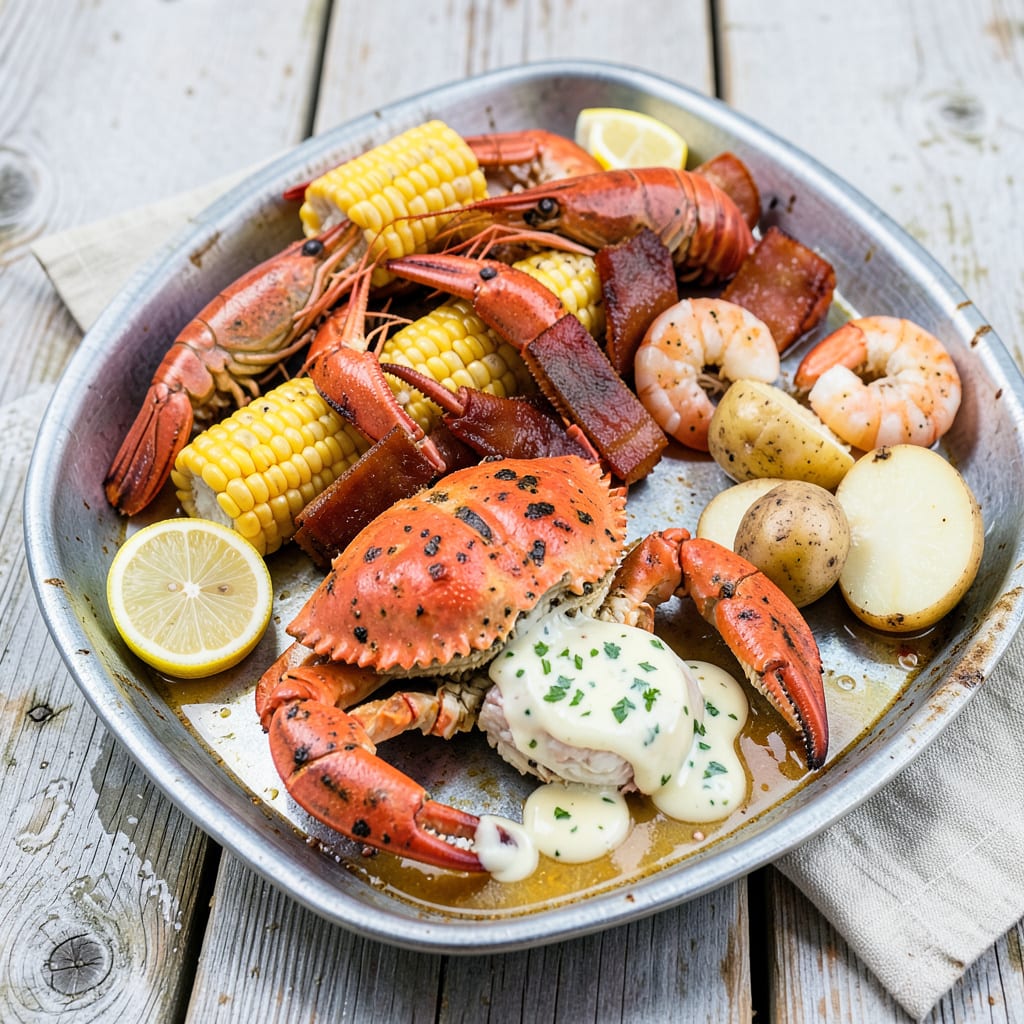
Seafood boil leftovers stay safe for 3-4 days in the refrigerator when stored properly in airtight containers. For longer storage, freeze within 2 hours of cooking and consume within 2-3 months for best quality and safety.
The clock starts ticking faster with seafood because its delicate proteins break down more quickly than beef or poultry. 🔥 I’ve learned through my coastal cooking adventures that shellfish like shrimp and crab are particularly vulnerable—their high moisture content creates the perfect breeding ground for bacteria. That’s why I always recommend transferring leftovers to shallow containers before refrigerating; it helps them cool faster and more evenly. The 2-hour window for freezing isn’t arbitrary—it’s based on food safety science that shows bacterial growth accelerates dramatically after that point.
What many don’t realize is that the spices and seasonings in your boil can actually mask early signs of spoilage. ✨ That’s why I trust my nose and the calendar more than my taste buds when evaluating leftovers. A properly stored seafood boil should maintain its briny, aromatic qualities for those first few days, but the texture will gradually soften as the proteins continue to break down even in cold storage.
💡 In This Article
- Why Seafood Boil Leftovers Spoil Faster Than Other Foods
- Best Practices for Storing and Reheating Seafood Boil Leftovers
Why Seafood Boil Leftovers Spoil Faster Than Other Foods
The rapid spoilage of seafood boils comes down to three key factors: high moisture content, delicate protein structure, and natural bacterial load. Shellfish like shrimp and crab contain about 80% water, creating an ideal environment for bacterial growth.
🔥 Unlike beef or chicken, seafood proteins denature more quickly after cooking, making them vulnerable to enzymatic breakdown even in refrigeration. The boiling process also releases more surface moisture, accelerating microbial activity once cooled.
Shellfish naturally carry higher bacterial counts than land animals due to their aquatic environment. A study from the FDA shows that cooked shrimp can develop unsafe bacterial levels in just 4 hours at room temperature—compared to 6 hours for chicken.
The 40°F-140°F “danger zone” affects seafood more dramatically because their proteins break down faster in this range. Even properly refrigerated at 38°F, the shelf life maxes out at 3-4 days due to these biological factors.
Cooking methods play a surprising role too. Boiling seafood in spiced water actually draws out more proteins and nutrients into the broth, leaving the meat more susceptible to quality degradation. I’ve noticed that boiled shrimp loses its firm texture faster than grilled shrimp because the boiling process weakens the muscle fibers more aggressively.
The spices in your boil can also interact with the proteins, sometimes accelerating flavor changes during storage.
Compare this to beef leftovers that typically last 5-7 days. Beef’s lower moisture content (about 75%) and denser muscle structure create a less hospitable environment for bacteria. The fat composition also differs—beef fat solidifies when cold, forming a protective layer, while seafood fats remain more fluid and vulnerable to oxidation.
This is why you’ll often see beef develop a gray surface when stored, while seafood develops that telltale slimy texture as proteins break down.
The freezing advantage comes from stopping bacterial growth entirely below 0°F, but quality still degrades over time. Seafood’s delicate cell walls rupture more easily during freezing, leading to that mushy texture when thawed. That’s why the 2-3 month window exists—it’s the point where texture changes become noticeable, even if the food remains technically safe.
Pro tip: Vacuum sealing removes more oxygen, slowing both bacterial growth and fat oxidation that causes off-flavors.
What most people overlook is how handling affects shelf life. Every time you open the container, you introduce new bacteria and warm air. I recommend portioning leftovers into meal-sized containers to minimize exposure.
The difference between day 3 and day 4 can be dramatic—what starts as slightly softer shrimp can become unpleasantly mushy overnight as proteins continue breaking down even in cold storage. ✨
Remember that “safe” doesn’t always mean “optimal.” While properly stored seafood boil might technically be safe on day 4, the eating experience declines significantly after day 2. The corn and potatoes in your boil will also absorb seafood odors over time, creating flavor imbalances.
This is why I always suggest consuming seafood leftovers within 48 hours for the best quality, even if they’re technically safe for another day or two.

Trained in classic French technique but raised on slow-cooked ribs and spicy rubs, she blends culinary skill with smoke and soul.
- Recipe for Boneless Pork Chops in Cast Iron Skillet: Sear and Baste to Juicy Perfection - October 3, 2026
- Recipe for Boneless Cross Rib Roast: Slow-Roasted Beef with Herb Crust - October 3, 2026
- Hamburgers in Sauce Recipe Crock Pot: Slow-Cooked Savory Delight - October 3, 2026