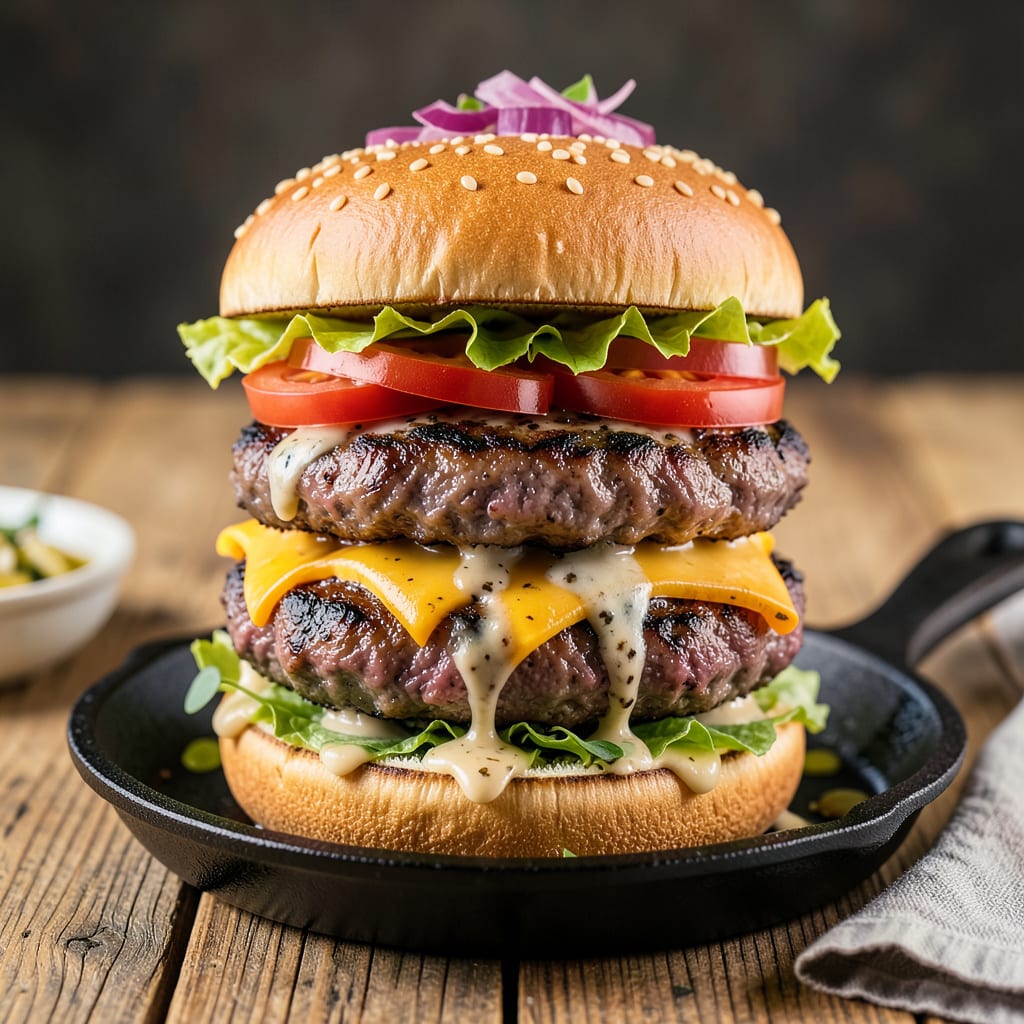
Cook ½-inch thick hamburgers on medium-high heat for 3-4 minutes per side for medium-rare, 4-5 minutes for medium, or 5-6 minutes for well-done. Always use a meat thermometer to check for 160°F internal temperature.
Getting that ideal crust while keeping the inside juicy is all about heat control and timing. 🔥 I’ve found that medium-high heat creates the perfect sear without burning the exterior before the center cooks through. The thickness of your patty plays a huge role too—thinner burgers cook faster but risk drying out, while thicker ones need more time to reach that 160°F sweet spot. My pro tip? Let your patties sit at room temperature for 10 minutes before cooking to ensure even doneness from edge to center.
💡 In This Article
- Why Stove Temperature and Burger Thickness Matter
- Pro Tips for Perfect Stovetop Hamburgers Every Time
Why Stove Temperature and Burger Thickness Matter
Medium-high heat (about 375-400°F) is the sweet spot for stovetop burgers because it creates a perfect balance between crust development and even cooking. At this temperature, the patty’s surface reaches 300°F+ quickly enough to trigger the Maillard reaction—that magical chemical process where amino acids and sugars combine to create complex, savory flavors and that coveted golden-brown crust. Too low, and you’ll steam your burger; too high, and you’ll burn the outside before the inside cooks through. ✨
The thickness of your patty directly impacts cooking time through simple physics. A ½-inch patty presents about 1 inch total of meat for heat to penetrate, while a ¾-inch patty increases that to 1.5 inches.
Heat transfers at about ¼ inch per minute at medium-high, which is why that extra quarter-inch adds 2-3 minutes to your total cooking time. I always use my thumb to test—when pressed gently, a medium patty should yield slightly like the base of your thumb when your hand is relaxed.
Here’s what’s actually happening inside your burger as it cooks: The proteins (myosin and actin) begin to denature at 120°F, squeezing out moisture. By 140°F, collagen starts breaking down into gelatin, which is why well-done burgers can feel dry—they’ve lost more moisture through this process.
The fat renders differently too—80/20 ground chuck (my favorite) will render about 20% of its weight in fat during cooking, creating those juicy pockets we love. 🔥
Thicker burgers need special attention to avoid the “bullseye effect” where the edges are well-done but the center remains undercooked. I combat this by creating a slight dimple in the center of thick patties before cooking—they’ll puff up evenly as they cook.
For 1-inch thick patties, I’ll often sear both sides first, then reduce heat to medium and cover with a lid for 2-3 minutes to let the center cook through gently without over-browning the exterior.
Your pan choice matters too. Cast iron retains heat beautifully, maintaining that 375-400°F range even when you add cold patties. Stainless steel works well but requires 30 seconds of preheating to stabilize temperature. Non-stick pans can’t reach the same high heat for proper searing—which is why I reserve them for delicate fish, not burgers.
The thermal mass of your pan affects recovery time: cast iron takes 2-3 minutes to return to temp after adding patties, while thin pans might never fully recover.
What most people don’t realize is that carryover cooking adds about 5-10°F to your burger’s internal temperature after you remove it from the pan. This is why I pull my burgers at 155°F for medium—they’ll coast up to that perfect 160°F while resting.
Thicker patties experience more carryover due to their greater thermal mass, so I’ll pull those even earlier at 150-152°F. ⚡
The resting period isn’t just about temperature—it’s about moisture redistribution. When you cook a burger, the muscle fibers contract and push juices toward the center. Resting for 3-5 minutes allows those juices to redistribute throughout the patty.
Cut too soon, and you’ll lose about 20% of those precious juices to your cutting board instead of your taste buds. I can always tell a properly rested burger by how it holds together when sliced—no crumbling, no dry edges.

Trained in classic French technique but raised on slow-cooked ribs and spicy rubs, she blends culinary skill with smoke and soul.
- Recipe for Boneless Pork Chops in Cast Iron Skillet: Sear and Baste to Juicy Perfection - October 3, 2026
- Recipe for Boneless Cross Rib Roast: Slow-Roasted Beef with Herb Crust - October 3, 2026
- Hamburgers in Sauce Recipe Crock Pot: Slow-Cooked Savory Delight - October 3, 2026