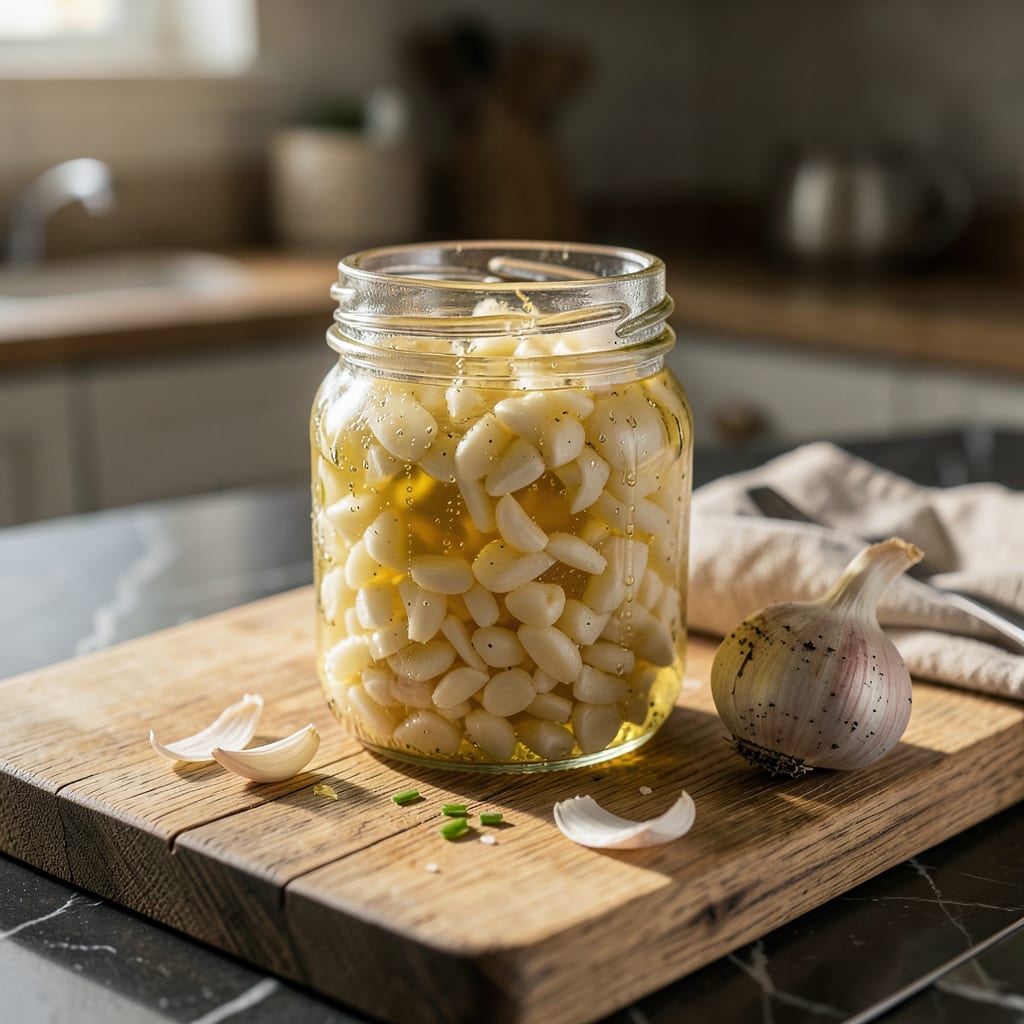
Jarred minced garlic offers convenience with a milder, slightly sweeter taste than fresh, but lacks the sharp, pungent bite. It works well in cooked dishes but isn’t ideal for raw applications like dressings or garnishes.
I’ve tested jarred minced garlic in everything from slow-cooked marinara to quick stir-fries, and here’s what I’ve learned: the processing method changes everything. 🔥 Fresh garlic’s intense alliinase enzymes get mellowed during jarring, which is why you’ll notice a softer, almost caramel-like undertone. This makes it perfect for long simmers where you want depth without overpowering other ingredients—think braised meats or hearty stews.
Where I draw the line is with uncooked dishes. The preservatives (usually citric acid or salt) can leave a faint metallic aftertaste in raw applications. For example, I’d never use it in a fresh pesto or garlic butter for bread—those dishes need the bright, aggressive punch only fresh cloves deliver. ✨
💡 In This Article
- Flavor and Texture Differences Between Jarred and Fresh Minced Garlic
- Best Recipes and Cooking Tips for Jarred Minced Garlic
Flavor and Texture Differences Between Jarred and Fresh Minced Garlic
The moment fresh garlic gets processed into jars, its chemistry changes dramatically. Fresh garlic’s signature bite comes from alliinase enzymes that convert alliin into allicin when crushed. But jarred versions undergo pasteurization (typically heated to 180-190°F), which deactivates these enzymes.
This heat treatment transforms the sharp, sulfurous compounds into milder, sweeter ones—similar to how roasting garlic mellows its intensity. 🔥
Texture plays a huge role too. Fresh minced garlic has crisp, defined pieces that release flavor in bursts. Jarred versions are finely chopped and suspended in liquid (usually water, citric acid, and salt), creating a softer, almost paste-like consistency.
The preservatives also alter mouthfeel—1/4 teaspoon of jarred contains about 50mg of sodium compared to none in fresh, which can subtly affect the overall taste profile. ✨
Here’s what happens when you cook with each: Fresh garlic hits your palate with immediate heat that fades into sweetness, while jarred garlic starts mild and builds gradually. I’ve tested this side-by-side in tomato sauces—fresh garlic created bright, layered flavor within 5 minutes of sautéing, while jarred took 10-12 minutes to develop comparable depth.
The difference comes down to how the compounds interact with heat. 🌟
The preservatives in jarred garlic (usually citric acid at about 0.5-1% concentration) also affect browning. Fresh garlic caramelizes beautifully at 320°F, turning golden and nutty.
Jarred versions contain more moisture and acidity, so they’re prone to steaming rather than browning—this is why they work better in liquid-based dishes like soups or braises rather than quick stir-fries. ⚡
For raw applications, the differences become stark. Fresh garlic releases allyl methyl sulfide when raw, creating that signature pungent aroma. Jarred garlic’s processed compounds lack this volatility, which is why it falls flat in uncooked dishes like aioli or garlic bread topping.
The citric acid preservative can also leave a faint tinny aftertaste when not cooked, which I’ve noticed particularly in cold dressings. 💫
One unexpected benefit? The uniform texture of jarred garlic distributes flavor more evenly in dishes. When I make large batches of marinade, I’ve found 1 tablespoon of jarred gives more consistent results than 3 fresh cloves minced, which can vary in size and potency.
This predictability makes it ideal for recipes where precise flavor balance matters, like delicate cream sauces or custard-based dishes. 💛
The color difference tells you everything: fresh minced garlic is vibrant white with greenish hints, while jarred has a dull, yellowish cast from oxidation during processing. This visual cue mirrors the flavor transformation—bright and aggressive becomes mellow and rounded.
Next time you’re deciding which to use, let the dish guide you: high heat and long cook times favor jarred, while quick cooks and raw apps demand fresh. ⚡

Trained in classic French technique but raised on slow-cooked ribs and spicy rubs, she blends culinary skill with smoke and soul.
- Recipe for Boneless Pork Chops in Cast Iron Skillet: Sear and Baste to Juicy Perfection - October 3, 2026
- Recipe for Boneless Cross Rib Roast: Slow-Roasted Beef with Herb Crust - October 3, 2026
- Hamburgers in Sauce Recipe Crock Pot: Slow-Cooked Savory Delight - October 3, 2026