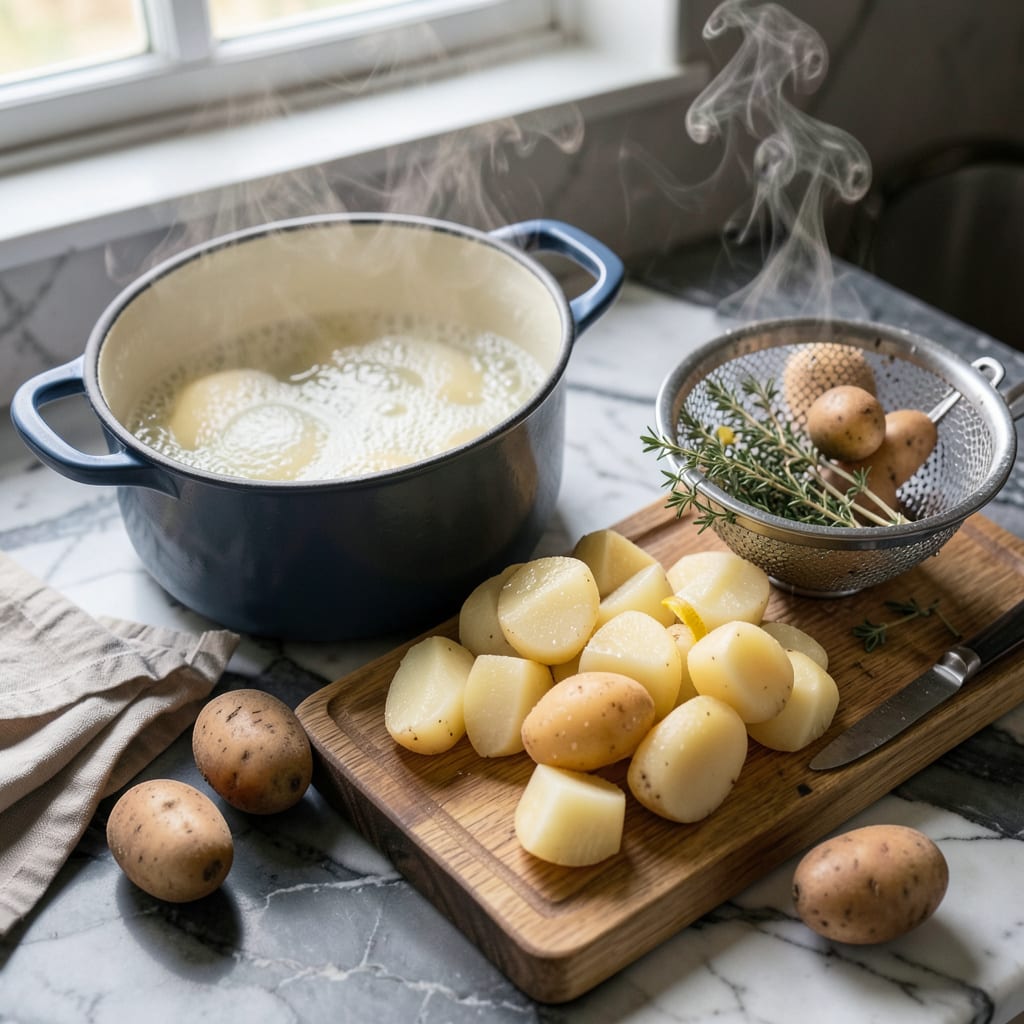
Blanch whole small potatoes for 8-10 minutes, large cubed potatoes for 5-7 minutes, and thin slices or fries for 3-5 minutes in boiling salted water. Test with a fork for slight tenderness before draining and shocking in ice water.
I’ve found that nailing the perfect blanch comes down to understanding how potato structure reacts to heat. 🔥 The key is stopping just before full tenderness—you want that slight resistance when pierced, which ensures they’ll hold up during final cooking. For example, when prepping fries, I blanch twice (first at 300°F, then 375°F) to create that signature crispy exterior while keeping the interior fluffy. The ice bath isn’t just for cooling; it halts the cooking process instantly and preserves that ideal texture you worked so hard to achieve.
💡 In This Article
- Why Blanch Time Varies by Potato Cut and Type
- Blanching Potatoes for Specific Dishes: Fries, Salads & More
Why Blanch Time Varies by Potato Cut and Type
The secret lies in how heat penetrates different potato structures. Whole small potatoes (like fingerlings) take 8-10 minutes because their dense, waxy composition resists heat transfer. The outer layer acts as insulation, requiring more time for heat to reach the center.
🔥 Meanwhile, thin slices or matchsticks blanch in just 3-5 minutes because their high surface-to-volume ratio exposes more starch directly to boiling water.
Starch content dramatically alters cooking behavior. Waxy potatoes (red, new potatoes) contain 16-18% starch and hold their shape better during blanching, while starchy varieties (Russets, Idahos) with 20-22% starch soften faster. I’ve noticed Russet cubes become fork-tender in 5-7 minutes, whereas red potato cubes need the full 7-8 minutes to reach the same tenderness.
The science? Starch granules absorb water and swell, creating that perfect al dente texture we’re after.
Size isn’t just about dimensions—it’s about heat conduction pathways. A 1-inch cube has six heat entry points, while a whole 2-inch potato only has one. This explains why cubed potatoes cook 30-40% faster than whole potatoes of similar weight. The ice bath isn’t just for cooling; it causes rapid cell contraction that locks in texture.
Without it, residual heat continues cooking the potatoes for another 1-2 minutes, potentially turning them mushy.
Water temperature plays a crucial role too. At 212°F, starch gelatinization occurs rapidly, but the process starts at just 140°F. This means potatoes begin changing texture before the water even boils.
That’s why I always start timing once the water returns to a full rolling boil after adding potatoes—the temperature drop from adding cold potatoes can extend cooking time by up to 2 minutes if not accounted for. ✨
Here’s a pro tip: Salt your blanching water like the Mediterranean Sea (1 cup salt per gallon). This doesn’t just season—it raises the water’s boiling point to about 215°F, creating a more aggressive cook that sets the potato’s exterior faster. The result? Better texture retention and more flavor penetration.
I learned this trick from French chefs who blanch their pommes frites in heavily salted water before the final fry.
For waxy potatoes destined for salads, aim for the lower end of the time range to maintain structure. Starchy potatoes for mashing can go longer—they’ll absorb 20-30% more water during blanching, which actually helps create that creamy texture later.
The ice bath step is non-negotiable; it stops enzyme activity that would otherwise turn your beautifully blanched potatoes gray within hours. 💫

Trained in classic French technique but raised on slow-cooked ribs and spicy rubs, she blends culinary skill with smoke and soul.
- Recipe for Boneless Pork Chops in Cast Iron Skillet: Sear and Baste to Juicy Perfection - October 3, 2026
- Recipe for Boneless Cross Rib Roast: Slow-Roasted Beef with Herb Crust - October 3, 2026
- Hamburgers in Sauce Recipe Crock Pot: Slow-Cooked Savory Delight - October 3, 2026