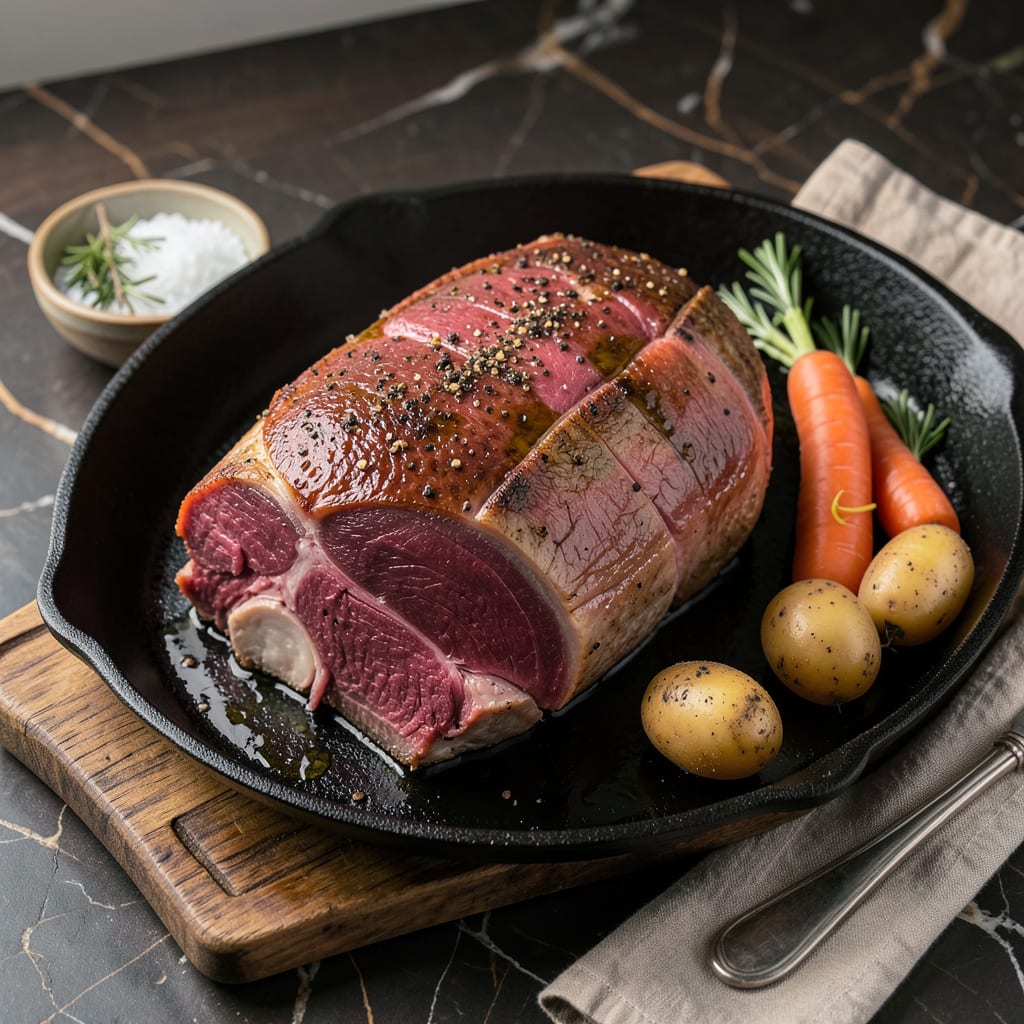
A frozen roast typically thaws in 12–24 hours in the fridge, 2–3 hours in cold water, or 1–2 hours in the microwave. Never thaw at room temperature for safety.
As a pitmaster who’s handled more roasts than I can count, I’ve learned that thawing isn’t just about waiting—it’s about controlling the environment. 🔥 The fridge method is my go-to for even, safe thawing because it keeps the meat at a consistent 40°F or below, preventing bacterial growth. Cold water works faster because the constant circulation transfers heat more efficiently than still air, but you’ll need to change the water every 30 minutes to maintain the right temperature.
What many home cooks overlook is how the roast’s shape affects timing—a 3-pound flat cut will thaw differently than a thick, round 5-pounder. And here’s a pro tip: If you’re short on time, combine methods by starting with cold water, then finishing in the fridge. This gives you better texture control while still being safe. ✨
💡 In This Article
- Factors That Affect Roast Thawing Time
- Step-by-Step Guide to Thawing a Roast Safely
Factors That Affect Roast Thawing Time
The size and shape of your roast dramatically impact thawing time because heat transfers differently through various cuts. A 3-pound chuck roast might thaw in 12 hours in the fridge, while a 7-pound standing rib roast could take 24+ hours due to its density.
Thickness matters more than weight—flat cuts thaw faster than round ones because heat penetrates more evenly through thinner sections. 🔥
Your freezer method plays a hidden role too. Roasts frozen in vacuum-sealed bags thaw 20-30% faster than those wrapped in butcher paper because the sealed environment conducts cold more efficiently.
Refrigerator temperature makes a difference as well—most home fridges run at 37-40°F, but if yours fluctuates above 40°F, you risk entering the bacterial “danger zone” where pathogens multiply rapidly. ✨
For cold water thawing, the magic happens through convection currents. When you submerge the roast, water molecules absorb heat from the meat’s surface and rise, creating a continuous flow that transfers heat 4-5 times faster than still air.
This is why changing the water every 30 minutes is crucial—it maintains the temperature differential that drives the thawing process. 💫
The microwave uses a completely different mechanism—radio waves that cause water molecules to vibrate and generate heat from within. However, this can create hot spots that partially cook the meat if not monitored.
Microwaves vary wildly in power (typically 700-1200 watts), so a 5-pound roast might take 8 minutes in a 1200W unit but 15+ minutes in a 700W model. ⚡
Food safety risks escalate when thawing improperly. Between 40°F and 140°F, bacteria like Salmonella and E. coli double every 20 minutes. A roast left on the counter might feel thawed on the outside while the center remains frozen, creating perfect conditions for bacterial growth in the warm outer layers.
This is why the USDA recommends never thawing at room temperature—it’s simply not worth the risk. 🌟
Pro tip from my pitmaster days: If you’re planning to smoke or slow-cook your roast, partially thawing it (so it’s still 30-40°F in the center) can actually improve results. The gradual temperature rise as it cooks helps break down connective tissue more evenly, giving you that perfect pull-apart texture we all crave. 💛

Trained in classic French technique but raised on slow-cooked ribs and spicy rubs, she blends culinary skill with smoke and soul.
- Recipe for Boneless Pork Chops in Cast Iron Skillet: Sear and Baste to Juicy Perfection - October 3, 2026
- Recipe for Boneless Cross Rib Roast: Slow-Roasted Beef with Herb Crust - October 3, 2026
- Hamburgers in Sauce Recipe Crock Pot: Slow-Cooked Savory Delight - October 3, 2026