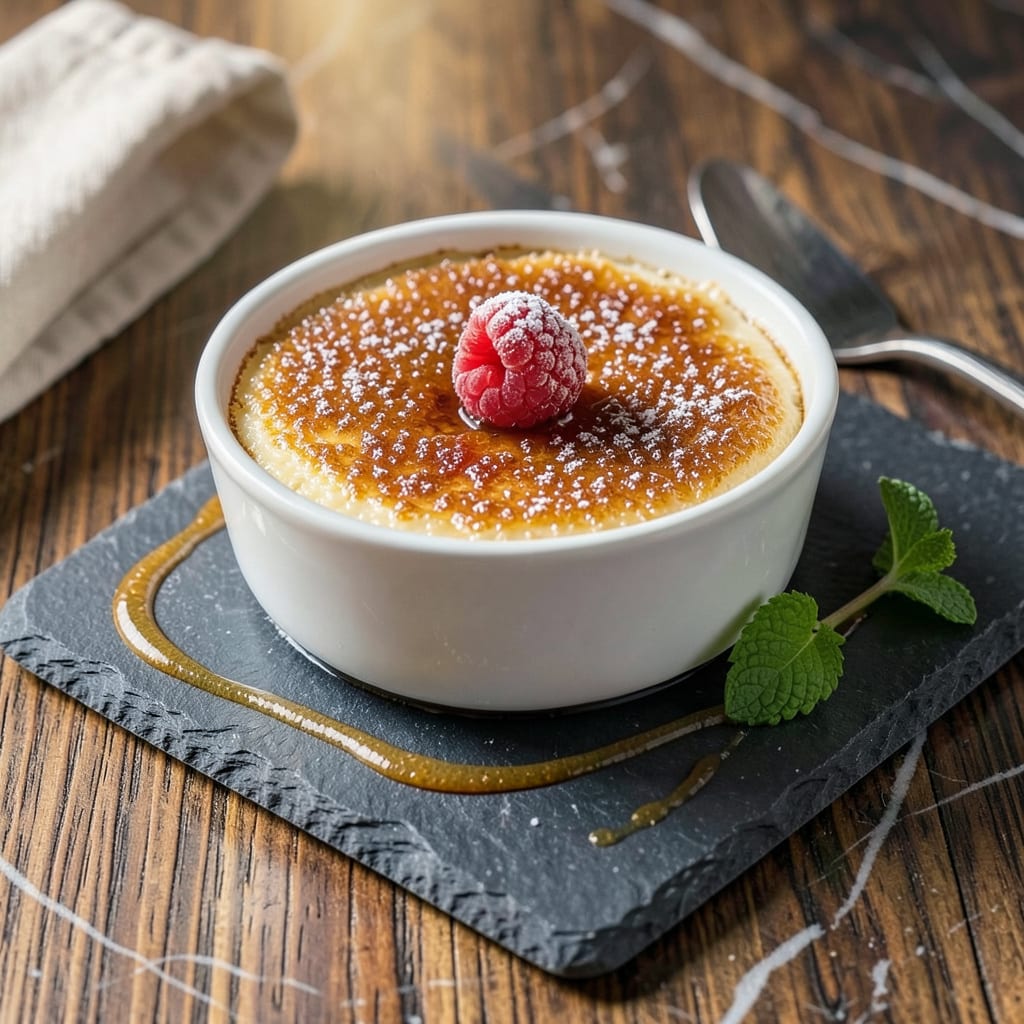
No, they’re distinct desserts. Crème brûlée features a rich custard base topped with caramelized sugar, while flan is a firmer, caramel-coated custard often made with condensed milk. Their textures and preparation methods differ significantly.
As a chef who’s worked with both, I can tell you these desserts tell completely different stories through their textures. 🔥 Crème brûlée’s signature crackly sugar shell gives way to a velvety custard that practically melts on contact, while flan holds its shape with a denser, almost pudding-like consistency. The preparation reveals their personalities too—crème brûlée demands precision with a torch for that perfect caramelized finish, whereas flan relies on a gentle bake that transforms simple ingredients into something extraordinary. It’s like comparing a delicate French sonnet to a rich Latin American ballad—both beautiful, but in entirely different ways.
💡 In This Article
- Culinary Origins and Texture Differences Between Crème Brûlée and Flan
- How to Choose Between Crème Brûlée and Flan for Your Dessert Menu
Culinary Origins and Texture Differences Between Crème Brûlée and Flan
These desserts trace their roots to completely different culinary traditions. Crème brûlée emerged in 17th-century France as a refined custard for aristocratic tables, while flan’s history stretches back to ancient Rome before evolving into its modern Latin American and Spanish forms.
The French version uses a precise ratio of 2 cups heavy cream to 6 egg yolks for that signature silkiness, while traditional flan often incorporates 1 can of condensed milk for its characteristic density. 🌟
The baking techniques create their defining textures. Crème brûlée bakes in a 325°F water bath for 40-50 minutes, producing a custard so delicate it trembles at the slightest touch. Flan, however, typically bakes at 350°F for 50-60 minutes in a direct-heat oven, developing a firmer structure that holds its shape when unmolded.
The sugar treatment differs dramatically too—crème brûlée’s caramelized top happens post-bake with a torch, while flan’s caramel forms during baking as the sugar syrup transforms at 320°F. ✨
What you feel in your mouth tells the real story. Crème brûlée’s custard contains about 30% fat from the heavy cream, creating that luxurious melt-on-contact sensation. Flan’s texture comes from the interaction between egg proteins and milk sugars during baking, resulting in a custard that’s 2-3 times firmer than its French counterpart.
The caramel layers behave differently too—crème brûlée’s crackly shell gives way immediately, while flan’s caramel coating clings to the custard like a glossy second skin. 🔥
The ingredient ratios explain why they behave so differently. A classic crème brûlée uses 1/3 cup sugar per 2 cups liquid, while flan recipes often call for 1 cup sugar for the caramel alone, plus additional sugar in the custard base.
This higher sugar concentration in flan contributes to its firmer set and deeper caramel flavor. The egg content varies too—crème brûlée relies on yolks only for richness, while flan typically uses whole eggs for structure. 💫
Even the serving experience differs. Crème brûlée must be served in its ramekin to maintain the custard’s delicate structure, while flan gets dramatically unmolded onto a plate, revealing its glossy caramel cascade.
The temperature at serving matters too—crème brûlée shines slightly chilled at 50-55°F to maintain its custard integrity, while flan can handle room temperature serving without losing its shape. These small but crucial differences make each dessert perfect for different occasions and presentations. ⚡
What most people don’t realize is that the custard bases actually start similarly—both begin with eggs and dairy. The magic happens in how they’re treated.
Crème brûlée’s mixture gets strained through fine mesh to eliminate any air bubbles that might disrupt its silky texture, while flan batter often gets gently folded to incorporate just enough air for a light but stable structure. It’s this attention to detail in the preparation that creates their distinct personalities. 💛
The cultural contexts shaped their evolution too. Crème brûlée’s refined nature reflects French haute cuisine’s emphasis on technique and presentation, while flan’s heartier character aligns with Latin traditions of resourceful, family-style desserts.
This history explains why crème brûlée often appears in fine dining with precise garnishes, while flan thrives as a comforting, shareable treat at casual gatherings. Understanding these origins helps appreciate why they’re so different despite sharing custard DNA. 🌟

Trained in classic French technique but raised on slow-cooked ribs and spicy rubs, she blends culinary skill with smoke and soul.
- Recipe for Boneless Pork Chops in Cast Iron Skillet: Sear and Baste to Juicy Perfection - October 3, 2026
- Recipe for Boneless Cross Rib Roast: Slow-Roasted Beef with Herb Crust - October 3, 2026
- Hamburgers in Sauce Recipe Crock Pot: Slow-Cooked Savory Delight - October 3, 2026