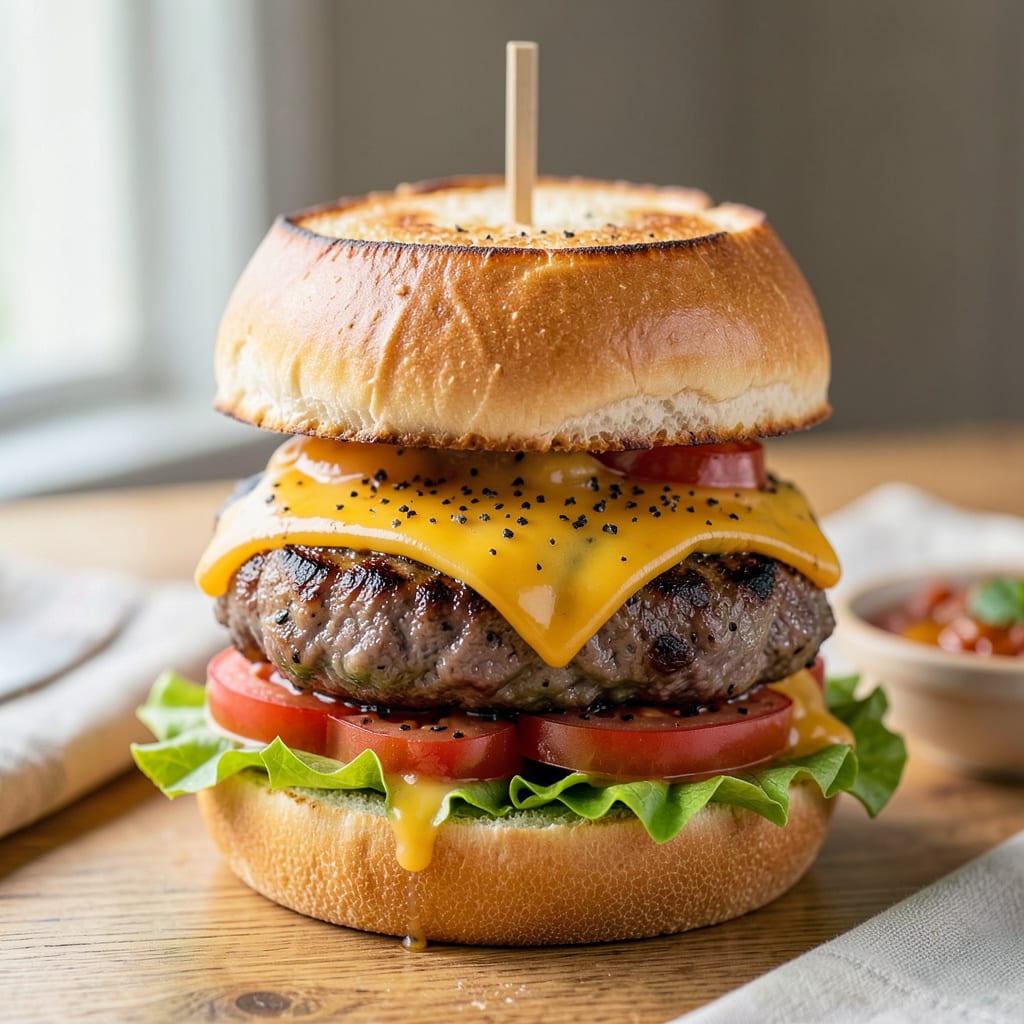
Frozen burgers typically take 6-8 minutes on a preheated George Foreman Grill. Cook for 4 minutes, flip once, then grill another 2-4 minutes until internal temperature reaches 160°F (71°C).
I’ve found the key to juicy results lies in that initial 4-minute sear—it creates a perfect crust while the inside thaws evenly. The grill’s dual plates work overtime here, pressing out excess moisture that would otherwise steam your patty. 🔥 What most people miss is how thickness changes everything: a standard quarter-pounder needs less time than those hefty half-pounders, which might require an extra minute or two to hit that safe 160°F mark without drying out.
Here’s my pitmaster trick: always let the grill preheat for 5 full minutes first—this mimics a restaurant flat-top’s consistent heat. And don’t skip the thermometer! I’ve judged too many burgers by color alone, only to find them undercooked inside. The Foreman’s sloped design actually helps render fat faster than traditional grills, which is why you’ll notice less grease pooling than with outdoor cooking. ✨
💡 In This Article
- Why Cooking Times Vary for Frozen Burgers on George Foreman Grill
- Pro Tips for Perfect Frozen Burgers on George Foreman Grill
Why Cooking Times Vary for Frozen Burgers on George Foreman Grill
The frozen state of your burgers creates a unique thermal challenge. When you place a frozen patty on that 400°F preheated surface, the outer layer immediately begins conducting heat inward—but there’s a 32°F temperature difference to overcome before the center even starts cooking.
This thermal gradient means the exterior can easily overcook while waiting for the frozen core to reach safe temperatures. 🔥 The George Foreman’s dual-contact design actually helps here by attacking from both sides simultaneously.
Burger thickness dramatically alters cooking dynamics. A standard ¼-pound patty (about ½-inch thick) will typically hit 160°F in 6-7 minutes, while a ½-pound behemoth (¾-inch or thicker) may need 9-10 minutes total. The science lies in heat penetration depth—each additional ¼-inch of thickness adds roughly 1-2 minutes to cooking time.
What’s fascinating is how the grill’s angled design forces rendered fat to drain away, preventing the steam pocket that would otherwise extend cooking time on flat surfaces.
Here’s what most home cooks miss about frozen burgers: the ice crystals within the meat act as tiny heat sinks. As they melt, they absorb 144 BTUs per pound of energy—energy that isn’t going into cooking your burger. This is why you’ll often see that initial 4-minute sear produces more steam than browning.
The Foreman’s floating hinge system actually helps by maintaining consistent pressure as the patty thaws and compresses, something rigid grills can’t match. ✨
The fat content plays a crucial role in timing variations. Lean turkey or chicken burgers (typically 7-10% fat) cook faster than beef patties (15-20% fat) because fat requires more energy to render. I’ve found that high-fat burgers need about 30 seconds longer per side to fully render without burning the exterior.
The grill’s non-stick surface reaches higher temperatures faster than cast iron, creating what engineers call a “thermal shock” that accelerates the Maillard reaction on that first contact. 💫
Ambient conditions affect your results more than you’d think. Cooking in a 70°F kitchen versus a 90°F summer kitchen can add 30-60 seconds to your total time because the grill works harder to maintain temperature in warmer environments. The Foreman’s compact design actually makes it more sensitive to ambient temps than outdoor grills.
Pro tip: if you’re cooking multiple batches, the second round will often cook 1-2 minutes faster because the grill retains heat in its mass. ⚡
What separates good results from great ones is understanding how the grill’s heat distribution changes as it works. The center of the plates runs about 25°F hotter than the edges due to heat concentration. This means rotating your burgers 180 degrees (not just flipping) after that initial sear ensures even cooking.
I learned this the hard way judging competition burgers where one side was perfect and the other underdone—all because of ignoring this heat map effect. 🌟
The final variable is patty composition. Homemade frozen burgers with breadcrumbs or eggs cook differently than commercial patties with added phosphates. The binders in store-bought burgers help them retain moisture during the thawing process, often reducing cooking time by about 1 minute total.
I always recommend checking commercial packages for added solutions—some contain up to 15% water weight, which significantly alters the thermal profile during cooking. 💛

Trained in classic French technique but raised on slow-cooked ribs and spicy rubs, she blends culinary skill with smoke and soul.
- Recipe for Boneless Pork Chops in Cast Iron Skillet: Sear and Baste to Juicy Perfection - October 3, 2026
- Recipe for Boneless Cross Rib Roast: Slow-Roasted Beef with Herb Crust - October 3, 2026
- Hamburgers in Sauce Recipe Crock Pot: Slow-Cooked Savory Delight - October 3, 2026