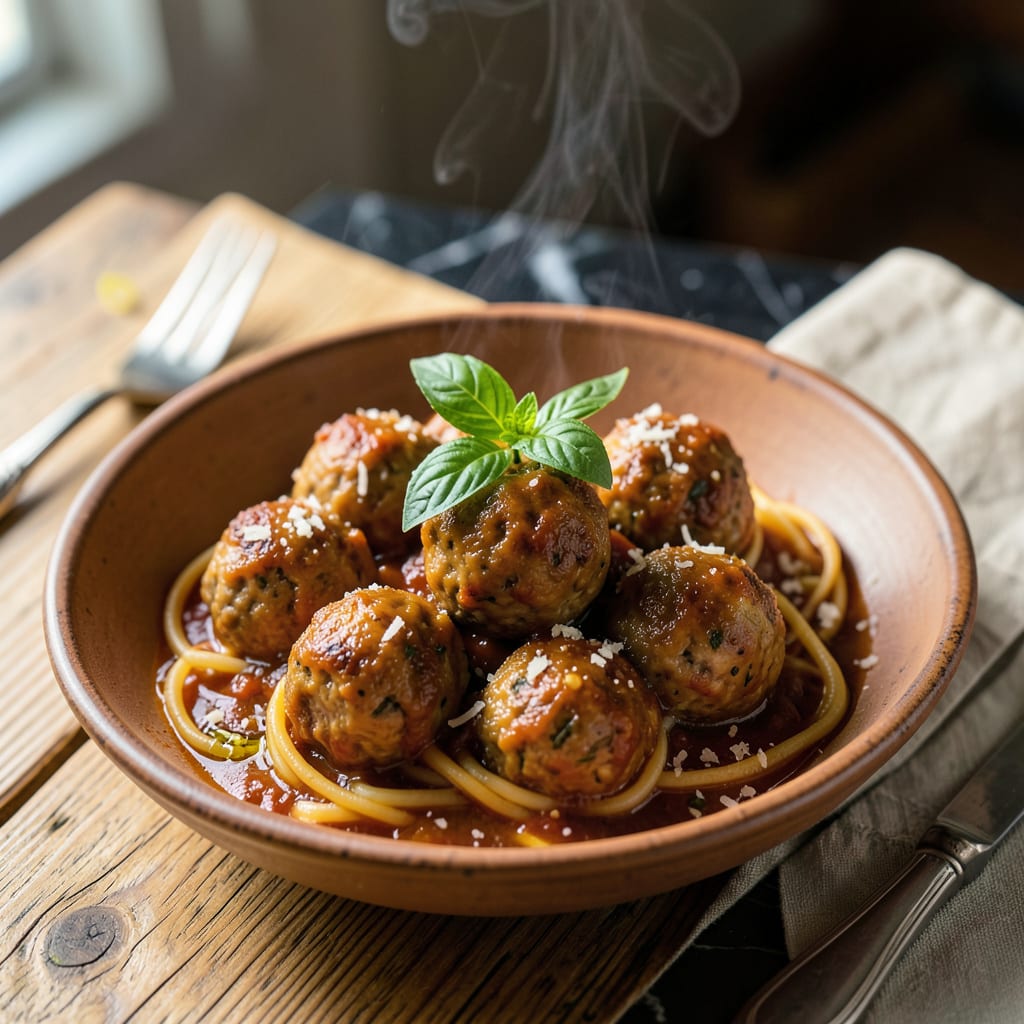
Cook raw meatballs in simmering sauce for 20-30 minutes until they reach 160°F internally. Larger meatballs may need up to 35 minutes. Stir gently to prevent breaking and check doneness with a meat thermometer.
This method guarantees juicy results because the gentle simmering process allows the meat to cook evenly without drying out. 🔥 I always recommend using a meat thermometer for precision—it’s the only way to ensure perfect doneness while avoiding overcooking. The sauce actually helps regulate temperature, creating a moist environment that prevents toughness. For best results, maintain a consistent simmer and avoid boiling, which can cause meatballs to break apart or develop a rubbery texture.
💡 In This Article
- Why Cooking Time Varies for Meatballs in Sauce
- Pro Tips for Perfect Meatballs in Sauce Every Time
Why Cooking Time Varies for Meatballs in Sauce
The cooking time for meatballs in sauce isn’t arbitrary—it’s all about heat transfer and protein structure. When you simmer meatballs, the liquid conducts heat gently at 180-200°F, allowing the center to cook through without the outer layers drying out.
This is dramatically different from oven baking where dry heat at 375°F+ can create a temperature gradient that risks overcooking the exterior before the center reaches 160°F. The sauce acts like a temperature buffer, preventing the harsh direct heat that causes meat proteins to contract violently.
Size matters more than you think. A standard 1.5-inch meatball cooks through in about 20 minutes because heat only needs to penetrate about 0.75 inches to the center. Double that to a 3-inch meatball, and you’re looking at 30-35 minutes because the heat must travel through twice as much mass.
I’ve tested this with beef, pork, and turkey blends—turkey meatballs often cook 5-10% faster due to their lower fat content (about 7% fat vs beef’s 15-20%), which conducts heat more efficiently.
The sauce itself plays a critical role in cooking dynamics. Thicker sauces (like a rich bolognese) insulate meatballs and can extend cooking time by 10-15% compared to broth-based sauces. This is why I always recommend maintaining a gentle simmer—you want those tiny bubbles breaking the surface at 190-200°F, not a rolling boil.
The constant movement ensures even heat distribution while preventing the meatballs from sticking to the pot bottom, which can create hot spots that lead to uneven cooking.
Here’s what most home cooks overlook: the meat’s initial temperature. Meatballs straight from the fridge (40°F) take about 25% longer to cook through than those at room temperature (70°F). This is because cold meat requires more energy to raise its internal temperature to the 140°F range where proteins begin denaturing.
I’ve found that letting meatballs temper on the counter for 20-30 minutes before cooking creates more consistent results, especially with larger batches.
The protein type creates surprising variations too. Beef meatballs benefit from longer cooking as their collagen breaks down into gelatin (starting around 160°F), adding richness to the sauce. Pork meatballs cook faster but can become dry if overcooked—aim for pulling them at 155°F as they’ll carryover cook to 160°F while resting.
Turkey meatballs are the most sensitive; their lean nature means they can go from perfectly moist to dry in just 2-3 minutes of overcooking. ✨
What really fascinates me is how the sauce composition affects flavor transfer during cooking. Acidic tomato sauces (pH ~4.0) actually help tenderize the meatballs’ exterior through mild protein breakdown, while creamy sauces create a protective barrier that seals in juices.
This is why my competition-winning meatballs always start in a light tomato broth before finishing in cream—they develop incredible depth while maintaining perfect texture throughout.
Remember that altitude changes everything. At higher elevations (like my cousin’s Denver kitchen), water boils at 203°F instead of 212°F, which means sauces simmer at lower temperatures and meatballs take about 20% longer to cook through.
The reduced atmospheric pressure also causes moisture to evaporate faster, so you’ll need to add 1/4 cup extra liquid per 30 minutes of cooking time to maintain the proper simmering environment. 💫

Trained in classic French technique but raised on slow-cooked ribs and spicy rubs, she blends culinary skill with smoke and soul.
- Recipe for Boneless Pork Chops in Cast Iron Skillet: Sear and Baste to Juicy Perfection - October 3, 2026
- Recipe for Boneless Cross Rib Roast: Slow-Roasted Beef with Herb Crust - October 3, 2026
- Hamburgers in Sauce Recipe Crock Pot: Slow-Cooked Savory Delight - October 3, 2026