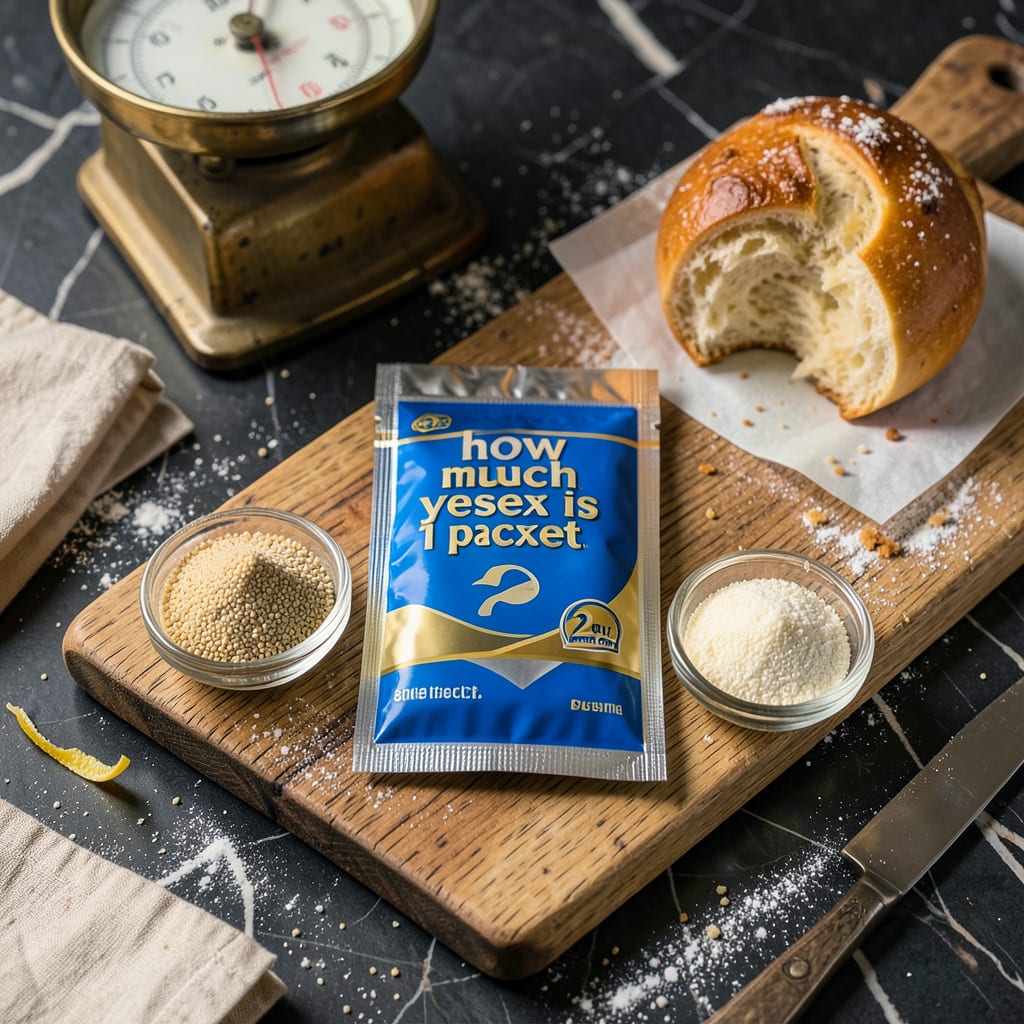
One standard packet of active dry yeast contains ¼ ounce (7 grams or 2¼ teaspoons). This equals about 1 block (0.6-ounce cake) of fresh yeast when substituted.
I’ve found this measurement to be the baking industry’s sweet spot—enough to leaven 2-4 cups of flour without overwhelming the dough. The ¼-ounce standard isn’t arbitrary; it dates back to early 20th-century packaging when home bakers needed consistent results. What’s fascinating is how this small amount can transform dense flour into light, airy bread through fermentation. ✨
When I’m working with recipes, I always double-check whether they call for active dry or instant yeast, as their densities differ slightly. The 2¼ teaspoon measurement becomes particularly handy when you’re scaling recipes up or down—no need for a scale if you’ve got measuring spoons. This conversion knowledge has saved me countless times when adjusting batch sizes for everything from dinner rolls to sourdough loaves.
💡 In This Article
- Understanding Yeast Packet Measurements and Conversions
- How to Substitute Yeast Packets in Recipes
Understanding Yeast Packet Measurements and Conversions
The ¼-ounce standard for yeast packets emerged in the 1930s when Fleischmann’s began marketing yeast directly to home bakers. This precise amount was calculated to reliably leaven 4 cups of flour—the typical quantity in bread recipes of that era.
The measurement stuck because it provided consistent results across different flour types and hydration levels, solving the problem of unpredictable home baking outcomes. 🔥
What’s fascinating is the density difference between yeast types. Active dry yeast (2¼ tsp per packet) has larger granules that need rehydration, while instant yeast (about 2 tsp per packet) contains finer particles that dissolve immediately. This subtle variation explains why some recipes specify one type over the other.
The 7-gram weight remains constant, but volume measurements shift slightly due to granule size and packing density.
For precise baking, I always recommend using weight measurements. 7 grams equals exactly ¼ ounce, but teaspoon measurements can vary based on how you scoop. A properly leveled teaspoon of active dry yeast should weigh about 3.1 grams, which is why 2¼ teaspoons hits that perfect 7-gram target.
This consistency matters when you’re working with delicate pastries or enriched doughs where even small variations affect texture.
The conversion to fresh yeast follows a simple ratio: 1 packet dry yeast = 1 cake (0.6 oz) fresh yeast. Fresh yeast contains about 70% water, which is why you need more by weight (about 17 grams) to match the leavening power of 7 grams of dry yeast.
I’ve found fresh yeast works beautifully in brioche and croissants where its higher moisture content contributes to a more tender crumb.
Temperature plays a crucial role in yeast activation. Both dry and fresh yeast perform optimally at 75-80°F liquid temperatures. Above 120°F, you risk killing the yeast cells, while below 70°F slows fermentation dramatically. This temperature sensitivity explains why some recipes call for proofing yeast first—it’s an insurance policy against dough that refuses to rise. ✨
When scaling recipes, remember that yeast quantities don’t increase linearly. Doubling a recipe doesn’t necessarily mean doubling the yeast. For large batches, I typically use 1 packet per 4 cups of flour as a baseline, then adjust based on ambient temperature and desired fermentation time.
In cooler kitchens, you might need 10-15% more yeast to maintain the same rise time.
The packaging standardization also solved a practical problem: shelf life. Sealed ¼-ounce packets maintain yeast viability for 12-18 months at room temperature, while opened packages degrade within weeks. This longevity made home baking more reliable, as bakers could keep yeast on hand without worrying about frequent replacements.
The small packet size also minimized waste for occasional bakers who didn’t need bulk quantities.

Trained in classic French technique but raised on slow-cooked ribs and spicy rubs, she blends culinary skill with smoke and soul.
- Recipe for Boneless Pork Chops in Cast Iron Skillet: Sear and Baste to Juicy Perfection - October 3, 2026
- Recipe for Boneless Cross Rib Roast: Slow-Roasted Beef with Herb Crust - October 3, 2026
- Hamburgers in Sauce Recipe Crock Pot: Slow-Cooked Savory Delight - October 3, 2026