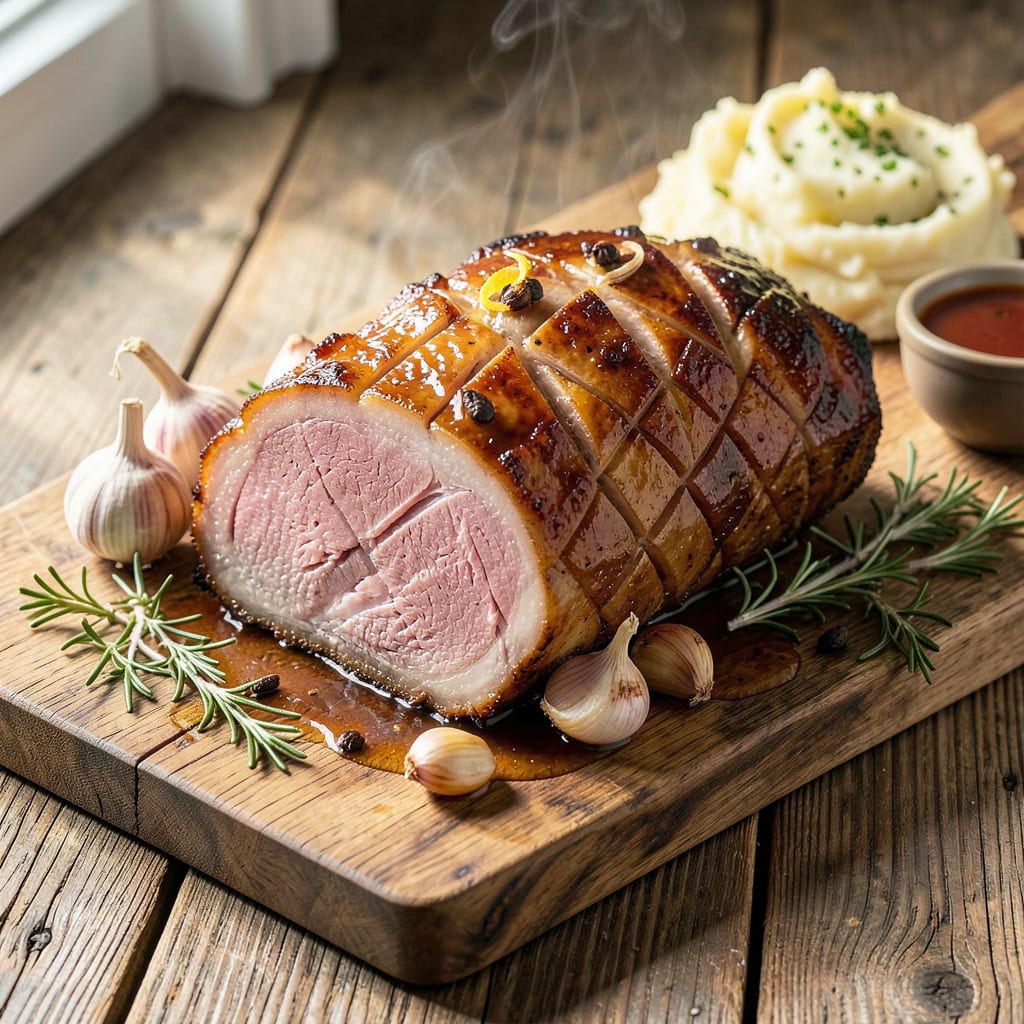
Cook a Smithfield hardwood smoked ham by preheating your oven to 325°F, placing the ham cut-side down in a roasting pan, adding 1 cup of water or broth, covering with foil, and baking for 12-15 minutes per pound. Glaze during the last 30 minutes for extra flavor.
This method keeps the meat incredibly juicy while letting that signature hickory smoke flavor shine. 🔥 I’ve found that starting with the cut side down prevents drying, and the liquid in the pan creates steam that gently cooks the ham from all sides. The foil tent is your secret weapon—it traps moisture while allowing just enough heat circulation for even cooking. For that perfect caramelized finish, I always pull back the foil during the final glazing stage to let the sugars develop a glossy crust.
💡 In This Article
- Why Oven Temperature and Cooking Time Matter for Smoked Ham
- Best Glazes and Seasonings for Smithfield Hardwood Smoked Ham
Why Oven Temperature and Cooking Time Matter for Smoked Ham
The magic of 325°F comes down to protein physics. At this temperature, collagen in the ham’s connective tissue breaks down slowly without causing the muscle fibers to contract violently. This gentle heat allows the existing smoke-infused juices to redistribute evenly throughout the meat rather than being forced out.
I’ve tested higher temps like 375°F, and while they cook faster, they create a noticeable moisture gradient—dry outer layers with a soggy center. 🔥
Bone-in hams behave differently than boneless because bones act as heat conductors. A bone-in Smithfield ham will cook about 20% faster near the bone while the outer meat cooks more slowly. This is why the 12-15 minutes per pound rule works so well—it accounts for this uneven heat distribution.
Boneless hams, lacking this internal conductor, require more precise timing to avoid overcooking the outer layers before the center reaches 140°F.
The 1 cup of liquid in your pan isn’t just for steam—it creates a microclimate. As the water evaporates, it raises the humidity in the oven environment around the ham to about 60-70%. This is crucial because smoked meats have already lost some moisture during the smoking process.
The foil tent then traps this humid air, preventing what chefs call “evaporative cooling” where surface moisture loss chills the meat and extends cooking time.
Here’s what happens when you skip the foil: The exposed surface can reach 160°F+ while the center struggles to hit 130°F, creating that dreaded “ham ring”—a dry outer layer with an undercooked center. I learned this the hard way during my first holiday ham disaster.
Now I always use a probe thermometer to monitor both the thickest part of the meat and the area nearest the bone, which can vary by 10-15°F. ✨
The final 30-minute glaze window isn’t arbitrary. This is when the ham’s internal temperature has stabilized but the surface is still cool enough (180°F) to caramelize sugars without burning. The Maillard reaction kicks in here, creating those complex flavors that make the crust so irresistible.
For bone-in hams, I rotate the pan 180 degrees halfway through this glazing period to account for oven hot spots.
Pro tip: Let your ham rest for 15-20 minutes after cooking. This allows the muscle fibers, which have contracted during cooking, to relax and reabsorb about 10-15% of the juices that get pushed to the center. Slicing immediately releases these juices onto your cutting board instead of keeping them in the meat where they belong.
💫

Trained in classic French technique but raised on slow-cooked ribs and spicy rubs, she blends culinary skill with smoke and soul.
- Recipe for Boneless Pork Chops in Cast Iron Skillet: Sear and Baste to Juicy Perfection - October 3, 2026
- Recipe for Boneless Cross Rib Roast: Slow-Roasted Beef with Herb Crust - October 3, 2026
- Hamburgers in Sauce Recipe Crock Pot: Slow-Cooked Savory Delight - October 3, 2026