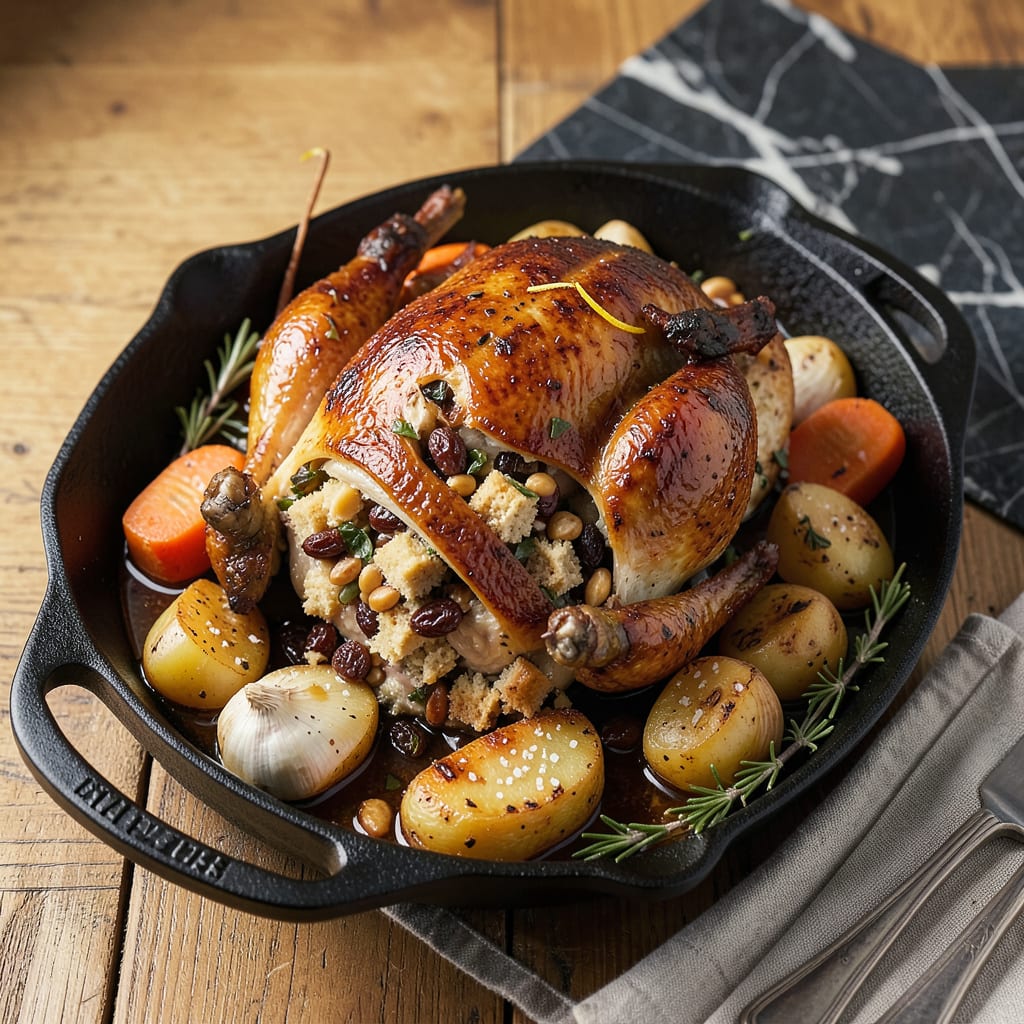
A whole stuffed chicken typically bakes at 350°F (175°C) for 20-25 minutes per pound until the internal temperature reaches 165°F (74°C) in the thickest part. For a 5-pound bird, expect about 1.5–2 hours total.
Stuffing changes the game—it acts like insulation, slowing down heat penetration to the center. That’s why I always recommend checking the temperature in multiple spots, especially where the thigh meets the body. 🔥 The stuffing itself needs to hit 165°F too, which is why dense bread-based fillings might extend your cook time by 10-15 minutes compared to an unstuffed bird.
Here’s what most recipes don’t tell you: your oven’s true temperature can vary by 25°F or more. I use an oven thermometer to verify, because even small differences affect how long that golden-brown skin takes to crisp while ensuring the meat stays juicy inside. ✨
💡 In This Article
- Why Baking Time Varies for Stuffed Whole Chicken
- Pro Tips for Evenly Baked Stuffed Chicken Every Time
Why Baking Time Varies for Stuffed Whole Chicken
The stuffing inside your chicken acts like a thermal barrier, dramatically altering heat distribution. Unlike an unstuffed bird where hot air circulates freely, dense fillings like bread-based mixtures absorb and retain heat, slowing the cooking process.
A classic herb stuffing with 1-2 cups of breadcrumbs can add 15-20 minutes to your total bake time compared to a simple citrus or vegetable filling. 🔥
Bird size matters more than you think. A 4-pound chicken might finish in 1 hour 20 minutes, while a 6-pound bird could take 2 hours 15 minutes—that’s nearly double the time for just 50% more weight.
The geometry plays a role: larger birds have thicker breast meat and leg quarters, requiring more time for heat to penetrate to the bone. Dark meat near the thighs also cooks slower than white breast meat due to higher connective tissue content.
Here’s what most home cooks overlook: oven calibration errors. Consumer ovens can vary by ±25°F from their displayed temperature. At 350°F, this means your chicken might actually be baking at 325°F or 375°F—enough to throw off timing by 10-15 minutes per pound.
I always recommend using an independent oven thermometer placed on the middle rack for accuracy. ✨
The stuffing-to-cavity ratio creates hidden variables. A loosely packed cavity with 1 cup of stuffing in a 5-pound bird will cook faster than a tightly packed 3 cups in the same chicken. The moisture content matters too—wet stuffings (like those with sausage or mushrooms) conduct heat differently than dry bread-based versions.
This is why temperature checks in multiple locations are non-negotiable for safety.
Dark meat versus white meat presents a biological challenge. Chicken thighs and legs contain more myoglobin (the protein that gives meat its color) and connective tissue, requiring 10-15°F higher internal temperatures to break down properly compared to breast meat.
The USDA’s 165°F standard accounts for this, but you’ll often find thighs reach perfect doneness at 170-175°F while breasts are best at 160°F. 💫
Altitude elevates the complexity. Above 3,000 feet, water boils at lower temperatures, meaning your stuffing’s moisture evaporates faster while the chicken cooks slower. For every 1,000 feet above sea level, I recommend increasing oven temperature by 5°F and checking doneness 5-10 minutes earlier than standard times suggest.
This prevents the exterior from drying out before the center reaches safe temperatures.
The resting period after baking isn’t just for juiciness—it’s a critical safety step. During those 10-15 minutes under foil, the internal temperature continues rising by 5-10°F (called “carryover cooking”), while the stuffing’s temperature equalizes. Skipping this step risks serving undercooked portions near the cavity walls where heat penetrates last. ⚡

Trained in classic French technique but raised on slow-cooked ribs and spicy rubs, she blends culinary skill with smoke and soul.
- Recipe for Boneless Pork Chops in Cast Iron Skillet: Sear and Baste to Juicy Perfection - October 3, 2026
- Recipe for Boneless Cross Rib Roast: Slow-Roasted Beef with Herb Crust - October 3, 2026
- Hamburgers in Sauce Recipe Crock Pot: Slow-Cooked Savory Delight - October 3, 2026