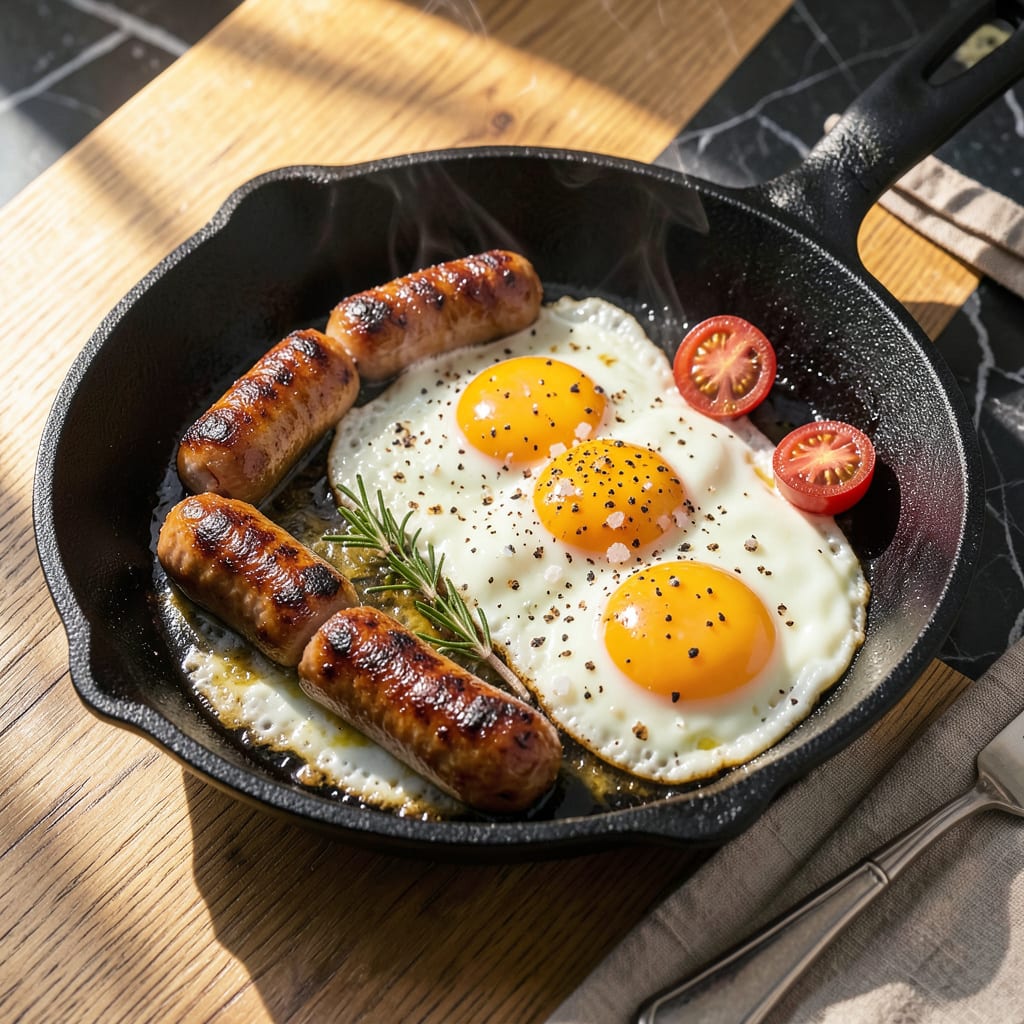
I’ve cooked more sausage links than I can count, but Bob Evans’ version holds a special place in my breakfast rotation. There’s something about that perfect balance of seasoning and juiciness that makes them stand out. The key to getting them just right? Patience and the proper heat level—no one wants rubbery or burnt links when that first bite could be pure breakfast perfection.
Whether you’re cooking the original, turkey, or maple-flavored links, the method stays simple. A medium-low skillet lets them brown evenly without drying out, while the oven or air fryer gives you hands-off convenience. I always aim for that golden-brown crust that tells you they’re cooked through but still tender inside—no guessing games with a meat thermometer needed.
Here’s what most people miss: Bob Evans links are pre-cooked, so you’re really just heating and crisping them up. That means you can focus on getting the texture spot-on without worrying about undercooking. My go-to move? A quick sear in butter for extra richness, then finishing with a splash of water to steam them gently. The result is juicy links with that ideal crisp exterior.
These links shine alongside fluffy scrambled eggs or tucked into a biscuit sandwich. I’ve even been known to chop them up for breakfast hash when I’m feeling fancy. The best part? They’re ready in under 15 minutes, making them my secret weapon for stress-free mornings that still taste like a diner special.
📚 In This Guide
- What You’ll Need
- Instructions
- Tips and Common Mistakes
What Youll Need
- ● 1 package (12 oz) Bob Evans Original or Flavored Sausage Links – Choose your favorite variety (e.g., Original, Maple, or Spicy).
- ● 1 tbsp cooking oil or butter – Neutral oils like vegetable, canola, or olive oil work best for even browning.
- ● Non-stick skillet or cast-iron pan – A 10-12 inch pan ensures links cook evenly without crowding.
- ● Tongs or spatula – For flipping sausage without piercing (keeps juices locked in!).
- ○ Meat thermometer (optional but recommended) – Ensures perfect doneness at 160°F internal temp.
- ● Paper towels – For draining excess grease post-cooking.
- ● Platter or serving dish – To keep links warm before serving.
- ○ Salt & pepper (optional) – Season to taste if desired.
- ○ Fresh herbs (optional) – A sprinkle of parsley or chives adds a pop of color!
Instructions
Here’s the foolproof method I use to get Bob Evans sausage links perfectly browned and juicy every time.
Choose Your Cooking Method
You’ve got three great options for cooking these sausage links: stovetop, oven, or air fryer. I prefer stovetop for that classic crispy exterior, but all methods work well. For stovetop, grab a heavy skillet—cast iron works beautifully if you have it.
If using the oven, preheat to 375°F and line a baking sheet with parchment paper. For air fryer, preheat to 350°F. The key is consistent heat—no matter which method you choose, maintaining the right temperature prevents rubbery or dry sausage.
Prepare the Sausage Links
Remove the sausage links from their packaging and pat them dry with paper towels. This step is crucial—any excess moisture will steam the sausages instead of browning them. I like to let them sit at room temperature for 5-10 minutes while my pan heats up.
Don’t separate the links if they’re connected—they’ll cook more evenly if you leave them attached until after browning. If you’re cooking a large batch, make sure not to overcrowd the pan; the links should have about ½ inch of space between them for proper browning.
Cook to Golden Perfection
For stovetop: Heat your skillet over medium heat for 2 minutes before adding the sausages. Cook for 10-12 minutes total, turning every 2-3 minutes until all sides are deep golden brown. You’ll hear a gentle sizzle—they’re done when the internal temperature reaches 160°F.
For oven: Arrange links on your prepared sheet and bake for 18-20 minutes, flipping halfway through. For air fryer: Cook in a single layer for 8-10 minutes, shaking the basket halfway. All methods should yield sausages that are crispy outside and juicy inside.
Rest and Serve
Transfer the cooked sausages to a plate lined with paper towels to drain any excess fat. Let them rest for 2-3 minutes before serving—this keeps all those delicious juices inside where they belong. If you’re serving a crowd, keep them warm in a 200°F oven.
I love serving these with scrambled eggs and toast, or tucked into biscuits for a hearty breakfast sandwich. The links should have a satisfying snap when you bite into them, with juicy, flavorful meat inside. Any leftovers will keep in the fridge for up to 4 days—just reheat gently in a skillet.
Tips and Common Mistakes
Let me share the little details that make the difference between good sausage and that perfect snap-and-juice combination we’re after.
The Heat Factor: When using the stovetop method in Step 3, that 2 minutes of preheating your skillet over medium heat is non-negotiable. I’ve found cast iron holds heat best for even browning, but any heavy-bottomed pan works. The gentle sizzle you hear when adding the sausages should sound steady, not aggressive – that’s your cue the temperature is just right.
Preparation Tip: Don’t rush the 5-10 minutes of resting time mentioned in Step 2. This brief period at room temperature ensures even cooking throughout. I always pat the links extra dry with paper towels – any lingering moisture creates steam instead of that beautiful golden crust we want. The ½ inch spacing between links isn’t just for browning; it prevents temperature drops in your pan when cooking multiple batches.
Timing Secret: For the stovetop method, those 2-3 minute intervals between turns during the 10-12 minute total cook time create the perfect crust. I set a timer to avoid guessing – each side needs exactly that window to develop color without burning. The internal temperature of 160°F is your fail-safe; I always check the thickest link with an instant-read thermometer.
Resting Matters: Those 2-3 minutes of resting in Step 4 might seem insignificant, but they’re crucial. The juices redistribute throughout the meat during this time. If you cut into them immediately, you’ll lose all that moisture to your plate. For serving crowds, the 200°F oven mentioned keeps them warm without continuing to cook – just don’t leave them more than 30 minutes or they’ll dry out.
Pro Tips for Cook Bob Evans Sausage Links
- Let me share the little details that make the difference between good sausage and that perfect snap-and-juice combina…
- The Heat Factor: When using the stovetop method in Step 3, that 2 minutes of preheating your skillet over medium heat…
- Preparation Tip: Don’t rush the 5-10 minutes of resting time mentioned in Step 2. This brief period at room temperatu…
Frequently Asked Questions
Got questions about cooking Bob Evans sausage links? You’re not alone! Here are the most common queries—and quick answers—to help you nail that perfect sizzle every time.
How long do I cook Bob Evans sausage links on the stove?
Cook fresh links for 12–14 minutes over medium heat (350°F), turning occasionally. Pre-cooked links only need 6–8 minutes to brown. Use a meat thermometer—160°F is the safe internal temp!
Can I bake or air-fry Bob Evans sausage links instead?
Absolutely! For baking, arrange links on a sheet pan at 375°F for 18–20 minutes, flipping halfway. For air-frying, cook at 360°F for 8–10 minutes, shaking the basket once. Both methods cut grease but keep the flavor!
Why do my sausage links split open while cooking?
Splitting usually happens from high heat or pricking the casings. Cook on medium (not high) and avoid piercing them. If they’re frozen, thaw first—ice crystals cause cracks! Pro tip: Pat them dry before cooking.
What’s the best way to store leftover cooked sausage links?
Let them cool, then store in an airtight container in the fridge for up to 4 days. For longer storage, freeze for 1–2 months. Reheat in a skillet (best texture) or microwave (cover with a damp paper towel).
Are Bob Evans sausage links gluten-free or keto-friendly?
Most original pork links are gluten-free (check the label—some flavors aren’t). For keto, opt for no-sugar-added varieties like Bob Evans Original Recipe (0g carbs). Always verify nutrition labels for dietary needs!
Cooking Bob Evans sausage links is quick, easy, and foolproof with the right technique! Whether you prefer them crispy, juicy, or somewhere in between, mastering the stovetop, oven, or air fryer ensures delicious results every time. 🍽️
Now that you’ve got the know-how, why not whip up a batch for your next breakfast or brunch? Pair them with eggs, pancakes, or even a hearty hash—your taste buds will thank you! Happy cooking!

Trained in classic French technique but raised on slow-cooked ribs and spicy rubs, she blends culinary skill with smoke and soul.
- Recipe for Boneless Pork Chops in Cast Iron Skillet: Sear and Baste to Juicy Perfection - October 3, 2026
- Recipe for Boneless Cross Rib Roast: Slow-Roasted Beef with Herb Crust - October 3, 2026
- Hamburgers in Sauce Recipe Crock Pot: Slow-Cooked Savory Delight - October 3, 2026