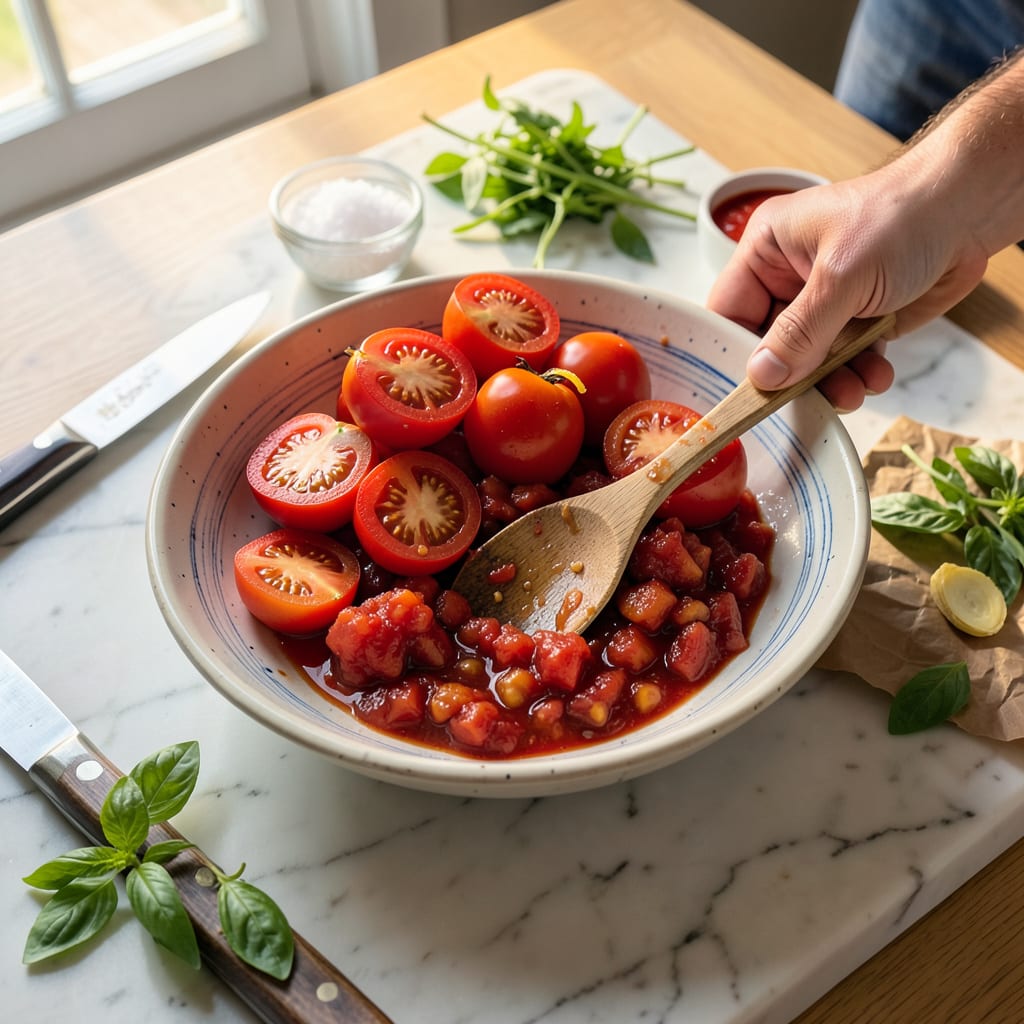
I’ll be real with you—crushing tomatoes by hand changes everything about your sauce. That first time I skipped the canned puree and worked with fresh tomatoes, I understood why Italian nonnas swear by this method. The texture you get from hand-crushing versus blending is night and day, and once you try it, there’s no going back.
Here’s the thing—different tools give you different results. A food mill leaves you with silky smooth sauce minus seeds and skins, while your hands create rustic texture with just the right amount of chunkiness. I’ve burned through my share of blenders trying to get it right, but nothing beats the control you have when you’re crushing by hand. Roma tomatoes are my go-to for their meaty flesh and low water content.
Safety matters too—hot tomatoes splatter like nobody’s business. I learned that lesson the hard way with a fresh batch of marinara all over my kitchen walls. Work in small batches, use a deep bowl, and for heaven’s sake wear an apron. The payoff is worth it: rich, vibrant tomato base that makes store-bought sauce taste like ketchup.
Once crushed, your tomatoes become the foundation for anything—quick marinara, hearty bolognese, or even just a simple base for braising meats. I always crush extra and freeze it in ice cube trays for those nights when I need a shortcut that still tastes homemade. This one technique will upgrade every sauce you make from here on out.
📚 In This Guide
- What You’ll Need
- Instructions
- Tips and Common Mistakes
What Youll Need
- ● Fresh tomatoes: 5–6 lbs (2.3–2.7 kg) of ripe Roma, San Marzano, or vine-ripened tomatoes (the juicier, the better! 🍅).
- ● Large pot or Dutch oven: 6–8 quart capacity (stainless steel or enameled cast iron for even heating).
- ● Food mill, immersion blender, or fine-mesh sieve: For smooth texture (a chinois or food strainer works too!).
- ● Sharp chef’s knife & cutting board: 8–10″ blade for safe, efficient chopping. ⚠️ Dull knives slip—keep it sharp!
- ● Wooden spoon or silicone spatula: Heat-resistant for stirring and mashing.
- ● Bowls (2–3): 1 large (for crushed tomatoes), 1 medium (for skins/seeds).
- ○ Optional but handy: Kitchen scale (for precise measurements).
- ● Lemon juicer (if adding citrus for brightness).
- ● Gloves (if handling hot tomatoes).
- ● Tomato corer (to speed up prep).
- ● Clean jars or airtight containers: For storing sauce (sterilized if canning).
Instructions
Here’s the simple method I use to transform whole tomatoes into velvety smooth sauce every time.
Select and Prepare Your Tomatoes
Start with ripe, meaty tomatoes—Roma or San Marzano varieties work best for sauce. Give them a quick rinse under cool water to remove any dirt or residue. I like to remove the core by cutting a small cone-shaped piece from the stem end, which eliminates that tough, bitter part.
Don’t worry about peeling them yet. The skin actually helps protect the flesh during the initial cooking process. You’ll notice the skins start to wrinkle and separate as they heat up, making them easier to remove later. For about 4 servings of sauce, I typically use 2-3 pounds of fresh tomatoes.
Cook the Tomatoes Until Soft
Place your prepared tomatoes in a large pot or Dutch oven. You don’t need to add any liquid—the tomatoes will release plenty of juice as they cook. Turn the heat to medium-low and cover the pot. Let them simmer gently for 20-25 minutes, stirring occasionally.
You’ll know they’re ready when the tomatoes have completely collapsed and the skins are peeling away from the flesh. I like to use a wooden spoon to press down on them occasionally—this helps release more juice and speeds up the softening process. The kitchen will start smelling wonderfully sweet and tangy, which is your signal that the tomatoes are breaking down properly.
Crush the Tomatoes by Hand
Here’s where the magic happens. Remove the pot from heat and let it cool slightly for 5 minutes. Using either a potato masher or your hands (my preferred method), start crushing the tomatoes right in the pot. The skins should slip right off as you work—just fish them out and discard them.
I find that working the tomatoes between my fingers gives me the best control over texture. You’ll feel the seeds separate from the pulp as you crush—these can stay in for a rustic sauce or be removed for something smoother. Continue until you’ve achieved your desired consistency, whether that’s chunky or nearly smooth.
Reduce to Perfect Sauce Consistency
Return the pot to medium heat and let the crushed tomatoes simmer uncovered. This is where your sauce develops depth of flavor. Cook for 30-45 minutes, stirring occasionally, until the sauce reduces by about one-third and reaches your preferred thickness.
You’ll notice the color deepen to a rich red and the texture become more velvety. I like to tilt the pot slightly—if the sauce coats the bottom and takes a moment to run back, it’s ready. For an ultra-smooth finish, you can blend it briefly with an immersion blender at this stage, though I often leave it slightly textured for that homemade feel.
Season and Finish Your Sauce
Now’s the time to balance the flavors. Start with 1 teaspoon of salt and ½ teaspoon of black pepper, then taste and adjust. I always add a pinch of sugar to counteract any acidity, and a splash of good olive oil at the end for richness. Let the sauce simmer for another 5 minutes after seasoning.
The final sauce should taste bright, balanced, and deeply tomato-forward. You’ll see little flecks of tomato flesh throughout, giving it that fresh, homemade appearance. At this point, your sauce is ready to use immediately or can be cooled and stored for later. I find it develops even more flavor if allowed to sit for a few hours before using.
Tips and Common Mistakes
Transforming fresh tomatoes into velvety sauce is simpler than you think—here’s what I’ve learned from years of perfecting this technique.
Tomato Selection: For the best results, choose ripe but firm Roma or San Marzano tomatoes. Their meaty texture and lower water content create a richer sauce compared to juicier varieties. I’ve found that 2-3 pounds yields about 4 servings, but you can scale up easily—just maintain the same cooking ratios. The skins should be smooth and deep red, indicating full ripeness without being overripe and mushy.
Cooking Technique: In Step 2, that 20-25 minute simmer at medium-low heat is crucial. Don’t rush it by turning up the heat—the gentle cooking allows the tomatoes to break down evenly while preserving their sweetness. I like to press down occasionally with a wooden spoon to help release juices, but avoid stirring too aggressively or you’ll end up with tomato mush instead of intact pieces for crushing.
Texture Control: When reducing the sauce in Step 4, watch for visual cues rather than just the timer. After 30-45 minutes at medium heat, the sauce should coat the back of a spoon and leave a clear trail when you run your finger through it. This is when you’ve achieved that perfect velvety consistency. If it’s still too thin, continue simmering uncovered—just stir more frequently to prevent sticking.
Flavor Development: The final 5-minute simmer after seasoning makes all the difference. This brief cooking time allows the salt, pepper, and any added sugar to fully integrate. I always taste before adding the olive oil—sometimes the tomatoes are naturally sweet enough that you can skip the sugar entirely. The sauce will continue developing flavor as it sits, so don’t be afraid to let it rest for an hour before using.
Pro Tips for Crush Tomatoes For Sauce
- Transforming fresh tomatoes into velvety sauce is simpler than you think—here’s what I’ve learned from years of perfe…
- Tomato Selection: For the best results, choose ripe but firm Roma or San Marzano tomatoes. Their meaty texture and lo…
- Cooking Technique: In Step 2, that 20-25 minute simmer at medium-low heat is crucial. Don’t rush it by turning up the…
Frequently Asked Questions
Do I need to peel tomatoes before crushing them for sauce?
Not always! For ultra-smooth sauce, peeling removes bitterness and improves texture. Quick method: Score an “X” on the bottom, blanch in boiling water for 30 seconds, then plunge into ice water—the skins will slip right off. For rustic sauces, skip peeling and blend well!
Can I use a blender instead of a food mill for crushing tomatoes?
A blender works great for small batches, but pulse in short bursts to avoid over-processing. Pro tip: Strain blended tomatoes through a fine-mesh sieve to remove seeds/skins if you want silky smoothness. Food mills are ideal for large quantities, though. Fresh crushed tomato sauce stays good in the fridge for 5–7 days in an airtight container. For longer storage, freeze for up to 6 months—portion into ice cube trays or freezer bags for easy use. Thaw overnight in the fridge before reheating. Watery sauce usually means excess liquid from the tomatoes. Simmer uncovered on low heat to reduce it, stirring occasionally. For a quick fix, add a splash of tomato paste or let it drain in a colander for 10–15 minutes before cooking. Yes! Canned tomatoes (whole, diced, or crushed) are pre-cooked and softer, so they blend easier. Drain excess juice first if you want thicker sauce. No need to peel—just pulse in a blender or crush with a potato masher for chunkier texture.How long does crushed tomato sauce last in the fridge or freezer?
Why is my crushed tomato sauce watery? How do I fix it?
Can I crush canned tomatoes the same way as fresh?
Now you’ve got the secret to perfectly crushed tomatoes—whether you prefer a rustic texture or silky-smooth sauce! 🍅✨ With just a few simple tools and techniques, you can elevate your homemade sauces, soups, and stews in minutes. No store-bought can compares to the fresh, vibrant flavor of tomatoes you’ve prepped yourself.
Ready to put your new skills to work? Try whipping up a batch of classic marinara or experiment with a bold arrabbiata—your sauce game will never be the same! Don’t forget to save any extras: crushed tomatoes freeze beautifully for future meals. Happy cooking!

Trained in classic French technique but raised on slow-cooked ribs and spicy rubs, she blends culinary skill with smoke and soul.
- Recipe for Boneless Pork Chops in Cast Iron Skillet: Sear and Baste to Juicy Perfection - October 3, 2026
- Recipe for Boneless Cross Rib Roast: Slow-Roasted Beef with Herb Crust - October 3, 2026
- Hamburgers in Sauce Recipe Crock Pot: Slow-Cooked Savory Delight - October 3, 2026