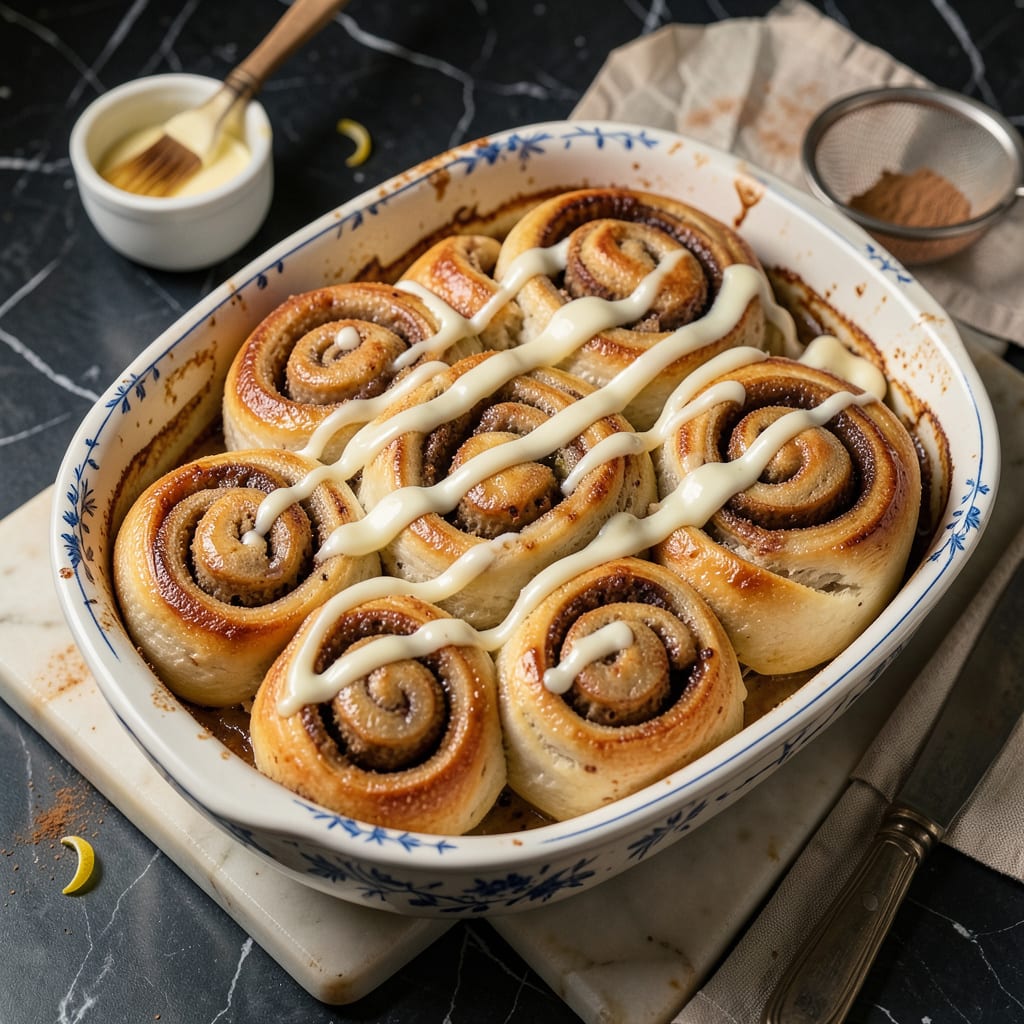
Nothing’s more disappointing than pulling cinnamon rolls from the oven only to find the centers still doughy. I’ve been there—staring at golden tops while the middle stays stubbornly undercooked. But here’s the good news: you can absolutely fix this without starting over. The key is knowing exactly how to finish them without drying out the edges.
First, resist the urge to just shove them back in the oven as-is. That’s how you end up with burnt tops and still-raw centers. Instead, we’ll use a two-step rescue: cover the rolls loosely with foil to protect the already-baked parts, then finish at a lower temperature. This lets the heat penetrate gently while preventing over-browning.
For perfect results, aim for an internal temperature of 190°F—that’s when the dough is fully cooked but still tender. No thermometer? No problem. The rolls should spring back when pressed lightly, and a toothpick should come out clean. If you’re in a rush, a toaster oven or air fryer can work too, but watch them closely.
Once you’ve saved this batch, let’s talk prevention. Next time, check your oven temp with a thermometer (many run hot or cold) and avoid overcrowding the pan. A little extra patience now means no more sad, gooey centers later.
📚 In This Guide
- What You’ll Need
- Instructions
- Tips and Common Mistakes
What Youll Need
- ● Undercooked cinnamon rolls – The star of the show! 🎉 (Quantity depends on your batch size.)
- ● Oven or toaster oven – Preheated to 325°F–350°F (adjust based on your oven’s quirks).
- ● Baking sheet or oven-safe dish – A light-colored pan prevents over-browning. Line with parchment paper for easy cleanup!
- ● Aluminum foil – 1 sheet (to tent rolls and prevent over-browning if needed).
- ○ Oven thermometer (optional but highly recommended) – Ensures your oven isn’t lying about the temp! 🌡️
- ● Toothpick or cake tester – For checking doneness (no guesswork!).
- ● Microwave-safe plate + damp paper towel (alternative method) – If you’re in a rush!
- ● Cooling rack – Lets rolls set without getting soggy.
- ○ Glaze or frosting (optional) – ½ cup powdered sugar + 1–2 tbsp milk/cream (to refresh the topping).
- ● Timer – Your phone works, but a kitchen timer keeps you on track! ⏰
Instructions
Don’t panic—these simple steps will transform your undercooked rolls into perfectly baked treats.
Assess the Situation
First, let’s determine exactly how undercooked your cinnamon rolls are. Press gently on the center of a roll with your fingertip. If it springs back slightly but still feels soft and doughy, they just need a bit more time. If your finger leaves a deep indentation or the dough sticks to it, they’re significantly underdone.
Check the bottoms too—lift one roll carefully with a spatula. If the bottom is pale or gummy, that confirms they need more heat. This quick assessment tells you whether to use the oven method (for slightly underdone) or the covered baking approach (for very raw centers).
Preheat Your Oven Properly
Set your oven to 325°F—this lower temperature prevents the outsides from burning while the centers finish cooking. I’ve found this gentle heat works better than the original 350°F most recipes call for when rescuing undercooked baked goods.
While the oven preheats, transfer your cinnamon rolls to a wire rack if they’re still in the pan. This allows heat to circulate underneath, which is crucial for even cooking. If they’re stuck, run a thin spatula around the edges to loosen them gently. Don’t worry about perfect presentation at this stage—we’re focusing on texture.
Choose Your Rescue Method
For rolls that are just slightly underdone in the center, return them to the oven uncovered on a baking sheet for 8-12 minutes. Watch closely after 8 minutes—you’re looking for the centers to feel firm when pressed and the internal temperature to reach 190°F when checked with an instant-read thermometer.
If your rolls are very doughy throughout, cover the baking sheet tightly with aluminum foil before returning to the oven. This traps steam, creating a gentler cooking environment that mimics the early stages of baking. Bake covered for 10-15 minutes, then uncover and bake 5 more minutes to restore any lost crispness to the tops.
Verify Doneness
The most reliable test is the toothpick method—insert a wooden toothpick into the center of the thickest roll. It should come out clean with no wet dough clinging to it. If you see any moist crumbs, they need 3-5 more minutes in the oven.
Check the color too—properly cooked cinnamon rolls should be golden brown all over, with the swirls of cinnamon filling just beginning to caramelize at the edges. The rolls should feel springy when pressed, not dense or gummy. If the tops are browning too quickly but centers still need time, tent loosely with foil for the remaining baking time.
Add the Finishing Touches
Once perfectly cooked, let the rolls cool for 10 minutes before glazing. This brief rest allows the structure to set so they don’t collapse when you add the icing. Warm your glaze slightly (about 20 seconds in the microwave) so it drizzles smoothly over the rolls.
The final test is in the eating—properly rescued rolls will pull apart cleanly with stretchy, gooey strands between the layers, not raw dough. The centers should be moist but fully cooked through, with that perfect cinnamon-sugar swirl in every bite. Serve warm for the best texture and flavor.
Tips and Common Mistakes
Rescuing undercooked cinnamon rolls is all about patience and precision—here’s what I’ve learned from saving countless batches.
Temperature Strategy: The 325°F setting in Step 2 is absolutely critical. I discovered this lower temperature after burning too many batches at 350°F while trying to salvage undercooked centers. This gentler heat allows the centers to catch up without turning the edges into charcoal. If your oven runs hot, consider reducing to 315°F and adding a couple extra minutes to the 8-12 minute or 10-15 minute baking times mentioned in Step 3.
Assessment Technique: In Step 1, don’t just press the tops—check the bottoms too. I’ve found that rolls can feel firm on top while still being gummy underneath. Use a thin spatula to lift one roll and examine the underside. If it’s pale or sticky, you’ll definitely want to use the covered baking method from Step 3 rather than the uncovered approach. This simple check prevents over-browning while ensuring thorough cooking.
Doneness Verification: The 190°F internal temperature mentioned in Step 3 is your best friend here. I always use an instant-read thermometer because visual cues can be deceiving with cinnamon rolls. Insert it into the center of the thickest roll—if it reads below 190°F, give them the additional 3-5 minutes suggested in Step 4. Remember that carryover cooking will add a few degrees after you remove them from the oven.
Cooling Wisdom: That 10-minute rest in Step 5 isn’t just about preventing collapsed rolls—it’s when the magic happens. The residual heat continues to gently cook the centers while the structure sets. If you glaze too soon, you’ll trap steam that makes the rolls soggy. I set a timer for exactly 10 minutes and use that time to warm my glaze for those perfect 20 seconds in the microwave.
Pro Tips for Fix Undercooked Cinnamon Rolls
- Rescuing undercooked cinnamon rolls is all about patience and precision—here’s what I’ve learned from saving countles…
- Temperature Strategy: The 325°F setting in Step 2 is absolutely critical. I discovered this lower temperature after b…
- Assessment Technique: In Step 1, don’t just press the tops—check the bottoms too. I’ve found that rolls can feel firm…
Frequently Asked Questions
Can I microwave undercooked cinnamon rolls to finish them?
Yes! Microwaving works in a pinch—place rolls on a microwave-safe plate, cover with a damp paper towel, and heat in 10-15 second bursts until warm (usually 30-60 seconds total). Warning: This can make them rubbery, so avoid overdoing it. Best for single servings!
How do I know if my cinnamon rolls are undercooked?
Check the center: If it’s gooey, pale, or gummy (not just soft), they’re underdone. A toothpick should come out with moist crumbs, not wet batter. Pro tip: Tap the pan—if it sounds hollow, they’re likely done!
Can I rebake cinnamon rolls the next day?
Store them in the fridge overnight, then rebake at 300°F (150°C) for 5-10 minutes, covered with foil to prevent drying. Add a splash of milk or butter on top to revive moisture. Best eaten within 2 days.
What if my cinnamon rolls are undercooked but the edges are burnt?
Trim the burnt edges, then cover the pan tightly with foil and bake at 275°F (135°C) for 8-12 minutes. The steam will gently cook the center without burning further. Alternatively, scoop out the middle and bake just the dough in a ramekin!
Is there a no-oven fix for undercooked cinnamon rolls?
Try the skillet method: Heat a nonstick pan on low, add rolls, cover with a lid, and cook for 3-5 minutes per side. Or use an air fryer (300°F for 3-4 minutes). Both mimic baking but require close watching to avoid drying out!
Don’t let undercooked cinnamon rolls ruin your baking win! 🎉 With a few simple fixes—like rebaking, air-frying, or even microwaving—you can turn that doughy disappointment into perfectly fluffy, golden rolls in no time. Remember, a quick temperature check and a little patience go a long way.
Now that you’ve mastered the rescue, why not prevent the issue next time? Try adjusting your oven temp or using an oven thermometer for foolproof results. Happy baking—and enjoy every gooey, cinnamon-sweet bite! 🍥

Trained in classic French technique but raised on slow-cooked ribs and spicy rubs, she blends culinary skill with smoke and soul.
- Recipe for Boneless Pork Chops in Cast Iron Skillet: Sear and Baste to Juicy Perfection - October 3, 2026
- Recipe for Boneless Cross Rib Roast: Slow-Roasted Beef with Herb Crust - October 3, 2026
- Hamburgers in Sauce Recipe Crock Pot: Slow-Cooked Savory Delight - October 3, 2026