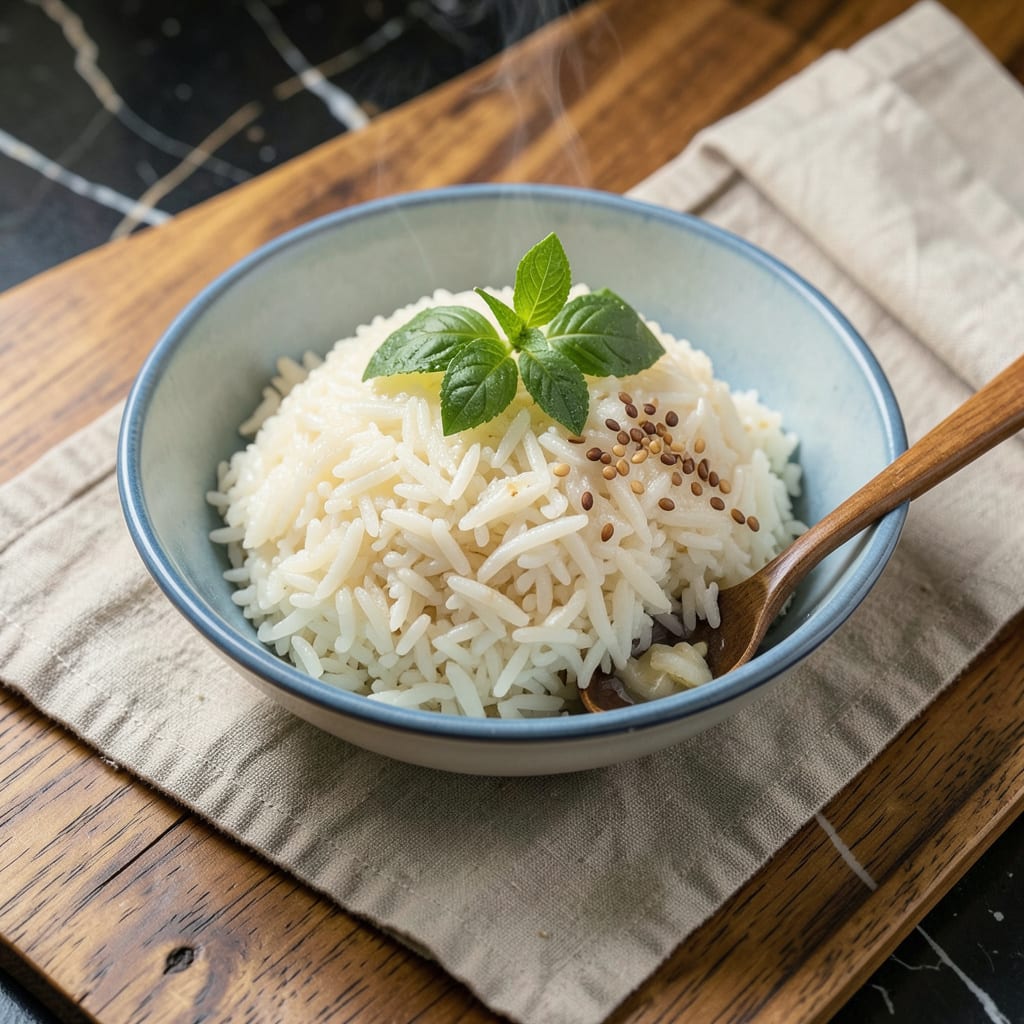
Here’s the thing—you don’t need fancy equipment to make perfect steamed rice at home. I’ve been cooking rice in regular pots for years, and the secret is all about the right water ratio and heat control. No steamer? No problem. This method works with just a pot and lid you already own.
What makes this technique foolproof is the 1:1.5 rice-to-water ratio (1 cup rice to 1.5 cups water) and a simple trick: bring to a boil, then immediately reduce to the lowest simmer. I learned this during my first apartment days when all I had was a beat-up pot and a dream of fluffy rice.
You’ll end up with separate, tender grains every time—no mushy clumps or undercooked centers. The rice absorbs all the water while steam finishes the cooking, creating that perfect texture. I’ve tested this with basmati, jasmine, and even short-grain rice with consistent results.
Bonus: you can easily infuse flavor by swapping water for broth or adding aromatics like garlic or bay leaves. Let’s get that rice cooking—it’s simpler than you think.
📚 In This Guide
- What You’ll Need
- Instructions
- Tips and Common Mistakes
What Youll Need
- ● Rice: 1 cup white long-grain rice (jasmine or basmati work best) or short-grain rice (for stickier results). Rinse until water runs clear!
- ● Water: 1½ cups cold water (adjust to 1:1.5 rice-to-water ratio; see tips for variations).
- ● Pot: 1 medium-sized pot (2–3 quarts) with a tight-fitting lid (glass lids let you peek without lifting!).
- ● Stovetop: Gas, electric, or induction—just ensure even heat distribution.
- ○ Salt (optional): ¼ tsp to enhance flavor.
- ○ Oil/Butter (optional): ½ tsp to prevent sticking (great for short-grain rice).
- ● Timer: A phone or kitchen timer to nail the 12–15 minute cook time.
- ○ Fork (optional): For fluffing rice post-steam (avoid spoons—they mash grains!).
- ○ Clean kitchen towel (optional): Helps absorb excess moisture if resting rice off-heat.
Instructions
Making perfect steamed rice without special equipment is easier than you think—here’s my foolproof method.
Rinse and Soak the Rice
Start by placing your rice in a fine-mesh strainer and rinsing it under cold running water. I like to swirl the rice with my fingers while rinsing to ensure every grain gets cleaned. You’ll notice the water running cloudy at first—that’s the excess starch washing away.
Continue rinsing until the water runs nearly clear, which usually takes about 1-2 minutes. This step is crucial because removing the surface starch prevents gummy, sticky rice. After rinsing, transfer the rice to a bowl and cover it with 1 inch of water above the rice level. Let it soak for 20-30 minutes—this allows the grains to absorb moisture evenly for more uniform cooking.
Measure Water Precisely
After soaking, drain the rice completely in the strainer. For perfect results, I use a 1:1.5 rice-to-water ratio (1 cup rice to 1.5 cups water). This ratio works beautifully for most white rice varieties. Transfer the drained rice to a heavy-bottomed pot with a tight-fitting lid.
Add the measured water and give it a quick stir to distribute the rice evenly. Here’s the thing—I always use my finger to check the water level. Place your fingertip on top of the rice; the water should come up to your first knuckle. This old trick ensures perfect hydration regardless of your pot’s shape.
Cook with the Absorption Method
Place the pot over medium-high heat and bring the water to a rolling boil. You’ll see bubbles breaking the surface consistently—that’s your signal. Once boiling, immediately reduce the heat to low, cover the pot with the lid, and set your timer for 15 minutes.
Don’t be tempted to peek during this time. The steam building inside is what cooks the rice perfectly. I know it’s hard to resist, but trust me—every time you lift that lid, you’re letting out precious steam that could be cooking your rice. After 15 minutes, turn off the heat but leave the pot covered.
Rest and Fluff for Perfect Texture
Let the rice sit covered for an additional 10 minutes off the heat. This resting period is just as important as the cooking time itself. It allows the steam to finish cooking the rice gently and helps the grains firm up slightly for that perfect fluffy texture.
After resting, remove the lid and use a fork to gently fluff the rice from the bottom up. I like to make a cross-hatch pattern with my fork—this separates the grains without crushing them. You’ll see beautiful, distinct rice grains that are tender but not mushy. Serve immediately while hot for the best texture.
Tips and Common Mistakes
Perfect rice comes down to technique, not fancy equipment. Here’s what I’ve learned from making countless batches.
Rinsing is Non-Negotiable: Those 1-2 minutes of rinsing in Step 1 make all the difference. I’ve tested this side-by-side—unrinsed rice always comes out gummy. Swirl the grains vigorously under cold water until it runs nearly clear. This removes excess starch that would otherwise make your rice sticky rather than fluffy. Trust me, it’s worth the extra effort.
The Soaking Secret: Don’t skip the 20-30 minute soak in Step 1. This isn’t just idle time—it allows the rice grains to absorb moisture evenly before cooking. I’ve found that properly soaked rice cooks more uniformly and results in that perfect tender-yet-firm texture we’re after. Set a timer so you don’t forget this crucial step.
Heat Control Matters: When you bring the water to a boil over medium-high heat in Step 3, watch carefully. The moment you see consistent bubbles breaking the surface, immediately reduce to low heat. This quick transition prevents the rice from cooking too fast on the outside while remaining undercooked inside. Maintain that gentle simmer for the full 15 minutes—no peeking!
Resting is Part of Cooking: The 10-minute rest in Step 4 isn’t optional downtime. This is when the rice finishes absorbing moisture and the grains firm up slightly. I always set my timer for this final rest—it’s tempting to fluff the rice immediately, but patience here ensures each grain stays separate and perfectly textured when you finally serve it.
Pro Tips for Make Steamed Rice Without A Steamer
- Perfect rice comes down to technique, not fancy equipment. Here’s what I’ve learned from making countless batches.
- Rinsing is Non-Negotiable: Those 1-2 minutes of rinsing in Step 1 make all the difference. I’ve tested this side-by-s…
- The Soaking Secret: Don’t skip the 20-30 minute soak in Step 1. This isn’t just idle time—it allows the rice grains t…
Frequently Asked Questions
Can I use any type of pot to steam rice without a steamer?
Yes! A heavy-bottomed pot with a tight-fitting lid works best (like stainless steel or enameled cast iron). Avoid thin pots—they burn rice easily. A deep pot prevents water from boiling over, so aim for at least 2–3 inches of headspace above the rice.
How long does it take to steam rice in a pot vs. a rice cooker?
Pot-steamed rice typically takes 15–20 minutes (plus 10 minutes resting), similar to a rice cooker. The key is maintaining a low, steady simmer—no peeking! High heat speeds it up but risks burnt or unevenly cooked grains.
What’s the best rice-to-water ratio for pot-steamed rice?
Use a 1:1.5 ratio (1 cup rice to 1.5 cups water) for white rice. For brown rice, increase to 1:2. Pro tip: Rinse rice first to remove excess starch—this prevents gummy texture!
My rice turned out mushy/undercooked. How do I fix it next time?
Mushy? Reduce water by 2–3 tablespoons or simmer uncovered for 1–2 minutes to evaporate excess. Undercooked? Add 2 tbsp hot water, cover, and cook 5 more minutes on low. Never stir while cooking—it releases starch and makes rice sticky!
Can I add flavor to the rice while steaming it in a pot?
Swap water for broth, or add a bay leaf, garlic cloves, or a splash of coconut milk to the cooking liquid. For extra aroma, toast the rice in the pot with oil for 1–2 minutes before adding liquid.
Who knew perfect steamed rice without a steamer could be this simple? 😊 With just a pot, water, and a few easy tricks—like the right water ratio and a quick rest—you’re now ready to whip up fluffy, restaurant-quality rice anytime. No fancy tools needed!
Ready to put your new skills to the test? Grab that rice and try it out tonight—your next stir-fry or curry is waiting for its ideal partner! For extra flavor, experiment with broth or herbs in your next batch. Happy cooking! 🍚✨

Trained in classic French technique but raised on slow-cooked ribs and spicy rubs, she blends culinary skill with smoke and soul.
- Recipe for Boneless Pork Chops in Cast Iron Skillet: Sear and Baste to Juicy Perfection - October 3, 2026
- Recipe for Boneless Cross Rib Roast: Slow-Roasted Beef with Herb Crust - October 3, 2026
- Hamburgers in Sauce Recipe Crock Pot: Slow-Cooked Savory Delight - October 3, 2026