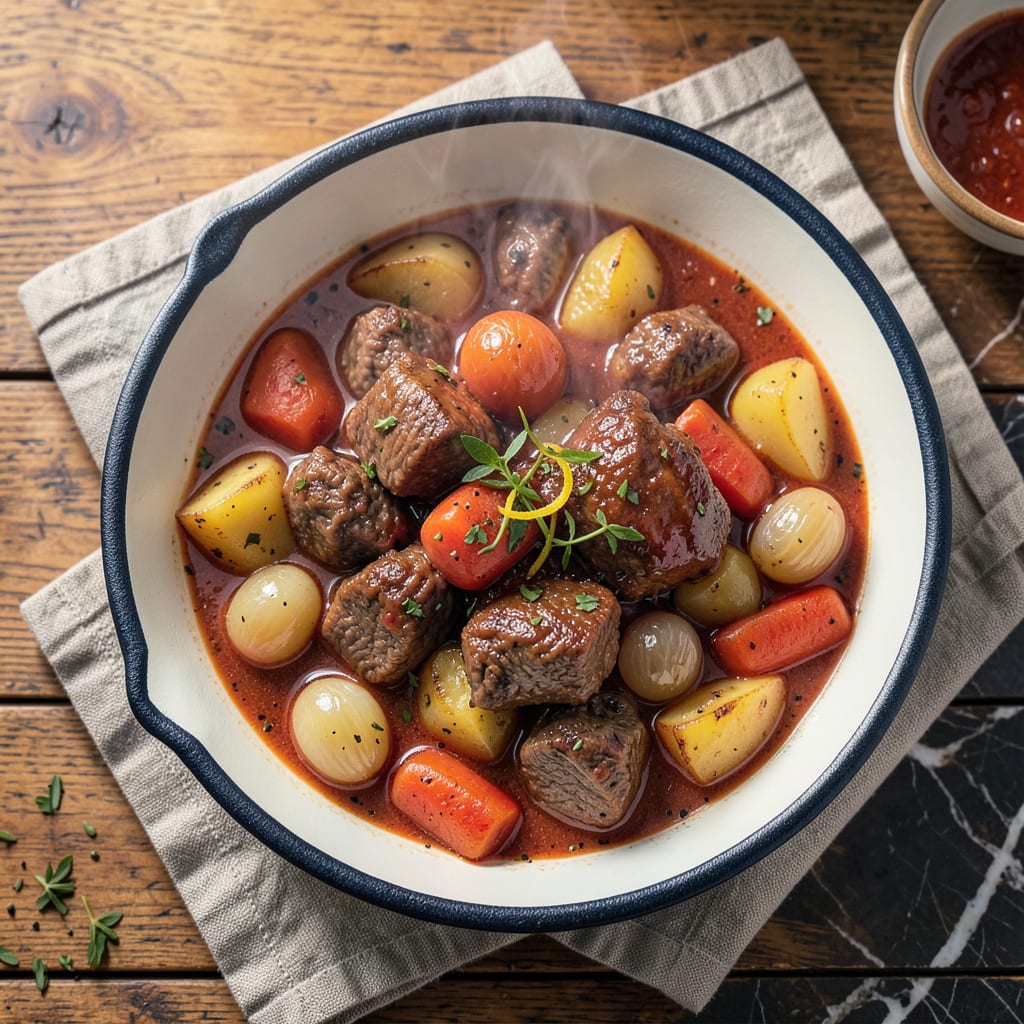
Thaw frozen beef stew overnight in the fridge, then reheat gently on the stovetop over medium-low heat, stirring occasionally. For best texture, add a splash of broth or water and cover the pot. Microwave in 1-minute intervals if in a hurry, stirring between each.
I’ve learned through years of cooking that the key to perfect reheated stew lies in patience and moisture control. 🔥 When you rush the process with high heat, the meat fibers contract and squeeze out their juices, leaving you with tough, dry chunks. That splash of liquid isn’t just for texture—it actually helps redistribute flavors that concentrate during freezing. The covered pot creates a mini steam environment that gently coaxes the vegetables back to life without turning them to mush.
What most people overlook is how freezing alters the stew’s structure. 💫 The ice crystals that form can burst cell walls in the vegetables and separate collagen from meat. That’s why the gradual fridge thaw and gentle reheating are non-negotiable—they give everything time to reabsorb moisture and rebuild those flavor connections.
💡 In This Article
- Why Thawing and Low Heat Preserve Beef Stew Quality
- Best Tools and Containers for Reheating Beef Stew
Why Thawing and Low Heat Preserve Beef Stew Quality
When beef stew freezes, ice crystals form between muscle fibers and vegetable cell walls. These crystals act like tiny knives, rupturing membranes and causing moisture loss. The slow fridge thaw (typically 12-24 hours) allows these damaged cells to gradually reabsorb liquid.
🔥 Rapid thawing in warm water forces proteins to contract suddenly, squeezing out precious juices that give stew its rich mouthfeel. I’ve seen this firsthand when comparing fridge-thawed vs. counter-thawed batches—the difference in meat tenderness is staggering.
The magic of low heat (medium-low setting, around 250-300°F) lies in how it treats collagen. Beef stew’s connective tissues need gentle coaxing to melt back into gelatin—the glue that gives stew its luscious body. High heat causes these proteins to seize up, creating that dreaded chewy texture.
💫 Vegetables benefit too: carrots and potatoes that were once mealy regain structure as their pectin slowly rehydrates. The covered pot traps steam, creating a 95% humidity environment that prevents surface drying while allowing flavors to recombine.
Microwave reheating demands a different approach because of how microwaves excite water molecules. Continuous heating creates hot spots that can bring portions to 212°F while others remain cold. The 1-minute burst method with stirring evens out temperature distribution, preventing the “rubber band” effect in meat where outer layers overcook while centers stay chilled.
I always add 2-3 tablespoons of liquid before microwaving to compensate for the 15-20% moisture loss that occurs during freezing.
Here’s what most recipes don’t tell you: the maillard reactions from the original cooking are fragile. Reheating above 325°F risks breaking down these complex flavor compounds. That’s why you’ll notice professionally reheated stews maintain their depth while hurried versions taste flat.
The gradual approach also gives spices time to re-bloom—their essential oils redistribute through the liquid rather than evaporating off with aggressive heat.
Pro tip from my test kitchen: Let reheated stew rest 5-10 minutes before serving. This allows the proteins to relax and reabsorb any expelled juices.
🌟 You’ll be amazed how this simple step transforms the texture from “just reheated” to “freshly made.” The temperature equalizes too, so you won’t burn your mouth on that first eager spoonful while the bottom stays lukewarm.
- Fridge thaw time: 24 hours for quarts, 12 hours for pints
- Ideal reheat temp: 165°F internal (use a thermometer!)
- Liquid ratio: ¼ cup per 2 cups stew to compensate for freezing
- Stirring frequency: Every 3-4 minutes for even heat distribution
The science confirms what grandmas knew all along: good food can’t be rushed. That slow reheat isn’t just about safety—it’s about rebuilding the complex matrix of flavors and textures that made the stew wonderful in the first place. ✨ When you respect the process, even leftovers can taste like they were made with love today.

Trained in classic French technique but raised on slow-cooked ribs and spicy rubs, she blends culinary skill with smoke and soul.
- Recipe for Boneless Pork Chops in Cast Iron Skillet: Sear and Baste to Juicy Perfection - October 3, 2026
- Recipe for Boneless Cross Rib Roast: Slow-Roasted Beef with Herb Crust - October 3, 2026
- Hamburgers in Sauce Recipe Crock Pot: Slow-Cooked Savory Delight - October 3, 2026