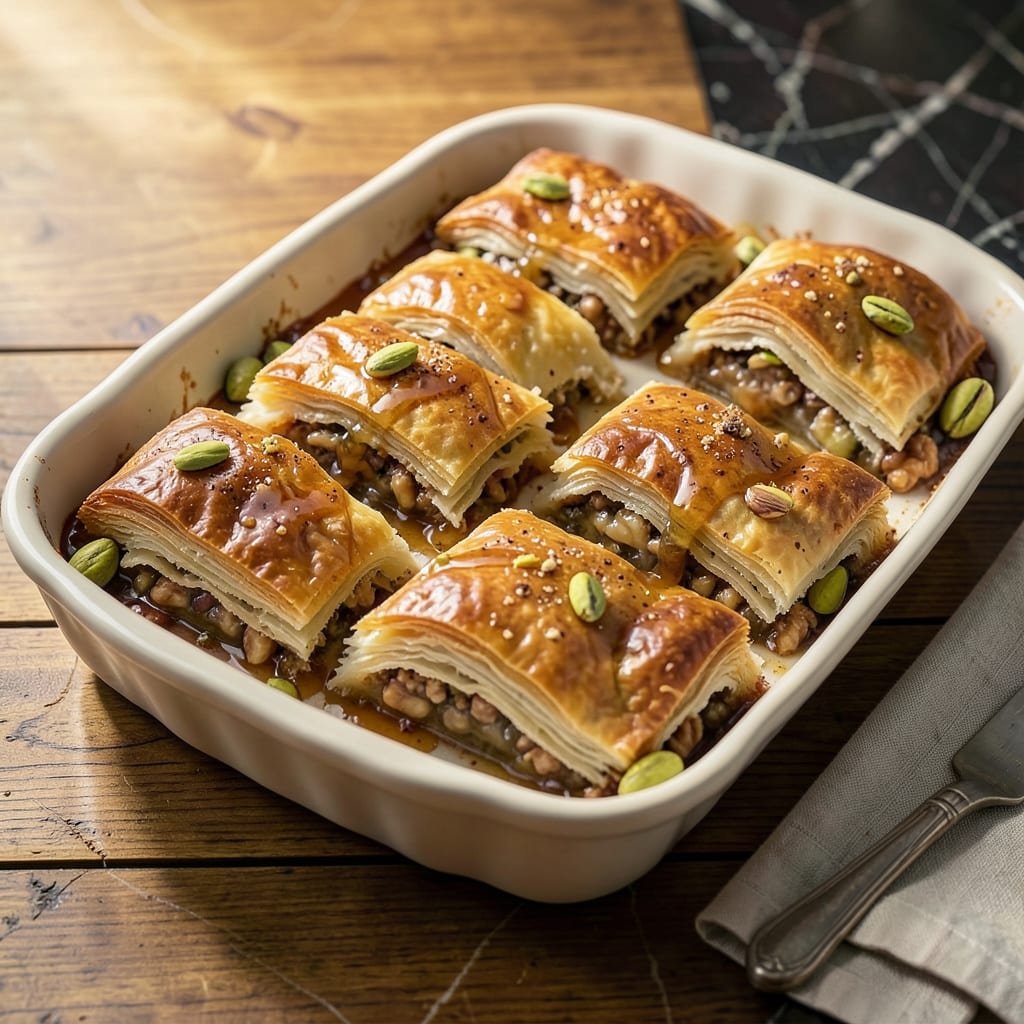
Nothing ruins perfect baklava faster than improper overnight storage. I’ve seen too many beautiful trays turn into soggy disappointments by morning. The secret isn’t just where you store it, but how you prepare it for that overnight rest. That first bite should still deliver crispy layers and sticky sweetness, not a mushy mess.
Here’s the thing—baklava needs to breathe, but not too much. I always let mine cool completely (at least 2 hours) before even thinking about storage. Warm baklava creates condensation, which is enemy number one for crispy phyllo. Once cooled, choose your container wisely: airtight is good, but leaving a tiny gap lets excess moisture escape without drying it out.
The syrup question gets tricky overnight. Between you and me, I store mine with the syrup already poured—just make sure it’s fully absorbed before covering. If your baklava sits in a pool of syrup, those bottom layers will turn to mush. A quick fix for morning revival? Pop it in a 300°F oven for 5-7 minutes to crisp up any softened layers.
Room temperature works best for most baklava, but if your kitchen runs warm, the fridge is safer. Just bring it back to room temp before serving—cold baklava loses that signature flaky texture. Whether you’re prepping for breakfast or a party, these steps guarantee baklava that tastes freshly made, not sadly stored.
📚 In This Guide
- What You’ll Need
- Instructions
- Tips and Common Mistakes
What Youll Need
- ● Baklava: Your freshly made or store-bought baklava (any quantity). 🍯
- ● Air-tight container: A clean, dry container with a snug lid (preferably glass or BPA-free plastic). Choose a size that fits your baklava without overcrowding.
- ● Parchment paper or wax paper: 1–2 sheets to layer between baklava and container (prevents sticking).
- ○ Paper towels (optional): 1–2 sheets to absorb excess moisture if your baklava is extra syrupy.
- ○ Aluminum foil (optional): For wrapping individual pieces if storing in bulk or freezing.
- ● Cooling rack (prerequisite): Ensure baklava is completely cooled (2+ hours) before storing to avoid sogginess.
- ● Refrigerator space: A flat shelf or section to keep the container level (prevents syrup pooling).
- ○ Labels & marker (optional): To date your container if storing longer than overnight.
Instructions for Storing Baklava Overnight
Here’s exactly how to preserve that perfect texture and flavor until morning.
Let the Baklava Cool Completely
After baking, allow your baklava to cool at room temperature for at least 2 hours. I know it’s tempting to cover it while still warm, but trapped steam creates soggy layers. The phyllo needs to become completely firm to the touch before storing.
You’ll notice the syrup will be fully absorbed when the baklava is properly cooled. The top should feel dry to the touch, not sticky. This cooling period is crucial – it prevents condensation from forming inside your storage container later.
Choose the Right Storage Container
Select an airtight container that’s just large enough to hold your baklava in a single layer. I prefer glass containers with snap-tight lids, but any food-safe container with a good seal will work. The key is minimizing empty space to reduce air exposure.
If you don’t have a perfect-sized container, line a larger one with paper towels first. The towels will absorb any minimal moisture that might escape. Avoid plastic wrap directly on the baklava – it can stick and tear the delicate layers when removed.
Layer with Parchment Paper for Protection
Place a sheet of parchment paper in the bottom of your container before adding the baklava. If stacking layers, put parchment between each level. This creates a protective barrier that maintains the crisp texture of the phyllo.
I’ve found that wax paper can sometimes stick to the syrup, so parchment works better. Make sure the paper extends slightly beyond the baklava edges to fully protect the sides. This simple step makes a noticeable difference in morning freshness.
Store at Room Temperature
Contrary to what you might expect, baklava stores best at room temperature. The refrigerator’s humidity will soften the phyllo layers. Choose a cool, dark spot in your kitchen away from direct sunlight or heat sources.
Your stored baklava will keep perfectly for up to 3 days this way. The flavors actually improve overnight as the syrup continues to meld with the nuts. Just make sure your storage spot maintains a consistent temperature – no drafty areas or near appliances that cycle on and off.
Revive Before Serving (If Needed)
In the morning, check your baklava. If it feels slightly soft, place the pieces on a wire rack and warm in a 200°F oven for 5-10 minutes. This gentle heat will restore the crispness without drying it out.
For individual pieces, you can use the microwave for just 10-15 seconds on a microwave-safe plate. Watch closely – you want to warm it just enough to refresh the texture. The syrup should glisten but not bubble when properly revived.
Tips and Common Mistakes
Storing baklava overnight requires attention to detail—here’s what I’ve learned from years of trial and error.
The Cooling Factor: Those 2 hours of cooling time in Step 1 aren’t just a suggestion—they’re critical. I once rushed this step and ended up with soggy layers that ruined the texture. The phyllo needs to become completely firm before storing, otherwise trapped steam will create condensation that softens the crisp layers. Trust me, set a timer and walk away.
Container Selection: When choosing your storage container in Step 2, avoid anything with even small gaps in the seal. I’ve found that glass containers with snap-tight lids work best because they create an airtight environment without compressing the delicate layers. If you must use plastic, double-check that the lid creates a complete seal when pressed down.
Parchment Paper Technique: In Step 3, don’t just place parchment under the baklava—make sure it extends beyond the edges by at least an inch. This extra coverage protects the sides from air exposure, which is where crispness is often lost first. I also recommend cutting the parchment to fit snugly against the container walls for maximum protection.
Revival Strategy: For Step 5, when using the 200°F oven method to revive your baklava, place pieces on a wire rack rather than directly on a baking sheet. This allows air to circulate completely around each piece, restoring crispness evenly. Watch closely during those 5-10 minutes—you want warmth, not additional baking.
Pro Tips for Store Baklava Overnight
- Storing baklava overnight requires attention to detail—here’s what I’ve learned from years of trial and error.
- The Cooling Factor: Those 2 hours of cooling time in Step 1 aren’t just a suggestion—they’re critical. I once rushed …
- Container Selection: When choosing your storage container in Step 2, avoid anything with even small gaps in the seal….
Frequently Asked Questions
Here are the most common questions about storing baklava overnight—answered!
Can I leave baklava out overnight instead of refrigerating it?
Yes, but only if your kitchen is cool (below 70°F). Cover it tightly with plastic wrap or foil to prevent drying. For hot/humid climates, refrigeration is safer to avoid soggy phyllo or spoilage.
How do I fix soggy baklava after storing it overnight?
Re-crisp it in a 300°F oven for 5–10 minutes! Place slices on a wire rack to let air circulate. Avoid microwaving—it’ll make the phyllo rubbery. Pro tip: Store with a paper towel layer to absorb excess moisture next time.
Is it better to store baklava in the fridge or at room temperature?
Room temp (in an airtight container) keeps it crispest for 1–2 days. Refrigerate for 3–4 days if your home is warm or you’ve added dairy-based syrups. Always bring chilled baklava to room temp before serving for the best texture!
Can I freeze baklava instead of storing it overnight?
Absolutely! Freeze slices in a single layer on a tray, then transfer to a sealed container for up to 3 months. Thaw at room temp (2–3 hours) before serving—no reheating needed! Perfect for make-ahead desserts.
Why does my baklava get hard after storing overnight?
Over-exposure to air dries out the phyllo. To prevent this, press plastic wrap directly onto the surface before sealing the container. If it’s already hard, brush lightly with simple syrup and warm briefly in the oven.
Storing baklava overnight doesn’t have to be tricky—just keep it airtight, cool, and dry to lock in that perfect flaky texture and sweet flavor! 🌟 Whether you choose room temperature, the fridge, or even the freezer, the right method ensures your treat stays as delicious as the day it was made.
Now that you’re a baklava-storage pro, why not whip up a fresh batch to test your skills? Share your favorite storage hack—or your go-to baklava recipe—in the comments below! 🍯✨

Trained in classic French technique but raised on slow-cooked ribs and spicy rubs, she blends culinary skill with smoke and soul.
- Recipe for Boneless Pork Chops in Cast Iron Skillet: Sear and Baste to Juicy Perfection - October 3, 2026
- Recipe for Boneless Cross Rib Roast: Slow-Roasted Beef with Herb Crust - October 3, 2026
- Hamburgers in Sauce Recipe Crock Pot: Slow-Cooked Savory Delight - October 3, 2026