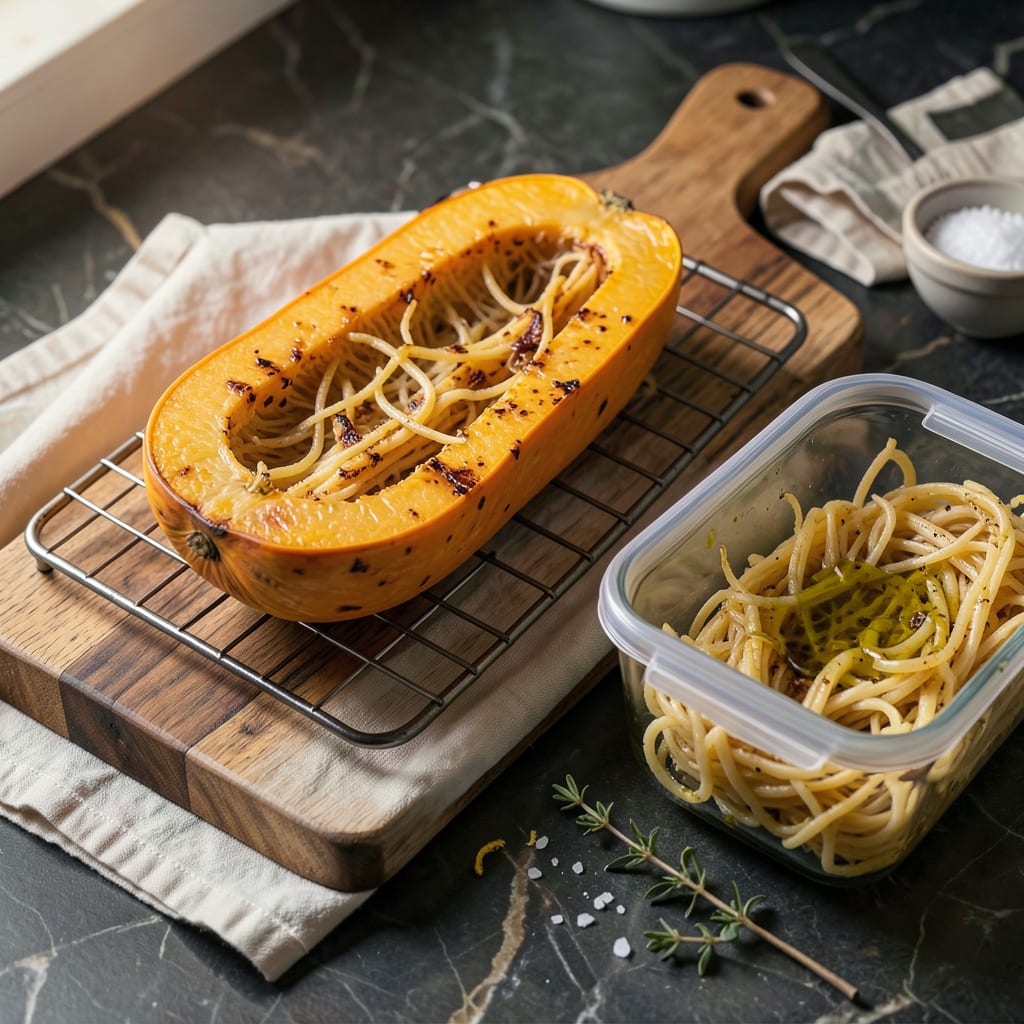
I’ll be real with you—cooked spaghetti squash is a meal prep game-changer, but only if you store it right. Too many times I’ve pulled out a container of mushy, waterlogged squash that went bad too soon. After burning through more batches than I’d like to admit, I finally cracked the code for keeping it fresh and ready to use.
Here’s the thing: refrigeration works great for short-term storage, but you’ve got to handle it properly. Cool the squash completely before sealing it in airtight containers—this prevents condensation that turns your strands to mush. It’ll stay good for 4-5 days this way, perfect for quick weeknight meals when you’re short on time.
For longer storage, freezing is your best bet. Spread the cooked strands on a tray first to freeze individually before bagging. This prevents clumping and lets you grab just what you need. Properly frozen, it keeps for 3 months without losing texture. The key is thawing it in the fridge overnight—not the microwave—to maintain that perfect al dente bite.
Whether you’re tossing it into stir-fries, mixing into casseroles, or just reheating with butter and herbs, stored spaghetti squash saves dinner when you’re in a pinch. No more wasted squash or last-minute takeout runs. Here’s exactly how to make it last.
📚 In This Guide
- What You’ll Need
- Instructions
- Tips and Common Mistakes
What Youll Need
- ● Cooked spaghetti squash – 1 whole (or ~4 cups of strands, cooled to room temperature)
- ● Air-tight containers – BPA-free, glass or plastic (with secure lids; e.g., 16–32 oz capacity)
- ○ Plastic wrap or aluminum foil – For extra sealing (optional but helpful for freezer storage)
- ● Parchment paper or wax paper – 1–2 sheets (to prevent sticking if layering)
- ● Freezer-safe bags – Quart-sized, heavy-duty (if freezing; e.g., Ziploc® or reusable silicone bags)
- ● Permanent marker – 1 (for labeling dates on containers/bags)
- ○ Measuring cups/spoons – For portioning (optional but handy for meal prep)
- ● Cooling rack – 1 (to speed up cooling before storage)
- ● Paper towels – 2–3 sheets (to pat dry excess moisture for longer freshness)
- ○ Vacuum sealer – Optional (for extended freezer life, if available)
Step-by-Step Instructions for Storing Cooked Spaghetti Squash
This simple method ensures your cooked squash stays fresh, flavorful, and ready for quick meals all week long.
Cool the Squash Completely Before Handling
After cooking your spaghetti squash, let it cool at room temperature for at least 30 minutes. I like to place it on a wire rack to allow air circulation underneath, which speeds up the cooling process. This step is crucial because trapping heat creates condensation, which leads to soggy squash.
You’ll know it’s ready when the squash feels cool to the touch and the strands separate easily with a fork. Don’t rush this step—patience here prevents mushy results later. If you’re short on time, you can place the whole squash in the refrigerator for 15-20 minutes to speed up cooling.
Remove and Drain the Strands Properly
Once cooled, cut the squash in half lengthwise if you haven’t already. Use a fork to scrape out the strands into a colander set over a bowl. I’ve found that working from the outer edges toward the center gives you the longest, most uniform strands.
Let the strands drain for 5-10 minutes to remove excess moisture. You’ll notice liquid collecting in the bowl—this is normal! Gently press on the strands with a paper towel to absorb any remaining moisture. The drier your squash, the better it will store and reheat.
Portion and Package for Optimal Freshness
Divide the drained strands into meal-sized portions—about 1 cup per serving works well for most recipes. I like to use airtight glass containers for storage, as they don’t absorb odors and are microwave-safe. Leave about ½ inch of headspace in each container to allow for expansion.
For best results, line your containers with a paper towel before adding the squash. This absorbs any residual moisture during storage. If using plastic bags, squeeze out all the air before sealing to prevent freezer burn. Label each container with the date—cooked spaghetti squash keeps beautifully for 4-5 days in the fridge or 8-10 months in the freezer.
Store Using the Right Method for Your Needs
For short-term storage (up to 5 days), place your containers in the refrigerator. The squash will maintain its texture best when stored in the main body of the fridge rather than the door, where temperature fluctuates more. I’ve found that refrigerated squash works perfectly in cold dishes like salads or can be quickly reheated.
For long-term storage, freeze the portions flat on a baking sheet for 1-2 hours before transferring to the freezer. This prevents the strands from clumping together. When ready to use, thaw overnight in the refrigerator or microwave directly from frozen with a splash of water. The texture remains surprisingly similar to fresh!
Reheat with Care to Preserve Texture
When ready to enjoy your stored squash, reheat it gently to maintain the perfect al dente texture. For refrigerated squash, microwave in 30-second intervals, stirring between each, until just heated through. I like to add a teaspoon of water and cover the dish to create steam.
Frozen squash benefits from being thawed in the refrigerator overnight first. Reheat it in a skillet over medium-low heat with a little olive oil or butter, stirring occasionally until warmed. You’ll be amazed at how well it holds its texture! Avoid overcooking, as this can make the strands mushy—stop heating as soon as it’s warm.
Tips and Common Mistakes for Perfectly Stored Spaghetti Squash
Let me share the game-changing secrets I’ve learned through years of meal prepping—these little details make all the difference in keeping your squash fresh and delicious!
Moisture Control is Everything: In Step 2, when you’re draining the strands for those 5-10 minutes, here’s what nobody tells you—use a clean kitchen towel instead of paper towels for pressing. The towel absorbs more moisture without leaving fibers behind, and you can really wring out the squash by gathering the corners and twisting. This extra step prevents that dreaded watery texture when you reheat!
Portioning Pro Tip: The 1 cup per serving recommendation in Step 3 is perfect for most recipes, but here’s my trick: use a measuring cup to pack the squash into your containers, then press down gently. This removes air pockets and helps maintain that perfect al dente texture during storage. I also love using small mason jars—they stack beautifully and you can see exactly what’s inside!
Freezing Like a Pro: During Step 4’s freezing process, don’t skip that 1-2 hours of initial freezing on the baking sheet! This is your secret weapon against icy clumps. For even better results, spread the strands in a thin, even layer—no thicker than your pinky finger. You’ll get perfectly separated strands that reheat just like fresh. I’ve found this makes the difference between sad, mushy squash and restaurant-quality texture months later!
Reheating Revelation: When you’re reheating in Step 5, that medium-low heat is non-negotiable for frozen squash! Here’s why: higher heat causes the cell walls to burst, releasing all that moisture you worked so hard to remove. I always add just a pat of butter—it coats the strands and helps maintain that beautiful texture. Trust me, your patience will be rewarded with squash that tastes freshly cooked!
Pro Tips for Store Cooked Spaghetti Squash
- Let me share the game-changing secrets I’ve learned through years of meal prepping—these little details make all the …
- Moisture Control is Everything: In Step 2, when you’re draining the strands for those 5-10 minutes, here’s what nobod…
- Portioning Pro Tip: The 1 cup per serving recommendation in Step 3 is perfect for most recipes, but here’s my trick: …
Frequently Asked Questions
Can I freeze cooked spaghetti squash for later use?
Freeze it in airtight containers or freezer bags for up to 8 months. First, let it cool completely, then portion it out (squeeze out excess moisture to avoid ice crystals). Thaw overnight in the fridge before reheating—it works great in soups, casseroles, or stir-fries!
How long does cooked spaghetti squash last in the fridge?
Stored properly in an airtight container, it stays fresh for 4–5 days. For best texture, reheat it gently in a skillet with a splash of water or microwave it covered. If it smells sour or gets slimy, toss it—better safe than sorry!
What’s the best way to reheat stored spaghetti squash without it getting mushy?
Skip the microwave if you can! Sauté it in a pan over medium heat with a little olive oil or butter for 3–5 minutes. For oven reheating, spread it on a baking sheet at 350°F (175°C) for 10–12 minutes—this keeps the strands firmer.
Can I store spaghetti squash with sauce already mixed in?
You can, but it’s riskier. Sauces (especially tomato-based) can make the squash soggy faster. Store them separately and combine when reheating for better texture. If you must mix, freeze it and use within 2–3 months for best quality.
Why did my stored spaghetti squash turn watery? How do I fix it?
Excess moisture is the culprit! After cooking, drain and pat dry the strands before storing. If it’s already watery, squeeze out liquid with a clean towel or strainer before reheating. Adding a sprinkle of salt can also help draw out extra water.
Storing cooked spaghetti squash is a breeze once you know the right tricks! Keep it fresh for up to 5 days in the fridge or freeze it for months—just seal it tight and follow the simple steps above. Whether you’re meal prepping or saving leftovers, you’ll always have a nutritious, ready-to-go ingredient on hand. 😊
Now that you’re a storage pro, why not put that squash to use? Try tossing it into a quick stir-fry or whipping up a low-carb pasta dish—your future meals just got a whole lot easier!

Trained in classic French technique but raised on slow-cooked ribs and spicy rubs, she blends culinary skill with smoke and soul.
- Recipe for Boneless Pork Chops in Cast Iron Skillet: Sear and Baste to Juicy Perfection - October 3, 2026
- Recipe for Boneless Cross Rib Roast: Slow-Roasted Beef with Herb Crust - October 3, 2026
- Hamburgers in Sauce Recipe Crock Pot: Slow-Cooked Savory Delight - October 3, 2026