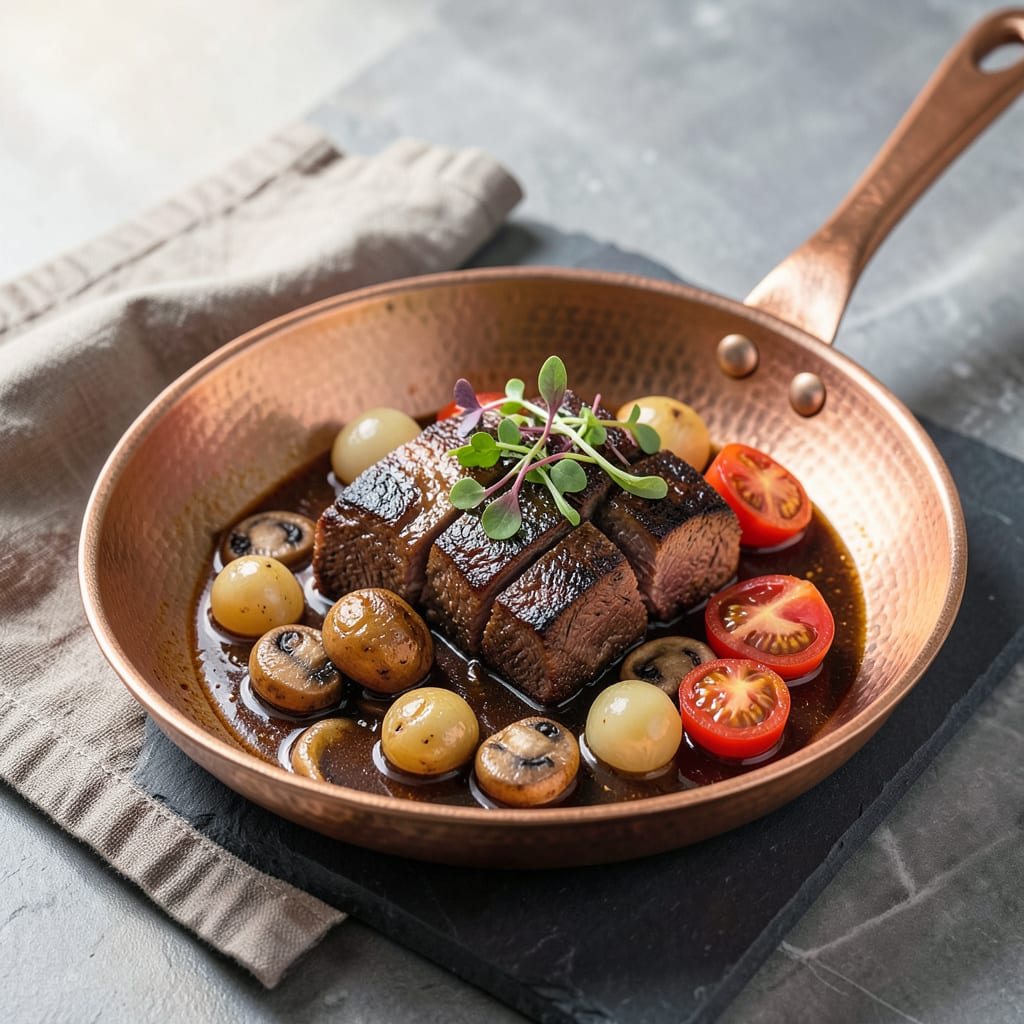
Demi-glace is available at specialty grocery stores like Whole Foods or Williams Sonoma, gourmet food shops, and online retailers such as Amazon, D’Artagnan, or Rouxbe. For chefs, bulk options are often found through restaurant supply stores or brands like More Than Gourmet.
As a chef who’s spent years perfecting sauces, I’ve learned that sourcing demi-glace is about more than convenience—it’s about finding a base that respects traditional French technique. 🔥 The best versions use slow-simmered veal bones and red wine reductions, which you’ll typically find at high-end butchers or European specialty markets. These places often carry small-batch options that deliver the depth you’d expect from homemade.
For home cooks, online retailers offer a practical solution, especially when you need consistent quality without the hours of reduction. I always recommend checking labels for natural ingredients and avoiding versions with fillers or excessive sodium—those can ruin a carefully balanced dish. ✨
💡 In This Article
- Why Quality Demi-Glace Sources Matter for Chefs
- Top Online and Local Stores for Authentic Demi-Glace
Why Quality Demi-Glace Sources Matter for Chefs
The difference between a mediocre and exceptional demi-glace starts with the bones. Traditional versions use veal bones (specifically knuckles and shanks) because their collagen content creates a richer gelatin structure during the 12-18 hour simmer. This slow extraction process develops complex umami notes that chicken or beef bones simply can’t replicate.
The mirepoix ratio (2:1:1 onions to carrots to celery) and red wine reduction are equally critical—they form the flavor backbone that distinguishes premium products.
Commercial demi-glace often cuts corners with hydrolyzed vegetable protein or cornstarch as thickeners, which creates a one-dimensional saltiness rather than layered depth. I’ve tested versions where the first ingredient was water—those lack the body and mouthfeel that comes from proper reduction.
A quality demi-glace should coat the back of a spoon at room temperature and have a glossy sheen, not a gummy texture. This viscosity difference comes from natural gelatin content, not additives.
Here’s what happens when you use inferior products: The sauce breaks under heat, the flavor disappears when reduced, and you end up adding more butter or cream to compensate. I once watched a line cook struggle with a store-bought version that separated into greasy layers during service—it contained soybean oil as a stabilizer.
Real demi-glace should behave like a professional chef’s reduction: holding its emulsion at 180°F and intensifying in flavor as it reduces.
The wine matters too. Premium versions use dry red wine reduced by 75% before adding to the stock, concentrating the fruit and tannins. Cheaper brands often use “wine flavor” or skip the reduction entirely.
You can taste the difference immediately—the proper version has a subtle wine brightness that cuts through richness, while artificial versions taste flat or overly sweet. This is why French import shops and high-end butchers are my go-to sources.
For professional kitchens, the math adds up quickly. A 1-gallon container of quality demi-glace might cost $45, but it yields 16 servings of sauce when properly extended with pan drippings.
The cheap $12 quart might seem economical until you realize you need twice as much to achieve the same flavor impact, and it still won’t perform the same under heat. That’s why serious chefs invest in brands like More Than Gourmet or D’Artagnan—they understand the cost-per-serving actually decreases with better quality.
I always tell my students: If you wouldn’t serve a sauce made from bouillon cubes, don’t expect a demi-glace with corn syrup to perform differently. The right source means the difference between a sauce that sings with complexity and one that just sits quietly on the plate.
That’s why I forage for wild thyme to finish my reductions—the base needs to be worth the effort. 🌿

Trained in classic French technique but raised on slow-cooked ribs and spicy rubs, she blends culinary skill with smoke and soul.
- Recipe for Boneless Pork Chops in Cast Iron Skillet: Sear and Baste to Juicy Perfection - October 3, 2026
- Recipe for Boneless Cross Rib Roast: Slow-Roasted Beef with Herb Crust - October 3, 2026
- Hamburgers in Sauce Recipe Crock Pot: Slow-Cooked Savory Delight - October 3, 2026