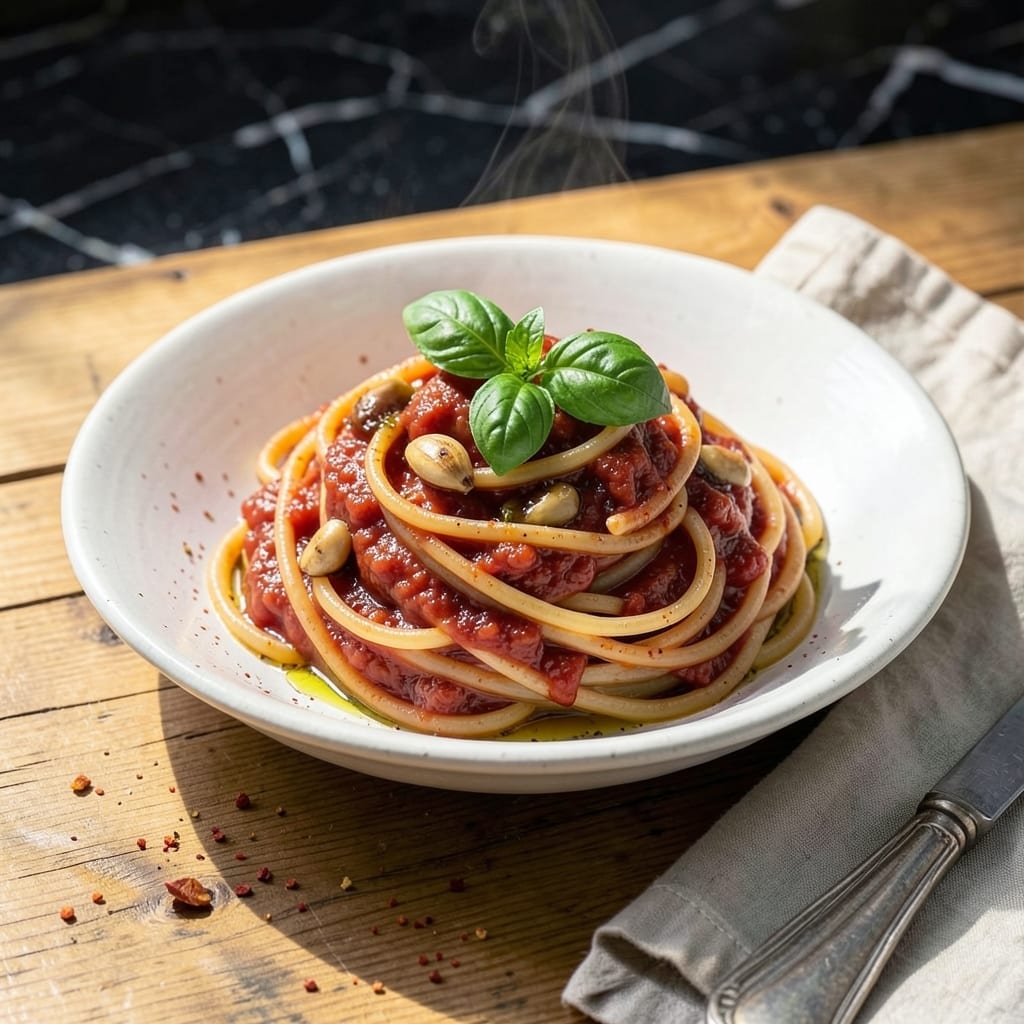
There’s a reason Mario Batali’s pasta dishes became legendary—simple ingredients transformed through precise technique. This recipe captures that rustic Italian essence with every al dente bite.
I’ve adapted his method for home cooks, focusing on quality pasta and a sauce that clings perfectly. The key is timing: cooking the pasta just shy of done before finishing it in the sauce.
What emerges is a dish with restaurant-quality depth, where the pasta absorbs the flavors without becoming mushy. The aroma alone will transport you to a Roman trattoria.
Serve immediately with a sprinkle of fresh herbs and grated cheese. Here’s how to make it right.
Ingredients for Mario Batali Pasta
Quality pasta and a handful of Italian staples create this rustic masterpiece with restaurant flair.
| Ingredient | Amount | Notes |
|---|---|---|
| Spaghetti Pasta 🍝 | 1 lb | Dried, high-quality bronze-cut |
| Extra-Virgin Olive Oil 🫒 | ½ cup | Plus extra for finishing |
| Garlic Cloves 🧄 | 4 cloves | Thinly sliced, not minced |
| San Marzano Canned Tomatoes 🍅 | 1 can | 28 oz size, crushed by hand |
| Red Pepper Flakes 🌶️ | ½ tsp | Adjust for heat preference |
| Fresh Basil Leaves 🌿 | 1 cup | Loosely packed, torn by hand |
| Parmesan Cheese 🧀 | 1 cup | Freshly grated Parmigiano-Reggiano |
| Pecorino Romano Cheese 🧀 | ½ cup | Freshly grated for depth |
| Kosher Salt 🧂 | 1 ½ tsp | Diamond Crystal preferred |
| Freshly Ground Black Pepper 🌶️ | 1 tsp | Coarsely ground for texture |
| Dry White Wine 🍷 | ½ cup | Pinot Grigio or Sauvignon Blanc |
| Reserved Pasta Water 💧 | 1 cup | Starchy, for sauce consistency |
[recipe_ingredient_scaler]
The pasta must be bronze-cut De Cecco or Barilla—rough texture grabs sauce better than smooth varieties. San Marzano tomatoes are non-negotiable for authentic flavor; look for the DOP certification on the can. Cheese should be imported Parmigiano-Reggiano and Pecorino Romano from specialty stores or Whole Foods. Fresh basil with vibrant green leaves signals peak quality.
Out of white wine? Substitute pasta water with a splash of lemon juice. No fresh basil? Dried at one-third the amount works in a pinch (though fresh is transformative). For a vegetarian twist, nutritional yeast can stand in for cheese—use half the quantity. The garlic can be adjusted to taste, but don’t skip the red pepper flakes (they’re essential to the profile).
Store dried pasta in airtight containers for 1-2 years. Canned tomatoes keep indefinitely, but use within 18 months for best quality. Grated cheese freezes beautifully for 3 months—portion into bags for easy use. Always reserve pasta water before draining; it’s the secret to silky sauce.
Why You’ll Love This Recipe
- One Pot Wonder: I love that this comes together in a single pan—just toss the spaghetti with olive oil, garlic, and San Marzano tomatoes, and let it simmer.
- Garlic Lovers Dream: The golden garlic cloves infuse every strand of pasta with that deep, sweet flavor that only slow-cooked garlic can deliver.
- Weeknight Hero: Honestly, it’s my go-to for busy evenings when I need something hearty but hands-off for the family.
- Budget Stretcher: San Marzano tomatoes and pantry staples mean I can feed four for the cost of a takeout appetizer—and it’s twice as good.
Step-by-Step Instructions for Rustic Italian Pasta
Here’s the method. Straightforward, tested, works every time.
Step 1: Cook the Pasta Al Dente
Bring a large pot of water to a rolling boil and add the 1 lb Spaghetti Pasta. Season the water generously with the 1.5 tsp Kosher Salt—it should taste like the sea. Cook until the pasta is 1 minute shy of package instructions for al dente.
Before draining, reserve 1 cup Reserved Pasta Water for the sauce. The starchy liquid is essential for creating a silky, emulsified sauce that clings to the strands. Drain the pasta but do not rinse—those surface starches are your secret weapon.
Step 2: Build the Aromatic Base
In a large skillet, heat the 0.5 cup Extra-Virgin Olive Oil over medium-low heat. Add the 4 cloves Garlic Cloves and cook for 2-3 minutes, stirring frequently, until the edges turn light golden brown.
Add the 0.5 tsp Red Pepper Flakes and stir for 30 seconds until fragrant. Be careful not to let the garlic burn—this step builds the foundation of flavor, and burnt garlic will turn the dish bitter. Remove the skillet from heat if the garlic is browning too quickly.
Step 3: Incorporate Tomatoes and Wine
Add the 1 can San Marzano Canned Tomatoes, crushing them by hand as they go into the pan. Increase the heat to medium and simmer for 5-7 minutes until the mixture thickens slightly.
Pour in the 0.5 cup Dry White Wine and simmer for another 3-4 minutes until the alcohol cooks off and the liquid reduces by half. The wine adds a bright acidity that balances the sweetness of the tomatoes. Stir in the 1 tsp Freshly Ground Black Pepper at this stage.
Step 4: Combine Pasta and Sauce
Add the cooked pasta to the skillet along with ½ cup of the Reserved Pasta Water. Toss vigorously with tongs for 1-2 minutes until the pasta is well coated and the sauce begins to cling. The starchy water will help emulsify the sauce, creating a glossy finish.
If the sauce seems too thick, add another splash of the Reserved Pasta Water, 1-2 tablespoons at a time, until it reaches your desired consistency. The sauce should lightly coat the back of a spoon but still flow easily.
Step 5: Finish with Fresh Herbs and Cheese
Remove the skillet from heat and stir in the 1 cup Fresh Basil Leaves, tearing them by hand as you add them. This preserves their delicate flavor and vibrant color. Fold in the 1 cup Parmesan Cheese and 0.5 cup Pecorino Romano Cheese until just combined.
Taste and adjust seasoning if needed, though the cheeses add significant saltiness. Serve immediately, garnished with additional basil leaves and a drizzle of Extra-Virgin Olive Oil. Each bite should deliver a balance of rustic tomato, sharp cheese, and aromatic basil.
Pro Tips For Making Mario Batali Pasta
- Reserve pasta water: Scoop out a cup of the starchy cooking water before draining—this thickens the sauce and helps it cling to the spaghetti like nothing else.
- Crush the tomatoes: Hand-crush the San Marzano tomatoes as you add them to the pan; it breaks them down faster and gives the sauce a rustic texture that blends perfectly with the garlic.
- Low and slow garlic: Cook the garlic in olive oil on low heat until just golden, not brown—I learned this the hard way after burning three batches and wondering why the sauce tasted bitter.
- Finish in the pan: Toss the cooked spaghetti directly into the saucepan with the tomatoes and garlic for the last minute of cooking, so the pasta absorbs all that flavor instead of sitting dry in a colander.
Essential Equipment for mario batali pasta
Pasta Pot Essentials
Invest in a 5-6 quart stainless steel pot—I swear by All-Clad for even heat distribution. The size matters because pasta needs room to move and cook uniformly. A heavy-bottomed pot prevents hot spots that can lead to uneven cooking.
Skillet for Sauce
A 12-inch stainless steel skillet gives you the surface area to properly toss pasta with sauce. I use my Made In Cookware pan—it’s durable and heats evenly. Avoid nonstick for this dish; you want the fond that builds for flavor.
Tongs for Tossing
Skip the spoon and grab 12-inch locking tongs. They let you agitate the pasta against the sauce without crushing it. I prefer OXO Good Grips for comfort. The locking mechanism keeps them compact in my drawer.
Precision Tools
A microplane is my secret for perfectly grated cheese. The fine rasp creates melt-in-your-mouth texture. I also keep a kitchen scale nearby for accurate pasta portions—4 oz per serving ensures consistency. 💡
Cheese Grater
For hard cheeses like Parmigiano-Reggiano, a box grater gives you control over texture. I use the fine side for melting and the coarse side for garnish. Freshly grated always tastes better than pre-shredded.
Colander Choice
A large stainless steel colander handles a full pound of pasta without overflow. I nest mine in the sink for easy draining. Look for one with wide handles for stability when pouring hot water and pasta. 🍝
Nutrition Facts
Frequently Asked Questions
Can I use a different pasta shape?
While spaghetti is classic, linguine or pappardelle work beautifully. Shorter shapes like penne or rigatoni hold sauce well too. Just adjust cooking time per package instructions.
What if I don’t have San Marzano tomatoes?
Use the best canned tomatoes you can find. Look for whole peeled and crush by hand. Avoid pre-diced—they lack the sweetness and texture. The dish will still shine with quality ingredients.
Can I make this ahead of time?
For best results, cook and sauce the pasta just before serving. If needed, undercook pasta by 2 minutes, rinse in cold water, and store separately. Reheat in the sauce with a splash of water.

Trained in classic French technique but raised on slow-cooked ribs and spicy rubs, she blends culinary skill with smoke and soul.
- Recipe for Boneless Pork Chops in Cast Iron Skillet: Sear and Baste to Juicy Perfection - October 3, 2026
- Recipe for Boneless Cross Rib Roast: Slow-Roasted Beef with Herb Crust - October 3, 2026
- Hamburgers in Sauce Recipe Crock Pot: Slow-Cooked Savory Delight - October 3, 2026