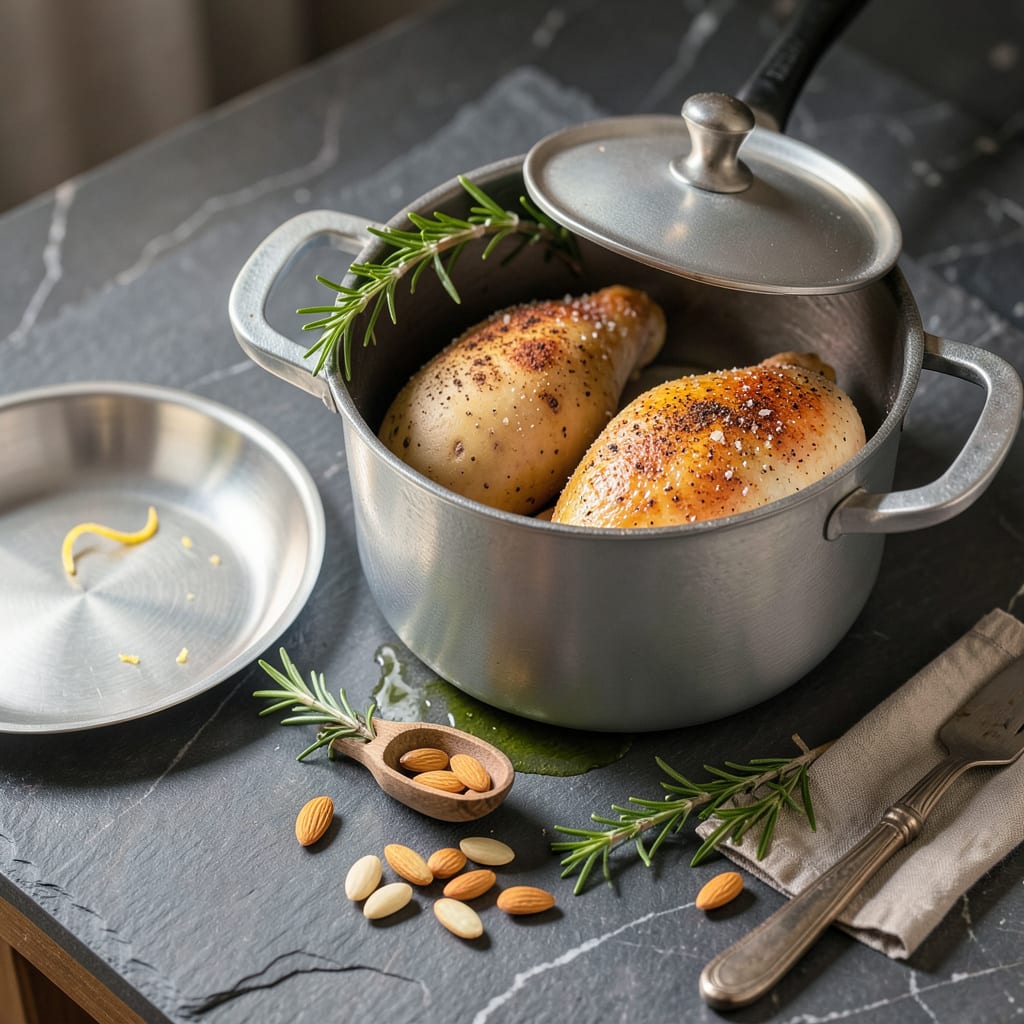
Cast aluminum cookware is generally safe when used properly, as modern manufacturing minimizes leaching. However, acidic or highly alkaline foods may cause small amounts of aluminum to transfer, though this is rarely harmful for healthy individuals.
I’ve cooked with cast aluminum for years, and here’s what I’ve learned about its safety profile. The key factor is how the cookware interacts with different foods—high-acid ingredients like tomatoes or citrus can cause minor aluminum transfer, but this is typically well below safety thresholds. 🔥 Modern manufacturing processes have significantly improved durability, making today’s cast aluminum far more stable than older versions. What matters most is proper use: avoiding metal utensils that scratch the surface and maintaining the cookware’s protective layer.
💡 In This Article
- How Aluminum Leaching Works in Cast Aluminum Cookware
- Safe Cooking Practices for Cast Aluminum Pans
How Aluminum Leaching Works in Cast Aluminum Cookware
The process begins at the molecular level when acidic or alkaline foods interact with the cookware’s surface. Aluminum atoms are held together in a metallic lattice, but when exposed to liquids with extreme pH levels (below 4 or above 9), these bonds weaken.
🔥 Tomatoes (pH 4.3-4.9) or vinegar (pH 2.4-3.4) can pull aluminum ions into the food through a process called ion exchange—where hydrogen ions from the food swap places with aluminum atoms in the metal.
Temperature accelerates this reaction dramatically. At room temperature, leaching occurs slowly, but cooking at 350°F or higher increases the rate by 10-20 times.
A study in the Journal of Food Composition and Analysis found that simmering tomato sauce in aluminum for 1 hour released about 3-6 mg of aluminum per serving—well below the WHO’s safe daily limit of 40 mg/kg body weight.
The leaching effect is most pronounced with new or unseasoned cookware, as the surface hasn’t developed its protective oxide layer yet.
What most people don’t realize is that aluminum naturally oxidizes when exposed to air, forming a thin, stable aluminum oxide layer that acts as a barrier. This is why well-seasoned cast aluminum (like properly maintained cast iron) becomes more resistant to leaching over time.
The oxide layer is only 0.01-0.1 microns thick but provides significant protection—until it’s scratched by metal utensils or abrasive cleaners, which exposes fresh aluminum to react again.
The human body actually absorbs very little of the aluminum that might leach into food—only about 0.1-0.3% of ingested aluminum enters the bloodstream, with the rest being excreted. For context, a single antacid tablet contains 200-400 mg of aluminum, while the average person consumes 7-9 mg daily from all dietary sources combined.
The real concern isn’t typical cooking but rather long-term exposure from multiple sources in individuals with kidney dysfunction.
Here’s what’s fascinating about modern cast aluminum: manufacturers now alloy it with elements like magnesium (1-5%) and silicon (7-12%) to create a more stable crystal structure. These alloys reduce leaching by 30-50% compared to pure aluminum.
When shopping, look for “cast aluminum alloy” labels—these formulations meet stricter food-grade standards and often include a factory-applied protective coating that further minimizes any potential transfer.
You can actually test your cookware’s leaching potential at home. Simmer 1 cup of distilled water with 1 tablespoon of lemon juice (pH ~2) in the pan for 10 minutes, then test with pH strips. If the water’s pH rises above 4, significant leaching is occurring.
Most quality cast aluminum will show minimal change, proving how far the manufacturing has come in ensuring safety through smart material science. ✨

Trained in classic French technique but raised on slow-cooked ribs and spicy rubs, she blends culinary skill with smoke and soul.
- Recipe for Boneless Pork Chops in Cast Iron Skillet: Sear and Baste to Juicy Perfection - October 3, 2026
- Recipe for Boneless Cross Rib Roast: Slow-Roasted Beef with Herb Crust - October 3, 2026
- Hamburgers in Sauce Recipe Crock Pot: Slow-Cooked Savory Delight - October 3, 2026