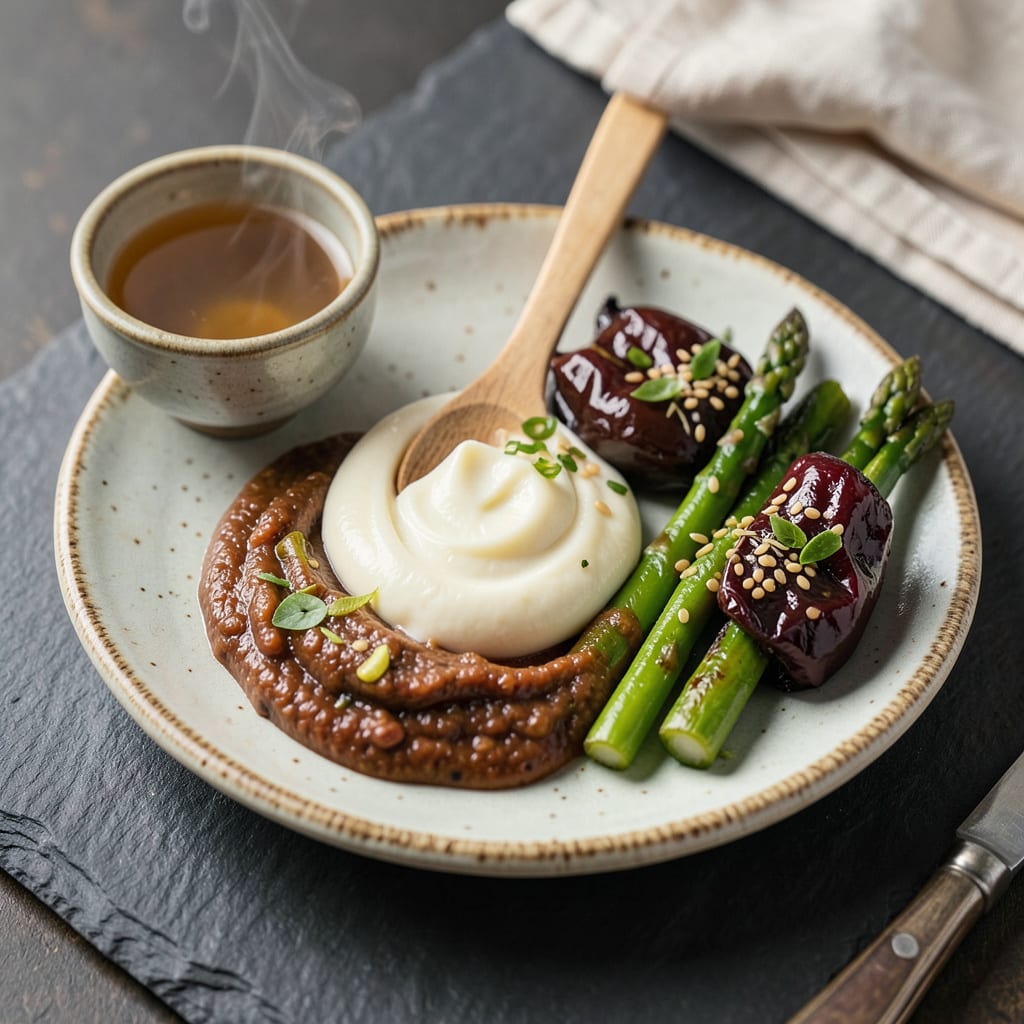
Yes, miso is naturally salty due to its fermentation process with salt, but the intensity varies by type. White miso is milder, while red and barley miso have higher sodium content and stronger saltiness.
This saltiness comes from the traditional fermentation method where soybeans (and sometimes grains) are combined with koji mold and a significant amount of salt. The longer the fermentation—sometimes years—the more concentrated the flavors become. What’s fascinating is how different varieties develop distinct profiles: white miso ferments for just weeks, while red miso can age for up to 3 years, deepening its saltiness and complexity. ✨
In my kitchen, I treat miso like a chef’s secret weapon—its saltiness isn’t just about flavor, but about preserving the paste naturally. The sodium content isn’t arbitrary; it’s a carefully balanced part of the fermentation that prevents spoilage while creating that signature umami richness. That’s why a little goes a long way in dishes, and why I always taste as I go when cooking with it. 🔥
💡 In This Article
- Why Miso’s Saltiness Varies by Type and Fermentation
- Balancing Miso’s Saltiness in Cooking and Recipes
Why Miso’s Saltiness Varies by Type and Fermentation
The salt content in miso isn’t accidental—it’s a deliberate part of the fermentation process. Traditional miso starts with cooked soybeans (or a soybean-grain blend) inoculated with koji mold (Aspergillus oryzae), then mixed with salt at ratios ranging from 5-13% by weight. This salt acts as a preservative while controlling microbial activity during fermentation.
The longer the miso ages, the more the salt integrates with the proteins and carbohydrates, creating deeper umami and saltier intensity. 🔥
White miso (shiro miso) ferments for just 1-3 weeks with a lower salt concentration (about 5-7%), resulting in a mild, slightly sweet flavor and 200-300mg sodium per tablespoon. Red miso (aka miso), aged 1-3 years with 10-13% salt, develops a robust, salty punch—packing 600-800mg sodium per tablespoon.
Barley miso (mugi miso) falls in between, with a 6-10% salt content and fermentation times of 6 months to 2 years, yielding 400-600mg sodium in the same serving.
Here’s what’s fascinating: the salt doesn’t just sit on the surface. During fermentation, enzymes break down the soybeans’ proteins into amino acids (like glutamic acid), while the salt dissolves and redistributes throughout the paste.
This creates a balanced saltiness that’s integrated into the miso’s structure—unlike simply adding salt to a dish, where the granules remain distinct. The result? A harmonized umami-salt profile that enhances without overpowering. ✨
The grain used also influences perception. Rice-based white miso tastes sweeter because the rice koji converts more starches to sugars, masking saltiness. Barley miso, with its nuttier base, allows the salt to stand out more prominently. Red miso’s higher soybean content (and longer aging) concentrates both salt and umami, making it the most assertive.
I’ve found that 1 teaspoon of red miso can replace ½ teaspoon of salt in recipes while adding complexity.
Temperature matters too. When miso is heated (like in soups), its saltiness becomes more pronounced as the heat releases volatile compounds. That’s why I add miso off-heat or at the end of cooking—to preserve its nuanced balance. Cold applications (like dressings) let the saltiness mellow, allowing other flavors to shine. 💫
For context, compare miso to soy sauce: a tablespoon of soy sauce contains 900-1,200mg sodium, while even the saltiest red miso maxes out around 800mg. The difference? Miso’s fermentation creates a rounded, less harsh saltiness because the sodium binds with amino acids and organic compounds, softening its impact on the palate.
Next time you taste miso, notice how the saltiness lingers differently than table salt. That’s the magic of fermentation—transforming simple ingredients into something far greater than the sum of its parts. 🌟

Trained in classic French technique but raised on slow-cooked ribs and spicy rubs, she blends culinary skill with smoke and soul.
- Recipe for Boneless Pork Chops in Cast Iron Skillet: Sear and Baste to Juicy Perfection - October 3, 2026
- Recipe for Boneless Cross Rib Roast: Slow-Roasted Beef with Herb Crust - October 3, 2026
- Hamburgers in Sauce Recipe Crock Pot: Slow-Cooked Savory Delight - October 3, 2026