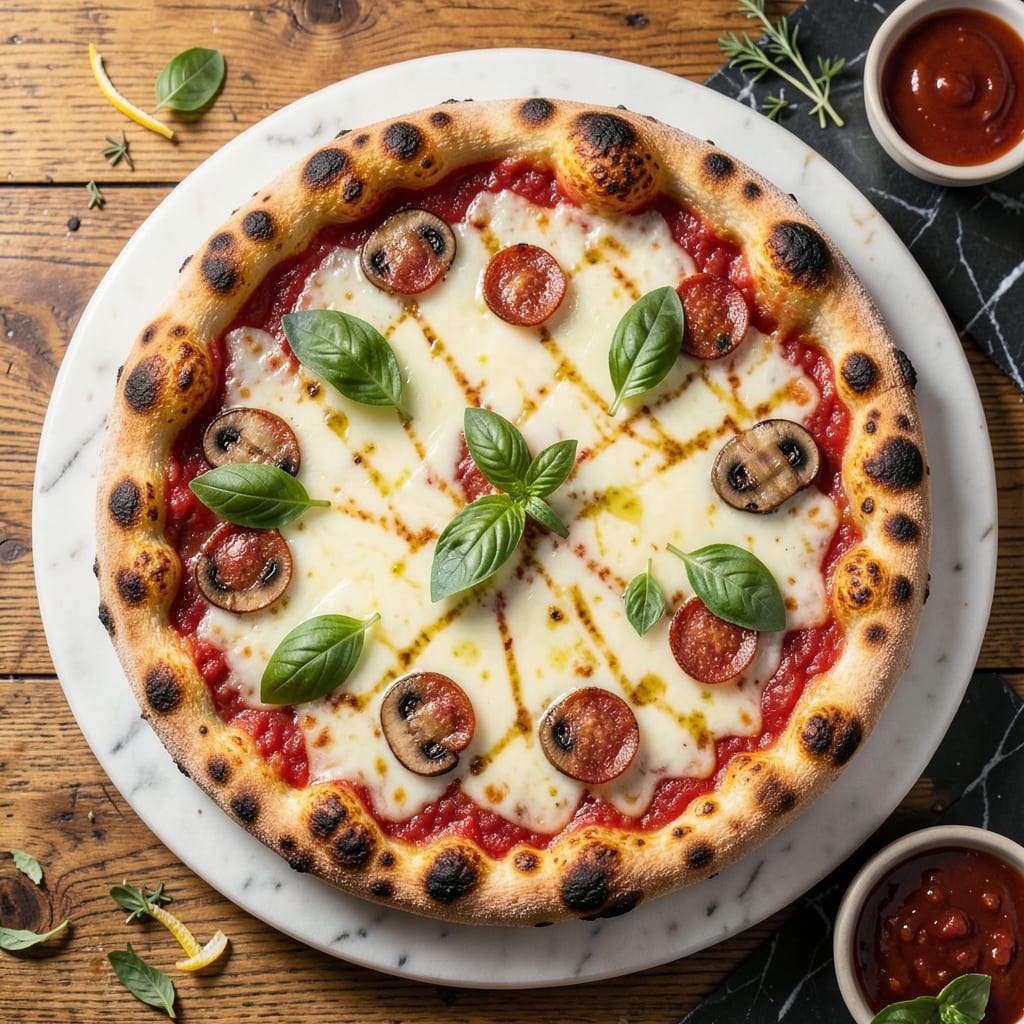
Traditional pizza dough doesn’t contain milk—it’s made with just flour, water, yeast, salt, and sometimes olive oil. Some modern recipes may add milk for softness, but authentic Neapolitan and New York-style doughs never include it.
I’ve spent years perfecting dough recipes, and the absence of milk in classic versions isn’t accidental. 🔥 The simplicity of water-based dough allows for better gluten development and a crispier crust—critical for that signature wood-fired snap. Milk’s sugars can caramelize too quickly, risking a burnt taste before the crust fully cooks. That’s why purists stick to the basics, letting fermentation and high heat do the heavy lifting.
What’s fascinating is how regional styles adapt this foundation. Neapolitan dough relies on long fermentation for flavor, while Sicilian versions might use olive oil for richness—still no milk. Modern variations sometimes sneak it in for tenderness, but I’d argue that’s more about convenience than tradition. ✨
💡 In This Article
- Why Traditional Pizza Dough Skips Milk Entirely
- Modern Pizza Dough Variations With and Without Milk
Why Traditional Pizza Dough Skips Milk Entirely
The secret to authentic pizza dough lies in its simplicity—flour, water, yeast, and salt create the perfect canvas for fermentation. Milk contains lactose, a sugar that caramelizes at 320°F, which can cause premature browning before the crust fully cooks. 🔥 This interferes with the Maillard reaction needed for that golden, crispy exterior.
Water-based dough allows for better gluten development and a more controlled fermentation process.
Italian purists avoid milk because it alters the dough’s structure. The proteins in milk (casein and whey) can make the crust too soft, preventing that signature chewy yet crispy texture.
Neapolitan pizzaiolos rely on long fermentation (24-48 hours) to develop flavor naturally, while Sicilian styles use olive oil for richness—both traditions prioritize balance over dairy additives. The high heat of wood-fired ovens (800-900°F) demands a leaner dough that won’t burn or become gummy.
Milk’s fat content (about 3.5% in whole milk) can also inhibit gluten formation, weakening the dough’s elasticity. This is why professional bakers use water—it hydrates the flour fully, creating a strong gluten network that stretches thin without tearing. The result? That satisfying leopard-spotted crust with airy pockets and a crisp bite. ✨
Regional differences highlight this philosophy. Neapolitan dough uses just 4 ingredients (flour, water, salt, yeast) for a delicate, foldable crust. Sicilian-style adds olive oil for a thicker, focaccia-like base—but still no milk. Even New York-style, known for its foldable slices, relies on high-gluten flour and cold fermentation, not dairy, for its signature texture.
What’s fascinating is how milk’s absence actually enhances flavor. Without competing dairy notes, the natural sweetness of fermented dough shines through. The crust becomes a blank canvas for toppings, with a clean, slightly tangy background that complements everything from marinara to mozzarella.
This is why traditional recipes have stood the test of time—sometimes less really is more. 💫
For home bakers, this means simpler ingredients but more precise technique. The lack of milk puts the focus on proper kneading, fermentation time, and oven temperature—skills that elevate any pizza from good to extraordinary. It’s not about what’s missing; it’s about what that absence allows the other ingredients to become.

Trained in classic French technique but raised on slow-cooked ribs and spicy rubs, she blends culinary skill with smoke and soul.
- Recipe for Boneless Pork Chops in Cast Iron Skillet: Sear and Baste to Juicy Perfection - October 3, 2026
- Recipe for Boneless Cross Rib Roast: Slow-Roasted Beef with Herb Crust - October 3, 2026
- Hamburgers in Sauce Recipe Crock Pot: Slow-Cooked Savory Delight - October 3, 2026