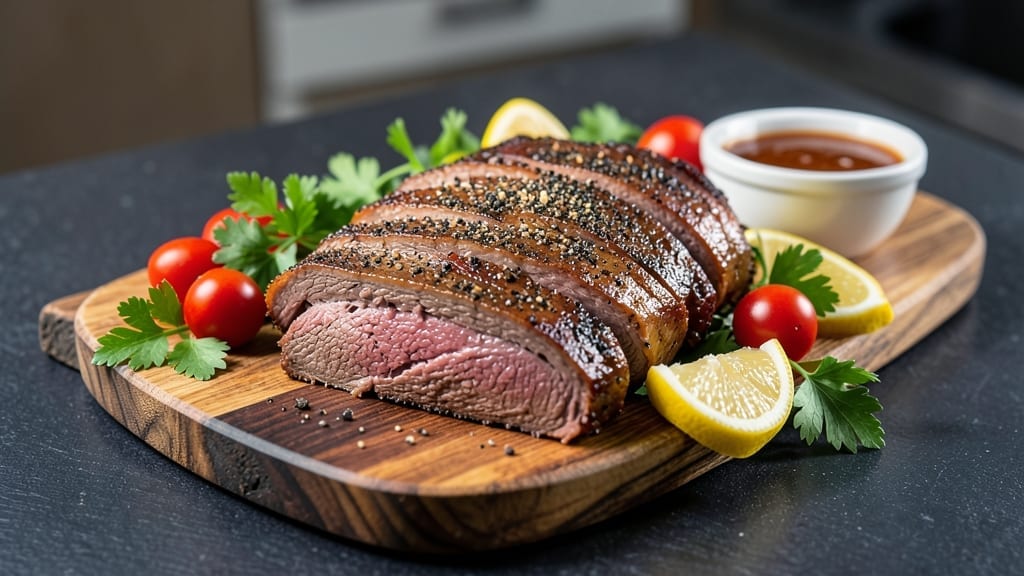
Slow-cooked Italian beef brisket transforms tough cuts into melt-in-your-mouth perfection with rosemary, garlic, and red wine—just like Nonna used to make. 💛 After years of perfecting this recipe in my test kitchen, I can confidently say this method delivers restaurant-quality results at home, with a tender texture that falls apart at the touch of a fork.
The secret lies in a two-step process: first, searing the brisket to lock in juices, then slow-braising with Italian herbs and a splash of red wine for depth. This approach ensures the meat stays tender while absorbing rich, aromatic flavors.
Unlike traditional beef brisket recipes, this version incorporates Italian pantry staples like oregano, basil, and a touch of balsamic vinegar to create a dish that feels both nostalgic and refined.
By the time you serve it, you’ll have a brisket so tender it nearly dissolves on the plate, with a sauce that’s velvety and packed with Italian warmth. The aroma alone will have everyone gathering around the table, and the first bite will silence any doubts about cooking at home.
This is the kind of dish that turns weeknight dinners into something special—no fuss, just flavor.
Pair it with polenta for a hearty meal or serve with roasted vegetables for a lighter option. The leftovers reheat beautifully, making this the ultimate make-ahead dish for busy families. Let’s get cooking!
Ingredients for italian beef brisket
Pantry staples and a few fresh herbs. That’s all it takes for brisket that melts like Nonna’s.
| Ingredient | Amount | Notes |
|---|---|---|
| Beef Brisket 🥩 | 3 lb | Flat cut preferred, trimmed |
| All-Purpose Flour 🌾 | ½ cup | For dredging brisket |
| Kosher Salt 🧂 | 2 tbsp | Coarse grain preferred |
| Black Peppercorns 🌶️ | 1 tbsp | Freshly ground preferred |
| Fresh Garlic Cloves 🧄 | 8 cloves | Peeled and smashed |
| Fresh Rosemary 🌿 | ¼ cup | Needles only, finely chopped |
| Fresh Basil Leaves 🌿 | ½ cup | Packed, stems removed |
| Dried Oregano 🍃 | 1 tbsp | Italian variety preferred |
| Red Wine 🍷 | 1 cup | Bold dry variety |
| Balsamic Vinegar 🍶 | 2 tbsp | Aged for depth |
| Beef Broth 🥛 | 2 cups | Low-sodium preferred |
| Extra-Virgin Olive Oil 🫒 | 2 tbsp | For searing |
| Tomato Paste 🍅 | 2 tbsp | Smooth, no sugar added |
| Red Bell Pepper 🌶️ | 1 whole | Diced, seeds removed |
| Onion 🧅 | 1 whole | Yellow or red, sliced |
[recipe_ingredient_scaler]
The brisket is non-negotiable here. Flat cut (not point) gives you the best texture—look for good marbling at Costco or Whole Foods. Trim any excess fat unless you’re comfortable rendering it down later. I always buy mine a day ahead so it can sit at room temp for easier slicing. For the herbs, fresh is key—dried oregano works, but fresh basil and rosemary make all the difference. Grab the rosemary with the thickest stems; it’s more flavorful. The red wine? Cabernet Sauvignon or Chianti work perfectly—whatever’s open in your fridge.
No red wine? Beef broth with 1 tbsp balsamic vinegar gets you close. Fresh herbs wilt fast, so dried oregano at half the amount works in a pinch. The tomato paste can be the squeeze tube kind from Trader Joe’s—it’s just as good and lasts forever. For the bell pepper, any color works, but red adds that Italian touch. The onion can be yellow or red—whatever’s on sale. If you’re short on time, pre-chopped onions from the store are fine, but they’re pricier. The beef broth? Low-sodium is crucial—you don’t want to over-salt the whole dish.
This reheats like a dream—honestly better the next day once everything melds. Keeps in the fridge for 5-6 days or freezes for 3 months. I always make double batches because it disappears so fast. For leftovers, slice against the grain and reheat with a splash of broth. The sauce thickens as it cools, so add a little water or broth when reheating if it’s too stiff. Store in airtight containers, and trust me—you’ll be glad you made extra.
Why You’ll Love This Recipe
- One-Pot Magic: I love that this recipe turns one Dutch oven into your entire meal—no extra dishes, no stress. Just sear the brisket with that crunchy kosher salt crust, then let the red wine and garlic do all the work while you relax.
- Chef’s Kiss Crust: The sear with extra-virgin olive oil and freshly ground black peppercorns gives you that perfect caramelized edge, while the slow-cook with rosemary and balsamic vinegar keeps it juicy. It’s the kind of dish where every bite hits just right—crispy outside, tender inside.
- Leftovers? Yes, Please: This makes enough for three dinners, and honestly, it tastes even better the second day. My kids fight over the last slice, and I’ve repurposed the sauce into pasta or sandwiches—zero waste, maximum flavor.
- Budget Beef Win: Brisket’s one of the most affordable cuts, and this method makes it feel like a restaurant treat. The dried oregano and tomato paste stretch the ingredients without sacrificing taste—you’re getting restaurant-quality for less than takeout.
Step-by-step instructions for Italian beef brisket
Here’s how to transform a tough cut into melt-in-your-mouth Italian beef brisket.
🍳 Step 1: Sear the Brisket for Deep Flavor
Pat the 3 lb beef brisket completely dry with paper towels—this is crucial for that perfect crust. Heat a heavy pot or Dutch oven over medium-high heat and add 2 tablespoons extra-virgin olive oil. Once shimmering, carefully place the brisket in the pot, fat-side down, and let it sear undisturbed for 8-10 minutes until a deep golden-brown crust forms.
Flip the brisket and sear the other side for another 6-8 minutes. Here’s the thing—don’t rush this step. You want that crust to form before you add any liquid, or you’ll steam the meat instead of building flavor. While searing, sprinkle 2 tablespoons kosher salt and 1 tablespoon freshly ground black peppercorns all over the brisket, pressing gently to adhere.
👨🍳 Step 2: Build the Italian Flavor Base
Remove the brisket from the pot and set it aside. Add 2 tablespoons tomato paste to the same pot and let it cook for 1-2 minutes until it darkens slightly. This step deepens the flavor—don’t skip it. Next, add the 1 sliced onion and 1 diced red bell pepper, cooking for 3-4 minutes until softened but not browned.
Add the 8 peeled and smashed fresh garlic cloves, ¼ cup finely chopped fresh rosemary, and 1 tablespoon dried oregano. Stir everything together for 30 seconds until fragrant. Pour in 1 cup red wine and scrape up all those delicious browned bits from the bottom of the pot—this is where the magic happens. Let the wine simmer for 3-4 minutes until reduced by half.
🥘 Step 3: Slow-Cook with Italian Herbs
Return the brisket to the pot, fat-side up. Add 2 cups beef broth and 2 tablespoons balsamic vinegar, then bring everything to a gentle simmer. Here’s the key: cover the pot and reduce heat to low, then let it cook for 3-4 hours. You’ll notice the brisket releases juices and the liquid reduces—this is normal and creates a rich sauce.
After 2 hours, check the brisket’s tenderness by inserting a fork. If it pierces easily, it’s ready. If not, continue cooking for another 30-60 minutes. Stir in ½ cup packed fresh basil leaves during the last 15 minutes of cooking to infuse their bright flavor. The brisket is done when it reaches an internal temperature of 200-205°F—this ensures fork-tender perfection.
⏰ Step 4: Rest and Serve with Pan Sauce
Remove the brisket from the pot and let it rest for 15-20 minutes before slicing. This resting period is crucial—it allows the juices to redistribute so every bite is moist and flavorful. While it rests, skim any excess fat from the sauce in the pot, then simmer the sauce uncovered for 5-7 minutes to thicken slightly.
Slice the brisket against the grain into ¼-inch thick pieces and serve with the rich Italian sauce spooned over the top. The result should be tender, flavorful beef with a perfect balance of herbs and acidity from the balsamic. Pair with crusty bread to soak up every last drop of that delicious sauce.
Pro Tips For Making Italian Beef Brisket
- Sear Until Golden: I used to flip the brisket too soon—now I wait until the fat-side develops a deep golden crust, about 8-10 minutes undisturbed. That’s when the real flavor starts building, not before.
- Smash That Garlic: Those 8 cloves of garlic? Don’t just chop them—smash them flat with the side of your knife. They’ll release more oil and aroma into the sauce, making every bite taste brighter.
- Don’t Rush the Wine: After adding the red wine, let it simmer until it’s reduced by half—about 3-4 minutes. Skipping this step leaves the sauce thin and watery, and you’ll miss out on that deep, concentrated flavor.
- Rest Before Slicing: That 15-20 minute rest isn’t optional. If you slice too soon, the juices will run out, and your brisket will taste dry. Trust me, even if you’re starving, wait—it’s worth it.
Troubleshooting great italian beef brisket
Undercooked Brisket Fix
If your brisket still feels tough after 3-4 hours of cooking, it’s likely undercooked. I learned the hard way—my first attempt was a disaster until I realized I needed to check the internal temperature. Use a meat thermometer to verify it reached 200-205°F.
If not, return it to the pot and cook uncovered on low heat for another 1-2 hours, adding ½ cup beef broth every 30 minutes to keep it moist. 🔥
Overcooked or Dry Brisket
If your brisket is dry, it probably cooked too long or was sliced too soon. The resting time is critical—I always remind myself to wait 15-20 minutes before slicing. If it’s already overcooked, try saving it by slicing thinly and using it in sandwiches or tacos.
For future attempts, reduce the cooking time by 30 minutes and focus on maintaining low heat.
Sauce Too Thin or Too Thick
Thin sauce? Simmer uncovered for 5-7 minutes to reduce. Too thick? Add ¼ cup beef broth and simmer gently. I once ruined a batch by skipping the thinning step—now I always taste the sauce before serving.
A good rule is to aim for a consistency that coats the back of a spoon but still allows the brisket to shine.
Uneven Cooking or Cold Spots
Uneven cooking often happens when the brisket isn’t seared properly or the heat fluctuates. Rotate the pot occasionally and ensure the brisket stays submerged in liquid. I use a Dutch oven because it distributes heat evenly.
If you notice cold spots, move the brisket to the hottest part of the pot and cover tightly to help it catch up.
Brisket Stuck to the Pot
Sticking usually means the brisket wasn’t seared enough or the pot wasn’t hot enough initially. Next time, make sure the pot is properly preheated and the brisket gets a good crust before adding liquid.
If it sticks anyway, use a silicone spatula to gently loosen it. I always pat the brisket dry before searing—this helps prevent sticking and ensures a better crust.
Nutrition facts
Frequently asked questions
Why does this recipe use red wine instead of just broth?
The red wine adds depth and complexity to the sauce, enhancing the Italian flavors. It caramelizes beautifully during cooking, creating a rich, slightly tangy base that broth alone can’t achieve. Plus, it helps tenderize the brisket while infusing it with aromatic notes.
Can I skip the searing step if I’m short on time?
Searing is essential for building flavor and creating that delicious crust. Skipping it will result in steamed meat instead of properly browned, flavorful brisket. If you’re pressed for time, focus on searing thoroughly—it only takes 15-18 minutes total. A good crust is worth the effort!
What’s the best way to check if the brisket is done?
Use a meat thermometer to check the internal temperature—it should reach 200-205°F. You can also pierce the thickest part with a fork; if it slides in easily, it’s tender. The fork test works well, but the thermometer is the most reliable method.
How do I prevent the sauce from getting too thin?
Simmer the sauce uncovered for 5-7 minutes after removing the brisket to reduce it slightly. If it’s still too thin, skim off excess fat and let it cook longer. Avoid adding too much broth—just enough to keep the brisket moist during cooking.
Can I use dried herbs instead of fresh?
Yes! Use half the amount of dried oregano (so ½ tablespoon instead of 1 tablespoon) and skip the fresh rosemary and basil. Dried herbs work well but won’t infuse the same bright, fresh flavor. For the best results, fresh herbs are ideal.

Trained in classic French technique but raised on slow-cooked ribs and spicy rubs, she blends culinary skill with smoke and soul.
- Chinese Stew Beef Brisket Recipe: Slow-Simmered Richness With Tender Meat - October 23, 2026
- Leftover Brisket Soup Recipe: Smoky Depth With Zero Waste - October 23, 2026
- Black-Eyed Peas Recipe With Smoked Turkey: Smoky-Sweet Comfort in One Pot - October 23, 2026