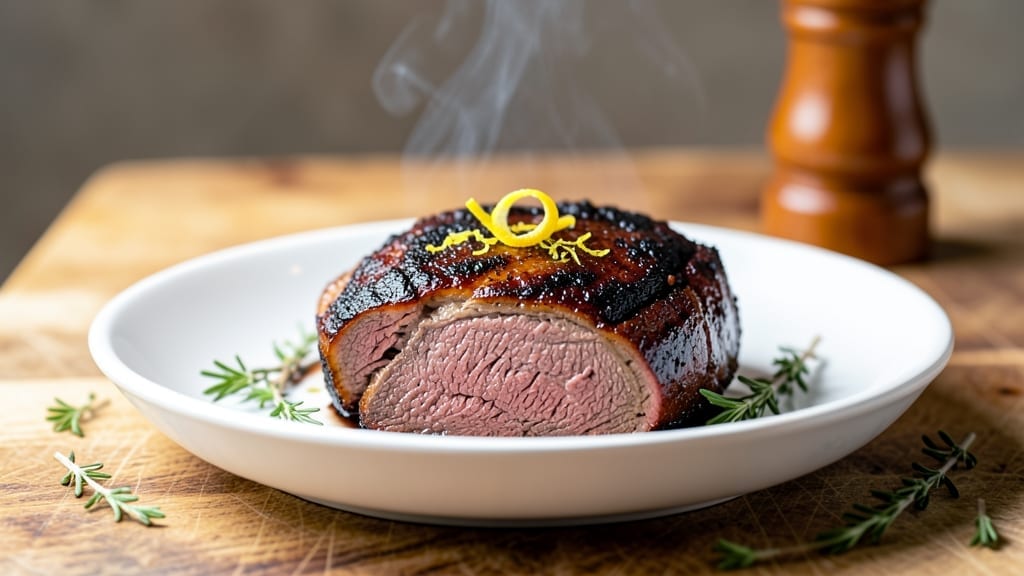
Mastering beef brisket pellet smoker recipe transforms tough cuts into melt-in-your-mouth perfection through precise low-and-slow techniques. The pellet smoker’s consistent temperature control eliminates guesswork, ensuring tender results even for beginners.
I’ve perfected this method after countless hours testing different wood blends and bark rubs to achieve that signature smoky depth without overpowering the beef’s natural richness.
The key to success lies in patience and preparation: a well-trimmed brisket wrapped in butcher paper at the right moment, and maintaining 225°F for 12-16 hours until the internal temperature reaches 195-203°F. This slow process breaks down collagen into gelatin, creating a texture so tender it practically falls apart.
The pellet smoker’s automatic wood feeding ensures steady heat, reducing the risk of temperature swings that can ruin traditional smoking methods.
What you’ll end up with is a brisket so tender it requires no knife—just a fork to pull apart the layers. The bark will be dark and crispy, the fat cap rendered into rich, flavorful drippings, and every slice will be infused with smoky sweetness from the hardwood pellets.
This isn’t just a recipe; it’s a method that delivers restaurant-quality results at home, with minimal effort after the initial setup.
Pair it with classic sides like smoked potato rolls, tangy coleslaw, or pickled jalapeños for a complete spread. The beauty of pellet smokers is their versatility—once you’ve nailed this brisket, you can tackle ribs, pork shoulders, and even vegetables with the same precision.
Let’s get started on your first perfectly tender brisket.
Ingredients for beef brisket pellet smoker
A single brisket feeds a crowd with melt-in-your-mouth tenderness through precise pellet smoker magic.
| Ingredient | Amount | Notes |
|---|---|---|
| Beef Brisket (whole packer cut) 🥩 | 8 lb | Fat cap left intact, trimmed of excess silver skin |
| Hickory Wood Pellets 🌳 | 4 lb | 100% hardwood, no additives |
| Kosher Salt 🧂 | 2 tbsp | Diamond Crystal preferred |
| Black Peppercorns 🌶️ | 1 tbsp | Freshly ground, coarse |
| Brown Sugar (light) 🍚 | 1 tbsp | Granulated, not packed |
| Garlic Powder 🧄 | 1 tsp | Not garlic salt |
| Smoked Paprika 🌶️ | 1 tsp | For bark development |
| Butcher Paper 📄 | 2 sheets | For wrapping brisket |
| Meat Thermometer 📊 | 1 whole | Instant-read digital |
| Apple Cider Vinegar 🍎 | 2 tbsp | For spritzing during cook |
| Butter (unsalted) 🧈 | 4 oz | For basting |
| Chicken or Beef Broth 🍲 | 1 cup | Low-sodium preferred |
[recipe_ingredient_scaler]
The brisket is your star—8 pounds of whole packer cut with fat cap intact delivers maximum tenderness. Trim excess silver skin but leave the fat, as it renders into flavorful drippings. Costco often carries pre-trimmed briskets, but if buying whole, ask the butcher to remove the point end for even cooking. Hickory pellets are non-negotiable for that classic smoky depth; Traeger or Rec Tec brands maintain consistent burn rates. The meat thermometer? Meater or Thermoworks models are reliable—no cheap probes here. Pro tip: Weigh your brisket before trimming to account for fat loss during cooking.
No hickory pellets? Mesquite or pecan pellets work for a different smoky profile, though hickory is the traditional choice. Short on brown sugar? Coconut sugar at half the amount mimics the caramelization. Want more bark? Increase smoked paprika to 1.5 tsp and add a pinch of cayenne. The butcher paper is crucial—not aluminum foil—to allow moisture escape while retaining heat. For the broth, chicken or beef works, but low-sodium is key to avoid overpowering the natural beef flavor. If you’re short on time, use pre-made dry rub instead of the salt/pepper/brown sugar blend, but it won’t develop the same bark.
This isn’t a quick cook—plan for 12-16 hours at 225°F with spritzing every 2 hours. The brisket keeps beautifully for 4 days in the fridge or 3 months frozen. For leftovers, slice against the grain and reheat in a slow cooker with a splash of broth. The bark crisps up beautifully when reheated. Store pellets in an airtight container away from moisture—damp pellets won’t burn properly. If you’re prepping ahead, trim and season the brisket up to 24 hours before smoking for even flavor absorption. Trust the process: the fork-tender payoff is worth every hour.
Why You’ll Love This Recipe
- No-Fuss Smoking: Honestly, this recipe is that kind of simple. Just season the brisket with kosher salt, black peppercorns, and brown sugar, then let the pellet smoker do the heavy lifting at 225°F while you prep the rest of dinner. The hickory pellets handle the smoke, and the butcher paper wrap keeps things low-maintenance during the stall. I’ve done it while watching TV—no stress, just delicious.
- Crispy Outside, Creamy Inside: That first bite? Chef’s kiss. The smoked paprika and garlic powder caramelize into a dark, crackly bark while the fat cap renders into the meat, keeping everything juicy. The apple cider vinegar spritzes every 90 minutes keep the surface moist enough to develop that perfect texture—no dry, tough brisket here. It’s the kind of balance that makes people stop mid-conversation to take another bite.
- Feeds a Crowd (or Loves Leftovers): An 8-pound brisket isn’t just for big gatherings—it’s my go-to for game days, potlucks, or even a cozy Sunday dinner. And here’s the real win: it keeps beautifully for 4 days in the fridge or 3 months frozen. I’ll slice some for sandwiches, shred the rest into tacos, or toss it into a quesadilla later in the week. Zero waste, maximum satisfaction.
- Budget-Friendly Powerhouse: Between the affordable cut of brisket and the simplicity of hickory pellets, this isn’t a splurge—it’s a smart meal. The kosher salt and brown sugar are pantry staples, and the butcher paper wrap (instead of foil) keeps costs down without sacrificing flavor. Plus, feeding a family for days? That’s money saved on takeout or delivery. My wallet (and my taste buds) thank me every time.
Step-by-step instructions for smoked brisket
Here’s how to transform an 8 lb brisket into melt-in-your-mouth perfection using just your pellet smoker.
Prepare and Season the Brisket
Start by trimming the beef brisket to remove any excess silver skin while leaving the fat cap intact—this protects the meat during the long cook. Pat the surface dry with paper towels to ensure maximum bark development. In a small bowl, combine the 2 tbsp kosher salt, 1 tbsp freshly ground black peppercorns, 1 tbsp brown sugar, 1 tsp garlic powder, and 1 tsp smoked paprika. This blend creates the perfect balance of sweet, smoky, and savory flavors.
Generously coat all sides of the brisket with the seasoning mix, pressing it firmly into the meat so it adheres well. Place the seasoned brisket on a wire rack set over a baking sheet and refrigerate uncovered for at least 4 hours, or preferably overnight. This step is crucial—it allows the seasoning to penetrate deeply and the surface to dry slightly, which is essential for developing that coveted dark bark.
Set Up the Pellet Smoker
Fill your pellet smoker with the 4 lb hickory wood pellets—this wood choice delivers that classic, slightly sweet smoke flavor that pairs perfectly with beef. Set the smoker to maintain a steady temperature of 225°F. Preheating takes about 15-20 minutes, but don’t rush this step. You want clean, blue smoke without any white vapor, indicating proper combustion and ideal smoking conditions.
Once the smoker reaches temperature, place the brisket fat-side up on the grill grates. The fat will render slowly and baste the meat as it cooks, adding flavor and moisture. Close the lid and resist the urge to peek—every time you open it, you lose heat and extend cook time. Let the brisket smoke undisturbed for the first 4 hours, allowing the bark to develop properly.
Spritz and Monitor the Cook
After the initial 4 hours, it’s time to spritz the brisket with the 2 tbsp apple cider vinegar mixed with ½ cup of the chicken or beef broth. This keeps the surface moist enough to prevent cracking while the bark continues to develop. I use a spray bottle for even distribution—just enough to lightly mist the surface without soaking it. Repeat this spritzing every 90 minutes throughout the cook.
Use the meat thermometer to monitor the internal temperature, aiming for a probe reading of 165-170°F in the thickest part of the brisket. This is where you’ll hit “the stall”—the temperature stops rising as moisture evaporates. Don’t panic; this is normal physics in action. The brisket will need about 10-12 hours total to reach this point, but timing varies based on your smoker’s efficiency and the brisket’s size.
Wrap and Finish the Cook
When the brisket hits the stall, it’s time for the Texas crutch. Tear open one of the 2 sheets of butcher paper and lay it on a clean surface. Place the brisket on the paper and fold the edges to create a loose, breathable wrap. This technique, called the “paper wrap,” allows steam to escape while retaining moisture—unlike foil, which can make the bark soggy. Return the wrapped brisket to the smoker and continue cooking.
Simmer the brisket until the internal temperature reaches 203°F, at which point the meat should be fork-tender with a probe sliding in like butter. This final stage typically takes another 4-6 hours. The butcher paper allows the bark to maintain its crisp texture while the meat continues to tenderize. Don’t rush this part—patience is what separates good brisket from exceptional brisket.
Rest and Baste for Maximum Juiciness
Once the brisket reaches 203°F, remove it from the smoker and transfer it to a cutting board. Tent loosely with foil and let it rest for at least 1 hour. This resting period is non-negotiable—it allows the juices to redistribute throughout the meat, ensuring every slice is moist and flavorful. During this time, melt the 4 oz butter in a small saucepan over low heat and mix in the remaining ½ cup of chicken or beef broth to create a simple basting sauce.
After resting, carefully unwrap the brisket and brush all sides with the butter-broth mixture. This basting adds a final layer of richness and helps create a glossy finish. Slice the brisket against the grain into ¼-inch thick pieces and serve immediately. Each bite should deliver that perfect combination of tender meat, smoky bark, and rich, savory flavors—exactly what you’d expect from a perfectly executed pellet-smoked brisket.
Pro Tips For Making Beef Brisket Pellet Smoker
- Salt the Night Before: I used to rush the seasoning, thinking a few hours would do. Then I tried letting the brisket sit overnight—Diamond Crystal kosher salt actually works its magic deeper into the meat, and that fat cap stays crisp instead of turning greasy. Trust me, your bark will be worth the wait.
- Watch the Smoke Color: Clean blue smoke means your 4 lb hickory pellets are burning right. If you see white vapor, your smoker’s too cold—brisket needs that steady 225°F to develop flavor, not just heat. A quick check at 15 minutes saves hours of guessing later.
- Spritz Lightly, Often: Drowning the brisket in vinegar-broth mix ruins the bark. A light mist every 90 minutes keeps the surface moist without steaming the seasoning off. Use the spray bottle like you’re painting—just enough to dampen, not soak.
- Paper, Not Foil: Foil traps steam and turns your perfect crust into sad, soggy paper. Butcher paper lets moisture escape while keeping the brisket tender—it’s the reason your 203°F probe reading will give you that melt-in-your-mouth texture. Don’t skip this step.
Dietary considerations for this beef brisket pellet smoker
Gluten-Free Adaptation
This classic brisket recipe is naturally gluten-free since it relies on kosher salt, spices, and hickory smoke—no wheat or gluten-containing ingredients are involved. The butcher paper wrap and broth also maintain gluten-free status, making it safe for those avoiding gluten.
Just double-check your meat thermometer and pellets for cross-contamination if you’re sensitive. 🥩
Low-Carb Considerations
For a lower-carb version, skip the 1 tbsp brown sugar and reduce the apple cider vinegar spritz to 1 tbsp total. The natural sugars in the hickory smoke and fat cap already add subtle sweetness.
This keeps carbs minimal while preserving the smoky depth. The butter-broth basting adds richness without carbs. 🍽️
Keto-Friendly Adjustments
Transform this into a keto-friendly meal by omitting the 1 tbsp brown sugar entirely and using unsweetened almond milk broth (½ cup) instead of chicken/beef broth. The fat cap on the brisket becomes your primary flavor source—render it slowly for maximum fat content.
Serve with cauliflower mash or pickled veggies for a low-carb side. 💪
Allergen-Free Options
This recipe is naturally nut-free, dairy-free (if you skip the 4 oz butter), and soy-free. For a completely allergen-free version, replace the apple cider vinegar with white vinegar and ensure your hickory pellets are certified allergen-free.
The butcher paper is also safe for most allergies—just avoid cross-contamination with other foods. ✨
Dairy-Free Swaps
If you’re avoiding dairy, simply omit the 4 oz butter during the basting step. Instead, use olive oil or avocado oil (1 tbsp) mixed with the remaining ½ cup broth for a similar glossy finish.
The flavor remains intact without the dairy richness. The smoked paprika and garlic powder still deliver that savory punch. 🥑
Nutrition facts
Frequently asked questions
Why does my brisket need to rest after smoking?
Resting is critical because it lets the juices redistribute evenly throughout the meat. Without resting, all the moisture pools near the surface, leading to dry slices. For this recipe, 1 hour of resting ensures every bite is tender and flavorful. Tent loosely with foil to keep it warm while it rests—this prevents moisture loss while allowing juices to settle.
How do I know when the brisket is done?
Use your instant-read thermometer to check the thickest part of the brisket. It’s done when it reaches 203°F, and the meat should feel fork-tender. The “stall” (where the temperature plateaus around 165-170°F) is normal—just wrap it in butcher paper and keep cooking until it hits that final temperature. Patience here pays off with perfect tenderness!
Can I use foil instead of butcher paper for wrapping?
Foil traps too much moisture, which can make the bark soggy and ruin its texture. Butcher paper allows steam to escape while keeping the brisket moist—this is called the “Texas crutch.” Wrapping in foil might speed up cooking, but it sacrifices that crispy bark you’re aiming for. Stick to butcher paper for the best results!
What if my pellet smoker runs out of pellets during cooking?
Refill the hopper immediately to maintain 225°F—interruptions in heat can cause uneven cooking or temperature swings. Keep an extra bag of hickory pellets nearby and monitor the hopper level every few hours. If the smoker cools down, it may take 15-20 minutes to recover, so plan ahead to avoid delays. Consistency is key for tender brisket!
How should I slice my brisket for the best texture?
Always slice against the grain in ¼-inch thick slices. This shortens the muscle fibers, making each bite tender and easy to chew. Use a sharp knife for clean cuts—dull blades crush the meat and release juices. Serve immediately after slicing to enjoy the perfect balance of smoky bark and juicy meat.

Trained in classic French technique but raised on slow-cooked ribs and spicy rubs, she blends culinary skill with smoke and soul.
- Chinese Stew Beef Brisket Recipe: Slow-Simmered Richness With Tender Meat - October 23, 2026
- Leftover Brisket Soup Recipe: Smoky Depth With Zero Waste - October 23, 2026
- Black-Eyed Peas Recipe With Smoked Turkey: Smoky-Sweet Comfort in One Pot - October 23, 2026