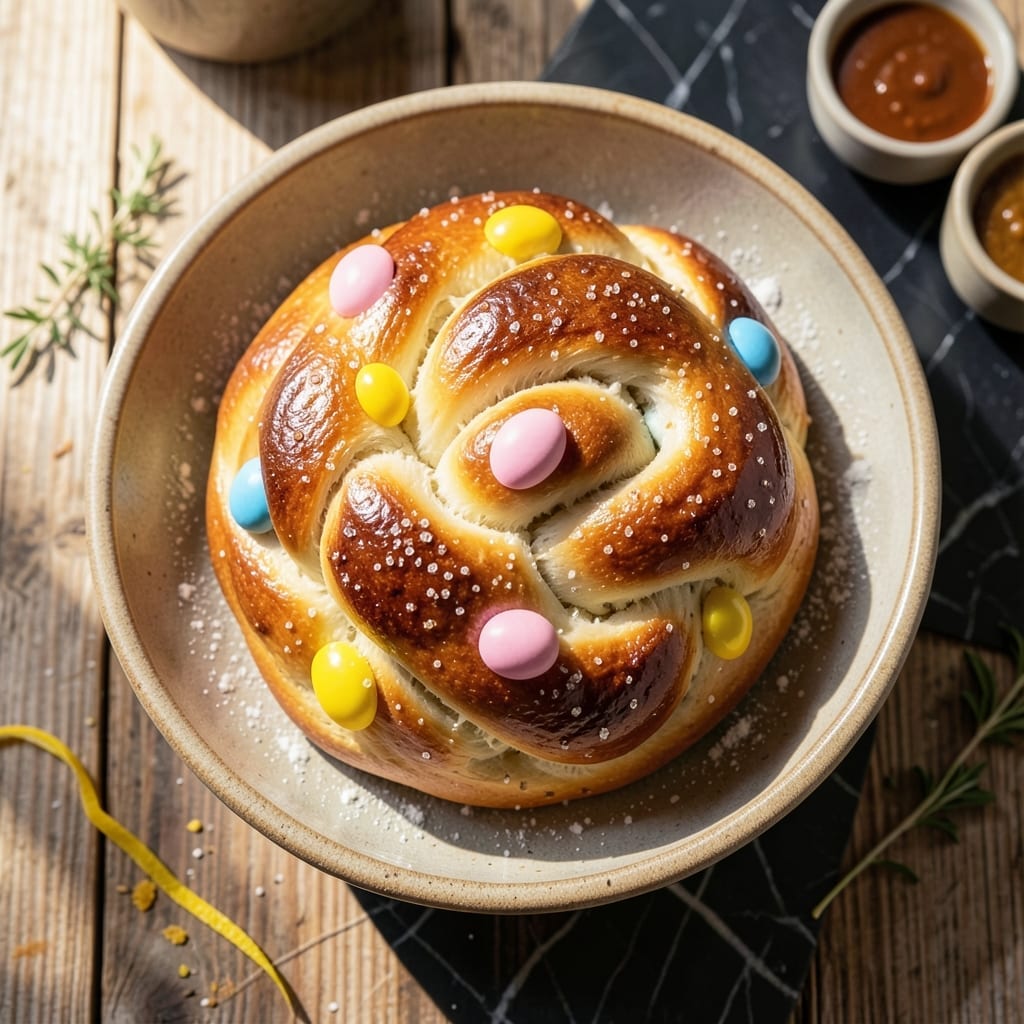
Standing on a step stool in my grandmother’s kitchen in Sicily, I learned this traditional recipe that carries the spirit of Italian Easter celebrations. This sweet citrus-infused loaf brings generations of family tradition to your table.
The dough, enriched with eggs and butter, develops a tender crumb that perfectly balances the bright flavors of orange and lemon zest. A touch of anise or vanilla adds depth, creating a traditional flavor profile that’s both comforting and festive.
Shaping the loaf into a braided ring isn’t just beautiful—it symbolizes the crown of thorns, a meaningful tradition for many Italian families. The baked bread emerges golden with a tender, slightly sweet interior.
Perfect for Easter morning or any special occasion, this recipe honors the past while creating new memories at your table.
Ingredients for Italian Easter Bread Recipe Giada
Traditional ingredients create this sweet citrus-infused loaf with Sicilian roots and family tradition.
| Ingredient | Amount | Notes |
|---|---|---|
| All-Purpose Flour 🌾 | 4 cups | Plus extra for dusting |
| Granulated Sugar 🍚 | ½ cup | Divided for dough and topping |
| Unsalted Butter 🧈 | ½ cup | Melted and cooled |
| Large Eggs 🥚 | 3 whole | Room temperature, divided |
| Whole Milk 🥛 | ¾ cup | Warmed to 110°F |
| Active Dry Yeast 🍞 | 2 ¼ tsp | One packet, proofed in milk |
| Orange Zest 🍊 | 1 tbsp | Freshly grated from 1 orange |
| Lemon Zest 🍋 | 1 tbsp | Freshly grated from 1 lemon |
| Vanilla Extract 🌿 | 1 tsp | Pure vanilla preferred |
| Anise Seeds 🌿 | 1 tsp | Optional for traditional flavor |
| Salt 🧂 | 1 tsp | Fine sea salt |
| Pearl Sugar 🍚 | ¼ cup | For topping, or substitute coarse sugar |
[recipe_ingredient_scaler]
The citrus zest is non-negotiable here. Organic oranges and lemons have the brightest, most fragrant oils in their skins—perfect for that authentic Sicilian flavor. I always grab mine from Whole Foods when they’re in season, but any well-stocked grocery store works. For the yeast, check the expiration date—old yeast won’t rise properly, and that’s a deal-breaker for this dough.
No anise seeds? Vanilla extract at double the amount gives you that warm depth (and most people have it on hand). Pearl sugar can be tricky to find—coarse turbinado sugar works just as well for crunch. If you’re out of whole milk, 2% works in a pinch, but the richness of whole milk really shines in the final loaf.
This bread stays fresh for 3-4 days in an airtight container. For longer storage, slice and freeze—toasts beautifully when you’re ready to eat. The dough can also be made a day ahead and left to rise overnight in the fridge.
Why You’ll Love This Recipe
- One Bowl Wonder: I mix everything in a single bowl—flour, sugar, butter, eggs, milk—and it’s ready for the oven. No fancy equipment, just my hands and a wooden spoon.
- Buttery Sweetness: The butter and sugar in the dough create this rich, tender crumb that’s just sweet enough. Honestly, it’s the kind of bread that makes you sneak an extra slice.
- Holiday or Anytime: I bake this for Easter, but it’s also my go-to for Sunday brunch or even as a sweet snack with coffee. Between us, it disappears faster than I can make it.
- Budget-Friendly Feast: A few pantry staples and I get a stunning loaf that feels special. I’ll be real: it’s way cheaper than buying a fancy dessert, and just as impressive.
Step-by-Step Instructions for Italian Easter Bread
This traditional method ensures a light, citrusy loaf with a beautiful pearl sugar topping.
Step 1: Activate the Yeast and Prepare Wet Ingredients
Warm the 0.75 cup whole milk to exactly 110°F—it should feel warm but not hot to the touch. In a small bowl, whisk the milk with the 2.25 tsp active dry yeast and 1 tsp granulated sugar from your 0.5 cup total. Let this sit for 5-7 minutes until foamy; this proves the yeast is alive and active.
In a separate large bowl, beat 2 whole large eggs (save the third for egg wash) with the remaining granulated sugar, 0.5 cup melted unsalted butter (cooled to room temperature), 1 tsp vanilla extract, 1 tbsp orange zest, and 1 tbsp lemon zest. The butter should be cool enough that it doesn’t cook the eggs when added.
Step 2: Combine Wet and Dry Ingredients
Once the yeast is foamy, pour it into the egg mixture and whisk to combine. In another bowl, sift together the 4 cups all-purpose flour, 1 tsp salt, and 1 tsp anise seeds. Gradually add the dry ingredients to the wet, mixing with a wooden spoon until a shaggy dough forms.
Here’s the thing—this dough will be sticky at first. Resist the urge to add more flour. Instead, let it rest for 5 minutes to hydrate fully. After resting, it should be easier to handle. Lightly dust your work surface with extra flour, then turn out the dough and knead for 8-10 minutes until smooth and elastic.
Step 3: First Rise and Shape the Loaf
Place the kneaded dough in a lightly greased bowl, cover with a clean kitchen towel, and let it rise in a warm, draft-free spot for 1.5 to 2 hours or until doubled in size. I like to turn my oven on to its lowest setting, then turn it off and place the bowl inside—this creates the perfect proofing environment.
Once doubled, punch down the dough to release the air. Divide it into 3 equal portions and roll each into a 20-inch rope. Braid the ropes together, pinching the ends to seal. Transfer the braided loaf to a parchment-lined baking sheet.
Step 4: Second Rise and Add Topping
Cover the braided loaf loosely with the kitchen towel and let it rise again for 45-60 minutes until puffy. Preheat your oven to 350°F during the last 15 minutes of rising. In a small bowl, beat the remaining 1 large egg with 1 tablespoon water for the egg wash.
Gently brush the egg wash over the entire loaf, ensuring all surfaces are coated. Sprinkle the 0.25 cup pearl sugar evenly over the top, pressing lightly so it adheres. The sugar will caramelize slightly during baking, creating a sweet, crunchy crust.
Step 5: Bake to Golden Perfection
Bake the loaf in the preheated oven for 25-30 minutes or until deep golden brown and the internal temperature reaches 190°F. Rotate the pan halfway through baking to ensure even browning. If the top browns too quickly, tent loosely with foil.
Remove the bread from the oven and let it cool on a wire rack for at least 20 minutes before slicing. This resting period allows the crumb to set. The finished loaf should have a tender, slightly sweet interior with a glossy, sugar-crusted top and the unmistakable aroma of citrus and anise.
Pro Tips For Making Italian Easter Bread Recipe Giada
- Proof the Dough: Give it a full 2 hours in a warm spot—I learned this the hard way when my first loaf came out dense as a hockey puck. Cover it with a damp towel to keep the surface from drying out.
- Soften the Butter: Take the unsalted butter out 30 minutes before mixing, or microwave it for 5-7 seconds if you’re in a rush. Cold butter tears the dough instead of blending in smooth.
- Skip Cold Eggs: Use room-temperature eggs straight from the counter, not the fridge. I was skeptical until I tried it, but they incorporate into the dough way faster and create a more even texture.
- Brush with Milk: Before baking, brush the top with whole milk for that golden-brown finish Giada’s version is known for. It’s a 10-second step that makes the loaf look bakery-worthy.
Best Sauces and Condiments for This italian easter bread recipe giada
Sweet Glazes
A simple powdered sugar glaze with 1 cup powdered sugar, 2 tbsp milk, and ½ tsp vanilla extract drizzled over warm slices adds a beautiful finish. I always use the wooden spoon Nonna gave me to stir it—some traditions you just don’t mess with. 💛
Honey Butter
Mix ½ cup softened butter with ¼ cup honey and a pinch of orange zest for a spread that complements the citrus notes perfectly. Serve it at Sunday family dinners, and watch it disappear.
Citrus Compote
A chunky orange-lemon compote made with 2 segmented oranges, 1 chopped lemon, and 2 tbsp sugar simmered for 10 minutes cuts through the sweetness. It’s like a taste of Sicily in every bite.
Whipped Mascarpone
Whip 8 oz mascarpone with 2 tbsp heavy cream and 1 tbsp sugar until light. This Italian specialty deli favorite adds richness without overpowering the bread’s delicate flavors. 🌟
Vanilla Pastry Cream
Fill the center of your braided loaf with 1 cup vanilla pastry cream before baking for a surprise. I learned this trick standing on a step stool in Nonna’s kitchen—some secrets are too good not to share.
Nutrition Facts
Frequently Asked Questions
Can I make this bread the night before?
Yes! Prepare the dough through the first rise, then refrigerate overnight. Shape and do the second rise in the morning. The cold fermentation actually enhances the flavor.
What if my dough doesn’t rise?
Check your yeast expiration date first. If it’s fresh, ensure your milk was exactly 110°F. Too hot kills yeast, too cold won’t activate it. A warm oven (turned off) is the perfect proofing spot.
Can I omit the anise seeds?
Double the vanilla extract or add 1 tsp almond extract for a different flavor profile. The citrus zests will still give that traditional Sicilian brightness.
How do I store leftovers?
Keep in an airtight container at room temperature for 3-4 days. For longer storage, slice and freeze. Toasting revives the texture beautifully.

Trained in classic French technique but raised on slow-cooked ribs and spicy rubs, she blends culinary skill with smoke and soul.
- Recipe for Boneless Pork Chops in Cast Iron Skillet: Sear and Baste to Juicy Perfection - October 3, 2026
- Recipe for Boneless Cross Rib Roast: Slow-Roasted Beef with Herb Crust - October 3, 2026
- Hamburgers in Sauce Recipe Crock Pot: Slow-Cooked Savory Delight - October 3, 2026