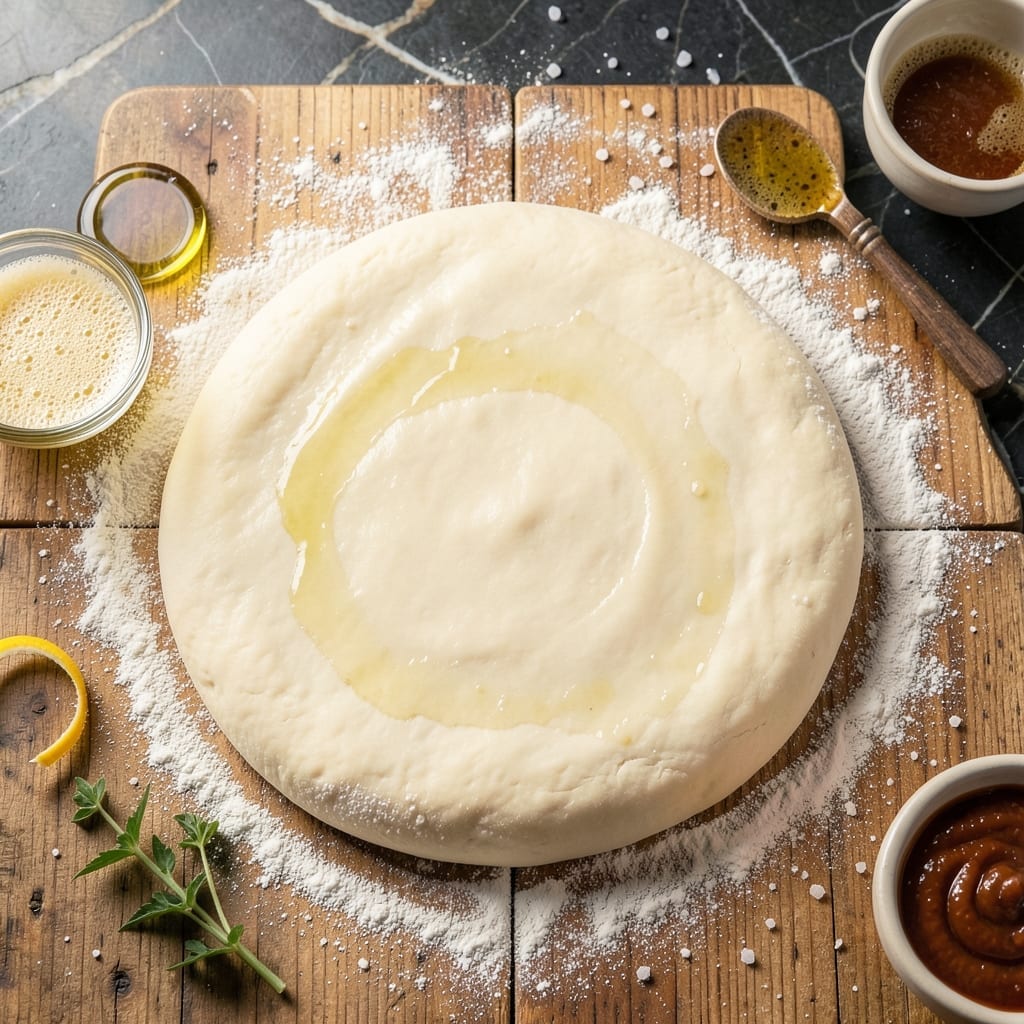
I developed this authentic pizza dough after years of testing in home kitchens, seeking that perfect Neapolitan-style base. The secret lies in Type 00 flour, which creates a tender yet crispy crust that’s impossible to replicate with standard flour.
This recipe stays true to traditional methods while adapting them for modern kitchens. The slow fermentation process develops complex flavors and creates those coveted air pockets in the crust.
What you’ll achieve is a dough that bakes into a golden, slightly charred crust with a soft, chewy interior—exactly what you’d find in a Neapolitan pizzeria. The extended rest time ensures maximum flavor and perfect texture.
Make a batch and experience the difference that authentic ingredients and techniques make in your homemade pizza.
Ingredients for Italian Pizza Dough Recipe 00 Flour
Type 00 flour and patience deliver that authentic Neapolitan texture you crave at home.
| Ingredient | Amount | Notes |
|---|---|---|
| Type 00 Flour 🌾 | 3 ½ cups | Caputo or Antimo brand preferred |
| Active Dry Yeast 🍞 | ¼ oz | One standard packet, 2 1/4 tsp |
| Fine Sea Salt 🧂 | 2 tsp | Diamond Crystal or Morton fine |
| Filtered Water 💧 | 1 ½ cups | Room temperature, about 70°F |
| Extra-Virgin Olive Oil 🫒 | 2 tbsp | For bowl coating and flavor |
| Semolina Flour 🌾 | ½ cup | For dusting work surface |
| Honey 🍯 | 1 tsp | Optional, helps yeast activation |
| Olive Oil 🫒 | 1 tbsp | For proofing bowl greasing |
[recipe_ingredient_scaler]
The flour is non-negotiable here. Caputo 00 or Antimo are the gold standards—find them at Eataly or specialty Italian markets. I’ve seen King Arthur carry it too. Look for the fine, silky texture (it should feel like powdered sugar). The yeast needs to be fresh—check the expiration date. Active dry works, but instant yeast can shave 10 minutes off your rise time.
No Type 00? Bread flour is your best backup, though the crust won’t be quite as tender. Out of semolina? All-purpose flour works for dusting, but expect a slightly denser dough. The honey is optional (skip it for a purist approach), but it gives the yeast a gentle nudge. For a more traditional taste, olive oil can replace it entirely—just reduce the water by a teaspoon.
The dough balls keep in the fridge for up to 3 days—actually improves with time. Freeze for 1 month if needed, but thaw overnight in the fridge. Bring to room temperature before shaping, or it’ll fight you every step of the way (worth the extra minute).
Why You’ll Love This Recipe
- 5-Minute Mix: I just dump the 00 flour, yeast, salt, and water in a bowl—no kneading marathons, no fancy tools.
- That 00 Flour Magic: Honestly, the texture is next-level: crisp outside, airy inside, with a subtle sweetness from the fine flour.
- Weeknight Hero: I’ll roll it thin for pizza or thick for focaccia, and it turns any Tuesday into a pizzeria night.
- Penny-Wise Perfection: Five basic ingredients, most of which I already have, and it makes enough for two pizzas—leftovers taste even better the next day.
Step-by-Step Instructions for Italian Pizza Dough with Type 00 Flour
Here’s the authentic method that makes all the difference in your homemade pizza.
Step 1: Activate the Yeast and Bloom the Mixture
In a large mixing bowl, combine the 1.5 cups Filtered Water, 0.25 oz Active Dry Yeast, and 1 tsp Honey. The water should be room temperature—about 70°F. Stir gently and let it sit for 5-7 minutes.
You’ll notice the mixture starts to foam and bubble—that’s the yeast activating. The honey gives it a gentle boost. If you don’t see any activity, your yeast might be expired, and you’ll need to start over with fresh yeast. This step is crucial for proper fermentation.
Step 2: Combine Flour and Salt for the Base
In a separate large bowl, whisk together the 3.5 cups Type 00 Flour and 2 tsp Fine Sea Salt. I prefer Caputo or Antimo brands for their fine texture and authentic Italian quality. Make a well in the center of the flour mixture.
Pour the activated yeast mixture into the well, along with the 2 tbsp Extra-Virgin Olive Oil. The oil adds richness and helps create that tender, elastic dough we’re after. Using a wooden spoon, begin mixing from the center outward, gradually incorporating the flour into the wet ingredients.
Step 3: Knead to Develop the Gluten Structure
Turn the dough out onto a clean surface dusted with 0.5 cup Semolina Flour. The semolina prevents sticking and adds a subtle texture to your finished crust. Knead the dough for 8-10 minutes by hand, pushing, folding, and turning it until it becomes smooth and elastic.
You’ll know it’s ready when the dough springs back when pressed gently with your finger. This process develops the gluten, which gives pizza dough its characteristic chewy texture. If the dough feels too sticky, add a bit more Type 00 Flour, but be sparing—too much flour can make the dough tough.
Step 4: First Rise and Proof the Dough
Lightly coat a clean bowl with the 1 tbsp Olive Oil. Place the dough in the bowl and turn it to coat all sides with the oil. This prevents a skin from forming and makes the dough easier to work with later. Cover the bowl with a damp kitchen towel or plastic wrap.
Let the dough rise in a warm, draft-free place for 1.5-2 hours, or until it has doubled in size. I like to place it near a sunny window or on top of the refrigerator where it’s slightly warm. The ideal temperature for proofing is around 75-80°F.
Step 5: Shape and Prepare for the Final Rest
Once the dough has doubled, punch it down gently to release the air. Divide it into 4 equal portions for individual pizzas. Shape each portion into a smooth ball by tucking the edges under and rolling it gently on the counter.
Place the dough balls on a lightly floured surface, cover them with the damp towel, and let them rest for another 30-60 minutes. During this time, the gluten relaxes, making the dough easier to stretch without tearing. Your dough is now ready to be shaped into pizzas and topped with your favorite ingredients.
Pro Tips For Making Italian Pizza Dough Recipe 00 Flour
- Use Warm Water: Activate your yeast properly with water around 105-110°F—any hotter and you’ll kill it, any colder and it won’t wake up. I learned this the hard way after a few flat, sad doughs.
- Weigh Your 00 Flour: Type 00 flour is finely milled and compacts easily, so scooping with a cup gives inconsistent results. Always use a scale for accuracy—200g per cup is a safe bet.
- Skip the Rush: Let the dough rise slowly in the fridge for at least 24 hours. Sounds tedious, but it develops flavor and texture you just can’t get in a hurry.
- Oil the Bowl: Coat your rising bowl with about 1 tablespoon of that extra-virgin olive oil before adding the dough. Prevents sticking and makes the first punch-down way easier.
Wine and Beer Pairings for italian pizza dough recipe 00 flour
Italian Wine Pairings
For this creation, I love a crisp Lacrima Christi del Vesuvio white from Campania. Its mineral notes and bright acidity cut through the dough’s richness while complementing tomato-based toppings. Serve chilled to 50-55°F for optimal flavor. 🍷
Bold Red Options
A light-bodied Chianti Classico with its cherry notes works beautifully with Margherita-style pizzas. The Sangiovese grape’s acidity mirrors tomato sauce perfectly. I recommend Ruffino Aziano for its approachable price point.
Sparkling Choices
Prosecco’s effervescence cleanses your palate between bites. Look for Brut styles (dry) rather than sweeter versions. The La Marca brand offers consistent quality at most grocery stores.
Beer Alternatives
An Italian pilsner like Peroni or Moretti provides crisp refreshment without overpowering flavors. The carbonation helps cut through the cheese’s richness. Serve in a chilled glass for best results. 🍺
Non-Alcoholic Pairing
For Sunday family dinners, I often serve San Pellegrino Aranciata. The orange citrus notes complement tomato sauce beautifully, and the bubbles provide that same palate-cleansing effect as wine.
Nutrition Facts
Frequently Asked Questions
Why is Type 00 flour better for pizza?
Type 00 flour is finely milled, creating a silky texture that produces a tender, crispy crust. Its low protein content results in a lighter, airier dough compared to standard flour.
Can I use bread flour instead?
Yes, bread flour works as a substitute, though the crust will be slightly denser. The higher protein content develops more gluten, making the dough chewier but less authentic.
How long can I refrigerate the dough?
Store the dough in an airtight container in the fridge for up to 3 days. The flavor improves with time, but let it come to room temperature before shaping.
What if my dough doesn’t rise?
Check your yeast expiration date first. Ensure the water is warm enough (70-80°F) and the environment is draft-free. Cold temperatures or old yeast are common culprits.

Trained in classic French technique but raised on slow-cooked ribs and spicy rubs, she blends culinary skill with smoke and soul.
- Recipe for Boneless Pork Chops in Cast Iron Skillet: Sear and Baste to Juicy Perfection - October 3, 2026
- Recipe for Boneless Cross Rib Roast: Slow-Roasted Beef with Herb Crust - October 3, 2026
- Hamburgers in Sauce Recipe Crock Pot: Slow-Cooked Savory Delight - October 3, 2026