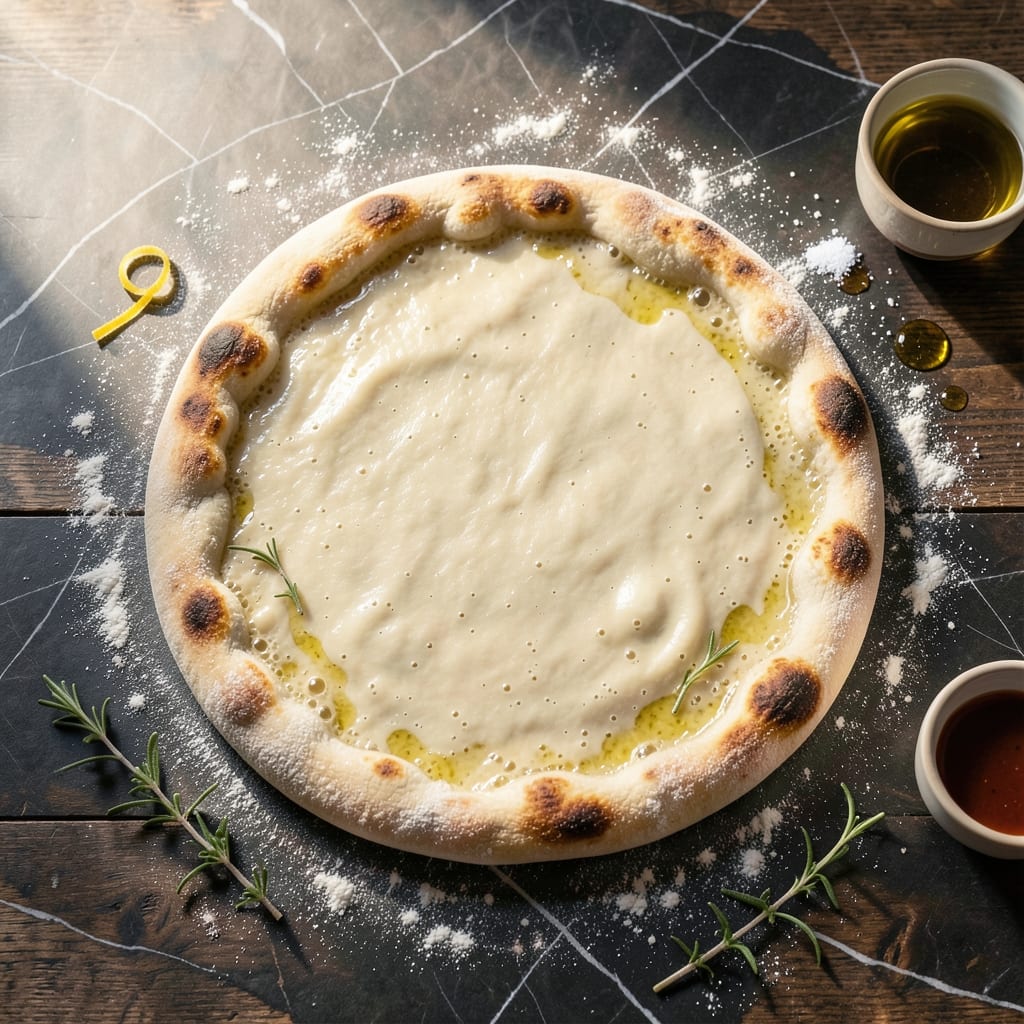
This dough captures the essence of Neapolitan pizza, just as Giada would make it. Simple ingredients combine to create a crust that’s soft, chewy, and full of flavor.
A slow fermentation is key to developing that authentic taste and texture. The process takes time, but the results are worth every minute of the wait.
You’ll end up with a golden, slightly charred crust that puffs up beautifully in the oven. It’s the foundation for a pizza that tastes like it came straight from a wood-fired oven in Naples.
This foolproof method delivers restaurant-quality results at home. The dough is versatile enough for any topping combination you choose.
Ingredients for Italian Pizza Dough Recipe Giada
These eight simple ingredients create an authentic Neapolitan-style crust with restaurant-quality results.
| Ingredient | Amount | Notes |
|---|---|---|
| All-Purpose Flour 🌾 | 3 ½ cups | Plus extra for dusting work surface |
| Fine Sea Salt 🧂 | 2 tsp | Diamond Crystal preferred for consistency |
| Active Dry Yeast 🍞 | 1 tsp | One packet, proofed in warm water |
| Warm Water 💧 | 1 ½ cups | 110°F to 115°F for yeast activation |
| Extra-Virgin Olive Oil 🫒 | 2 tbsp | Divided for dough and bowl |
| Granulated Sugar 🍚 | 1 tsp | Feeds yeast for fermentation |
| Semolina Flour 🌾 | ½ cup | For dusting pizza peel |
| Cornmeal 🌽 | ¼ cup | Alternative to semolina for peel |
[recipe_ingredient_scaler]
The flour is fundamental here. King Arthur or Caputo 00 deliver authentic texture—avoid bread flour, as its higher protein creates a tougher crust. Diamond Crystal kosher salt is the professional standard (its coarse grains dissolve evenly). For yeast, SAF Gold instant is my go-to, but active dry works with proper proofing. Always check expiration dates on yeast—old packets won’t rise properly.
No semolina? Fine cornmeal works equally well for dusting the peel. Out of olive oil? Use any neutral oil, but you’ll lose some flavor depth. For a more complex taste, replace 1/4 cup water with room-temperature beer. The sugar isn’t strictly traditional but ensures reliable yeast activation—honey at half the amount works too (though purists may object).
Dough balls keep refrigerated for 48 hours (flavor improves with time) or frozen for 1 month. Bring to room temperature before shaping. Store flour in airtight containers to prevent moisture absorption—6-month shelf life for peak freshness.
Why You’ll Love This Recipe
- No-Fuss Rising: I just mix the yeast with warm water and a drizzle of olive oil, then let it do its thing—no fancy steps.
- Crave-Worthy Crust: That fine sea salt and extra-virgin olive oil give it a rich, authentic Italian taste every time.
- Weeknight Hero: Honestly, it’s my go-to for quick dinners, lunch prep, or even impromptu parties.
- Budget Stretch: A bag of flour and a packet of yeast make multiple pizzas, saving me a ton compared to takeout.
Step-by-Step Instructions for Italian Pizza Dough
Master this traditional technique for a crust that’s crisp yet chewy with authentic character.
Step 1: Activate the Yeast Mixture
In a small bowl, combine the 1.5 cups warm water with the 1 tsp active dry yeast and 1 tsp granulated sugar. Let this sit undisturbed for 5-7 minutes until the surface becomes foamy and bubbly—this confirms your yeast is active and ready to work.
The water temperature should be between 110°F to 115°F; any hotter will kill the yeast, while cooler water will slow activation. I find this brief proofing step ensures consistent results, especially with older yeast packets.
Step 2: Combine Dry Ingredients and Form the Dough
In a large mixing bowl, whisk together the 3.5 cups all-purpose flour and 2 tsp fine sea salt. Create a well in the center and pour in the proofed yeast mixture and 1 tbsp extra-virgin olive oil. Using a wooden spoon, gradually incorporate the flour into the wet ingredients until a shaggy dough forms.
The dough will be sticky at this stage—that’s normal. Resist adding more flour; the hydration level is crucial for that authentic Neapolitan-style texture. The Diamond Crystal salt ensures even distribution without overpowering the gentle yeast flavor.
Step 3: Knead to Develop Gluten Structure
Turn the dough out onto a lightly floured surface dusted with all-purpose flour. Knead vigorously for 8-10 minutes until the dough becomes smooth and elastic. You’ll notice it transforms from rough and sticky to silky and supple—that’s the gluten developing properly.
Use the heel of your hand to push the dough away, then fold it back over itself repeatedly. If it sticks, add minimal flour—just enough to prevent it from adhering to your work surface. Proper kneading creates the chewy texture characteristic of authentic Italian pizza crust.
Step 4: First Rise Until Doubled in Volume
Shape the dough into a ball and place it in a clean bowl coated with the remaining 1 tbsp extra-virgin olive oil. Cover the bowl with a damp kitchen towel or plastic wrap. Let it rise in a warm, draft-free location for 1.5 to 2 hours or until doubled in size.
The ideal rising temperature is about 75°F to 80°F. I place my bowl near the oven with the light on, which provides just enough warmth. The dough should spring back slowly when poked with a finger—if it springs back quickly, it needs more time.
Step 5: Divide, Shape, and Prepare for Final Use
Punch down the risen dough to release the air, then turn it out onto a surface dusted with either 0.5 cup semolina flour or 0.25 cup cornmeal. Divide the dough into 4 equal portions for individual pizzas. Shape each into a ball, cover with a towel, and let rest for 15 minutes before stretching.
This resting period relaxes the gluten, making the dough easier to stretch into a thin crust without snapping back. The semolina or cornmeal prevents sticking while adding a subtle texture to the crust’s underside. Your dough is now ready for topping and baking into authentic Italian pizza.
Pro Tips For Making Italian Pizza Dough Recipe Giada
- Test Your Yeast: I learned this the hard way—always proof your active dry yeast in the warm water with a pinch of sugar first. If it doesn’t foam after 5 minutes, your dough won’t rise, no matter how long you wait.
- Use Room-Temp Water: Skip the lukewarm guesswork—aim for 105-110°F water. Too hot kills the yeast, too cold slows it down, and I’ve ruined batches both ways.
- Oil the Bowl Well: Coat the bowl with about 1 tablespoon of extra-virgin olive oil before the first rise. Sounds excessive, but it prevents sticking and makes the dough easier to handle later.
- Let It Double: Resist the urge to rush—give the dough a full 1.5-2 hours to rise until it’s truly doubled in size. My early pizzas were dense because I didn’t wait long enough.
Wine and Beer Pairings for This Recipe
Italian Wine Pairings
For this pizza, I always reach for Lambrusco from Emilia-Romagna. Its slight effervescence and dark berry flavors cut through the richness of melted cheese. Chianti Classico is another excellent choice, with its bright acidity and cherry notes complementing tomato sauce perfectly. 🍷
Northern Italian Options
Pinot Grigio from Alto Adige offers crisp citrus and mineral notes that refresh your palate between bites. For a bolder choice, Barbera d’Asti has enough acidity and body to stand up to hearty pizza toppings like sausage or mushrooms.
Beer Pairings
I love pairing this with Peroni or Moretti—their light, crisp profiles cleanse the palate without overwhelming the flavors. For craft beer lovers, a Belgian-style witbier with its citrus and coriander notes provides interesting contrast. Avoid heavy IPAs or stouts. 🍺
Sparkling Alternatives
Prosecco is my go-to sparkling option. Its light, fruity character and gentle bubbles make it incredibly versatile with pizza. The slight sweetness balances the acidity in the tomato sauce beautifully.
Non-Alcoholic Options
San Pellegrino Aranciata offers a citrusy, slightly bitter profile that pairs wonderfully. For a classic Italian choice, blood orange soda provides a sweet-tart contrast to the savory pizza flavors. These work especially well for lunch pairings.
Nutrition Facts
Frequently Asked Questions
Why does the water temperature matter so much?
Water between 110°F to 115°F activates yeast without killing it. Too hot destroys the yeast, too cold slows fermentation. Use a thermometer for accuracy.
Can I use bread flour instead of all-purpose?
No, bread flour’s higher protein creates a tougher crust. Stick with all-purpose flour or 00 flour for authentic Neapolitan texture. The lower protein yields a tender, chewy bite.
How long can I refrigerate the dough before using?
Store dough balls in the fridge for up to 48 hours. The flavor deepens with time. Let it return to room temperature before stretching for best results.
What’s the best way to stretch dough without tearing?
Rest shaped dough balls for 15 minutes to relax the gluten. Use your fingertips to gently press and stretch from the center outward. Avoid rolling pins.

Trained in classic French technique but raised on slow-cooked ribs and spicy rubs, she blends culinary skill with smoke and soul.
- Recipe for Boneless Pork Chops in Cast Iron Skillet: Sear and Baste to Juicy Perfection - October 3, 2026
- Recipe for Boneless Cross Rib Roast: Slow-Roasted Beef with Herb Crust - October 3, 2026
- Hamburgers in Sauce Recipe Crock Pot: Slow-Cooked Savory Delight - October 3, 2026