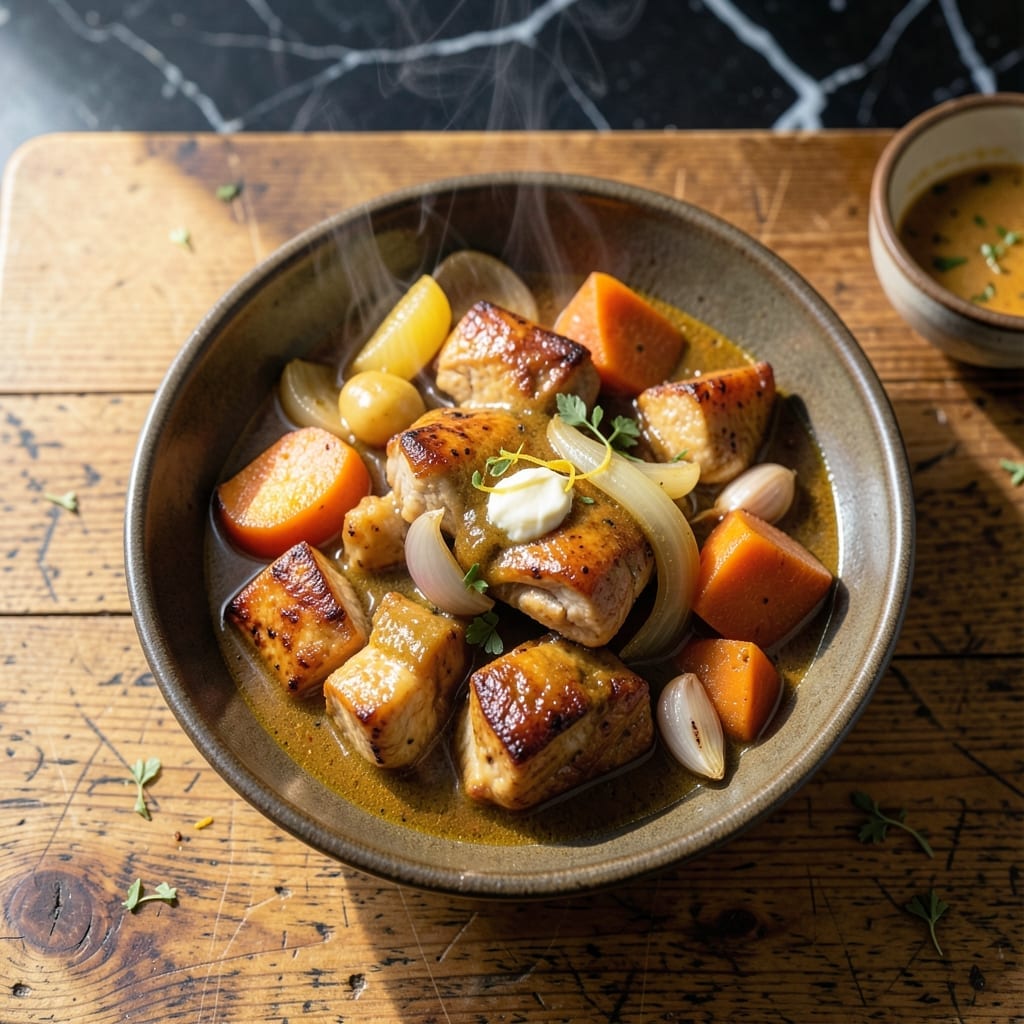
This Japanese chicken curry brings comfort in every bite with its thick, velvety gravy and warm, aromatic spices. I developed this version after years of perfecting the balance between sweetness and savory depth.
The cubed chicken stays tender while soaking up the rich curry sauce, which gets its signature thickness from a roux of butter, flour, and curry powder. It’s a foolproof method that delivers restaurant-quality results at home.
What emerges is a dish with layers of flavor—sweet potatoes, carrots, and onions soften into the sauce while maintaining their shape. Each spoonful offers a perfect harmony of textures and tastes.
Serve over steamed rice for the full experience. This recipe transforms a simple weeknight dinner into something truly special.
Ingredients for Japanese Chicken Curry Recipe with Cubes
Velvety curry sauce begins with butter, flour, and aromatic spices. Serve over rice for comfort.
| Ingredient | Amount | Notes |
|---|---|---|
| Boneless Chicken Thighs 🍗 | 1 ½ lb | Cut into 1-inch cubes |
| Sweet Potatoes 🍠 | 2 whole | Peeled and cubed |
| Carrots 🥕 | 2 whole | Peeled and sliced |
| Yellow Onion 🧅 | 1 whole | Thinly sliced |
| Garlic Cloves 🧄 | 3 cloves | Minced finely |
| Unsalted Butter 🧈 | 3 tbsp | For roux base |
| All-Purpose Flour 🌾 | 3 tbsp | For roux thickening |
| Japanese Curry Powder 🌿 | 3 tbsp | S&B Golden or House Foods |
| Honey 🍯 | 1 tbsp | For balancing sweetness |
| Soy Sauce 🥢 | 1 tbsp | Low-sodium preferred |
| Garam Masala 🌶️ | ½ tsp | Optional for depth |
| Chicken Stock 🍲 | 2 cups | Low-sodium or homemade |
| Bay Leaf 🍃 | 1 whole | For aromatic infusion |
| Steamed White Rice 🍚 | 4 cups | Cooked, for serving |
| Vegetable Oil 🫒 | 1 tbsp | For sautéing vegetables |
[recipe_ingredient_scaler]
The chicken thighs are non-negotiable here—bone-in adds flavor but boneless keeps it foolproof. Costco or Whole Foods have quality options with good fat marbling, which keeps the meat moist during cooking. For the curry powder, S&B Golden Curry or House Foods are authentic choices; avoid generic blends as they lack the nuanced sweetness. The sweet potatoes should be firm and bright orange (not the pale, dry variety).
No chicken thighs? Boneless breasts work but require careful timing to avoid dryness. Out of Japanese curry powder? Madras curry powder at double the amount gets you close. For a gluten-free roux, cornstarch or rice flour can replace all-purpose flour. The honey can be swapped for maple syrup or agave, but reduce slightly as they’re thinner. Fresh ginger (1 tsp grated) adds brightness if you have it.
This curry tastes even better the next day once flavors meld. Refrigerate in an airtight container for up to 4 days or freeze for 3 months. The roux can be made ahead and stored in the fridge for 1 week—just soften before using. Reheat gently to maintain the velvety texture.
Why You’ll Love This Recipe
- One Pot Wonder: I love that everything—chicken, sweet potatoes, carrots—simmers together in one pot, so cleanup is a breeze.
- Rich Comfort: The garlic and onions build a deep, savory base that makes the curry sauce irresistibly cozy.
- Feeds a Crowd: Honestly, it’s my go-to for family dinners because it stretches easily and everyone asks for seconds.
- Better Next Day: The flavors meld overnight, so leftovers taste even more incredible—if they last that long.
Step-by-Step Instructions for Japanese Chicken Curry With Cubes
This method delivers rich, velvety sauce with tender chicken and vegetables in every bite.
Step 1: Sear the Chicken and Sauté Vegetables
Heat the 1 tablespoon vegetable oil in a large pot over medium-high heat until shimmering. Add the 1.5 lb boneless chicken thighs cut into 1-inch cubes and cook for 5-6 minutes, turning occasionally, until golden brown on all sides.
Remove the chicken with a slotted spoon and set aside. In the same pot, add the 1 whole yellow onion (thinly sliced), 2 whole carrots (peeled and sliced), and 2 whole sweet potatoes (peeled and cubed). Sauté for 4-5 minutes until the onion softens and the vegetables begin to develop light browning.
Add the 3 cloves garlic cloves (minced finely) and cook for 30 seconds until fragrant. This builds the aromatic foundation for the curry.
Step 2: Create the Roux Base
Reduce heat to medium and add the 3 tbsp unsalted butter to the pot. Once melted, stir in the 3 tbsp all-purpose flour and cook for 1-2 minutes, stirring constantly, until the mixture forms a light golden roux.
This step is crucial—it thickens the sauce and removes the raw flour taste. Watch for the color change; it should resemble light caramel but not darken too much.
Immediately add the 3 tbsp Japanese curry powder and 0.5 tsp garam masala (optional for depth), stirring vigorously for 30 seconds to toast the spices and release their full aroma.
Step 3: Build the Sauce and Simmer
Gradually pour in the 2 cups chicken stock, whisking constantly to prevent lumps from forming. Add the 1 whole bay leaf, 1 tbsp honey, and 1 tbsp soy sauce. Stir until the mixture is smooth and begins to thicken slightly.
Return the chicken to the pot, along with any accumulated juices. Bring to a gentle simmer, then reduce heat to medium-low. Cover and cook for 20-25 minutes, stirring occasionally, until the vegetables are fork-tender and the sauce has thickened to a velvety consistency.
The sauce should coat the back of a spoon and the chicken should be fall-apart tender. If it’s too thick, add a splash of water; if too thin, simmer uncovered for a few more minutes.
Step 4: Adjust Seasoning and Serve
Remove the bay leaf and discard. Taste the curry and adjust seasoning if needed—the honey and soy sauce should balance the richness of the spices without overpowering them.
Let the curry rest off the heat for 5 minutes to allow the flavors to meld together. This resting period ensures every bite is infused with the deep, comforting spices.
Serve hot over the 4 cups steamed white rice, ensuring each portion has a generous amount of sauce, chicken, and vegetables. The rice soaks up the thick gravy, making every mouthful satisfying and hearty.
Pro Tips For Making Japanese Chicken Curry Recipe With Cubes
- Brown the Chicken Well: Sear the boneless chicken thigh cubes in batches over medium-high heat until deeply golden—about 4-5 minutes per side. I learned this the hard way when my curry tasted flat because I rushed this step.
- Cut Uniform Cubes: Dice the sweet potatoes, carrots, and chicken into even 1-inch pieces so everything cooks at the same rate. Sounds obvious, but I used to get lazy and end up with half-mushy, half-raw veggies.
- Bloom the Spices: After sautéing the onion and garlic, add the curry roux and cook for 1-2 minutes, stirring constantly, to wake up the flavors. Skip this and your curry will taste dull, no matter what else you do.
- Simmer Covered: Once everything’s in the pot, cover and simmer on low for 20-25 minutes. This keeps the sweet potatoes from turning to mush while guaranteeing the chicken stays tender.
Common Mistakes When Making Great japanese chicken curry recipe with cubes
Roux Burning
Never walk away while toasting your butter-flour roux. It takes just 1-2 minutes to reach that perfect light golden color, but it can scorch in seconds. I learned this the hard way during my first attempt at curry—burnt flour tastes bitter and ruins the whole pot. 🌡️
Lumpy Sauce
Always whisk constantly when adding chicken stock to your roux. Lumps form quickly if you pour too fast. If you do get lumps, don’t panic—just whisk vigorously or use an immersion blender to smooth it out before adding the chicken back in.
Overcooked Chicken
Remove the 1.5 lb chicken thighs after browning and set aside. If you leave them in while building the roux, they’ll turn rubbery. Return them only after the sauce starts simmering. This ensures fall-apart tenderness without drying out.
Underseasoned Curry
Taste before serving—this dish needs that perfect balance. The 1 tbsp honey and 1 tbsp soy sauce should complement, not overpower. If it tastes flat, add a pinch more Japanese curry powder or a dash of salt. Trust your palate.
Skipping the Rest
That 5-minute rest off heat isn’t optional. It lets the sauce thicken further and the flavors meld. I’ve served it immediately before, and the difference is night and day. 💡
Wrong Pot Size
Use a large, heavy-bottomed pot—at least 5-6 quarts. A small pot causes spills when stirring and doesn’t allow proper simmering. My Le Creuset Dutch oven is perfect for this. The vegetables and chicken need room to cook evenly.
Nutrition Facts
Frequently Asked Questions
Can I use chicken breast instead of thighs?
Yes, but thighs stay juicier. If using breasts, reduce cooking time to 15-18 minutes to prevent dryness.
Why is my curry sauce too thin?
Simmer uncovered for 5-10 minutes to thicken. For faster results, mix 1 tablespoon cornstarch with water, then stir into the sauce.
Can I make this ahead of time?
The flavors deepen overnight. Store in an airtight container for up to 4 days in the fridge.
What if I don’t have Japanese curry powder?
Substitute with Madras curry powder (use double the amount) and add 1 teaspoon sugar for sweetness.

Trained in classic French technique but raised on slow-cooked ribs and spicy rubs, she blends culinary skill with smoke and soul.
- Recipe for Boneless Pork Chops in Cast Iron Skillet: Sear and Baste to Juicy Perfection - October 3, 2026
- Recipe for Boneless Cross Rib Roast: Slow-Roasted Beef with Herb Crust - October 3, 2026
- Hamburgers in Sauce Recipe Crock Pot: Slow-Cooked Savory Delight - October 3, 2026