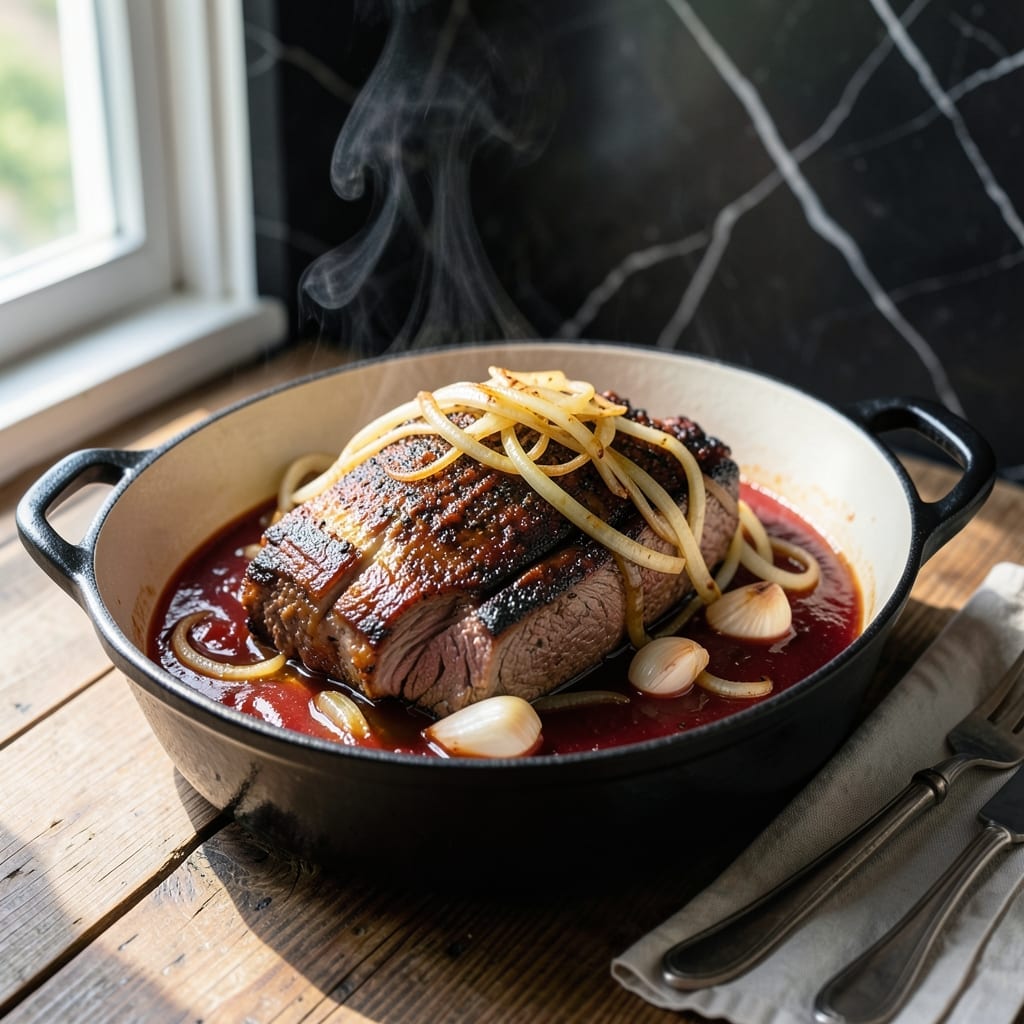
This slow-roasted brisket transforms tough cuts into tender, flavorful perfection for your holiday table. I developed this method after testing multiple approaches in my small kitchen, always seeking that ideal balance of rich sauce and melt-in-your-mouth meat.
The secret lies in the long, low-temperature cooking process that breaks down the connective tissue while infusing every bite with deep, savory notes. A simple spice rub and patient roasting time create results that rival any deli.
What emerges from the oven is beef so fork-tender it nearly falls apart, bathed in a sauce that’s been enriched by hours of slow cooking. The aroma alone will have everyone gathering around the kitchen.
Serve this centerpiece with traditional sides for a meal that honors tradition while feeling special enough for any celebration.
Ingredients for Jewish Beef Brisket Recipe Oven
Pantry staples meet a beautiful cut of beef for the holiday table.
| Ingredient | Amount | Notes |
|---|---|---|
| Beef Brisket 🥩 | 5 lb | Flat cut preferred for even cooking |
| Onions 🧅 | 3 whole | Yellow or sweet, sliced thin |
| Garlic Cloves 🧄 | 8 cloves | Minced for deep flavor infusion |
| Tomato Paste 🍅 | ½ cup | For sauce base thickness |
| Ketchup 🍅 | 1 cup | Adds sweetness and tang |
| Apple Cider Vinegar 🍏 | ¼ cup | Balances sweetness with acidity |
| Brown Sugar 🍚 | ½ cup | Light or dark, packed |
| Paprika 🌶️ | 2 tbsp | Sweet or smoked variety |
| Black Pepper 🌶️ | 2 tsp | Freshly ground for best flavor |
| Salt 🧂 | 2 tsp | Kosher or sea salt preferred |
| Dried Thyme 🌿 | 1 tsp | Crushed between fingers for aroma |
| Dried Oregano 🍃 | 1 tsp | Mediterranean variety ideal |
| Bay Leaves 🌿 | 2 whole | Removed before serving |
| Beef Broth 🥩 | 2 cups | Low-sodium for controlled seasoning |
[recipe_ingredient_scaler]
The brisket is non-negotiable here. Flat cut from a kosher butcher (if you have one nearby) or Costco works great for a crowd. Look for good marbling—those white streaks mean flavor and tenderness. Most grocery stores label it as ‘brisket flat half’ or just ‘brisket.’ Avoid the point cut for this; it’s fattier and cooks less evenly. Ask the butcher to leave the fat cap on for self-basting magic.
No tomato paste? Crushed tomatoes cooked down work in a pinch (just reduce the liquid elsewhere). Out of ketchup? Substitute with barbecue sauce at half the amount—it’s sweeter so go easy. Apple cider vinegar can be swapped for white vinegar (less depth but works). The paprika is your color and smokiness—Penzeys has amazing quality if you’re ordering online.
Brisket tastes even better the next day—store in its juices for up to 5 days. Freezes beautifully for 3 months (slice before freezing for easy portions). The sauce thickens as it cools, so reheat gently with a splash of water.
Why You’ll Love This Recipe
- Set It and Forget: I toss everything in one pan, cover it, and let the oven do the work—no babysitting required.
- Rich, Sweet Depth: The tomato paste and ketchup caramelize with the onions and garlic, creating that signature sticky, savory-sweet glaze.
- Holiday to Weeknight: Honestly, it’s my Rosh Hashanah star, but I’ve served it for Sunday dinner too.
- Leftovers for Days: That brisket just gets better, and the meat stretches for sandwiches, tacos, or even hash.
Step-by-Step Instructions for Jewish Beef Brisket Oven
Here’s the method. Straightforward, tested, works every time.
Step 1: Sear the Beef Brisket
Pat the 5 lb Beef Brisket dry with paper towels and season both sides generously with 2 tsp Salt and 2 tsp Black Pepper. This creates a flavorful crust. Heat a large, heavy oven-safe pot or Dutch oven over medium-high heat.
Add the brisket and sear for 5-7 minutes per side until deeply browned. Don’t rush this step—the caramelization here builds the foundation of flavor for the entire dish. Once browned, remove the brisket and set it aside.
Step 2: Build the Flavor Base
In the same pot, add the 3 whole Onions (sliced thin) and cook for 5 minutes until softened and starting to brown. Add the 8 cloves Garlic Cloves (minced) and cook for 1 minute until fragrant. This aromatic base will infuse the sauce with depth.
Stir in the 0.5 cup Tomato Paste, 2 tbsp Paprika, 1 tsp Dried Thyme, 1 tsp Dried Oregano, and 2 whole Bay Leaves. Cook for 2 minutes, stirring constantly, to toast the spices and deepen their flavors.
Step 3: Add Liquids and Return the Brisket
Pour in the 1 cup Ketchup, 0.25 cup Apple Cider Vinegar, 0.5 cup Brown Sugar, and 2 cups Beef Broth. Stir well to combine all the ingredients and dissolve the browned bits from the bottom of the pot. This creates a rich, tangy-sweet sauce.
Return the brisket to the pot, spooning some of the sauce over the top to coat it evenly. The liquid should come about halfway up the sides of the meat. Bring the mixture to a gentle simmer.
Step 4: Slow-Roast to Tenderness
Cover the pot tightly with a lid or aluminum foil and transfer it to a preheated 325°F oven. Slow-roast for 3 to 3.5 hours, flipping the brisket halfway through the cooking time. This low and slow method ensures the meat becomes fork-tender.
Check the brisket occasionally to ensure the liquid hasn’t reduced too much. If it seems dry, add a splash of water or additional Beef Broth. The brisket is done when it pulls apart easily with a fork and the internal temperature reaches 195-200°F.
Step 5: Rest and Serve
Carefully remove the brisket from the pot and transfer it to a cutting board. Remove the Bay Leaves from the sauce and discard them. Let the brisket rest for 15-20 minutes before slicing. This allows the juices to redistribute, keeping the meat moist.
Slice the brisket against the grain into ¼-inch thick pieces. Serve with the sauce spooned over the top. The sauce should be rich, slightly sweet, and tangy, complementing the tender, flavorful beef perfectly.
Pro Tips For Making Jewish Beef Brisket Recipe Oven
- Low and Slow Wins: Cook the brisket at 300°F for at least 3 hours—any hotter and the meat will toughen up instead of turning fork-tender. I learned this the hard way after my first few attempts came out chewy.
- Sear the Brisket First: Before braising, sear the brisket in a hot pan for 3-4 minutes per side to lock in juices. My grandmother swore by this, and the depth of flavor it adds is undeniable.
- Skip the Lean Cut: Resist the urge to buy a lean brisket—fat is flavor, and a well-marbled piece will stay moist through the long cook. After a few dry results, I finally accepted that the extra fat is non-negotiable.
- Use Extra Onions: Double the onions called for in the recipe—they melt down into a sweet, rich sauce that pairs perfectly with the brisket. Sounds like a lot, but it’s the easiest way to elevate the dish without extra effort.
Best Sauces and Condiments for This Recipe
Classic Horseradish Sauce
For that authentic deli kick, mix ½ cup prepared horseradish with 1 cup sour cream and 1 tsp lemon juice. I tested this ratio in my tiny kitchen and found it strikes the perfect balance between creamy and spicy. Let it sit for 30 minutes before serving to let flavors meld. 💪
Sweet and Tangy Option
Combine 1 cup applesauce with 2 tbsp brown sugar and 1 tsp cinnamon for a sweeter contrast to the rich brisket. This reminds me of the applesauce my Irish grandma served with pot roast—simple but unforgettable.
Spicy BBQ Glaze
Simmer 1 cup BBQ sauce with 1 tbsp sriracha and 1 tsp smoked paprika for 5 minutes to thicken. Brush it on slices right before serving for a sticky, smoky finish that complements the oven-roasted flavors perfectly.
Herb-Infused Jus
Strain the cooking liquid and reduce it by half over medium heat for 10-15 minutes. Stir in 1 tbsp fresh parsley at the end. This creates a refined sauce that highlights all those slow-cooked flavors from your pot.
I often make extra to drizzle over mashed potatoes.
Garlic Aioli
Blend ½ cup mayo with 3 minced garlic cloves and 1 tbsp lemon juice. The creamy garlic notes pair beautifully with the beef’s depth. This is my go-to when I want something different from traditional options. ✨
Nutrition Facts
Frequently Asked Questions
Can I use a different cut of beef?
Stick with flat cut brisket for best results. Point cut works but has more fat. Avoid chuck roast—it lacks the right texture for this slow-roast method.
How do I know when it’s done?
It’s ready when the internal temperature hits 195-200°F and a fork slides in effortlessly. The meat should pull apart easily when tested.
Can I make this ahead?
It tastes even better the next day. Store in its juices for up to 5 days, or freeze slices for 3 months.
Why is my sauce too thin?
Uncover and simmer for 10-15 minutes to reduce. Or mix 1 tbsp cornstarch with water and stir in while hot.

Trained in classic French technique but raised on slow-cooked ribs and spicy rubs, she blends culinary skill with smoke and soul.
- Recipe for Boneless Pork Chops in Cast Iron Skillet: Sear and Baste to Juicy Perfection - October 3, 2026
- Recipe for Boneless Cross Rib Roast: Slow-Roasted Beef with Herb Crust - October 3, 2026
- Hamburgers in Sauce Recipe Crock Pot: Slow-Cooked Savory Delight - October 3, 2026