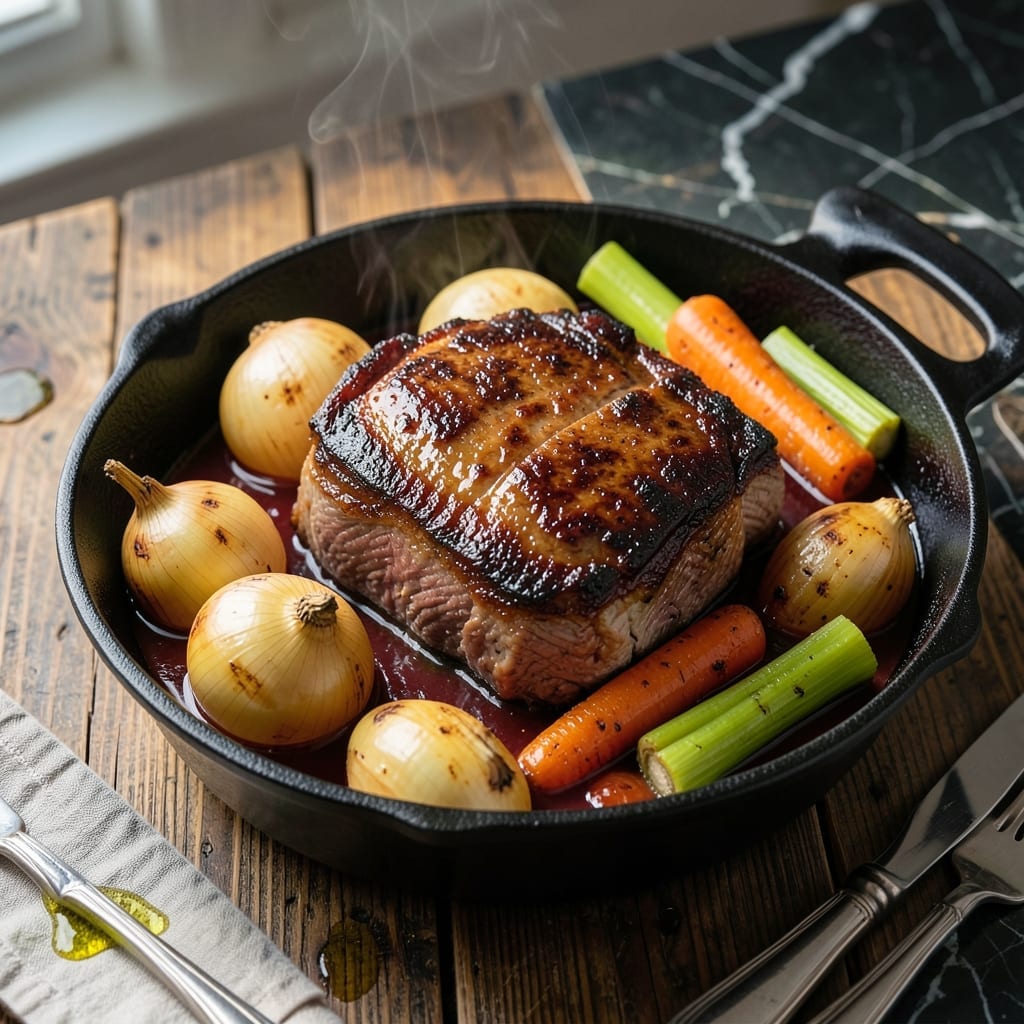
Preserving family traditions one recipe at a time brings me closer to my grandmother’s kitchen. Her handwritten cards, though vague, hold the secrets to dishes that have nourished generations.
These time-honored recipes require no culinary school training, just patience and respect for traditional techniques. Each dish tells a story of cultural preservation and family love passed through the ages.
From tender brisket to golden latkes, every creation connects us to our heritage. The methods remain simple yet deliver profound flavors that modern shortcuts can’t replicate.
Cooking these dishes keeps history alive at your table. The results are always worth the effort, just as my grandmother intended.
Ingredients for Jewish Food Recipe Archives
Traditional cuts and simple pantry staples honor generations of family cooking.
| Ingredient | Amount | Notes |
|---|---|---|
| Beef Brisket 🥩 | 3 lb | First-cut preferred for leanness |
| Yellow Onions 🧅 | 3 whole | Large, thinly sliced |
| Garlic Cloves 🧄 | 6 cloves | Peeled, crushed |
| Carrots 🥕 | 4 whole | Peeled, cut into chunks |
| Celery Stalks 🌿 | 3 whole | Cut into large pieces |
| Tomato Paste 🍅 | 3 tbsp | For depth of flavor |
| Red Wine 🍷 | 1 ½ cups | Dry variety like Cabernet |
| Beef Broth 🥣 | 2 cups | Low-sodium preferred |
| Honey 🍯 | 2 tbsp | For balancing acidity |
| Apple Cider Vinegar 🍏 | 2 tbsp | Adds brightness to the sauce |
| Bay Leaves 🍃 | 2 pieces | Dried, whole |
| Fresh Thyme Sprigs 🌿 | 4 pieces | Or 1 tsp dried thyme |
| Kosher Salt 🧂 | 1 tbsp | Adjust to taste |
| Black Pepper 🌶️ | 1 tsp | Freshly ground |
| Olive Oil 🫒 | 2 tbsp | For searing brisket |
[recipe_ingredient_scaler]
The brisket is the heart of this dish. First-cut has less fat but stays tender with slow cooking. Your butcher at local kosher markets or Whole Foods can point you right to it. Look for good marbling if you’re choosing a whole piece—it breaks down beautifully over hours. This isn’t a weeknight meal, but the effort pays homage to the old ways (and the leftovers are legendary).
No red wine? Concord grape juice plus a splash of vinegar works in a pinch for a non-alcoholic version. Swap honey for brown sugar if you prefer, though the flavor shifts slightly. Fresh thyme not available? Dried at one-third the amount is fine. The vegetables can be adjusted based on what’s in season—parsnips hold up well too.
Brisket tastes even better the next day. Refrigerate in its juices for up to 5 days or freeze for 3 months. Slice against the grain when serving—this keeps it tender. The sauce thickens as it cools, perfect for spooning over potatoes.
Why You’ll Love This Recipe
- One Pot Wonder: Most of the work is just tossing the brisket, onions, and garlic into the same pot and letting the oven do the rest.
- Feeds a Crowd: I make this for Shabbat dinner and there’s always enough for seconds—and leftovers taste even better the next day.
Step-by-Step Instructions for Braised Beef Brisket
Here’s the method I use to achieve that melt-in-your-mouth texture that’s been passed down for generations.
Step 1: Sear and Season the Brisket
Pat the 3 lb Beef Brisket dry with paper towels—this ensures a proper sear. Season generously with the 1 tbsp Kosher Salt and 1 tsp Black Pepper on all sides, pressing the seasoning into the meat so it adheres well.
Heat the 2 tbsp Olive Oil in a large Dutch oven over medium-high heat until it shimmers. Add the brisket and sear for 4-5 minutes per side until deeply browned. You want a rich, caramelized crust—this develops the deep, complex flavors that define this dish. Transfer the brisket to a plate and set aside.
Step 2: Sauté the Vegetables and Build the Base
In the same pot, add the 3 whole Yellow Onions, 4 whole Carrots, and 3 whole Celery Stalks. Cook over medium heat for 8-10 minutes, stirring occasionally, until the onions soften and begin to caramelize.
Add the 6 cloves Garlic Cloves and 3 tbsp Tomato Paste, stirring constantly for 1-2 minutes until the tomato paste darkens slightly. This step intensifies its sweetness and removes any raw flavor. The mixture should be fragrant and starting to stick to the bottom of the pot—that’s the fond building, which is pure flavor.
Step 3: Deglaze and Add Liquids
Pour in the 1.5 cups Red Wine and scrape the bottom of the pot with a wooden spoon to release all the browned bits. Let it simmer for 3-4 minutes until the liquid reduces by about half. The wine should mellow slightly but still retain its bold character.
Add the 2 cups Beef Broth, 2 tbsp Honey, 2 tbsp Apple Cider Vinegar, 2 pieces Bay Leaves, and 4 pieces Fresh Thyme Sprigs. Stir to combine, then return the brisket to the pot, along with any accumulated juices. The liquid should come about halfway up the brisket—this ensures even cooking and maximum flavor infusion.
Step 4: Braise Low and Slow
Cover the pot and transfer it to a preheated 325°F oven. Braise for 3 to 3.5 hours, turning the brisket every 45 minutes to ensure even cooking. You’ll know it’s ready when a fork slides in with almost no resistance—this dish rewards patience.
The brisket should be fork-tender but not falling apart. If the liquid reduces too much during cooking, add a splash of water or broth to maintain the level. The aromas filling your kitchen at this stage are a promise of the rich, hearty meal to come.
Remove the brisket from the oven and let it rest in the braising liquid for 15-20 minutes before slicing. This allows the juices to redistribute, ensuring every bite is moist and flavorful.
Pro Tips For Making Jewish Food Recipe Archives
- Low and Slow: Cook the brisket at 275°F for at least 3-4 hours—any higher and the meat turns tough. I learned this the hard way after pulling a dry, chewy brisket out of a 350°F oven.
- Sear the Brisket: Pat the brisket dry and sear it in a hot pan with oil until deeply browned on both sides. This step locks in moisture and adds a rich, caramelized crust that’s non-negotiable for flavor.
- Skip the Small Carrots: Use whole carrots cut into large chunks instead of baby carrots—they hold up better during long cooking and actually taste sweeter when roasted alongside the brisket.
- Rest Before Slicing: Let the brisket rest for 20-30 minutes after cooking, tented with foil. Slicing too soon sends all the juices running onto the cutting board instead of staying in the meat.
Health Benefits of This Dish
Rich in Protein
This dish delivers high-quality protein from the 3 lb Beef Brisket, with each serving providing about 50 grams. Protein is essential for muscle repair and growth, and brisket is particularly rich in amino acids that support overall health. 💪
Iron Boost
Beef is one of the best sources of heme iron, which your body absorbs more easily than plant-based iron. A serving of brisket provides about 20% of your daily iron needs, helping prevent fatigue and supporting energy levels.
B Vitamins Galore
The brisket is packed with B vitamins, including B12, which supports nerve function, and niacin, which aids metabolism. These nutrients help your body convert food into energy efficiently.
Zinc for Immunity
You’ll get a healthy dose of zinc from this recipe, with a serving providing about 40% of your daily needs. Zinc is crucial for immune function and wound healing, keeping you strong and resilient.
Collagen Benefits
Slow-cooked brisket breaks down collagen in the meat, which supports skin, joint, and gut health. The braising process makes this nutrient more bioavailable, so your body can absorb it easily. 🥗
Balanced Nutrition
The carrots and celery in this dish add fiber, vitamins A and C to balance the richness of the beef. This combination makes the meal both hearty and nutritionally well-rounded.
Nutrition Facts
Frequently Asked Questions
How do I adjust recipes for kosher dietary laws?
Separate meat and dairy completely during prep and cooking. Use dedicated utensils and cookware to avoid mixing. For Passover, replace leavened ingredients with matzo or approved substitutes.
Can I substitute ingredients in traditional recipes?
Yes, but some changes may affect authenticity. For example, margarine can replace butter in dairy-free dishes. Always check if the substitute aligns with the dish’s cultural significance.
What’s the best way to preserve handwritten recipes?
Store originals in acid-free sleeves away from light. Digitize them by scanning or photographing with good lighting. Keep backups in multiple locations to prevent loss.

Trained in classic French technique but raised on slow-cooked ribs and spicy rubs, she blends culinary skill with smoke and soul.
- Best Smoked Oxtail Recipe: Deep-Rich Flavor After Low-and-Slow Cooking - October 14, 2026
- Pit Boss Smoked Prime Rib Roast Recipe: Bark-to-Bone Crispness in 4 Hours - October 14, 2026
- Smoked Tuna Steak Recipe: Seared Crust Meets Silky Centers - October 14, 2026