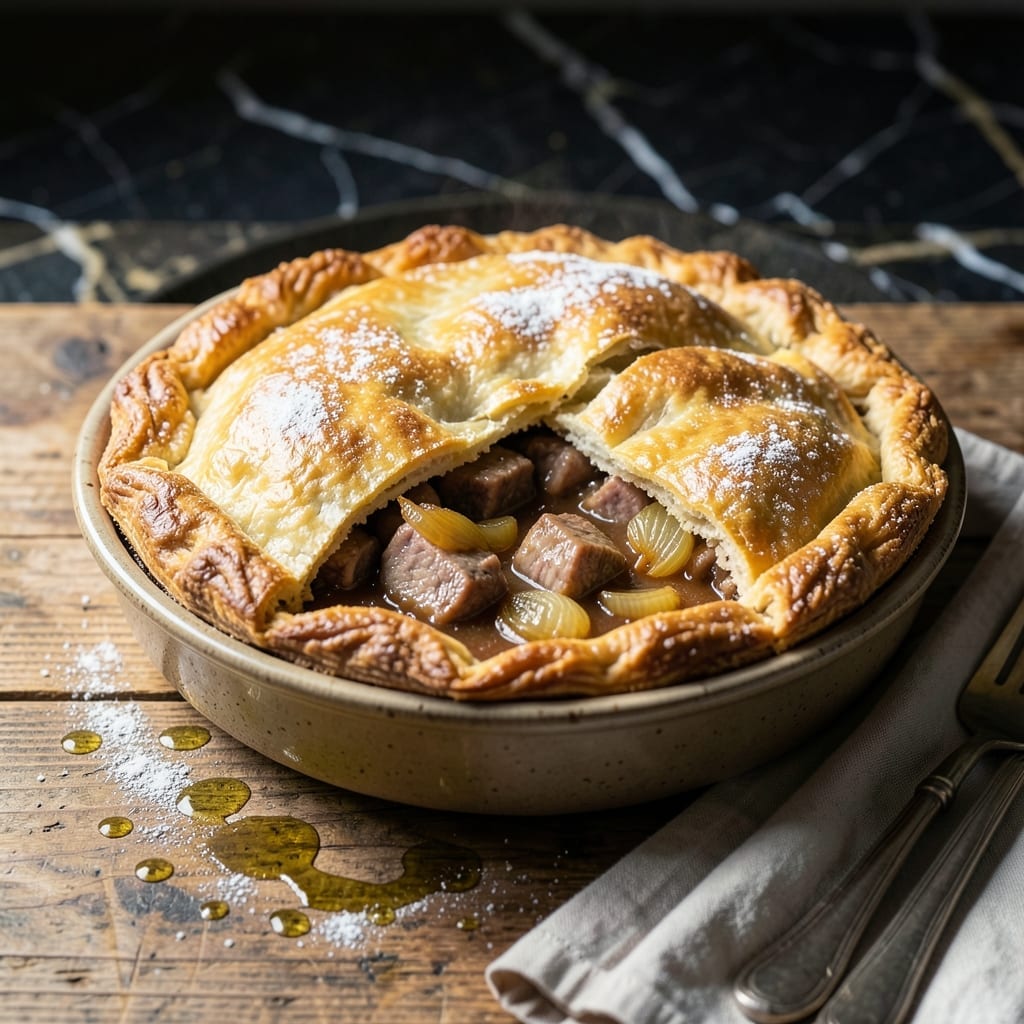
There’s something deeply comforting about a golden flaky crust enclosing a rich, savory filling. I developed this pork pot pie after testing various pastry techniques to achieve that perfect tender-crisp texture.
The secret lies in keeping the dough cold and handling it minimally. The filling combines tender pork with aromatic herbs and vegetables, creating a balanced, hearty dish that’s satisfying without being heavy.
What emerges from the oven is a beautiful, flaky pie with a golden crust that shatters at the touch. The filling is thick and flavorful, with each bite delivering the warmth of comfort food at its best.
This dish brings a touch of elegance to any dinner table while remaining approachable for home cooks. Here’s how to make it perfectly every time.
Ingredients for Recipe for Pork Pot Pie
Rich, flaky pastry wraps a savory pork and herb filling. Nothing beats this comfort classic.
| Ingredient | Amount | Notes |
|---|---|---|
| Pork Shoulder 🥩 | 1 ½ lb | Boneless, diced into 1-inch cubes |
| All-Purpose Flour 🌾 | 2 ½ cups | Plus extra for dusting |
| Unsalted Butter 🧈 | 1 cup | Cold, cubed for pastry |
| Ice Water 💧 | ½ cup | Plus extra as needed |
| Salt 🧂 | 1 ½ tsp | Divided between dough and filling |
| Yellow Onion 🧅 | 1 whole | Medium-sized, finely diced |
| Carrots 🥕 | 2 whole | Peeled and diced |
| Celery Stalks 🌿 | 2 whole | Finely diced |
| Garlic Cloves 🧄 | 3 cloves | Minced |
| Fresh Thyme 🍃 | 1 tbsp | Chopped, or 1 tsp dried |
| Fresh Rosemary 🍃 | 1 tbsp | Chopped, or 1 tsp dried |
| Dijon Mustard 🟡 | 1 tbsp | For depth in filling |
| Chicken Stock 🍲 | 1 ½ cups | Low-sodium preferred |
| Heavy Cream 🥛 | ½ cup | For rich, creamy filling |
| Frozen Peas 🌱 | ½ cup | No need to thaw |
[recipe_ingredient_scaler]
The pork shoulder is key here—boneless, well-marbled cuts from your butcher or Whole Foods work best. Look for pieces with visible fat streaks; they’ll render down and keep the meat tender. For the pastry, use European-style butter (like Plugrá) if you can find it; the higher fat content makes for a flakier crust. Keep everything cold—even your hands (run them under cold water first).
No pork shoulder? Pork tenderloin works in a pinch (just cook it less). Swap the thyme and rosemary for sage or tarragon if that’s what’s in your garden. The Dijon mustard can be whole-grain at half the amount for a milder taste. For the stock, Better Than Bouillon paste is a solid backup. Frozen peas not your thing? Diced green beans hold up well too.
The dough can rest overnight in the fridge (just wrap it tight). Fill and bake the pie the next day. Leftovers keep 3-4 days refrigerated—reheat in the oven to crisp the crust. Freeze unbaked pies for up to 2 months (don’t forget to label them).
Why You’ll Love This Recipe
- One Bowl Wonder: I mix the flour, butter, and ice water right in the same bowl I’ll use for the filling—no extra dishes, no fuss.
- Melt-In-Your-Mouth Filling: The pork shoulder slow-cooks until it’s fall-apart tender, and the buttery crust soaks up every rich, savory bite.
- Sunday Dinner, Tuesday Leftovers: It’s just as good reheated the next day—honestly, the flavors deepen overnight.
- Budget-Friendly Feast: Pork shoulder stretches far, and with just flour, butter, and salt, it feeds a crowd without breaking the bank.
Step-by-Step Instructions for Pork Pot Pie
Here’s the method I swear by for achieving that perfect flaky crust and rich herb filling.
Step 1: Prepare the Flaky Pastry Dough
In a food processor, pulse the 2.5 cups all-purpose flour with ½ teaspoon salt to combine. Add the 1 cup cold unsalted butter (cubed) and pulse in 1-second bursts until the mixture resembles coarse crumbs with pea-sized butter pieces visible. This visible butter is what creates those flaky layers we’re after.
With the processor running, slowly drizzle in the ½ cup ice water. Stop as soon as the dough just comes together—it’ll look shaggy, not smooth. Turn the dough out onto a lightly floured surface, divide into two equal portions, shape into discs, wrap in plastic, and refrigerate for at least 1 hour. This chilling step is non-negotiable for achieving that promised flaky texture.
Step 2: Sear the Pork and Build the Filling Base
Heat a Dutch oven over medium-high heat. Season the 1.5 lb pork shoulder (diced into 1-inch cubes) with ½ teaspoon salt and sear in batches until browned on all sides, about 5-6 minutes per batch. Don’t crowd the pan or the pork will steam instead of brown. Transfer to a plate and set aside.
In the same pot, add the finely diced yellow onion, diced carrots, and finely diced celery stalks. Cook for 5 minutes until the vegetables soften. Add the minced garlic cloves, 1 tbsp fresh thyme, and 1 tbsp fresh rosemary, cooking for 30 seconds until fragrant. Stir in the 1 tbsp Dijon mustard to deepen the flavor base.
Step 3: Simmer the Filling to Perfection
Return the pork to the pot and pour in the 1.5 cups chicken stock. Bring to a simmer, then reduce heat to low. Cover and let it cook for 1 hour to 1 hour 15 minutes, stirring occasionally, until the pork is tender and shreds easily with a fork.
Uncover and stir in the ½ cup heavy cream and ½ cup frozen peas. Simmer uncovered for 5-7 minutes until the sauce thickens slightly and coats the back of a spoon. Taste and adjust seasoning with the remaining ½ teaspoon salt if needed. The filling should be rich and velvety, with the peas just warmed through.
Step 4: Assemble and Bake to Golden Perfection
On a lightly floured surface, roll out one dough disc to a 12-inch round and transfer it to a 9-inch pie dish. Spoon the pork filling into the crust, spreading it evenly. Roll out the second dough disc to the same size and place it over the filling. Crimp the edges to seal, then cut 4-5 slits in the top crust to allow steam to escape.
Brush the top with a bit of heavy cream for extra browning. Bake at 375°F for 40-45 minutes, until the crust is deep golden brown and the filling is bubbling through the slits. Let it rest for 10 minutes before serving to allow the filling to set slightly.
Pro Tips For Making Recipe For Pork Pot Pie
- Chill the Dough: Pop your butter-flour mixture in the fridge for 15 minutes before adding ice water—I learned this the hard way after my crust turned tough from overworked butter.
- Low and Slow Pork: Cook the pork shoulder at 300°F until it shreds with a fork, about 3-4 hours; resist the urge to rush it with higher heat or it’ll dry out.
- Dry the Pork: Pat the pork shoulder completely dry before browning—sounds weird, but it works to get that deep, golden sear instead of steamed meat.
- Use Ice Water: Keep your water truly ice-cold when mixing the crust; after burning three batches, I finally figured out warm water makes the dough greasy and hard to handle.
Dietary Considerations for These Flavors
Gluten-Free Option
Swap the 2.5 cups all-purpose flour for a 1:1 gluten-free blend like King Arthur Measure for Measure. Add 1 tsp xanthan gum to improve texture. The dough may feel slightly stickier, but it rolls out beautifully with extra flour for dusting. 💪
Dairy-Free Adaptation
Use coconut oil or vegan butter (like Miyoko’s) for the crust. For the filling, replace ½ cup heavy cream with full-fat coconut milk. The flavor will be subtly different but still rich and satisfying.
Lower-Carb Version
For a lighter crust, use almond flour or a keto pie crust mix. Reduce the filling’s thickeners by simmering the sauce uncovered for 10-15 minutes to concentrate flavors. You’ll get all the comfort with fewer carbs.
Pork-Free Alternative
Substitute the 1.5 lb pork shoulder with chicken thighs or mushrooms for a vegetarian option. Chicken needs 40-45 minutes to cook through, while mushrooms will take just 20-25 minutes to soften.
Allium Sensitivity
Omit the yellow onion and garlic if needed. Boost umami with 1 tsp smoked paprika and 1 tbsp nutritional yeast instead. The filling will still be deeply flavorful without the alliums. 🌱
Reducing Sodium
Use low-sodium chicken stock and skip added salt in the dough. Season the filling to taste with herb blends or lemon zest for brightness. The herbs and pork’s natural richness will carry the dish beautifully.
Nutrition Facts
Frequently Asked Questions
Can I use pre-made pie crust?
Yes! Store-bought crust works fine for convenience. Just ensure it’s cold when assembling to prevent sogginess. You may need to adjust baking time by 5-10 minutes since pre-made crusts often brown faster.
How do I prevent a soggy bottom crust?
Blind-bake the bottom crust for 10 minutes before filling. Also, let the filling cool slightly before adding it to the crust. This creates a barrier against moisture.
What’s the best way to reheat leftovers?
Cover with foil and warm at 350°F for 15-20 minutes. This revives the filling without over-browning the crust. Avoid microwaving as it makes the pastry soggy.

Trained in classic French technique but raised on slow-cooked ribs and spicy rubs, she blends culinary skill with smoke and soul.
- Beef Brisket Rolls Recipe: Flaky Layers and Smoky Sweet Filling - October 15, 2026
- Masterbuilt Smoker Beef Brisket Recipe: Bark-To-Meat Ratio Hack for Unmatched Flavor - October 15, 2026
- Costco Beef Brisket Recipe: Low-and-Slow Masterpiece With Molasses-Kissed Crust - October 15, 2026