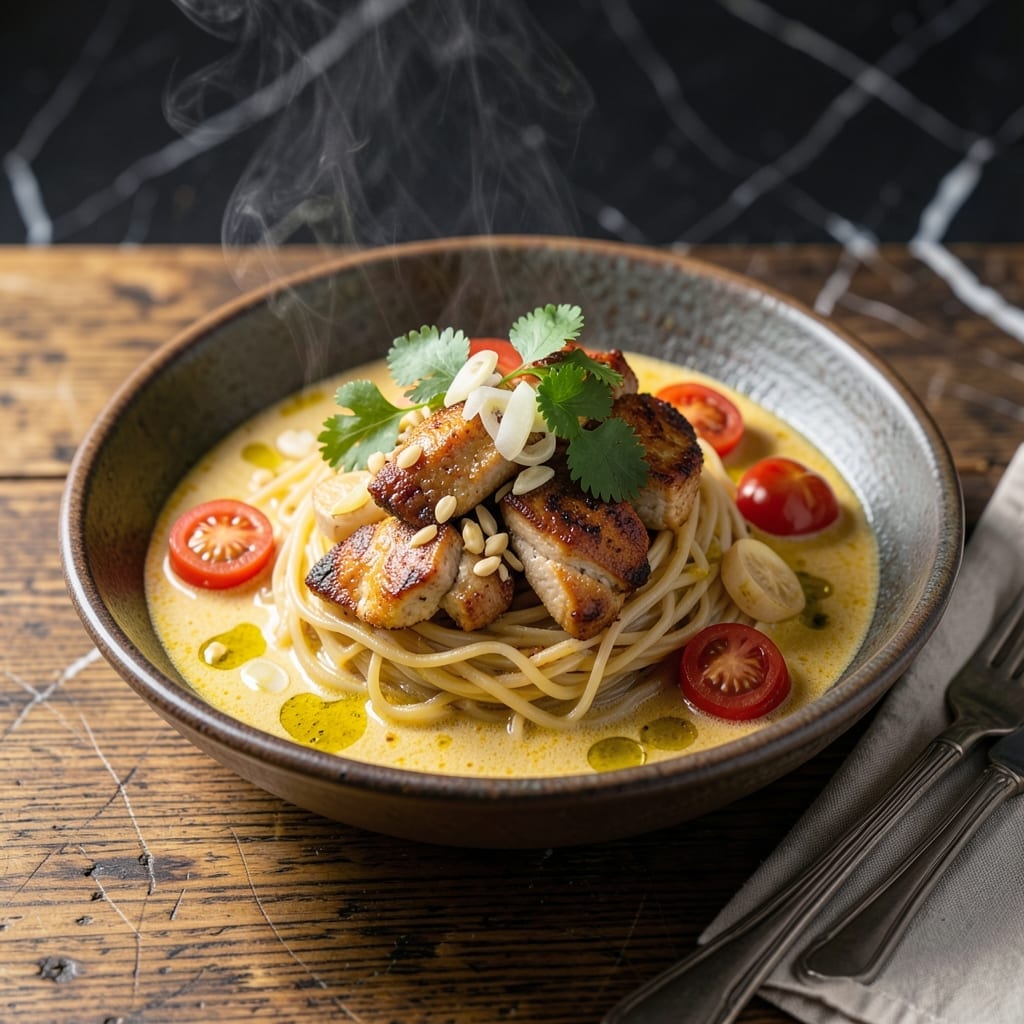
Burmese flavors meet modern fusion in this coconut curry noodle bowl that brings restaurant-quality results to your kitchen. I developed this recipe after testing multiple versions to perfect the balance of rich coconut, aromatic spices, and tender noodles.
The dish combines silky coconut milk with turmeric, lemongrass, and ginger for a fragrant base. Thin rice noodles and your choice of protein absorb the complex flavors, while crispy toppings add essential texture contrast.
What emerges is a bowl where creamy curry coats every strand of noodle, with bright lime and fresh herbs cutting through the richness. The toppings—crunchy fried shallots, boiled eggs, and cilantro—complete the experience.
This creation transforms a traditional street food into an accessible home-cooked meal with layers of authentic taste. The process is straightforward, with each component building on the last.
Ingredients for Khao Suey Recipe Food Fusion
Silky coconut milk, aromatic spices, and tender noodles come together in this fusion bowl.
| Ingredient | Amount | Notes |
|---|---|---|
| Thin Rice Noodles 🍜 | 8 oz | Vermicelli or rice stick noodles |
| Coconut Milk 🥥 | 2 cups | Full-fat for creaminess |
| Chicken Thighs 🍗 | 1 lb | Boneless, skinless, diced |
| Shallots 🧅 | 2 whole | Thinly sliced, divided |
| Garlic Cloves 🧄 | 4 cloves | Minced for curry base |
| Fresh Ginger 🌿 | 1 tbsp | Peeled and grated |
| Lemongrass 🌱 | 2 whole | Bruised, 3-inch pieces |
| Turmeric Powder 🌶️ | 1 tsp | Ground, for color and depth |
| Curry Powder 🌶️ | 1 tbsp | Mild or hot variety |
| Fish Sauce 🐟 | 1 tbsp | Or soy sauce for vegetarian |
| Lime 🍋 | 1 whole | Cut into wedges for serving |
| Fresh Cilantro 🌿 | ½ cup | Chopped for garnish |
| Large Eggs 🥚 | 4 whole | Hard-boiled, halved for topping |
| Vegetable Oil 🫒 | ½ cup | For frying shallots and cooking |
| Chili Flakes 🔥 | ½ tsp | Adjust to taste for heat |
[recipe_ingredient_scaler]
The coconut milk is non-negotiable here—full-fat from Thai Kitchen or Native Forest gives you that restaurant-quality richness. Lemongrass is key for authenticity; most Asian markets sell it fresh, or grab frozen at Trader Joe’s (it works in a pinch). For the chicken, thighs stay juicier than breasts in the curry. If you can’t find thin rice noodles, vermicelli works perfectly.
Need to swap the protein? Shrimp or tofu both shine in this curry. No lemongrass? Zest of one lime plus a bay leaf gets you 80% there. Fish sauce can be soy sauce for vegetarian, but don’t skip the umami entirely. The shallots for topping must be fried crispy—use peanut oil if you’ve got it (higher smoke point).
Curry base keeps 3 days in the fridge, but noodles are best fresh. Fry extra shallots—they keep in an airtight container for 1 week and add crunch to everything. Lime wedges and cilantro should be prepped last minute so they stay bright.
Why You’ll Love This Recipe
- One Pot Wonder: Honestly, I just dump the rice noodles, coconut milk, and chicken thighs in one pot—minimal cleanup, maximum flavor.
- Creamy Spice Hit: The shallots and garlic in the coconut milk base create this rich, aromatic broth that’s ridiculously good.
- Weeknight Hero: I’ve served this for lazy dinners and impressed guests alike—works every time.
- Leftovers? Yes Please: The noodles soak up even more flavor overnight, so it tastes better the next day.
Step-by-Step Instructions for Burmese Coconut Curry Noodle Bowl
This method delivers layers of aromatic flavor in every bowl—rich, balanced, and restaurant-worthy.
Step 1: Prepare and Cook the Chicken Base
In a heavy pot, heat 2 tablespoons of the vegetable oil over medium-high heat. Add the diced chicken thighs and cook for 5-6 minutes until golden brown and no longer pink inside. I press down occasionally with a wooden spoon to ensure even browning.
Transfer the chicken to a plate and set aside. In the same pot, add the remaining vegetable oil and sauté 1 thinly sliced shallot, the minced garlic cloves, fresh ginger, and bruised lemongrass for 3-4 minutes until fragrant and golden. This builds the aromatic foundation for the curry.
Step 2: Build the Coconut Curry Sauce
Stir in the turmeric powder and curry powder, toasting for 30 seconds until the spices deepen in color. Real talk: this step wakes up the flavors. Immediately pour in the 2 cups coconut milk and fish sauce, scraping up any browned bits from the bottom of the pot.
Return the chicken to the pot and simmer for 10-12 minutes on medium-low heat until the sauce thickens slightly and the chicken is tender. The mixture should coat the back of a spoon lightly. If it reduces too much, add a splash of water.
Step 3: Cook the Noodles and Prepare Toppings
Soak the 8 oz thin rice noodles in hot water for 5-7 minutes until pliable but still slightly firm. Drain and rinse under cold water to stop the cooking process. I like to use a colander for easy draining.
Meanwhile, hard-boil the 4 large eggs for 9-10 minutes, then cool in ice water, peel, and halve lengthwise. Thinly slice the remaining shallot and fry in 1 tablespoon vegetable oil over medium heat for 2-3 minutes until golden and crispy. Drain on paper towels.
Step 4: Assemble the Bowls
Divide the cooked noodles among four bowls. Ladle the hot coconut curry and chicken over the noodles, ensuring each serving gets plenty of sauce. Here’s the thing—this dish is all about the toppings, so don’t skimp.
Arrange the halved eggs on top, then scatter with crispy fried shallots, chopped cilantro, and a pinch of chili flakes. Serve with lime wedges on the side for a bright, citrusy finish.
The contrast of rich curry, creamy coconut, chewy noodles, and crunchy toppings is what makes this dish unforgettable.
Pro Tips For Making Khao Suey Recipe Food Fusion
- Toast the Noodles: Dry-toast the rice noodles in a pan for 2-3 minutes before boiling to prevent them from turning to mush in the coconut broth.
- Brown the Thighs: Sear the chicken thighs in batches—crowding the pan steams them instead of browning, and you lose that deep flavor base.
- Bloom the Aromatics: Cook the shallots and garlic in oil until golden, not just softened; raw garlic will give your khao suey a harsh, bitter edge.
- Thin the Coconut Milk: I learned this the hard way—cut the coconut milk with a little water or stock to keep the sauce from clotting when it hits the heat.
Essential Equipment for This Recipe
Heavy Pot Essentials
I always use my 5-quart enameled cast iron Dutch oven for the curry base—it distributes heat evenly and prevents scorching. A heavy pot is non-negotiable for building deep flavors without burning the spices. I recommend Lodge for budget-friendly quality. 🔥
Wooden Spoon
A wooden spoon is my tool of choice for stirring the curry and scraping up browned bits. It won’t scratch your pot, and the flat surface helps press ingredients into the bottom for better browning. Plus, it’s gentle on your cookware.
Deep Skillet Alternative
If you don’t have a Dutch oven, a deep stainless steel skillet with a lid works well. Just keep the heat at medium-low to avoid hot spots. I’ve tested this in my Boston apartment’s tiny kitchen with great results.
Colander for Noodles
For draining noodles, a large colander is essential. I rinse my rice noodles under cold water immediately after soaking to stop the cooking process. This keeps them from turning mushy when assembled with the hot curry.
Frying Setup
Crispy shallots require a small saucepan for frying—they cook evenly in 1 inch of oil. I use a slotted spoon to transfer them to paper towels. This setup gives you perfect, golden shallots every time. ✨
Serving Bowls
Wide, shallow bowls show off the beautiful layers of this dish. I love my stoneware bowls from a local Boston pottery studio—they retain heat well and make the presentation stunning. The wide rim makes topping arrangement easy.
Nutrition Facts
Frequently Asked Questions
Can I use shrimp instead of chicken?
Swap in 1 lb peeled shrimp and cook for just 2-3 minutes per side. They’ll finish cooking in the hot curry.
What if I can’t find lemongrass?
Use 1 tbsp lime zest plus 1 bay leaf as a substitute. It won’t be identical but captures the citrusy brightness.
How do I prevent soggy noodles?
Rinse noodles with cold water after soaking and assemble bowls just before serving. Keep curry and noodles separate until ready to eat.
Can I make this vegetarian?
Replace chicken with extra-firm tofu and use soy sauce instead of fish sauce. Add 1 cup chickpeas for extra heartiness.

Trained in classic French technique but raised on slow-cooked ribs and spicy rubs, she blends culinary skill with smoke and soul.
- Recipe for Boneless Pork Chops in Cast Iron Skillet: Sear and Baste to Juicy Perfection - October 3, 2026
- Recipe for Boneless Cross Rib Roast: Slow-Roasted Beef with Herb Crust - October 3, 2026
- Hamburgers in Sauce Recipe Crock Pot: Slow-Cooked Savory Delight - October 3, 2026