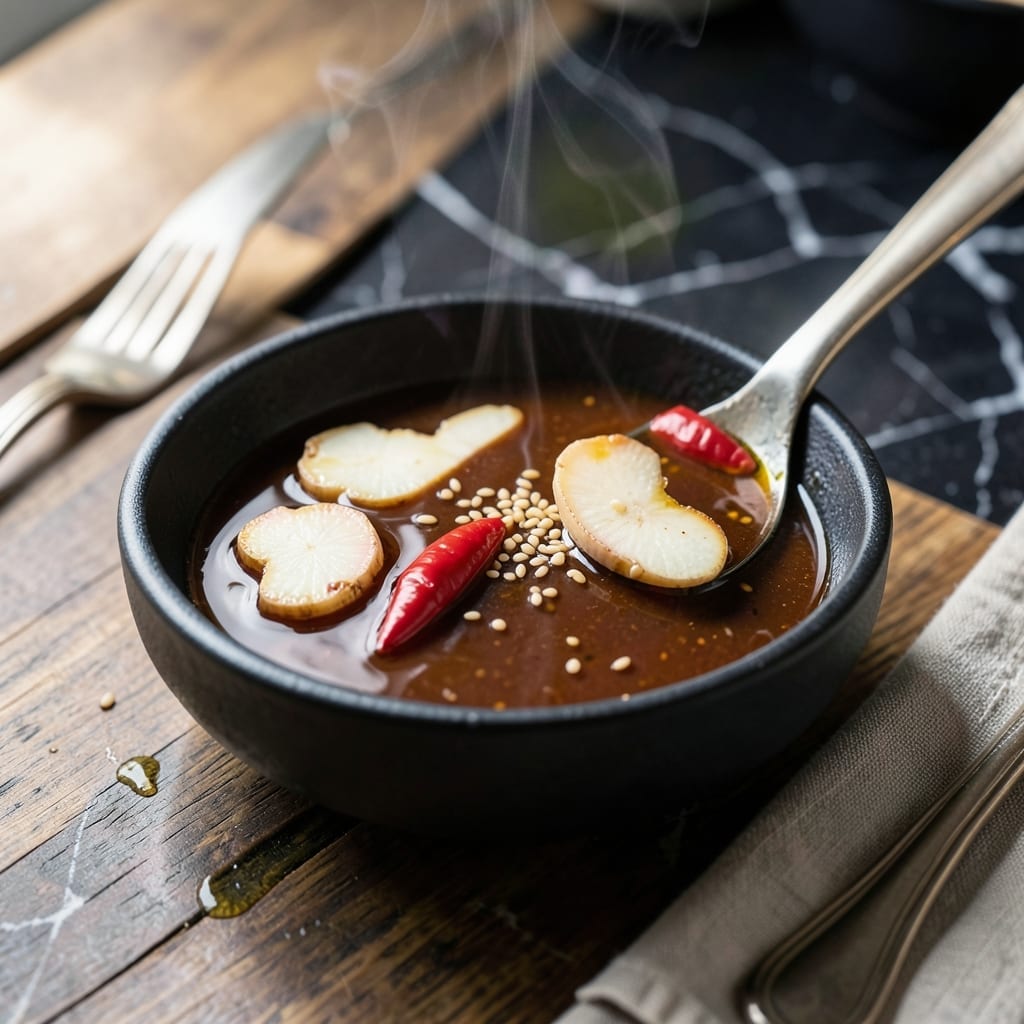
Few sauces deliver the perfect balance of sweet and savory like a well-made teriyaki. This version captures the authentic glossy finish that makes grilled dishes shine.
I developed this recipe after years of experimenting with ratios, seeking that signature thickness and depth. The key is a precise reduction that transforms simple ingredients into a rich, versatile glaze.
You’ll achieve a sauce that clings beautifully to meats and vegetables, with just the right sweetness and umami complexity. It’s the kind of finish that elevates everyday grilling to restaurant-quality.
Store it in the fridge for up to two weeks, ready to brush on anything from chicken to tofu.
Ingredients for Kikkoman Teriyaki Sauce
Ten simple ingredients create that signature glossy, umami-rich teriyaki glaze for grilling perfection.
| Ingredient | Amount | Notes |
|---|---|---|
| Soy Sauce 🥢 | ½ cup | Use low-sodium for control |
| Mirin 🍶 | ¼ cup | Essential for authentic sweetness |
| Sake 🍶 | 2 tbsp | Adds depth to the glaze |
| Granulated Sugar 🍚 | 2 tbsp | Balances savory elements |
| Brown Sugar 🟤 | 1 tbsp | For caramelized richness |
| Fresh Ginger 🌿 | 1 tsp | Finely grated for smooth texture |
| Garlic Cloves 🧄 | 2 cloves | Minced for even distribution |
| Rice Vinegar 🍚 | 1 tbsp | Brightens the sauce |
| Cornstarch 🌾 | 1 tbsp | Slurry with water for thickening |
| Water 💧 | 2 tbsp | For cornstarch slurry |
[recipe_ingredient_scaler]
For authentic results, Kikkoman soy sauce is the gold standard, but any quality Japanese soy works. Mirin and sake are non-negotiable—look for them in the Asian aisle at Whole Foods or any well-stocked supermarket. The ginger must be fresh (the jarred stuff lacks punch), and for the best texture, grate it finely so it dissolves into the sauce rather than settling.
No mirin? Sweet sherry or dry white wine plus a pinch of sugar can substitute in a pinch. Out of sake? Dry vermouth works, though the flavor profile shifts slightly. For a thicker sauce without cornstarch, reduce the mixture longer—just watch it doesn’t burn. Brown sugar can be swapped for white, but the molasses notes add complexity worth keeping.
This keeps beautifully. Refrigerate in an airtight container for up to 2 weeks. For longer storage, freeze in ice cube trays, then transfer to a bag—thaw only what you need. The flavors deepen after a day, so make it ahead if possible.
Why You’ll Love This Recipe
- 5-Minute Magic: I dump all five ingredients in a saucepan and walk away. Honestly, it simmers itself while I set the table.
- Sweet-Savory Balance: The brown sugar caramelizes with the mirin and soy, giving that sticky, glossy finish kids beg for.
- Marinade to Meal: I use it for chicken tonight, then toss leftovers with noodles tomorrow. Between us, it’s my weeknight hack.
- Pantry Stable: Soy, sake, and sugar keep forever, so I’m never more than five minutes from teriyaki.
Step-by-Step Instructions for Homemade Teriyaki Glaze
Follow this authentic method to achieve a perfectly balanced, glossy teriyaki glaze every time.
Step 1: Combine the Base Liquids and Sweeteners
In a medium saucepan, whisk together the 0.5 cup Soy Sauce, 0.25 cup Mirin, and 2 tbsp Sake over medium heat. The Mirin is crucial here—it provides the signature sweetness and sheen that defines authentic teriyaki.
Add the 2 tbsp Granulated Sugar and 1 tbsp Brown Sugar, stirring until the sugars begin to dissolve. The brown sugar contributes a deeper, caramelized richness that complements the umami of the soy sauce. Watch for the mixture to start gently bubbling at the edges.
Step 2: Infuse with Aromatics
Once the sugars are mostly dissolved, stir in the 1 tsp Fresh Ginger and 2 cloves Garlic Cloves, both finely grated or minced. The ginger and garlic should be finely processed to ensure they blend seamlessly into the glaze without overpowering the final product.
Let the mixture simmer for 3-4 minutes, stirring occasionally. You’ll notice the aromatics becoming fragrant and the liquid taking on a slightly syrupy consistency. This step builds the foundational flavors that make teriyaki sauce so distinctive.
Step 3: Add Acid and Thicken the Glaze
Stir in the 1 tbsp Rice Vinegar. This small but critical addition brightens the sauce, balancing the richness of the other ingredients. The vinegar’s subtle tang will round out the sweet, salty, and umami notes.
In a small bowl, whisk together the 1 tbsp Cornstarch and 2 tbsp Water to create a smooth slurry. Slowly pour this into the simmering sauce while whisking continuously to prevent lumps. The mixture will begin to thicken noticeably within 1-2 minutes.
Step 4: Achieve the Perfect Consistency
Reduce the heat to low and continue simmering for an additional 2-3 minutes. Stir frequently to ensure the sauce doesn’t stick to the bottom of the pan. You’re aiming for a glossy, syrup-like consistency that coats the back of a spoon.
The glaze should be thick enough to cling to grilled meats or vegetables but still fluid enough to pour easily. If it thickens too much, add a splash of water and stir to adjust. Remove from heat once the desired texture is achieved.
Step 5: Cool and Use
Transfer the sauce to a heatproof bowl or jar and let it cool to room temperature. The glaze will thicken slightly as it cools, which is normal. This step ensures the flavors meld completely, resulting in a smooth, cohesive sauce.
Use immediately for basting during grilling, or store in an airtight container in the refrigerator for up to 2 weeks. For the best results, brush the glaze onto proteins or vegetables during the last few minutes of cooking to prevent burning. The finished product should have a deep amber color and a balanced sweet-savory flavor with a subtle sheen.
Pro Tips For Making Kikkoman Teriyaki Sauce
- Simmer, Don’t Boil: Keep the heat at a gentle simmer—boiling burns the sugars and turns your teriyaki bitter. I learned this the hard way after ruining a batch by cranking the heat too high.
- Dissolve Sugars First: Mix the granulated and brown sugar with the mirin and sake before adding soy sauce. This prevents grainy texture and guarantees a smooth, glossy finish.
- Skip the Substitutes: Use real mirin and sake—substituting with rice vinegar or dry sherry flattens the flavor. After trying shortcuts, I finally accepted that the authentic stuff is non-negotiable.
- Reduce to Thicken: Let the sauce reduce by about a third before using—this concentrates the flavors and gives it that perfect sticky consistency without cornstarch. Sounds slow, but it’s worth the wait.
Regional Styles of This kikkoman teriyaki sauce
Japanese Tradition
In Japan, teriyaki sauce is simpler—just soy sauce, mirin, and sugar. I love how the mirin gives it that signature glossy sheen. The ratio is typically 1:1:1, creating a balanced sweet-savory glaze. 🗺️
Hawaiian Fusion
Hawaiian-style teriyaki adds pineapple juice for tropical sweetness and a thinner consistency. I’ve seen it used in marinades for kalua pork and huli huli chicken. The acidity from pineapple also helps tenderize meats.
American Adaptation
Stateside, we often add garlic and ginger for extra depth, plus cornstarch for a thicker glaze. I prefer brown sugar over white for its molasses notes. This version clings beautifully to grilled proteins.
Korean Twist
Korean teriyaki incorporates gochujang for heat and complexity. I mix in 1 tsp for subtle spice. The combination of sweet, savory, and spicy is irresistible on bulgogi or grilled veggies.
Chinese Influence
In China, hoisin sauce often replaces mirin, creating a deeper, more complex flavor. I use 2 tbsp hoisin with 1 tbsp honey for a sticky, rich glaze perfect for char siu.
Gourmet Upgrade
For a chef’s touch, I reduce the sauce with a splash of dry sherry and finish with a pat of butter. This French-Japanese fusion adds a silky, luxurious mouthfeel. 💫
Nutrition Facts
Frequently Asked Questions
Can I use honey instead of sugar?
Yes, replace both sugars with 3 tbsp honey. It adds a floral note and natural sweetness. Reduce heat slightly to prevent burning the honey.
Why does my sauce turn out too thin?
Likely the cornstarch slurry wasn’t simmered long enough. Ensure you cook it for 1-2 minutes after adding. For thicker results, use 1.5 tbsp cornstarch next time.
Can I make this without sake?
Substitute with dry white wine or apple cider vinegar. The flavor will differ slightly but still works well. Avoid cooking wine—it’s too salty.
How do I fix a sauce that’s too salty?
Balance it by adding 1-2 tsp brown sugar or a splash of rice vinegar. Taste as you go. Diluting with water works but mutes flavor.

Trained in classic French technique but raised on slow-cooked ribs and spicy rubs, she blends culinary skill with smoke and soul.
- Recipe for Boneless Pork Chops in Cast Iron Skillet: Sear and Baste to Juicy Perfection - October 3, 2026
- Recipe for Boneless Cross Rib Roast: Slow-Roasted Beef with Herb Crust - October 3, 2026
- Hamburgers in Sauce Recipe Crock Pot: Slow-Cooked Savory Delight - October 3, 2026