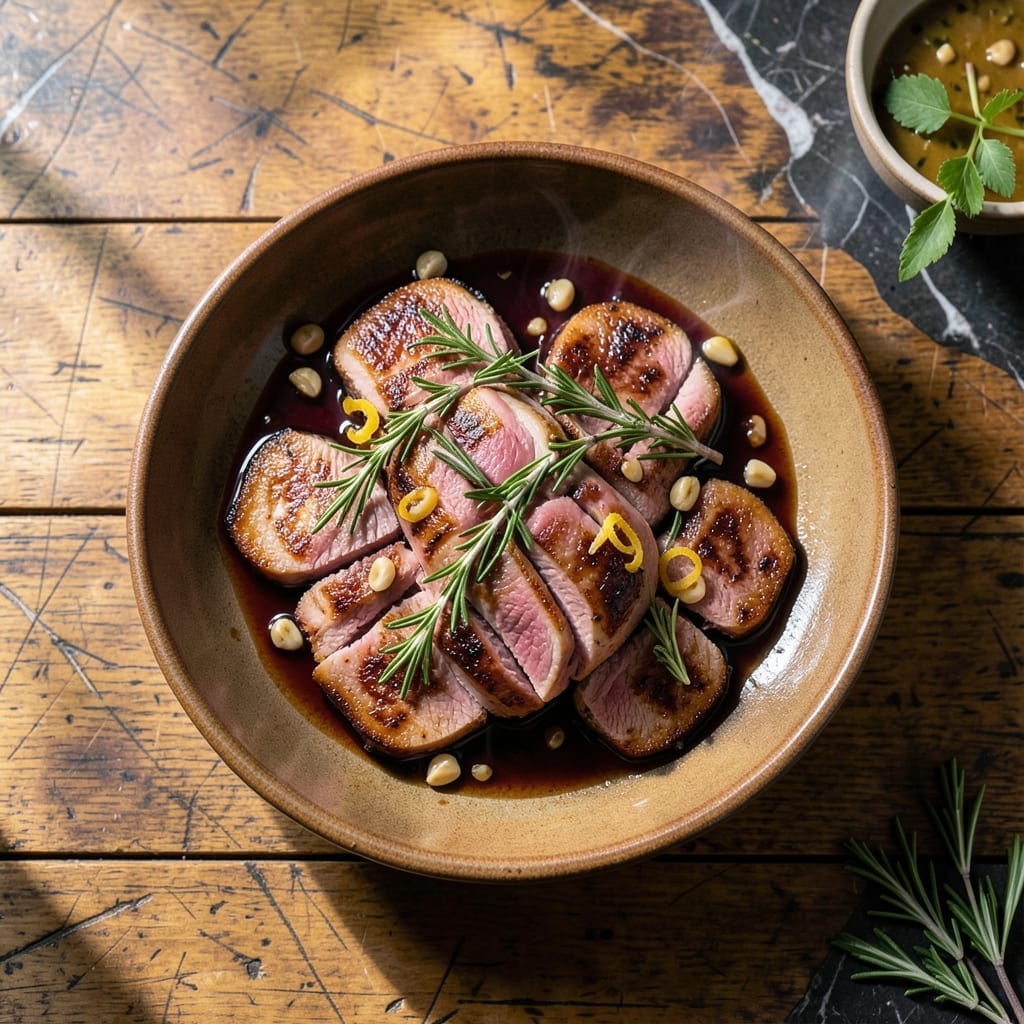
Offal cooking rewards the patient chef with deep, complex flavors that mass-market cuts simply can’t match. This dish transforms pig heart into a tender, rich centerpiece through precise preparation and slow cooking.
I developed this method after years of working with less conventional proteins, learning that proper cleaning and marinating are essential for offal. The heart’s lean texture benefits from low, slow heat that breaks down fibers without drying the meat.
The result is a dish with robust, meaty flavor that pairs beautifully with earthy sides. Each bite delivers the satisfaction of using every part of the animal while achieving restaurant-quality presentation.
Serve with roasted root vegetables or a simple green salad to let the heart’s natural richness shine through.
Ingredients for Pig Heart
Transform pig heart into a tender, restaurant-quality centerpiece with these carefully selected ingredients.
| Ingredient | Amount | Notes |
|---|---|---|
| Pig Heart 🫀 | 1 ½ lb | Trimmed of fat and connective tissue |
| Red Wine Vinegar 🍷 | ½ cup | For marinating overnight |
| Olive Oil 🫒 | ¼ cup | Extra-virgin preferred |
| Garlic Cloves 🧄 | 6 cloves | Minced finely for marinade |
| Fresh Rosemary 🌿 | 2 tbsp | Chopped, stems discarded |
| Fresh Thyme 🍃 | 2 tbsp | Leaves stripped from stems |
| Kosher Salt 🧂 | 2 tsp | Diamond Crystal brand preferred |
| Black Peppercorns 🌶️ | 1 tsp | Freshly cracked for best flavor |
| Beef Stock 🥣 | 2 cups | Low-sodium, high-quality |
| Yellow Onion 🧅 | 1 whole | Large, finely diced |
| Carrots 🥕 | 2 whole | Peeled, sliced into rounds |
| Celery Stalks 🌿 | 2 whole | Diced for aromatic base |
| All-Purpose Flour 🌾 | ¼ cup | For dredging heart slices |
| Butter 🧈 | 2 tbsp | Unsalted, for deglazing |
| Bay Leaves 🍃 | 2 whole | For braising liquid |
[recipe_ingredient_scaler]
The pig heart is the foundation—source from a reputable butcher or specialty market like Whole Foods for the freshest, best-quality offal. Look for hearts that are deep red with no gray discoloration, indicating peak freshness. Proper cleaning is non-negotiable; trim all fat and connective tissue thoroughly. The wine vinegar in the marinade is critical for tenderizing the lean muscle fibers (use red wine vinegar, not white).
No red wine vinegar? Apple cider vinegar works in a pinch, though the flavor profile shifts slightly. Fresh herbs are ideal, but dried at one-third the quantity can substitute—just rehydrate in warm water first. For the beef stock, homemade delivers superior depth, but Better Than Bouillon paste is a solid store-bought alternative. The flour dredge can be swapped for cornstarch for a gluten-free version.
Marinate the heart overnight for optimal tenderness. The braising liquid—stock, vinegar, and aromatics—can be prepped 1 day ahead and refrigerated. Finished dish keeps 3-4 days in the fridge or freezes beautifully for 3 months. Always slice against the grain before serving for maximum tenderness.
Why You’ll Love This Recipe
- One Pan Wonder: I sear the pig heart in olive oil, then let it soak in red wine vinegar and garlic—minimal cleanup, maximum flavor.
- Garlicky Rosemary Depth: The fresh rosemary and garlic infuse into every bite, making it rich without overpowering.
- Weeknight Hero: Honestly, it’s my go-to for busy evenings—cooks fast and pairs with anything from mashed potatoes to crusty bread.
- Budget Stretcher: Pig heart is affordable, and leftovers taste even better the next day. I’ll be real: it feeds my family for pennies per serving.
Step-by-Step Instructions for Pig Heart
Master the technique for transforming this bold ingredient into a tender, sophisticated dish.
Step 1: Marinate the Heart for Maximum Flavor
Begin by trimming the 1.5 lb Pig Heart of any fat or connective tissue. Cut it into ½-inch thick slices and place them in a bowl. In a separate container, whisk together the 0.5 cup Red Wine Vinegar, 0.25 cup Olive Oil, minced 6 cloves Garlic Cloves, 2 tbsp Fresh Rosemary, 2 tbsp Fresh Thyme, crushed 2 tsp Kosher Salt, and cracked 1 tsp Black Peppercorns.
Pour the marinade over the heart slices, ensuring they are fully submerged. Cover and refrigerate for at least 8 hours, preferably overnight. This step tenderizes the meat and infuses it with aromatic complexity, balancing its natural richness with bright, herbal notes.
Step 2: Dredge and Sear the Heart Slices
Remove the heart slices from the marinade and pat them dry with paper towels. Dredge each slice lightly in the 0.25 cup All-Purpose Flour, shaking off any excess. The flour creates a delicate crust that locks in juices during cooking.
Heat a heavy skillet over medium-high heat and add 1 tablespoon of the Olive Oil. Once the oil shimmers, add the dredged heart slices in a single layer, working in batches if necessary. Sear for 3-4 minutes per side until deep golden brown and just cooked through. Transfer to a plate and set aside.
Step 3: Build the Braising Liquid
In the same skillet, reduce heat to medium and melt the 2 tbsp Butter. Add the finely diced 1 whole Yellow Onion, sliced 2 whole Carrots, and diced 2 whole Celery Stalks. Sauté for 5-6 minutes until the vegetables soften and the onion becomes translucent.
Pour in the 0.5 cup Red Wine Vinegar from the marinade and deglaze the pan, scraping up any browned bits. Add the 2 cups Beef Stock and 2 whole Bay Leaves, then bring to a simmer. This liquid forms the base of a rich, savory sauce that complements the heart’s depth.
Step 4: Braise to Tenderness
Return the seared heart slices to the skillet, submerging them in the braising liquid. Reduce heat to low, cover, and simmer gently for 45-60 minutes. The heart is done when it is fork-tender and the liquid has reduced to a glossy, lightly thickened sauce.
During braising, the heart absorbs the flavors of the aromatics and wine, transforming from a firm, muscular cut into a melt-in-your-mouth delicacy. Stir occasionally and add a splash of water if the liquid reduces too quickly.
Step 5: Rest and Serve
Remove the 2 whole Bay Leaves and discard. Let the heart rest in the sauce for 5-10 minutes off heat. This allows the flavors to meld and the meat to reabsorb some of the braising liquid, ensuring each bite is moist and flavorful.
Serve the heart slices with the reduced sauce spooned over the top. The dish should have a deep, umami-rich sauce with tender, succulent meat that offers a refined take on offal. Pair with crusty bread or mashed potatoes to soak up every last drop.
Pro Tips For Making Pig Heart
- Soak the Heart: I learned this the hard way—soak the pig heart in cold water with a splash of red wine vinegar for at least 2 hours to remove any gamey blood flavor. Skip this and you’ll taste the difference.
- Score the Surface: After trimming, make shallow cuts across the heart’s surface in a crosshatch pattern. This helps the olive oil, garlic, and rosemary penetrate deeper during cooking.
- Don’t Overcook It: Pig heart turns tough fast—pull it at 145°F internal temp, then let it rest 5-10 minutes under foil. It’ll keep cooking and stay juicy.
- Crush the Garlic: Sounds weird, but it works: lightly crush the garlic cloves before adding them to the oil. This releases more flavor without burning, and you can remove the cloves before serving if you prefer.
Essential Equipment for This Recipe
Heavy Skillet
I always reach for my 12-inch Lodge cast iron skillet for this dish. Its even heat distribution and retention are perfect for searing and braising. The weight helps maintain steady temperatures when cooking the heart slices. 🔥
Sharp Knife
A 8-inch chef’s knife from Wüsthof is my go-to for trimming and slicing the heart. A sharp blade makes clean cuts through the dense muscle fibers. Keep it honed for safety and precision.
Dutch Oven Option
For larger batches, my 5.5-quart Le Creuset Dutch oven works beautifully. It transitions seamlessly from stovetop searing to oven braising. The enameled surface prevents reactive flavors with the acidic marinade.
Instant Read Thermometer
I verify doneness with a ThermoWorks MK4 thermometer. While not strictly necessary, it gives me confidence the heart reaches 145°F internal temperature. The probe is thin enough to test slices without tearing.
Wooden Spoon
A sturdy wooden spoon is essential for stirring during braising. It won’t scratch your cookware and helps scrape up browned bits. I keep one dedicated to my cast iron to avoid cross-contamination.
Butcher’s Twine
For whole heart preparations, cotton butcher’s twine helps maintain shape during cooking. I soak it in water first to prevent burning. This is especially useful if you’re stuffing the heart with aromatics.
Nutrition Facts
Frequently Asked Questions
How long should I marinate the heart?
Marinate for at least 8 hours, but overnight is ideal. This tenderizes the lean muscle and lets the flavors penetrate deeply.
Can I use a different vinegar?
Yes, apple cider vinegar works in a pinch. The flavor will be slightly different, but it still tenderizes effectively.
What if my heart turns out tough?
It likely didn’t braise long enough. Return it to the liquid and simmer on low heat for another 15-20 minutes.
Is it safe to eat medium-rare?
No, cook to at least 145°F internal temperature. Offal requires thorough cooking for food safety.

Trained in classic French technique but raised on slow-cooked ribs and spicy rubs, she blends culinary skill with smoke and soul.
- Recipe for Boneless Pork Chops in Cast Iron Skillet: Sear and Baste to Juicy Perfection - October 3, 2026
- Recipe for Boneless Cross Rib Roast: Slow-Roasted Beef with Herb Crust - October 3, 2026
- Hamburgers in Sauce Recipe Crock Pot: Slow-Cooked Savory Delight - October 3, 2026