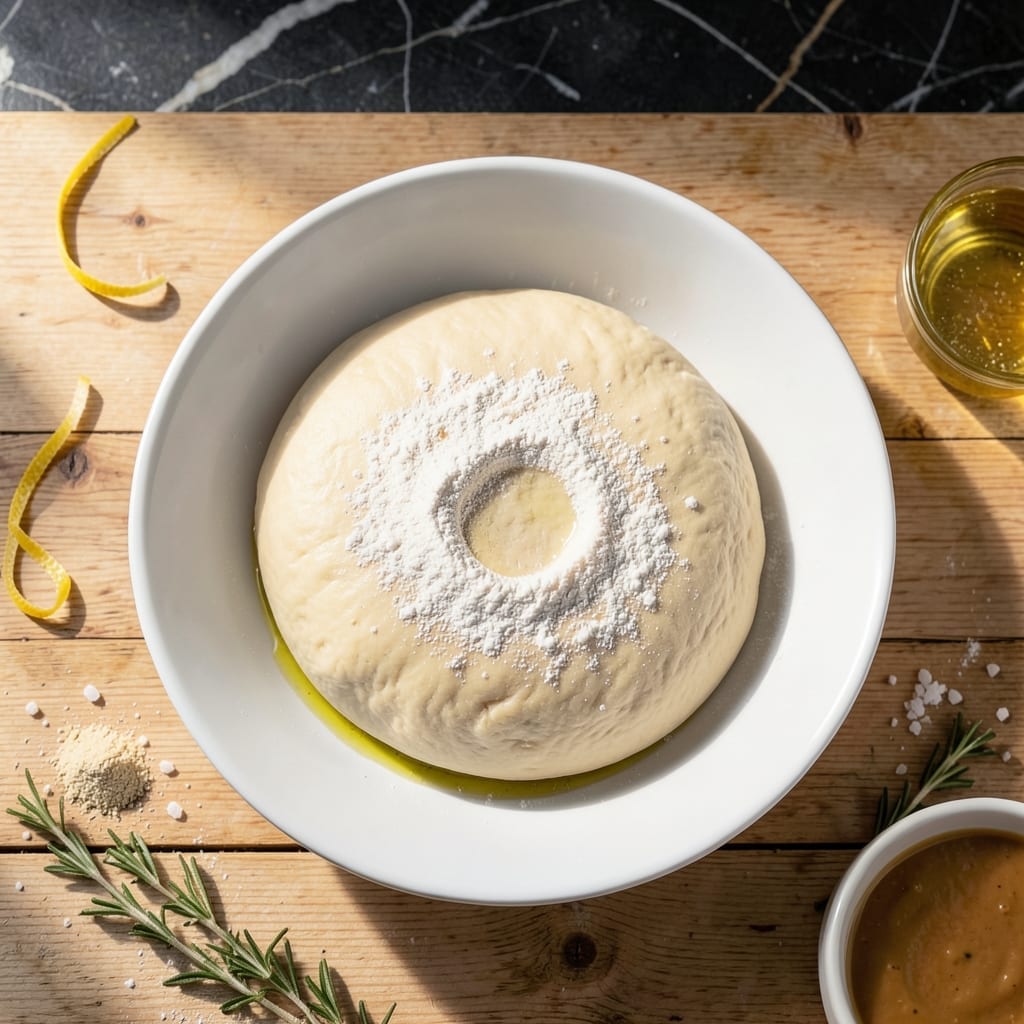
I developed this quick-rise dough for those nights when only pizza will do, but a full batch is overkill. The method is streamlined without sacrificing texture or flavor.
This recipe delivers a tender, slightly chewy crust with minimal effort. Just mix, rest, and roll—no fancy equipment required. The dough comes together in 10 minutes of active time.
You’ll get a perfectly sized base for a single-serving pizza that bakes up crisp at the edges and soft in the center. It’s ideal for testing toppings or satisfying a solo craving.
No yeast blooming, no long fermentation. This is pizza dough stripped down to its essentials while maintaining professional quality.
Ingredients for Single Serving Pizza Dough
Seven essential ingredients create this streamlined dough for personal pizzas with professional results.
| Ingredient | Amount | Notes |
|---|---|---|
| All-Purpose Flour 🌾 | 1 ½ cups | Spoon and level for accuracy |
| Instant Yeast 🍞 | ¾ tsp | Active dry works too |
| Granulated Sugar 🍚 | ½ tsp | Feeds the yeast for rise |
| Kosher Salt 🧂 | ½ tsp | Diamond Crystal preferred |
| Olive Oil 🫒 | 1 tbsp | Extra-virgin for flavor |
| Warm Water 💧 | ½ cup | 110-115°F ideal temperature |
| Cornmeal 🌽 | 2 tbsp | For dusting work surface |
[recipe_ingredient_scaler]
The flour is the foundation—King Arthur or Bob’s Red Mill for consistent results. Instant yeast is key for the quick rise (look for SAF or Fleischmann’s brands). Warm water temperature is critical: too hot kills the yeast, too cold slows activation. A kitchen thermometer removes guesswork, but most taps hit the right range after 30 seconds of running.
No instant yeast? Active dry yeast works at the same ratio—just let it bloom in warm water with sugar for 5 minutes first. For a slightly richer flavor, swap 1 tbsp olive oil for melted butter. If you’re out of cornmeal, semolina or extra flour prevents sticking just as well. The sugar can be omitted, but it does help with browning.
Dough rests at room temperature for 30-60 minutes—no need for a warm proofing box. Store unused portions wrapped tightly in the fridge for 2-3 days, or freeze for 1 month. Bring to room temperature before rolling for best texture.
Why You’ll Love This Recipe
- No Fuss Rising: I mix, let it sit for 10 minutes, and it’s ready—no waiting hours for dough to prove.
- Buttery Crust: The olive oil gives it this rich, golden edge that’s crispy outside, soft inside. Honestly, it’s the little details that make it.
- Solo Feast: It’s just enough for one personal pizza, so I can make exactly what I’m craving without leftovers.
- Pantry Staples: All-purpose flour, yeast, sugar—stuff I always have. Between us, it’s cheaper than delivery and tastes way better.
Step-by-Step Instructions for Single Serving Pizza Dough
Here is the method for achieving perfectly textured dough with minimal effort and time.
Step 1: Activate the Yeast Mixture
In a medium mixing bowl, combine the 0.5 cup warm water, 0.5 tsp granulated sugar, and 0.75 tsp instant yeast. The water should be between 110-115°F—hot enough to activate the yeast but not so hot it kills it.
Let it sit for 5-7 minutes until the mixture becomes frothy and cloudy. This visual confirmation means the yeast is alive and ready to work. If you don’t see bubbles, your water may have been too hot or the yeast too old.
Step 2: Form the Dough
Add the 1.5 cups all-purpose flour and 0.5 tsp kosher salt to the yeast mixture. Stir with a wooden spoon until a shaggy dough forms. The salt regulates yeast activity and enhances flavor, so don’t skip it.
Drizzle in the 1 tbsp olive oil and continue mixing until the dough starts to pull away from the sides of the bowl. The dough will be slightly sticky but should hold together when pressed. This step ensures even distribution of fat for a tender crumb.
Step 3: Knead Until Smooth
Turn the dough onto a lightly floured surface and knead for 5-6 minutes by hand. Use the heel of your palm to push the dough away, then fold it back and repeat. The dough is ready when it feels elastic and springs back when poked.
If the dough sticks, add a sprinkle of flour—just enough to prevent it from adhering to your work surface. Over-flouring can make the dough tough, so use a light hand. You’re aiming for a smooth, slightly tacky surface that holds its shape.
Step 4: Let the Dough Rise
Lightly oil the mixing bowl, place the dough inside, and cover with a damp kitchen towel. Let it rise in a warm, draft-free spot for 1 hour or until doubled in size. A turned-off oven with the light on creates an ideal environment.
The dough should puff up noticeably and feel airy when pressed gently. If it hasn’t risen after 1 hour, check your yeast’s expiration date or ensure the water temperature was correct.
Step 5: Shape and Prepare for Baking
Punch down the risen dough to release excess air, then turn it onto a surface dusted with 2 tbsp cornmeal. The cornmeal adds texture and prevents sticking. Shape the dough into a ¼-inch thick round by pressing from the center outward.
Let the shaped dough rest for 5 minutes before adding toppings. This brief pause relaxes the gluten, making it easier to stretch if needed. The base should hold its form without springing back excessively, ready for your choice of sauce and toppings.
Pro Tips For Making Single Serving Pizza Dough
- Warm the Water: Use water around 110°F—hot enough to activate the instant yeast but not so hot it kills it. I learned this the hard way after a few flat, sad doughs.
- Measure Flour Right: Spoon the all-purpose flour into your measuring cup and level it off—scooping directly from the bag packs it down and makes your dough dense.
- Skip Cold Olive Oil: Let the olive oil sit at room temp for 10 minutes before mixing. Cold oil won’t incorporate as smoothly into the dough.
- Rest the Dough: Give it a solid 30 minutes to rise under a damp towel, even if you’re impatient. It doubles in size and develops way better texture.
Regional Styles of These Flavors
Neapolitan Thin Crust
For authentic Neapolitan style, reduce the all-purpose flour to 1¼ cups and add ¼ cup tipo 00 flour for a finer texture. Let it rest for 24 hours in the fridge for deeper flavor development. The result is a thin, tender base with charred edges. 🗺️
New York Style
Increase the olive oil to 2 tbsp and add 1 tsp honey to the yeast mixture for a slightly sweeter, chewier dough. This creates that classic foldable slice texture. I learned this trick from a Brooklyn pizzeria owner during one of my coastal rides.
Sicilian Thick Crust
Use 1¾ cups all-purpose flour and let the dough rise for 1½ hours for a thicker, airier base. Press it into a greased 8×8-inch pan and dimple with your fingers before baking. The extra height makes it perfect for hearty toppings.
Chicago Deep Dish
Add 2 tbsp cornmeal to the flour mix and press the dough into a 6-inch cake pan. The cornmeal gives that signature crisp texture against the buttery crust. Bake at 375°F for 25-30 minutes with toppings layered directly on the dough.
Gluten-Free Option
Swap the all-purpose flour for 1½ cups gluten-free blend with xanthan gum. Let it rest for 20 minutes—gluten-free dough doesn’t need as much time. Add 1 tsp apple cider vinegar to improve elasticity. It won’t stretch like traditional dough but still delivers great flavor. 💪
Whole Wheat Version
Replace ½ cup all-purpose flour with whole wheat flour for nuttier flavor and extra fiber. Add 1 tbsp vital wheat gluten to help with rise. The dough will be denser but packed with hearty goodness. I forage wild herbs to sprinkle on top for added complexity.
Nutrition Facts
Frequently Asked Questions
Can I make this without yeast?
Yes! Use 1 tsp baking powder and ½ tsp baking soda as a quick substitute. The texture will be denser but still tasty. Skip the rising time and bake immediately.
How do I store leftover dough?
Wrap tightly in plastic wrap and refrigerate for up to 3 days. For longer storage, freeze for 1 month. Thaw in the fridge before using.
Why didn’t my dough rise?
Check your yeast’s expiration date and ensure water was 110-115°F. Too hot kills yeast; too cold slows activation. A warm, draft-free spot helps too.
Can I use bread flour instead?
Bread flour’s higher protein creates a chewier crust. Use the same amount but expect a slightly denser texture.

Trained in classic French technique but raised on slow-cooked ribs and spicy rubs, she blends culinary skill with smoke and soul.
- Recipe for Boneless Pork Chops in Cast Iron Skillet: Sear and Baste to Juicy Perfection - October 3, 2026
- Recipe for Boneless Cross Rib Roast: Slow-Roasted Beef with Herb Crust - October 3, 2026
- Hamburgers in Sauce Recipe Crock Pot: Slow-Cooked Savory Delight - October 3, 2026