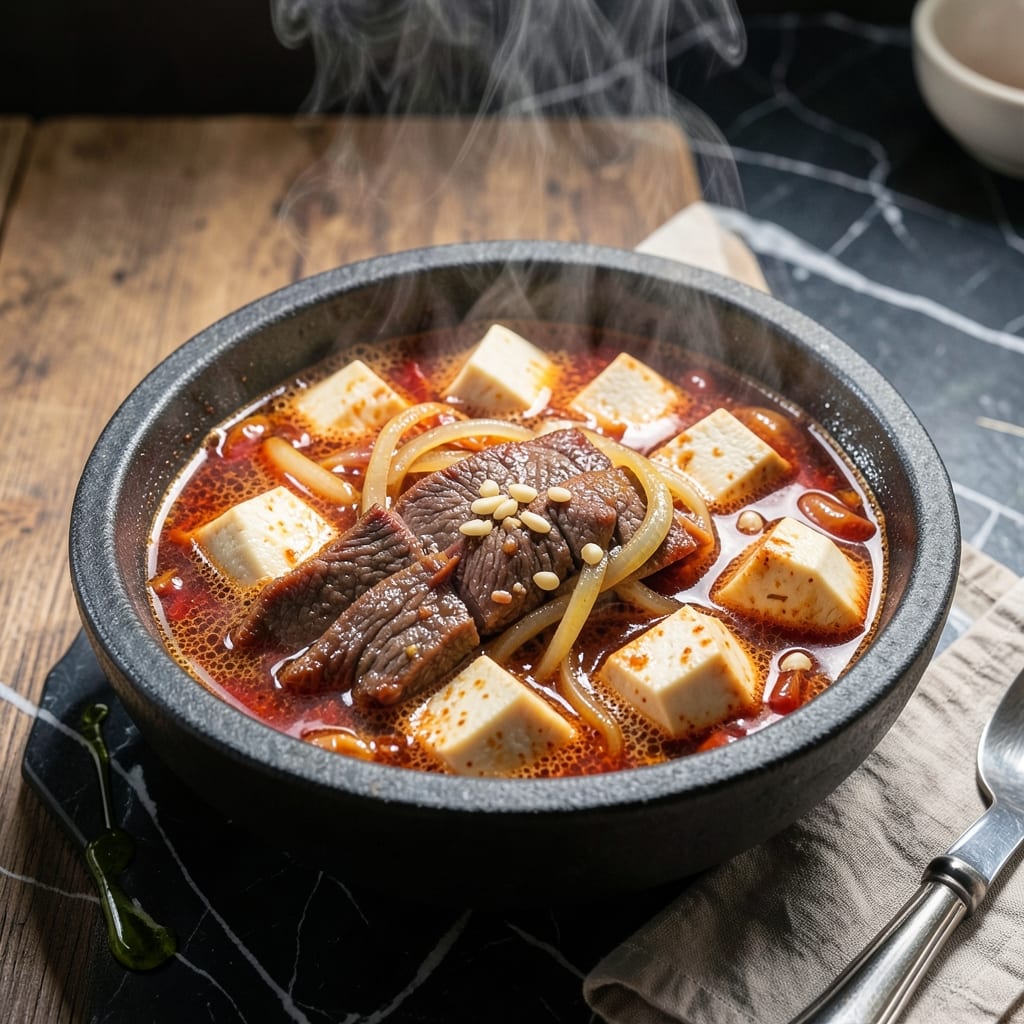
This Korean classic transforms aged kimchi and tender beef into a deeply flavorful stew that warms from the first spoonful. The fermentation of kimchi creates a complex base that develops rich, tangy depth as it simmers.
I’ve refined this method to balance heat, umami, and heartiness without overwhelming the palate. Thinly sliced beef cooks quickly and absorbs the bold flavors, while tofu adds a soft contrast to the robust broth.
What emerges is a hearty one-pot meal with layers of spice, sourness, and savory satisfaction. The stew thickens naturally as it reduces, coating every ingredient in its vibrant sauce.
Serve steaming hot with rice to soak up every last drop of the aromatic broth.
Ingredients for Kimchi Jjigae Recipe with Beef
Aged kimchi, tender beef, and bold Korean flavors come together in this stew.
| Ingredient | Amount | Notes |
|---|---|---|
| Aged Kimchi 🥬 | 2 cups | Well-fermented, chopped with juices |
| Beef 🥩 | ¾ lb | Thinly sliced, ribeye or chuck |
| Firm Tofu 🧈 | ½ lb | Drained, pressed, cubed |
| Kimchi Juice 💧 | ½ cup | Reserved from kimchi |
| Onion 🧅 | 1 whole | Medium, thinly sliced |
| Garlic Cloves 🧄 | 4 cloves | Minced finely |
| Gochugaru 🌶️ | 2 tbsp | Korean red pepper flakes |
| Gochujang 🔥 | 1 tbsp | Korean fermented chili paste |
| Soy Sauce 🫒 | 2 tbsp | Low-sodium preferred |
| Sesame Oil 🫒 | 1 tbsp | Toasted, for finishing |
| Sugar 🍚 | 1 tsp | Balances acidity |
| Green Onions 🌱 | 3 whole | Thinly sliced for garnish |
| Water or Beef Broth 💧 | 2 cups | For adjusting consistency |
| Vegetable Oil 🫒 | 1 tbsp | For sautéing |
[recipe_ingredient_scaler]
The kimchi is key here—look for well-fermented, sour kimchi (the kind that’s been aging for weeks). Most Korean markets have it, but larger Whole Foods or H Mart locations carry it too. The beef should be thinly sliced against the grain; ask your butcher to do it or freeze the meat for 30 minutes for easier slicing at home. Tofu absorbs flavors best when pressed first (30 minutes under a heavy pan works).
No gochugaru? Substitute with cayenne plus a pinch of smoked paprika for color. Gochujang can be swapped with miso paste plus chili flakes in a pinch. For extra umami, add 1 tsp fish sauce (if not strict vegetarian). The tofu can be swapped for mushrooms if preferred. Silken tofu will fall apart, so stick with firm or extra-firm.
This stew tastes even better the next day as flavors meld. Keeps in the fridge for 3-4 days or freezes for 3 months. Reheat gently to preserve the tofu’s texture. Always serve with steamed rice to soak up the rich, spicy broth.
Why You’ll Love This Recipe
- One Pot Wonder: I just dump everything in and let it simmer—aged kimchi, beef, tofu, and onion all in one pot.
- Deep Umami Bomb: The beef and aged kimchi create this rich, funky depth that’s honestly addictive.
- Feeds a Crowd: I make a big batch and it’s always gone by the next day, even with picky eaters.
- Tastes Better Tomorrow: Here’s what sold me—the flavors meld overnight, so leftovers are even more crave-worthy.
Step-by-Step Instructions for Kimchi Jjigae With Beef
Here’s the method. Straightforward, tested, works every time.
Step 1: Sauté Aromatics and Beef
Heat 1 tbsp Vegetable Oil in a heavy pot over medium-high heat. Add the 1 whole Onion and cook for 3-4 minutes until soft and translucent. This builds the flavor base that makes this stew so satisfying.
Push the onion to one side and add the 0.75 lb Beef. Sear for 2-3 minutes until the meat loses its pink color and starts to brown. Break up any large pieces with your spoon—you want bite-sized portions throughout.
Step 2: Develop the Flavor Base
Stir in the 4 cloves Garlic Cloves, 2 tbsp Gochugaru, and 1 tbsp Gochujang. Cook for 1 minute until fragrant and the spices begin to toast slightly. The gochugaru should turn a shade darker, signaling its flavors are developing.
Add the 2 cups Aged Kimchi and cook for another 2-3 minutes. This step is crucial—the aged kimchi needs time to release its complex, fermented flavors into the oil. You’ll notice the mixture becoming deeply aromatic and slightly sticky.
Step 3: Simmer the Stew
Pour in the 0.5 cup Kimchi Juice, 2 tbsp Soy Sauce, 1 tsp Sugar, and 2 cups Water or Beef Broth. Stir well to combine, scraping up any browned bits from the bottom. These fond bits are pure flavor waiting to be incorporated.
Bring the mixture to a boil, then reduce heat to medium-low. Add the 0.5 lb Firm Tofu and simmer for 15-20 minutes until the stew thickens slightly and the tofu absorbs the rich, spicy broth. The tofu should be heated through but still hold its shape.
Step 4: Finish and Serve
Remove from heat and stir in the 1 tbsp Sesame Oil. This adds a final layer of nutty aroma that complements the spicy, tangy flavors. Taste and adjust seasoning if needed—though the kimchi and soy sauce usually provide enough saltiness.
Ladle the stew into bowls and garnish with the 3 whole Green Onions, thinly sliced. The green onions add a fresh, crisp contrast to the hearty stew. Serve immediately while hot, with steamed rice on the side to soak up the delicious broth.
Pro Tips For Making Kimchi Jjigae Recipe With Beef
- Sear the Beef First: Brown the beef in batches over medium-high heat before adding anything else—this builds a deep, meaty foundation that aged kimchi alone can’t provide. I learned this the hard way after making too many bland batches.
- Use Sour Kimchi: Skip fresh kimchi; the sourer and more fermented, the better. My grandmother swore by kimchi that’s been aging for at least 3-4 weeks—it gives the jjigae that tangy depth you’re after.
- Add Tofu Last: Stir in the firm tofu during the last 5 minutes of cooking so it stays intact and soaks up flavor without turning mushy. Sounds weird, but it works.
- Simmer Low and Slow: Once everything’s in the pot, keep it at a gentle simmer for 20-25 minutes—this lets the beef get tender and the flavors meld. After burning three batches, I finally figured out that high heat just makes it bitter.
Troubleshooting This Recipe
Too Watery Stew
If your jjigae is too thin, simmer uncovered for 5-10 minutes to reduce the liquid. Stir occasionally to prevent sticking. David and I learned this the hard way—patience is key. For faster results, mash some of the kimchi with a spoon to release its pectin, which naturally thickens the stew. 💡
Not Spicy Enough
Add 1 tsp gochugaru at a time until the heat level suits your taste. Remember, the spice develops as it simmers, so wait 5 minutes between additions. I often keep a small bowl of extra gochugaru on the table for those who want more kick.
Tofu Breaking Apart
Press your tofu thoroughly before adding—30 minutes under a heavy pan works. Add it gently to the pot and avoid stirring too vigorously. If it does break, don’t worry—it’ll still taste delicious, just less photogenic.
Beef Turning Tough
This usually happens if the beef is overcooked or sliced too thick. Use ribeye or chuck, thinly sliced against the grain. Sear it just until it loses its pink color—2-3 minutes max. Overcooking turns it chewy.
Too Sour Flavor
Balance the acidity with 1 tsp sugar or a pinch of baking soda. Stir well and taste before adding more. The sugar enhances the natural sweetness of the kimchi without making the stew taste sweet. 🔥
Burning the Bottom
Use a heavy-bottomed pot and maintain medium-low heat during simmering. Stir occasionally, especially in the first 10 minutes. If you notice sticking, add ¼ cup water or broth and scrape up the browned bits—they’re packed with flavor.
Nutrition Facts
Frequently Asked Questions
Can I use fresh kimchi instead of aged?
Fresh kimchi lacks the deep, tangy flavor needed. Use well-fermented kimchi that’s been aging for weeks. If fresh is all you have, add 1 tbsp vinegar to mimic the sourness.
What’s the best cut of beef for this stew?
Ribeye or chuck work best due to their marbling and tenderness. Slice thinly against the grain for melt-in-your-mouth texture. Avoid lean cuts like sirloin—they can turn chewy.
How do I store leftovers?
Cool completely, then store in an airtight container in the fridge for 3-4 days. Freeze for up to 3 months. Reheat gently on the stove to preserve the tofu’s texture.
Can I make this vegetarian?
Swap beef for mushrooms or extra tofu. Use vegetable broth and ensure your gochujang is vegan. The kimchi provides plenty of umami without meat.

Trained in classic French technique but raised on slow-cooked ribs and spicy rubs, she blends culinary skill with smoke and soul.
- Recipe for Boneless Pork Chops in Cast Iron Skillet: Sear and Baste to Juicy Perfection - October 3, 2026
- Recipe for Boneless Cross Rib Roast: Slow-Roasted Beef with Herb Crust - October 3, 2026
- Hamburgers in Sauce Recipe Crock Pot: Slow-Cooked Savory Delight - October 3, 2026