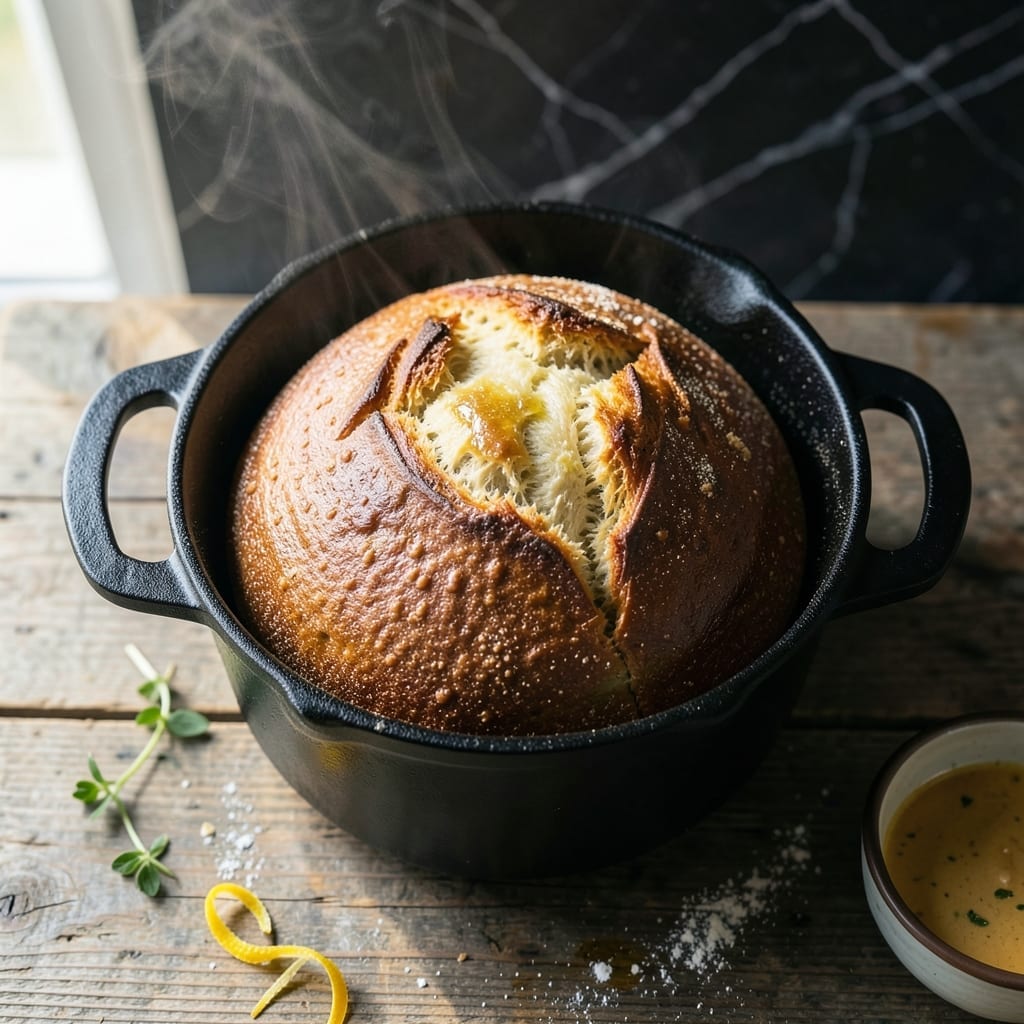
This Dutch oven method delivers bakery-quality bread with a crispy crust and airy interior—no special equipment needed. I developed this technique after years of experimenting with steam-baking at home.
The secret is preheating the Dutch oven to create an oven-within-an-oven effect. This traps steam during the initial bake, allowing the bread to rise fully before the crust sets. The result is a loaf with artisan texture and flavor.
You’ll achieve a golden, shatteringly crisp exterior and an open crumb structure that’s perfect for sandwiches or serving with olive oil. The process is straightforward but requires precise timing for best results.
With just a few basic ingredients and this method, you can produce bread that rivals any professional bakery. The Dutch oven does all the work—you just need to master the technique.
Ingredients for King Arthur Bread Recipe Dutch Oven
Eight ingredients. One Dutch oven. Bakery-quality bread at home with crisp, artisan results.
| Ingredient | Amount | Notes |
|---|---|---|
| King Arthur Bread Flour 🌾 | 4 cups | All-purpose flour works too |
| Active Dry Yeast 🍞 | 2 ¼ tsp | One 0.25 oz packet |
| Kosher Salt 🧂 | 2 tsp | Diamond Crystal preferred |
| Granulated Sugar 🍚 | 1 tsp | Helps activate yeast |
| Lukewarm Water 💧 | 1 ½ cups | 105-110°F for yeast activation |
| Extra-Virgin Olive Oil 🫒 | 2 tbsp | For dough and bowl greasing |
| Cornmeal 🌽 | ¼ cup | For dusting Dutch oven |
| Ice Cubes ❄️ | 4 pieces | For steam generation |
[recipe_ingredient_scaler]
The flour is the foundation here. King Arthur Bread Flour has the protein content (12.7%) that delivers that open crumb structure. All-purpose works in a pinch, but the texture won’t be quite as airy. Most supermarkets carry King Arthur—look for the red bag. Yeast freshness is critical; check the expiration date and store it in the freezer to extend shelf life. Diamond Crystal kosher salt dissolves evenly and has the right flake size for consistent seasoning.
No bread flour? All-purpose plus 1 tbsp vital wheat gluten per cup mimics the protein boost. Out of yeast? This recipe doesn’t work with baking powder or soda—you need the live cultures. For the olive oil, any neutral oil works, but extra-virgin adds a subtle fruitiness. The cornmeal prevents sticking and adds a nice texture to the crust. Bob’s Red Mill has a fine grind that works perfectly.
Store flour in an airtight container in a cool, dark place for up to 6 months. Yeast keeps in the freezer for 1 year unopened. The dough can rest overnight in the fridge if you want to bake the next day—this actually enhances the flavor development. Baked loaves stay fresh for 3-4 days in a paper bag.
Why You’ll Love This Recipe
- One Bowl Wonder: I love that this comes together in a single bowl—just mix King Arthur flour, yeast, salt, sugar, and water, then let it rise.
- Crispy Crust Magic: The Dutch oven traps steam for that bakery-style crust, while the inside stays soft and pillowy.
- Weeknight Hero: Honestly, it’s my go-to for busy evenings—ready in under 3 hours with minimal hands-on time.
- Budget Friendly: King Arthur flour and basic pantry staples make this a wallet-friendly loaf that still feels special.
Step-by-Step Instructions for King Arthur Bread Dutch Oven
This method delivers a professional-quality loaf with crisp crust and open crumb structure.
Step 1: Activate the Yeast and Mix the Dough
In a small bowl, combine the 2.25 tsp Active Dry Yeast, 1 tsp Granulated Sugar, and 1.5 cups Lukewarm Water. Let stand for 5-7 minutes until foamy—this confirms yeast activation. The mixture should develop a thick, bubbly head.
In a large mixing bowl, whisk together the 4 cups King Arthur Bread Flour and 2 tsp Kosher Salt. Create a well in the center and pour in the activated yeast mixture and 2 tbsp Extra-Virgin Olive Oil. Use a wooden spoon to combine until a shaggy dough forms.
Step 2: Knead and First Rise
Turn the dough onto a lightly floured surface and knead for 8-10 minutes until smooth and elastic. The dough should spring back slowly when pressed with a finger. This develops the gluten structure essential for proper rise.
Lightly oil a clean bowl with some of the Extra-Virgin Olive Oil and place the dough inside, turning to coat. Cover with a damp towel and let rise in a warm, draft-free place for 1-2 hours or until doubled in volume. The dough should look puffy with visible air pockets.
Step 3: Shape and Second Rise
Punch down the risen dough to deflate it, then shape into a round boule. Place the dough on a piece of parchment paper dusted with 0.25 cup Cornmeal—this prevents sticking and adds texture to the crust. Cover and let rise for another 30-45 minutes until slightly puffed.
Preheat your Dutch oven with lid in a 450°F oven during the second rise. The pot must be screaming hot when the dough goes in to ensure proper oven spring. The cornmeal-dusted parchment will slide easily into the hot pot.
Step 4: Bake with Steam
Carefully transfer the dough (still on parchment) into the preheated Dutch oven. Immediately add the 4 pieces Ice Cubes to the pot and quickly cover with the lid. The ice creates steam, which is crucial for developing that professional bakery crust.
Bake covered for 30 minutes, then remove the lid and bake uncovered for another 15-20 minutes until the loaf is deep golden brown and the internal temperature reaches 200-210°F. The crust should be thick and crisp with a hollow sound when tapped on the bottom.
Pro Tips For Making King Arthur Bread Recipe Dutch Oven
- Preheat the Dutch Oven: I learned this the hard way—put your empty Dutch oven in the oven for at least 30 minutes at 450°F before adding the dough. A scorching hot pot is what gives you that bakery-style crust.
- Use a Scale: After burning three batches, I finally figured out that volume measurements for flour are unreliable. Weigh your King Arthur Bread Flour—227g per cup is the sweet spot for consistency.
- Skip Cold Water: Resist the urge to use cold water to speed things up. Lukewarm water (about 110°F) activates the yeast properly—too hot kills it, too cold slows fermentation down.
- Cover While Cooling: Sounds weird, but it works: let the bread cool in the Dutch oven with the lid slightly ajar for 10 minutes. It prevents the crust from getting too hard while the interior finishes setting.
Common Mistakes When Making king arthur bread recipe dutch oven
Skipping the Proof
Don’t rush the first rise—cutting it short gives you dense bread instead of that airy crumb we’re after. I learned this the hard way when I tried to speed things up for Sunday dinner. Give it the full 1-2 hours until doubled in size. 💡
Cold Dutch Oven
Your pot must be screaming hot before adding dough. Placing dough in a cold Dutch oven prevents proper oven spring. Preheat it for at least 30 minutes at 450°F with the lid on. This mimics a professional bread oven.
Overworking Dough
Knead just until smooth and elastic—about 8-10 minutes. Over-kneading develops too much gluten, resulting in tough bread. The dough should spring back slowly when pressed, not bounce back instantly like a rubber ball.
Steam Management
Those 4 ice cubes create essential steam for a crispy crust. Skip them and you’ll get a flat, dull exterior. Add them immediately after placing the dough in the pot, then close the lid fast to trap the steam.
Premature Uncovering
Resist peeking during the first 30 minutes of covered baking. Opening the lid releases steam too early, causing the crust to form before the bread finishes rising. Wait until the timer goes off to check progress.
Underbaking
The internal temperature should reach 200-210°F for fully baked bread. Pulling it out too soon leaves you with a gummy interior. I always use a thermometer to confirm doneness—it’s the only way to be sure. 🌡️
Nutrition Facts
Frequently Asked Questions
Can I use all-purpose flour instead of bread flour?
Yes, but add 1 tbsp vital wheat gluten per cup of flour to boost protein. Bread flour’s higher protein creates better structure. All-purpose works but may yield a slightly denser crumb.
Why does the Dutch oven need to be preheated?
Preheating ensures immediate oven spring—the rapid rise when dough hits heat. A cold pot won’t create the steam environment needed for a crispy crust. Always preheat for 30 minutes at 450°F.
How do I know when the bread is fully baked?
Use a thermometer: internal temp should reach 200-210°F. The crust will be deep golden brown and sound hollow when tapped. Underbaking leaves the interior gummy.
Can I skip the ice cubes for steam?
No—steam is crucial for crust development. Without it, you’ll get a dull, flat exterior. The 4 ice cubes create instant steam when added to the hot pot.

Trained in classic French technique but raised on slow-cooked ribs and spicy rubs, she blends culinary skill with smoke and soul.
- Recipe for Boneless Pork Chops in Cast Iron Skillet: Sear and Baste to Juicy Perfection - October 3, 2026
- Recipe for Boneless Cross Rib Roast: Slow-Roasted Beef with Herb Crust - October 3, 2026
- Hamburgers in Sauce Recipe Crock Pot: Slow-Cooked Savory Delight - October 3, 2026