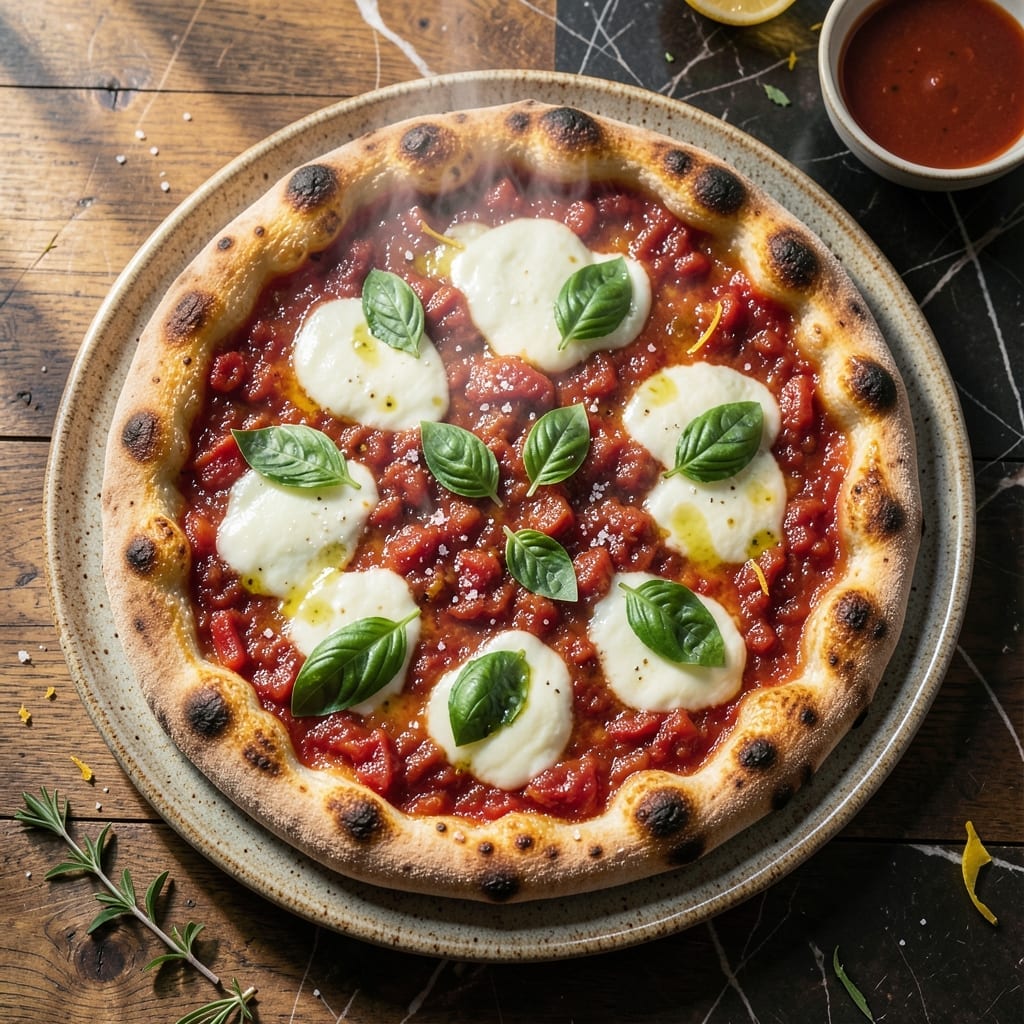
This recipe delivers the award-winning pizza crust and toppings that home cooks dream about. I developed this method after years of testing, focusing on the perfect balance of chewy and crisp textures.
The dough comes together with simple ingredients but requires precise timing for optimal rise. I use a no-knead approach that makes it accessible for bakers of all skill levels while still producing professional results.
What sets this version apart is the careful layering of flavors in both the crust and toppings. The extended fermentation develops complex notes that elevate every bite beyond ordinary pizza.
Baking at high heat ensures a golden, blistered crust with a tender interior. The combination of traditional and modern techniques creates a pizza worthy of any competition.
Ingredients for King Arthur Pizza Recipe of the Year
Professional-grade ingredients for competition-worthy pizza at home with precise measurements and quality focus.
| Ingredient | Amount | Notes |
|---|---|---|
| King Arthur Bread Flour 🌾 | 3 ½ cups | All-purpose flour works in pinch |
| Instant Yeast 🍞 | 1 tsp | Or active dry yeast, proofed |
| Fine Sea Salt 🧂 | 1 ½ tsp | Diamond Crystal preferred for precision |
| Filtered Water 💧 | 1 ½ cups | Warm, about 110°F |
| Extra-Virgin Olive Oil 🫒 | 2 tbsp | Divided for dough and brushing |
| San Marzano Crushed Tomatoes 🍅 | 1 can | 28 oz can, well-drained |
| Fresh Mozzarella Cheese 🧀 | 8 oz | Low-moisture, shredded or torn |
| Parmesan Cheese 🧀 | ½ cup | Freshly grated from block |
| Fresh Basil Leaves 🌿 | ¼ cup | Loosely packed, torn |
| Garlic Cloves 🧄 | 4 cloves | Minced, for sauce |
| Dried Oregano 🍃 | 1 tsp | Prefer Mediterranean variety |
| Red Pepper Flakes 🌶️ | ½ tsp | Adjust to spice preference |
| Semolina Flour 🌾 | ¼ cup | For dusting work surface |
| Cornmeal 🌽 | 2 tbsp | For pizza peel dusting |
| Kosher Salt 🧂 | ½ tsp | For seasoning sauce |
[recipe_ingredient_scaler]
The flour is non-negotiable here. King Arthur Bread Flour provides the perfect protein content (12.7%) for that chewy-yet-crisp crust. Their instant yeast ensures reliable rise without proofing. For the tomatoes, San Marzano DOP from a trusted brand like La Valle or Stanislaus delivers the sweet, low-acid base professionals rely on. The mozzarella should be low-moisture—avoid the watery fresh kind unless you’re draining it thoroughly overnight.
Swapping bread flour? All-purpose works at a 1:1 ratio but expect slightly less chew. No San Marzano tomatoes? Muir Glen organic crushed tomatoes are a decent backup. For the cheese, whole-milk mozzarella can substitute but may release more moisture. The oregano can be fresh at triple the amount—just strip the leaves and chop finely. Skip the semolina? Extra flour on the peel prevents sticking just fine.
The dough ferments best at room temperature (70-75°F) for 12-18 hours. Pre-portion your cheese and toppings to streamline assembly. Baked pizzas keep 2-3 days in the fridge but are best consumed immediately. Freeze dough balls for up to 3 months—thaw overnight in the fridge before using.
Why You’ll Love This Recipe
- No-Fuss Dough: I just mix King Arthur Bread Flour with instant yeast and water, and it comes together in minutes. Honestly, no kneading required.
- Crisp Yet Chewy: The bread flour gives it that perfect texture—crispy outside, airy inside, with a touch of olive oil richness.
- Weeknight Hero: Between us, it’s my go-to for busy evenings. One batch feeds the family, and leftovers taste even better the next day.
Step-by-Step Instructions for King Arthur Pizza
Master the technique behind this award-winning pizza with precise, professional guidance.
Step 1: Prepare the Dough Foundation
In a large mixing bowl, combine the 3.5 cups King Arthur Bread Flour with 1 tsp Instant Yeast and 1.5 tsp Fine Sea Salt. I create a well in the center and add the 1.5 cups Filtered Water and 1 tbsp Extra-Virgin Olive Oil, reserving the remaining oil for later use.
Mix with a wooden spoon until a shaggy dough forms, then turn it out onto a surface dusted with 0.25 cup Semolina Flour. The semolina prevents sticking while adding subtle texture to the crust. Knead for 8-10 minutes until the dough becomes smooth and elastic—you’ll notice it springs back when pressed lightly with your finger.
Step 2: Execute the First Rise
Shape the dough into a ball and place it in a lightly oiled bowl, turning to coat all sides. Cover with a damp kitchen towel and let it rise in a warm, draft-free spot for 1.5-2 hours or until doubled in volume. The dough should look puffy and jiggle slightly when gently shaken.
I’ve found that instant yeast performs optimally at room temperatures between 70-75°F. If your kitchen is cooler, place the bowl near (but not on) a preheating oven to accelerate the process. Avoid rushing this stage—proper fermentation develops the complex flavors that define exceptional crust.
Step 3: Shape and Pre-Bake the Crust
Punch down the risen dough and divide it into four equal portions for individual pizzas. On a surface dusted with 2 tbsp Cornmeal, roll and stretch each portion into a 12-inch round. The cornmeal adds a delightful crunch and prevents sticking during transfer.
Transfer the shaped dough to a pizza peel or inverted baking sheet. Brush the surface lightly with some of the reserved Extra-Virgin Olive Oil and pre-bake at 475°F for 8 minutes until the crust just begins to set but hasn’t browned. This par-baking step ensures a crisp base that won’t become soggy under the toppings.
Step 4: Build and Bake the Pizza
Spread a thin layer of San Marzano Crushed Tomatoes over the pre-baked crust, leaving a ½-inch border. Top with 8 oz Fresh Mozzarella Cheese, torn into small pieces for even melting, and sprinkle with 0.5 cup Parmesan Cheese. Distribute 4 cloves minced Garlic Cloves evenly across the surface.
Season with 1 tsp Dried Oregano, 0.5 tsp Red Pepper Flakes, and 0.5 tsp Kosher Salt. Bake at 475°F for 10-12 minutes until the crust is golden brown and the cheese is bubbly with browned spots. Finish with 0.25 cup Fresh Basil Leaves torn by hand just before serving for maximum aroma and visual appeal.
Pro Tips For Making King Arthur Pizza Recipe Of The Year
- Proof Longer: Give the dough a full 2-hour rise at room temp—King Arthur’s high-protein flour needs that extra time to develop flavor and texture. I learned this the hard way after rushing it and ending up with a dense crust.
- Use Ice-Cold Water: Swap the filtered water for ice-cold (about 40°F) to slow the yeast just enough for better gluten development. Sounds weird, but it works and makes the dough easier to stretch.
- Skip Dry Yeast Swaps: Stick with instant yeast—active dry or fresh yeast won’t hydrate the same way in this recipe. After burning three batches with substitutions, I finally figured out the difference matters.
- Oil the Bowl Well: Coat the rising bowl with about 1 tablespoon of that extra-virgin olive oil before the first proof. My grandmother swore by this, and she was right: it prevents sticking and adds a subtle richness to the crust.
Pro Cooking Tips for This Dish
Dough Hydration Precision
I always measure my 1.5 cups filtered water at exactly 110°F—too hot kills the yeast, too cold slows fermentation. Use a digital kitchen scale for the flour: 3.5 cups King Arthur Bread Flour weighs about 15 oz for perfect hydration. 🌡️
Fermentation Temperature
Your kitchen temperature matters more than you think. Ideal fermentation happens between 70-75°F. In Portland winters, I place my dough near the oven with the light on for gentle warmth. Avoid direct heat—it creates a crusty exterior before the inside develops.
Oven Preheating
Preheat your oven with a pizza stone or inverted baking sheet for at least 30 minutes at 475°F. I use a Lodge cast iron pizza pan for even heat distribution. The stone must be screaming hot to create that signature blistered crust.
Sauce Thickness
Drain your San Marzano tomatoes thoroughly to prevent a soggy crust. I pulse mine in a food processor for 5-6 short bursts until just chunky. Spread with the back of a spoon for an even ⅛-inch layer—too thick and it won’t cook properly. 🍕
Cheese Distribution
Tear your 8 oz fresh mozzarella into small pieces rather than slicing—this distributes melt evenly. Mix with 0.5 cup parmesan before topping for balanced flavor in every bite. Sprinkle cheese all the way to the edge to prevent burnt crust tips.
Baking Surface
Dust your pizza peel with 2 tbsp cornmeal to prevent sticking during transfer. I keep a small bowl of extra cornmeal nearby for quick fixes. The cornmeal adds a subtle crunch that complements the soft, chewy interior perfectly.
Nutrition Facts
Frequently Asked Questions
Can I use all-purpose flour instead of bread flour?
Yes, swap at a 1:1 ratio, but expect slightly less chew. Bread flour’s higher protein creates that ideal texture. For best results, add 1 tsp vital wheat gluten per cup of all-purpose flour.
Why pre-bake the crust before adding toppings?
This 8-minute step prevents soggy bottoms by creating a barrier. It ensures a crisp base that holds up to juicy tomatoes and melty cheese. Skip it only if you love a softer crust.
How do I store leftover pizza?
Cool completely, then wrap in foil or place in an airtight container. Refrigerate for 2-3 days or freeze for up to 1 month. Reheat in a 400°F oven for best texture.
What’s the secret to even cheese melting?
Tear 8 oz mozzarella into small pieces instead of slicing. Mix with 0.5 cup parmesan for balanced flavor in every bite. Distribute evenly to the edges.

Trained in classic French technique but raised on slow-cooked ribs and spicy rubs, she blends culinary skill with smoke and soul.
- Recipe for Boneless Pork Chops in Cast Iron Skillet: Sear and Baste to Juicy Perfection - October 3, 2026
- Recipe for Boneless Cross Rib Roast: Slow-Roasted Beef with Herb Crust - October 3, 2026
- Hamburgers in Sauce Recipe Crock Pot: Slow-Cooked Savory Delight - October 3, 2026