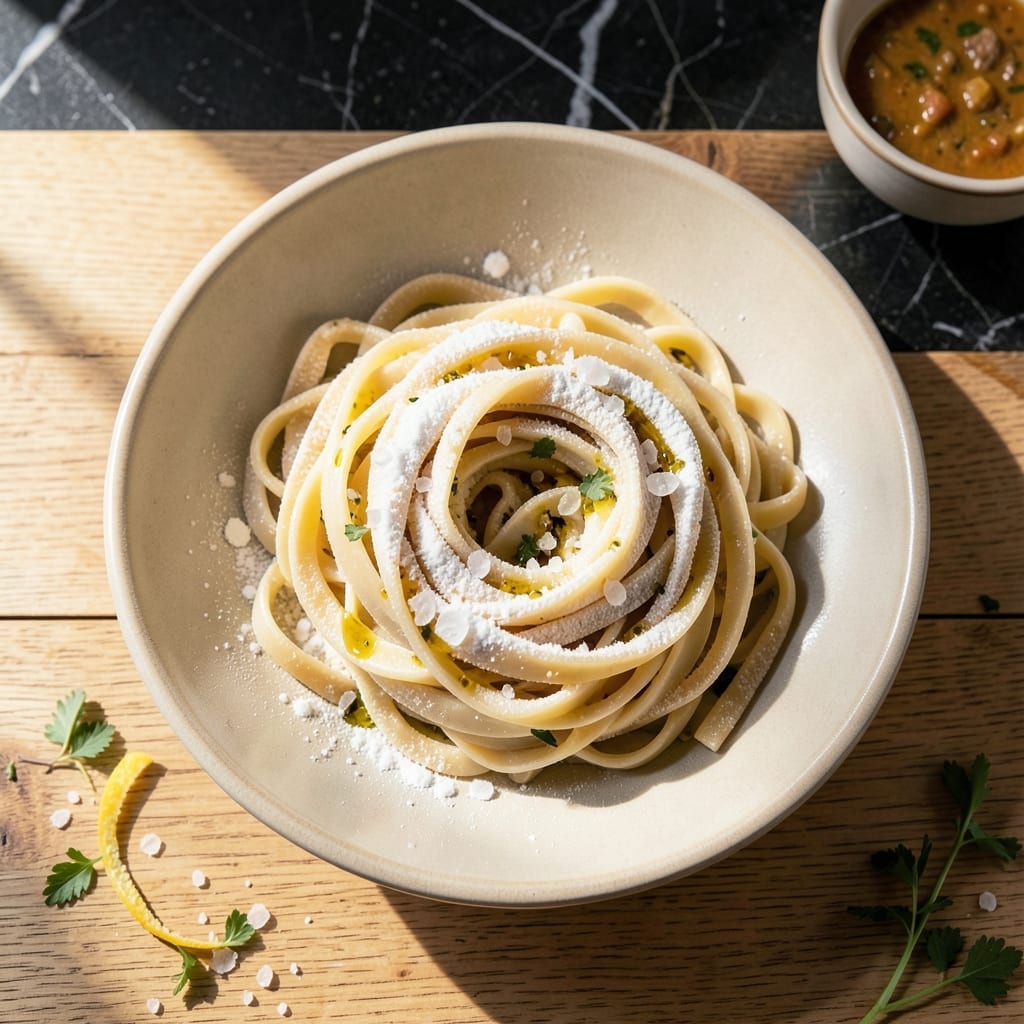
Making fresh pasta without eggs is simpler than you might think. My grandmother proved it by turning flour and water into silky ribbons with just her hands.
This method uses your KitchenAid mixer to do the hard work, creating smooth, elastic dough that rolls out beautifully. The vegan approach delivers the same tender texture as traditional pasta.
The process takes about 30 minutes from start to finish, with most of that time spent resting the dough. You’ll be amazed at how easy it is to create restaurant-quality pasta at home.
Perfect for weeknight dinners or special occasions. Here’s how to make it.
Ingredients for Kitchenaid Pasta Recipe No Egg
Flour, water, and a mixer. That is all for silky vegan pasta.
| Ingredient | Amount | Notes |
|---|---|---|
| All-Purpose Flour 🌾 | 2 ½ cups | Plus extra for dusting |
| Water 💧 | ¾ cup | Room temperature preferred |
| Olive Oil 🫒 | 1 tbsp | Optional for elasticity |
| Sea Salt 🧂 | ½ tsp | Fine grain preferred |
[recipe_ingredient_scaler]
The flour is doing all the work here. King Arthur or Bob’s Red Mill all-purpose give the best texture—avoid bread flour (too dense) or cake flour (too light). Weigh it if you’ve got a scale: 2.5 cups is about 300g. The water should be room temp, not cold from the tap (helps the dough come together faster). I use filtered water just because our tap has a weird taste, but it’s probably overkill.
No olive oil? Skip it—the pasta will still work, just might be slightly less elastic. Want extra flavor? Infuse the water with a pinch of turmeric (golden pasta!) or spinach puree (green pasta). The salt is optional too, but I always add it—enhances the wheat flavor. If your dough feels too dry, add water 1 tsp at a time. Too wet? More flour, same approach.
Fresh pasta cooks in 2-3 minutes, so make it right before boiling. Dough can rest in the fridge for up to 24 hours if wrapped tightly. The cooked pasta freezes beautifully for 1 month—just toss with a little oil first.
Why You’ll Love This Recipe
- No-Fuss Mixing: I just dump flour, water, olive oil, and salt in the stand mixer and let it do the work—no cracking eggs, no sticky hands.
- Simple Perfection: The olive oil adds a subtle richness that makes the pasta taste restaurant-quality, even with just four ingredients.
- Meal Prep Magic: I make a big batch on Sunday and it keeps beautifully for quick dinners all week. Honestly, it’s my lazy-day lifesaver.
- Budget Friendly: All-purpose flour and pantry staples mean I can make fresh pasta for pennies compared to store-bought.
Step-by-Step Instructions for Kitchenaid Pasta No Egg
Here’s how I make perfect noodles using just flour and water in my stand mixer.
Step 1: Combine Dry Ingredients in Mixer Bowl
Attach the dough hook to your Kitchenaid mixer. Add the 2.5 cups All-Purpose Flour and 0.5 tsp Sea Salt directly to the mixing bowl. I always use the fine grain sea salt because it dissolves more evenly throughout the dough.
Mix on low speed for 10-15 seconds just to combine the flour and salt. You’ll see the dry ingredients swirl together into an even mixture. This brief mixing ensures the salt is distributed before adding any liquid.
Step 2: Create a Well and Add Wet Ingredients
Stop the mixer and use your fingers to create a well in the center of the flour mixture. Pour in the 0.75 cup Water and 1 tbsp Olive Oil into this well. The room temperature water works best here—cold water can make the dough tougher to come together.
I like to add the olive oil last because it helps create a more elastic dough, though it’s technically optional. The oil also adds a subtle richness to the finished pasta. You’ll notice the liquids settle into the well without spreading into the flour yet.
Step 3: Mix on Low Until Dough Forms
Turn the mixer back on to low speed and let it run for 30-45 seconds. You’ll see the dough start to come together in clumps before forming a single mass. Don’t be tempted to increase the speed—this slow mixing prevents overworking the gluten.
The dough will look shaggy at first, then gradually become smoother as it incorporates all the flour. If it seems too dry, add water 1 teaspoon at a time. If too sticky, add flour 1 tablespoon at a time. You want a firm but pliable dough that doesn’t stick to your fingers.
Step 4: Knead Until Smooth and Elastic
Increase the mixer speed to medium-low and let it knead the dough for 8-10 minutes. This is where the magic happens—the gluten develops, creating that perfect pasta texture. You’ll know it’s ready when the dough pulls away from the bowl sides and feels smooth to the touch.
The finished dough should be firm but not hard, with a slight give when pressed. If it feels tough, you’ve over-kneaded. If it’s still sticky, it needs more flour. Let the mixer do the work—your arms will thank you.
Step 5: Rest and Roll Out the Dough
Remove the dough from the bowl and shape it into a ball. Wrap it tightly in plastic wrap and let it rest at room temperature for 30 minutes. This resting period relaxes the gluten, making the dough easier to roll out.
After resting, divide the dough into 4 portions and roll each through your pasta machine, starting at the widest setting and gradually decreasing. You’ll end up with beautiful, silky ribbons ready for cooking or drying.
Pro Tips For Making Kitchenaid Pasta Recipe No Egg
- Knead Just Enough: Stop the mixer as soon as the dough clumps around the hook—overworking it makes the pasta tough. I learned this the hard way after my first few batches came out chewy.
- Use Warm Water: About 100°F water helps the flour hydrate evenly and creates a smoother dough. Cold water works in a pinch, but the texture isn’t as reliable.
- Skip the Extra Flour: Resist the urge to dust the counter with flour when rolling—it dries out the pasta. A lightly oiled surface works better for this eggless dough.
- Rest 30 Minutes: Let the dough sit covered at room temp before rolling. Sounds weird, but it relaxes the gluten so the sheets don’t shrink back when you stretch them.
Troubleshooting Great kitchenaid pasta recipe no egg
Dough Too Dry
If your dough crumbles when pressed, add room temperature water 1 tsp at a time while mixing on low. I learned this the hard way when I first started—too much flour creates a stiff, unworkable dough. Stop adding liquid once it holds together without sticking. 💡
Dough Too Sticky
When it clings to your fingers or the bowl, sprinkle in 1 tbsp flour at a time until it pulls away cleanly. Remember my grandmother’s method: dust your hands and work surface lightly, but don’t overdo it. The dough should feel firm, not damp.
Over-Kneaded Dough
If it feels tough and springs back sharply, you’ve likely overworked it. Let it rest for 10-15 minutes—sometimes the gluten just needs time to relax. Next time, knead for just 8 minutes max on medium-low speed.
Uneven Thickness
If your sheets roll out patchy, flatten the dough by hand before feeding it through the pasta machine. Start at the widest setting and gradually decrease, folding and repeating if needed. This ensures silky, uniform ribbons every time.
Tearing During Rolling
If the dough tears, it might be too dry. Spritz with a few drops of water and let it rest for 5 minutes before trying again. I keep a spray bottle nearby for quick fixes.
Storage Issues
If your dough dries out while resting, wrap it tightly in plastic wrap or place it in an airtight container. For cooked pasta, toss with 1 tsp olive oil before storing in the fridge for up to 24 hours. ❄️
Nutrition Facts
Frequently Asked Questions
Can I make this without a pasta machine?
Yes! Roll the dough as thin as possible with a rolling pin. It takes more effort but works for rustic shapes. Aim for 1-2mm thickness for best results.
Why rest the dough for 30 minutes?
The resting period relaxes the gluten, making it easier to roll out. Without this, the dough may spring back or tear. Think of it as a necessary pause for perfect texture.
How do I know when the dough is ready?
It should pull away from the bowl and feel smooth, not sticky. Press it with your finger—if it springs back slowly, it’s ready. Over-kneading makes it tough.
Can I add flavors to the dough?
Try 1 tsp turmeric for golden pasta or 2 tbsp spinach puree for green. Adjust water slightly if adding liquids to maintain consistency.

Trained in classic French technique but raised on slow-cooked ribs and spicy rubs, she blends culinary skill with smoke and soul.
- Recipe for Boneless Pork Chops in Cast Iron Skillet: Sear and Baste to Juicy Perfection - October 3, 2026
- Recipe for Boneless Cross Rib Roast: Slow-Roasted Beef with Herb Crust - October 3, 2026
- Hamburgers in Sauce Recipe Crock Pot: Slow-Cooked Savory Delight - October 3, 2026