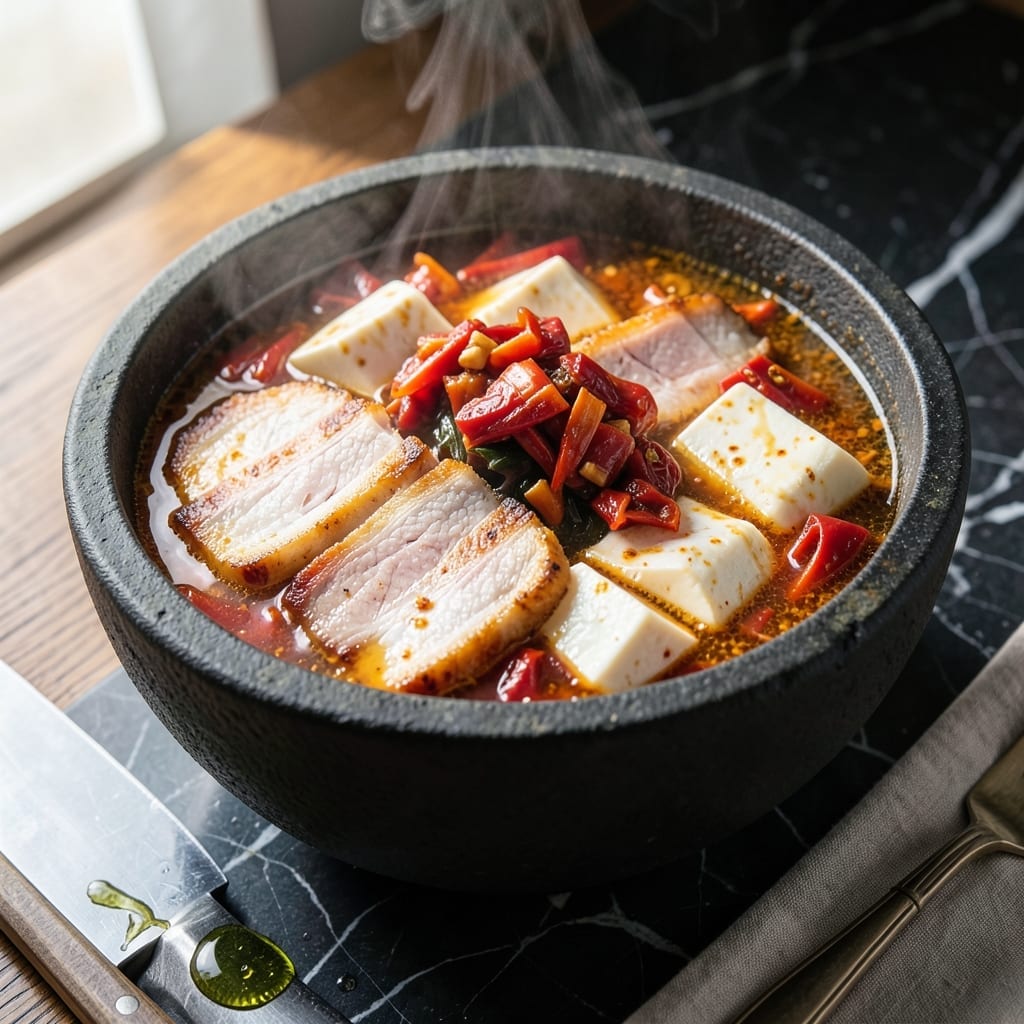
There’s nothing quite like the rich, spicy depth of a Korean hot pot with kimchi at its heart. This dish transforms simple ingredients into a bold, fermented broth that warms from the inside out.
I developed this recipe to bring authentic Korean flavors to any home kitchen. The kimchi provides the signature tang and heat, while pork or tofu adds satisfying substance to the meal.
What makes this special is the balance between spicy, savory, and umami notes. The broth simmers just long enough to meld all the flavors without losing the kimchi’s signature punch.
Serve it bubbling at the table with rice and fresh vegetables for dipping. The experience is as much about the process as the eating.
Ingredients for Korean Hot Pot Recipe Kimchi
Bold flavors start with fermented kimchi and spicy gochujang for this warming tabletop feast.
| Ingredient | Amount | Notes |
|---|---|---|
| Kimchi 🥬 | 2 cups | Well-fermented, with juice |
| Pork Belly 🥩 | 1 lb | Thinly sliced, or substitute tofu |
| Firm Tofu 🧈 | 14 oz | Pressed and cubed, optional for vegetarian option |
| Kimchi Juice 💧 | 1 cup | Reserved from kimchi |
| Gochujang 🌶️ | 2 tbsp | Korean red pepper paste |
| Gochugaru 🌶️ | 1 tbsp | Korean red pepper flakes |
| Soy Sauce 🫒 | 2 tbsp | Low-sodium preferred |
| Garlic Cloves 🧄 | 6 cloves | Minced for depth of flavor |
| Fresh Ginger 🌿 | 1 tbsp | Grated, for aromatic warmth |
| Onion 🧅 | 1 whole | Thinly sliced, yellow or white |
| Green Onions 🌱 | 4 pieces | Chopped, for garnish and flavor |
| Mushrooms 🍄 | 8 oz | Shiitake or enoki preferred |
| Chicken Broth 🥣 | 4 cups | Or vegetable broth for vegetarian |
| Sesame Oil 🫒 | 1 tbsp | Toasted, for finishing |
| Sugar 🍬 | 1 tsp | Balances spice and acidity |
[recipe_ingredient_scaler]
The kimchi is non-negotiable here—look for well-fermented napa cabbage kimchi at a Korean market (H Mart is great) or the refrigerated section of Whole Foods. It should be tangy, spicy, and bubbly. The pork belly (find it at Costco or a butcher) gives that melt-in-your-mouth texture, but tofu works just as well if you prefer a lighter option. Freshness matters most with the aromatics like ginger and garlic.
No gochujang? Mix 1 tbsp sriracha with 1 tsp miso paste for a similar punch. Gochugaru can be swapped with regular red pepper flakes at half the amount (they’re hotter). Vegetable broth replaces chicken broth easily. For mushrooms, cremini or white button work if shiitake aren’t available. The sugar isn’t just sweetness—it rounds out the heat (don’t skip it).
The broth deepens in flavor overnight, so leftovers taste even better the next day. Store in the fridge for up to 4 days or freeze for 3 months. Reheat gently to preserve the kimchi’s texture. Always serve bubbling hot at the table for the full experience.
Why You’ll Love This Recipe
- I’ll be real: it tastes even better the next day after the flavors meld overnight.
- One Pot Magic: I just dump everything in and let the kimchi juice and gochujang do the work—minimal cleanup, maximum flavor.
- Flavor Bomb: The pork belly soaks up the tangy kimchi juice while the tofu balances it with a creamy, spicy bite.
- Crowd Pleaser: Honestly, it’s my go-to for lazy weekends or when friends pop over unannounced.
Step-by-Step Instructions for Korean Kimchi Hot Pot
Build layers of flavor methodically for a broth that’s rich, spicy, and deeply satisfying.
Step 1: Sauté Aromatics and Build the Base
Heat a large pot over medium-high heat and add the 1 lb Pork Belly. Cook for 5-7 minutes until the fat renders and the pieces turn golden brown. This creates a rich foundation for your broth.
Add the thinly sliced onion, 6 cloves minced garlic, and 1 tbsp grated ginger. Sauté for 3-4 minutes until the onion softens and becomes translucent. The aroma should be fragrant and inviting—this is your signal that the base is ready for the next layer.
Step 2: Develop the Spicy Broth
Pour in the 4 cups Chicken Broth, 1 cup Kimchi Juice, 2 tbsp Gochujang, 1 tbsp Gochugaru, 2 tbsp Soy Sauce, and 1 tsp Sugar. Stir well to combine, ensuring the Gochujang and Gochugaru dissolve completely into the liquid.
Increase the heat to high and bring the mixture to a boil. Once boiling, reduce the heat to medium-low and let it simmer for 10 minutes. This allows the flavors to meld and deepen, creating a broth that’s both spicy and complex.
Step 3: Add Kimchi and Vegetables
Add the 2 cups Kimchi and 8 oz Mushrooms to the pot. Stir to incorporate, then let the mixture simmer for another 10 minutes. The Kimchi will soften and infuse the broth with its tangy, fermented depth.
Taste the broth and adjust seasoning if needed. If it’s too spicy, add a bit more Chicken Broth to balance it. The mushrooms should be tender, and the Kimchi should be fully immersed in the broth, releasing its bold flavors.
Step 4: Add Protein and Finish
Gently add the 14 oz cubed Firm Tofu and any remaining Pork Belly slices to the pot. Simmer for 5-7 minutes until the Tofu is heated through and absorbs some of the broth’s flavor. Avoid stirring too vigorously to keep the Tofu intact.
The Tofu should be soft and slightly puffed, soaking up the rich, spicy broth. This step ensures all ingredients are perfectly cooked and the flavors are fully integrated.
Step 5: Garnish and Serve
Drizzle the 1 tbsp Sesame Oil over the hot pot and sprinkle the 4 pieces chopped Green Onions on top. This adds a fresh, aromatic finish to the dish.
Serve immediately while hot, ensuring each serving includes a mix of broth, Tofu, Pork Belly, and vegetables. The broth should be bubbling slightly, with a deep red color and an irresistible, spicy aroma.
Pro Tips For Making Korean Hot Pot Recipe Kimchi
- Simmer the Kimchi First: Cook the kimchi and its juice for 5-7 minutes before adding other ingredients—this deepens the flavor and mellows the acidity. I learned this the hard way after my first few batches tasted harsh and one-dimensional.
- Sear the Pork Belly: Brown the pork belly slices in the pot before adding liquids; about 2-3 minutes per side. It adds a rich, meaty base that makes the broth taste like it simmered for hours.
- Skip Unpressed Tofu: Use firm tofu that’s been pressed for at least 15 minutes to remove excess water, or it’ll fall apart in the broth. Sounds tedious, but it’s the only way to get those perfect, spongy cubes that soak up flavor.
- Thin Gochujang First: Mix the gochujang with a little kimchi juice or water before stirring it into the pot—this prevents clumping and helps it distribute evenly. After burning a batch with clumped paste, I never skip this step.
Common Mistakes When Making Perfect Results
Overcooking the Kimchi
Adding kimchi too early and simmering it for 20+ minutes destroys its signature tang and texture. I always add it during the last 10 minutes of broth simmering to preserve its vibrant fermented flavor and slight crunch. 🌶️
Skipping the Fat Rendering
Rushing the pork belly step means missing out on rich depth. Cook it for 5-7 minutes on medium-high heat until golden brown. This creates a flavorful base that transforms the entire dish.
Neglecting Broth Balance
Too much gochujang or gochugaru can make the broth overwhelmingly spicy. Start with 2 tbsp gochujang and 1 tbsp gochugaru, then taste and adjust. The 1 tsp sugar is crucial to balance the heat and acidity.
Overcrowding the Pot
Adding all ingredients at once leads to uneven cooking. I add proteins and tofu only after the broth has developed for 10 minutes. This ensures everything cooks evenly without diluting the flavors.
Ignoring the Juice
The 1 cup kimchi juice is liquid gold for depth. Don’t drain it away—it carries the fermented complexity that defines this dish. If your kimchi is dry, add a splash of water to compensate.
Serving Too Cool
This creation must bubble when served. Keep it on low heat at the table, or reheat gently if needed. The bubbling broth enhances both flavor and the communal dining experience. 🔥
Nutrition Facts
Frequently Asked Questions
Can I use fresh kimchi instead of fermented?
Fresh kimchi lacks the tangy depth needed. Use well-fermented kimchi that’s at least 2-3 weeks old for authentic flavor. The fermentation process develops the sour, complex taste that defines this dish.
How do I adjust the spice level?
Start with 1 tbsp gochujang and 1/2 tbsp gochugaru, then taste. Add more gradually—you can’t remove heat once it’s in! The 1 tsp sugar helps balance spiciness.
What’s the best way to reheat leftovers?
Gently warm on medium-low heat for 5-7 minutes, stirring occasionally. Avoid boiling to preserve the kimchi’s texture. Leftovers taste even better the next day!
Can I make this vegetarian?
Skip the pork belly and use 14 oz tofu plus extra mushrooms. Replace chicken broth with vegetable broth for a fully plant-based version.

Trained in classic French technique but raised on slow-cooked ribs and spicy rubs, she blends culinary skill with smoke and soul.
- Recipe for Boneless Pork Chops in Cast Iron Skillet: Sear and Baste to Juicy Perfection - October 3, 2026
- Recipe for Boneless Cross Rib Roast: Slow-Roasted Beef with Herb Crust - October 3, 2026
- Hamburgers in Sauce Recipe Crock Pot: Slow-Cooked Savory Delight - October 3, 2026