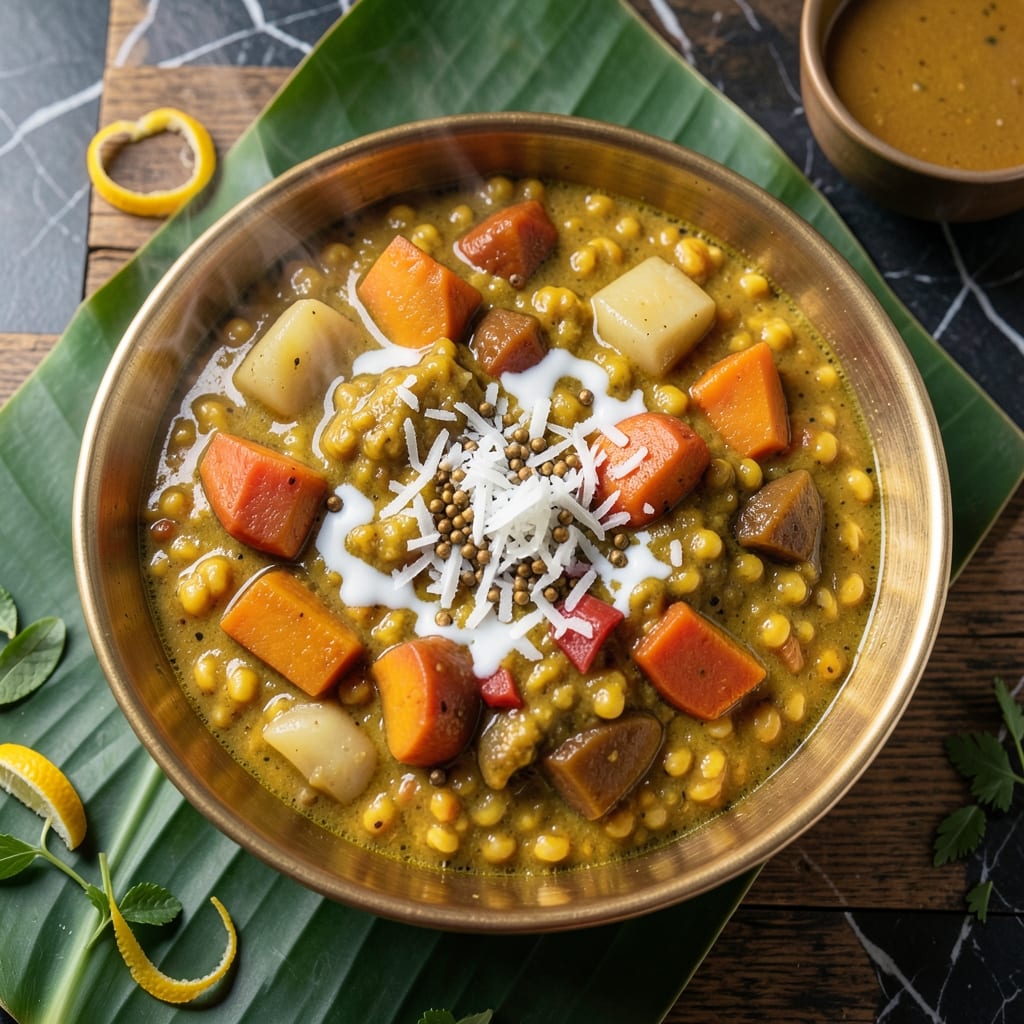
This Kerala-style kootu curry brings the authentic flavors of South India to your kitchen with a perfect balance of lentils and vegetables in a coconut-spiced gravy.
I developed this recipe after years of studying traditional methods, focusing on the slow-cooked harmony between tender lentils and garden-fresh vegetables. The coconut base creates a rich, velvety texture that defines this classic dish.
The secret lies in layering spices properly—mustard seeds, curry leaves, and turmeric build depth before the vegetables join the pot. Each bite delivers comfort and nutrition in equal measure.
Serve with steamed rice or appam for a complete, satisfying meal that tastes like home.
Ingredients for Kootu Curry Recipe Kerala Style
Traditional Kerala dals and garden vegetables create this rich coconut-spiced dish with authentic South Indian flavors.
| Ingredient | Amount | Notes |
|---|---|---|
| Yellow Moong Dal 🌾 | 1 cup | Rinsed and drained well |
| Toor Dal 🌾 | ½ cup | Rinsed and drained well |
| Mixed Vegetables 🥕 | 3 cups | Diced, carrot, beans, pumpkin |
| Fresh Coconut 🥥 | ½ cup | Grated or frozen unsweetened |
| Coconut Milk 🥥 | 1 cup | Full-fat for richness |
| Mustard Seeds 🌿 | 1 tsp | Black or brown variety |
| Cumin Seeds 🌿 | 1 tsp | Whole, not ground |
| Dried Red Chilies 🌶️ | 2 whole | Broken into pieces |
| Curry Leaves 🍃 | 12 pieces | Fresh preferred, dried acceptable |
| Turmeric Powder 🌿 | ½ tsp | Ground, for color and flavor |
| Asafoetida 🧂 | ¼ tsp | Hing, for umami depth |
| Green Chilies 🌶️ | 2 whole | Slit lengthwise for heat |
| Ginger 🌿 | 1 tbsp | Fresh, finely grated |
| Garlic Cloves 🧄 | 4 cloves | Peeled and minced |
| Water 💧 | 4 cups | For cooking dal and vegetables |
| Salt 🧂 | 1 ½ tsp | Adjust to taste |
[recipe_ingredient_scaler]
The dals are the foundation here. Yellow moong dal and toor dal are essential for authentic texture—find them at Indian grocery stores or well-stocked international aisles. Fresh curry leaves elevate the dish significantly (look for them in the refrigerated section at Patel Brothers or H-Mart), but dried works in a pinch. Coconut quality matters; frozen unsweetened is more reliable than canned for freshness.
No fresh coconut? Unsweetened desiccated coconut rehydrated in warm water works. Missing curry leaves? A pinch of curry powder adds similar aroma. For vegetables, stick to pumpkin, drumsticks, or yard-long beans for authenticity, but carrots, green beans, and zucchini are fine substitutions. The asafoetida is non-negotiable for that authentic Kerala flavor—find it at any South Indian market.
This curry tastes even better the next day as the flavors meld. Stores in the refrigerator for 4-5 days and freezes beautifully for 3 months. Reheat gently to preserve the coconut’s velvety texture (don’t boil vigorously). Always use a heavy-bottomed pot to prevent the dal from sticking during the long cooking process.
Why You’ll Love This Recipe
- One Pot Meal: I just toss the moong dal, toor dal, and veggies into a single pot and let it simmer—minimal cleanup, maximum flavor.
- Coconut Heaven: The fresh coconut and coconut milk blend into this creamy, slightly sweet base that makes every bite feel like a warm hug.
- Feeds Everyone: Honestly, it’s my go-to for family dinners, potlucks, or even meal prep—packed with protein and veggies in one dish.
- Budget Stretcher: Between us, a handful of dal and whatever veggies are in the fridge turn into a hearty meal that lasts for days.
Step-by-Step Instructions for Kootu Curry Kerala Style
This traditional method delivers authentic Kerala flavors with perfect texture and balance.
Step 1: Prepare and Cook the Lentils and Vegetables
Combine the 1 cup Yellow Moong Dal and 0.5 cup Toor Dal in a pressure cooker with the 3 cups Mixed Vegetables, 4 cups Water, 0.5 tsp Turmeric Powder, and 1.5 tsp Salt. I always rinse the dals thoroughly first to remove any impurities and prevent bitterness in the final dish.
Cook under pressure for 3-4 whistles until the lentils are completely soft and the vegetables are tender but still hold their shape. You want the dal to be mushy enough to blend into the curry base but not so overcooked that it loses all texture. Release the pressure naturally for best results.
Step 2: Create the Tempering Base
Heat a heavy-bottomed pot over medium heat and add the 1 tsp Mustard Seeds. When they begin to pop (you’ll hear a distinct crackling sound), immediately add the 1 tsp Cumin Seeds, 2 whole Dried Red Chilies, and 0.25 tsp Asafoetida.
Stir for 20-30 seconds until the cumin turns a shade darker and releases its aroma. Add the 12 pieces Curry Leaves next—they should sizzle and become crisp within 10 seconds. Be careful not to burn the spices; this tempering step builds the foundation of your kootu curry’s flavor profile.
Step 3: Incorporate Aromatics and Coconut
Reduce heat to low and add the 2 whole Green Chilies, 1 tbsp Ginger, and 4 cloves Garlic Cloves. Sauté for 1-2 minutes until the raw aroma of ginger and garlic mellows into a fragrant blend. The green chilies should soften slightly but retain their shape.
Add the 0.5 cup Fresh Coconut and stir continuously for 2-3 minutes until the coconut turns a light golden color. This toasting step enhances the coconut’s natural sweetness and adds depth to the curry. The mixture should be fragrant but not browned.
Step 4: Combine and Finish with Coconut Milk
Pour the cooked dal and vegetable mixture into the tempering pot. Stir well to combine all the flavors. The curry should have a thick, porridge-like consistency at this point. If it appears too thick, add a small amount of hot water to adjust.
Finally, stir in the 1 cup Coconut Milk and simmer on low heat for 3-4 minutes. Do not let it boil vigorously after adding the coconut milk, as this can cause curdling. The kootu curry is ready when all ingredients are well incorporated and the flavors have melded together beautifully.
Pro Tips For Making Kootu Curry Recipe Kerala Style
- Soak the dals: I learned this the hard way—soaking the yellow moong dal and toor dal for 20-30 minutes cuts cooking time in half and prevents that mushy texture.
- Grate coconut fresh: Skip pre-packaged shredded coconut; freshly grated coconut adds a richness to the kootu that dried just can’t match.
- Cook veggies right: Add harder vegetables like carrots or drumsticks first, then softer ones like spinach or pumpkin in the last 5-10 minutes to avoid a mushy curry.
- Temper the spices: Always temper mustard seeds, curry leaves, and dried red chilies in coconut oil until they sizzle—this brings out the full aroma for the base of your kootu.
Health Benefits of kootu curry recipe kerala style
Protein-Packed Goodness
The combination of yellow moong dal and toor dal in this dish delivers a powerful plant-based protein punch. Together they provide about 25 grams of protein per serving, making it an excellent meat-free option for muscle repair and growth. 💪
Fiber for Digestion
You’ll get a significant dose of dietary fiber from both the lentils and mixed vegetables. A single serving contains roughly 15 grams of fiber, which supports healthy digestion and keeps you feeling full longer. I notice it helps me stay satisfied for hours.
Healthy Fats from Coconut
The fresh coconut and coconut milk provide medium-chain triglycerides, which are metabolized differently than other fats. These healthy fats offer quick energy and may support metabolism. The 1.5 cups total coconut in the recipe gives just the right richness.
Rich in Vitamins
This curry is loaded with vitamins from the mixed vegetables. Carrots contribute vitamin A, while pumpkin adds vitamin C and potassium. The turmeric provides anti-inflammatory benefits through its active compound curcumin.
Low Glycemic Impact
The combination of protein, fiber, and healthy fats helps stabilize blood sugar levels. This makes the dish particularly beneficial for those monitoring their glucose. The 3 cups of vegetables add volume without spiking blood sugar.
Antioxidant Boost
Spices like turmeric, cumin, and mustard seeds are packed with antioxidants. These compounds help combat oxidative stress in the body. The 0.5 tsp turmeric and 1 tsp each of mustard and cumin seeds make this dish a flavorful health powerhouse. ✨
Nutrition Facts
Frequently Asked Questions
Can I use canned coconut milk instead of fresh?
Yes, full-fat canned coconut milk works well. Just shake the can thoroughly before using and avoid light versions as they lack richness.
What if I don’t have a pressure cooker?
Cook the dal and vegetables in a heavy pot with 4 cups water for 45-60 minutes on medium-low heat until soft. Stir occasionally to prevent sticking.
How do I adjust the spice level?
Reduce to 1 green chili for mild heat or omit dried chilies entirely. For extra spice, add 1/2 tsp red chili powder with the turmeric.
Can I make this ahead of time?
The flavors deepen overnight. Store in an airtight container in the fridge for up to 5 days or freeze for 3 months.

Trained in classic French technique but raised on slow-cooked ribs and spicy rubs, she blends culinary skill with smoke and soul.
- Recipe for Boneless Pork Chops in Cast Iron Skillet: Sear and Baste to Juicy Perfection - October 3, 2026
- Recipe for Boneless Cross Rib Roast: Slow-Roasted Beef with Herb Crust - October 3, 2026
- Hamburgers in Sauce Recipe Crock Pot: Slow-Cooked Savory Delight - October 3, 2026