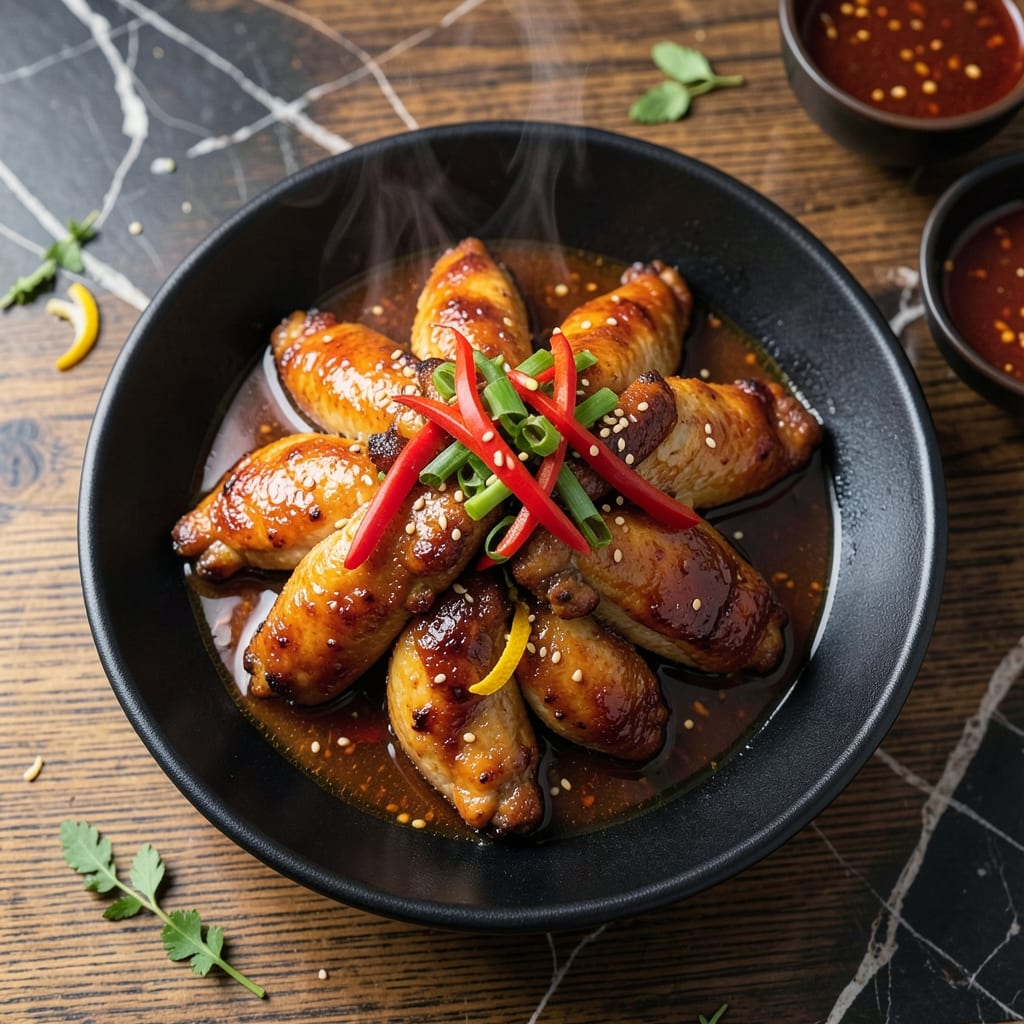
I developed this oven-baked version after years of struggling with messy deep-frying in my small Boston kitchen. The secret lies in achieving that signature crispy exterior without submerging the chicken in oil.
By using the broiler function during the final minutes, we create a caramelized gochujang glaze that delivers authentic Korean flavors. This method ensures juicy meat inside with a sticky, slightly charred coating outside.
The recipe transforms everyday chicken into something special, with bold, complex flavors that develop in the oven. No special equipment required—just a baking sheet and 15 minutes of active prep.
Serve this with steamed rice and quick-pickled vegetables for a complete meal that tastes like it came from your favorite Korean restaurant.
Ingredients for Korean Chicken Recipe Not Fried
Simple ingredients transform into crispy, juicy oven-baked chicken with bold Korean flavors.
| Ingredient | Amount | Notes |
|---|---|---|
| Boneless Skinless Chicken Thighs 🍗 | 2 lb | Trimmed of excess fat |
| Gochujang Paste 🌶️ | ½ cup | Korean red pepper paste |
| Soy Sauce 🥢 | ¼ cup | Low-sodium preferred |
| Honey 🍯 | 3 tbsp | Balances spice and salt |
| Rice Vinegar 🍚 | 2 tbsp | Adds tangy brightness |
| Sesame Oil 🫒 | 1 tbsp | Toasted for depth |
| Garlic Cloves 🧄 | 5 cloves | Minced finely |
| Fresh Ginger 🌿 | 1 tbsp | Grated for zing |
| Cornstarch 🌾 | 2 tbsp | For crispy coating |
| Toasted Sesame Seeds 🌰 | 2 tbsp | For garnish |
| Green Onions 🧅 | 4 whole | Thinly sliced |
| Vegetable Oil 🫒 | 1 tbsp | For greasing pan |
| Salt 🧂 | 1 tsp | Kosher or sea salt |
| Black Pepper 🌶️ | ½ tsp | Freshly ground |
[recipe_ingredient_scaler]
The gochujang is non-negotiable for authentic flavor—look for it in the Asian aisle at Whole Foods or H Mart. Chicken thighs stay juicier than breasts here (trust me, I’ve tried both). For the best texture, pat the chicken dry before coating. The cornstarch is what gives that crispy edges without frying. I always keep a bottle of Kikkoman soy sauce on hand for this.
No gochujang? Sriracha plus a little miso gets you close but won’t be the same. Out of honey? Brown sugar dissolved in warm water works. Skip the rice vinegar? Apple cider vinegar in a pinch, but it’s slightly fruitier. For extra heat, add a pinch of gochugaru (Korean chili flakes). The sesame seeds can be skipped, but they add that restaurant-style finish.
The glaze thickens as it cools, so let it sit 5 minutes before serving. Leftovers keep 4-5 days in the fridge—reheat in the oven to revive the crispiness. Freezes well for up to 3 months (thaw overnight before reheating).
Why You’ll Love This Recipe
- One Pan Wonder: I toss everything in a skillet and let the gochujang and honey work their magic while I set the table.
- Sweet & Spicy Fix: That first bite of sticky, tangy sauce clinging to tender chicken—honestly, I make extra just to lick the pan.
- Meal Prep MVP: It reheats beautifully, so I pack it for lunch all week without the soggy texture of fried versions.
- Budget Feeder: A pound of thighs and pantry staples stretch to feed four, and I’ll be real: it tastes like a restaurant dish.
Step-by-Step Instructions for Oven-Baked Gochujang Chicken
Here’s the method. Straightforward, tested, works every time.
Step 1: Season and Coat the Chicken
Pat the 2 lb Boneless Skinless Chicken Thighs dry with paper towels. This is crucial for achieving a crispy coating, so don’t skip this step. Season both sides with the 1 tsp Salt and 0.5 tsp Black Pepper, pressing the seasoning into the meat so it adheres well.
Place the 2 tbsp Cornstarch in a shallow dish. Dredge each thigh through the cornstarch, shaking off any excess. The cornstarch will create that desirable crispy texture without frying. Set the coated thighs aside on a clean plate while you prepare the glaze.
Step 2: Prepare the Gochujang Glaze
In a medium bowl, whisk together the 0.5 cup Gochujang Paste, 0.25 cup Soy Sauce, 3 tbsp Honey, 2 tbsp Rice Vinegar, and 1 tbsp Sesame Oil until smooth. The gochujang is thick, so really get in there with that whisk to break up any lumps.
Add the 5 cloves Garlic Cloves (minced) and 1 tbsp Fresh Ginger (grated) to the bowl and stir to combine. Taste the glaze and adjust if needed—I like a balance where the sweet, spicy, and tangy notes all shine through. Divide the glaze in half, as you’ll use some for brushing during baking and reserve the rest for serving.
Step 3: Bake the Chicken to Crispy Perfection
Preheat your oven to 400°F. Line a baking sheet with parchment paper and drizzle with the 1 tbsp Vegetable Oil, spreading it evenly to prevent sticking. Arrange the coated chicken thighs on the baking sheet, leaving space between each piece so they crisp up instead of steaming.
Bake for 20 minutes, then flip each piece and brush generously with half of the gochujang glaze. Return to the oven and bake for another 10-12 minutes until the chicken is cooked through and the coating is deep golden brown and slightly caramelized. The internal temperature should reach 165°F.
Step 4: Garnish and Serve
Remove the chicken from the oven and let it rest for 5 minutes. This allows the juices to redistribute, keeping the meat moist and tender. While it rests, thinly slice the 4 whole Green Onions and toast the 2 tbsp Toasted Sesame Seeds if they aren’t already toasted.
Drizzle the reserved glaze over the chicken and sprinkle with the sliced green onions and toasted sesame seeds. Serve immediately while hot—the contrast between the crispy exterior and juicy interior is what makes this dish shine. The glaze will be sticky and slightly spicy, with a perfect balance of sweet and savory flavors.
Pro Tips For Making Korean Chicken Recipe Not Fried
- Marinate Overnight: Let the chicken soak in the gochujang, soy, and honey mix for at least 4 hours—overnight if you can. I learned this the hard way after rushing it and ending up with bland spots.
- Trim the Fat: Even though it’s skinless, trim any visible fat from the thighs so the sauce clings better and doesn’t pool in greasy patches.
- Simmer the Sauce: After baking or grilling, reduce the leftover marinade on the stovetop for 3-4 minutes to thicken it—this gives a glossy, restaurant-style finish.
- Skip the Boiling: Resist the urge to boil the marinade if reusing it—just bring it to a simmer for 1-2 minutes to kill bacteria without curdling the honey.
Essential Equipment for This Recipe
Baking Sheet Essentials
I always use a half-sheet pan (18×13 inches) for this recipe—it provides enough space for the chicken to crisp up properly. Look for one with a light-colored finish to prevent burning, like the Nordic Ware brand I picked up at my local Boston market. The parchment paper is non-negotiable for easy cleanup. 💡
Mixing Bowls Matter
A medium-sized mixing bowl (about 2-3 quart capacity) works perfectly for whisking the gochujang glaze. I prefer glass or stainless steel over plastic—they’re easier to clean and don’t absorb odors. The glaze comes together quickly, but you’ll want room to whisk vigorously.
Whisk for Smooth Glaze
A balloon whisk is ideal for breaking up the thick gochujang paste. I’ve found that silicone-tipped whisks work well and won’t scratch your bowls. The key is getting the glaze completely smooth so it coats the chicken evenly without lumps.
Meat Thermometer
Don’t guess at doneness—use an instant-read thermometer. I keep a ThermoWorks ThermoPop in my kitchen drawer for $30. It’s the only way to know your chicken has hit that perfect 165°F internal temperature without overcooking. 🌡️
Pastry Brush
A silicone pastry brush makes applying the glaze effortless and handles the heat of the oven better than natural bristles. I bought a 2-pack at Trader Joe’s for $3 that has lasted me years. The silicone won’t melt or shed bristles into your food.
Cooling Rack
For extra crispiness, transfer the baked chicken to a wire cooling rack for those final 5 minutes of resting. This prevents the bottoms from getting soggy. I use a simple stainless steel rack that fits perfectly over my sheet pan.
Nutrition Facts
Frequently Asked Questions
Can I use chicken breasts instead of thighs?
You can, but they dry out more easily. Reduce baking time by 5-7 minutes and check internal temperature at 160°F to prevent overcooking. Thighs stay juicier.
What if I don’t have gochujang?
Mix 2 tbsp sriracha with 1 tbsp miso paste and 1 tbsp honey for a close substitute. The flavor won’t be identical but still delicious.
How do I make it less spicy?
Cut gochujang in half and replace with hoisin sauce or 1 tbsp extra honey. For mild heat, use 1/4 cup gochujang max.
Can I air-fry instead of bake?
Yes! Cook at 375°F for 12-15 minutes, flipping halfway. Brush glaze on after 10 minutes to prevent burning.

Trained in classic French technique but raised on slow-cooked ribs and spicy rubs, she blends culinary skill with smoke and soul.
- Recipe for Boneless Pork Chops in Cast Iron Skillet: Sear and Baste to Juicy Perfection - October 3, 2026
- Recipe for Boneless Cross Rib Roast: Slow-Roasted Beef with Herb Crust - October 3, 2026
- Hamburgers in Sauce Recipe Crock Pot: Slow-Cooked Savory Delight - October 3, 2026