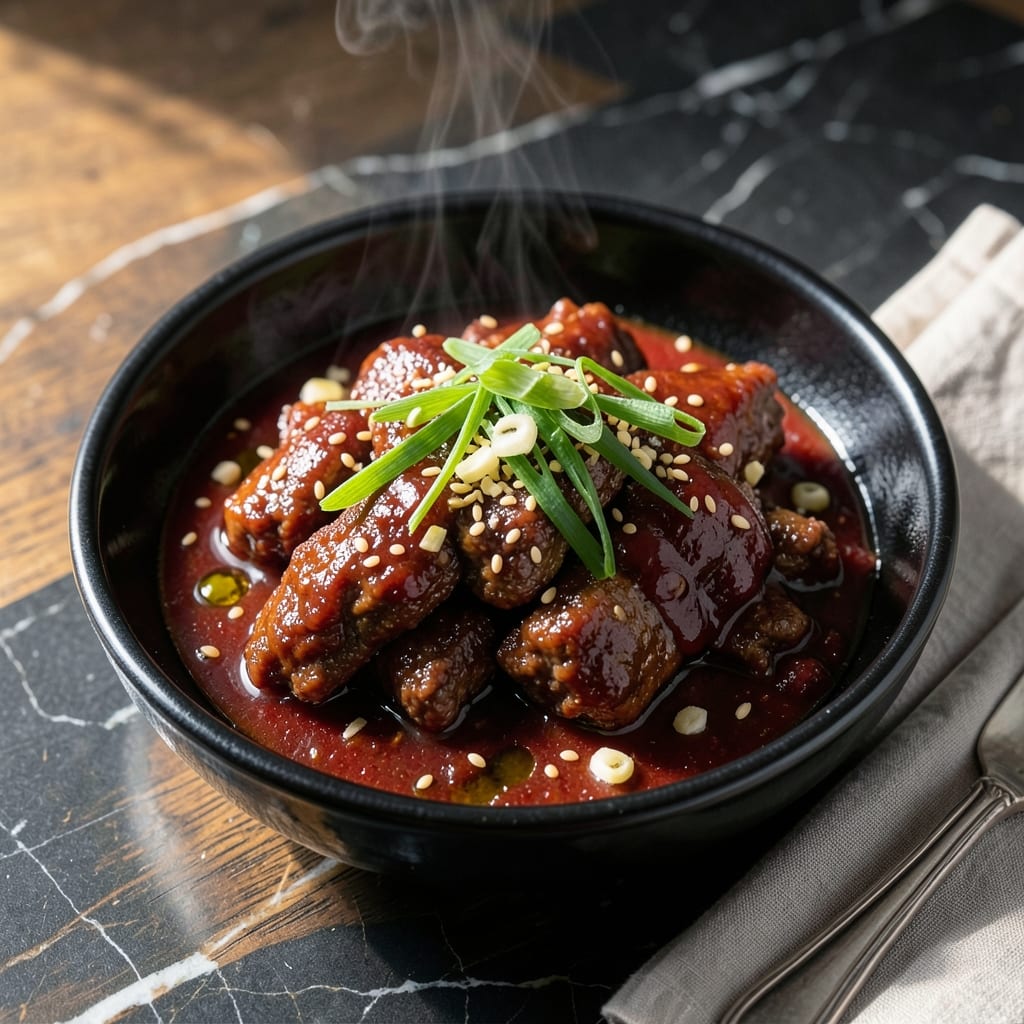
This Korean beef recipe transforms simple ground meat with a bold, spicy-sweet gochujang glaze that clings to every bite. The secret lies in the balance of heat, sweetness, and umami that defines authentic Korean flavors.
I developed this method after years of testing to achieve tender beef with a caramelized sauce that’s neither too thin nor too thick. The key is cooking the meat just until browned, then letting it simmer in the glaze to absorb maximum flavor.
What emerges is a dish that’s both comforting and exciting—sweet with a kick, rich without being heavy. The beef soaks up the sauce beautifully, creating a perfect ratio of meat to glaze in every mouthful.
Serve over steamed rice with quick-pickled vegetables for contrast. Here’s how to make this restaurant-quality dish at home.
Ingredients for Korean Beef Recipe Gochujang
Ground beef and a handful of bold ingredients create this vibrant Korean-inspired dish with ease.
| Ingredient | Amount | Notes |
|---|---|---|
| Ground Beef 🥩 | 1 lb | 80/20 fat ratio preferred |
| Gochujang 🌶️ | ½ cup | Korean red pepper paste |
| Soy Sauce 🫙 | ¼ cup | Low-sodium preferred |
| Brown Sugar 🍚 | 3 tbsp | Packed, for sweetness |
| Garlic Cloves 🧄 | 4 cloves | Minced for depth |
| Fresh Ginger 🌿 | 1 tbsp | Grated, for zing |
| Sesame Oil 🫒 | 1 tbsp | Toasted, for aroma |
| Rice Vinegar 💧 | 1 tbsp | For acidity balance |
| Green Onions 🧅 | 4 whole | Thinly sliced for garnish |
| Sesame Seeds 🌰 | 1 tsp | Toasted for crunch |
| Steamed Rice 🍚 | 4 cups | Cooked, for serving |
| Vegetable Oil 🫒 | 1 tbsp | For cooking beef |
| Red Pepper Flakes 🔥 | ½ tsp | Optional for extra heat |
[recipe_ingredient_scaler]
The beef is the foundation. 80/20 ground chuck delivers the right fat for flavor and tenderness—leaner cuts dry out. H-Mart or Korean markets carry authentic gochujang, but Whole Foods and Amazon stock solid options too. Look for a deep red color, not pale or watery. The soy sauce should be Korean if possible (like Jin), but any good quality works.
No gochujang? Sriracha mixed with miso paste (2:1 ratio) gets you close, though the fermented depth won’t be the same. Brown sugar can be swapped for honey or maple syrup. Fresh ginger is ideal but ground ginger at half the amount works in a pinch. For extra umami, add a splash of fish sauce (if not vegetarian) or a teaspoon of miso paste.
Cooked beef keeps in the fridge for 3-4 days and freezes beautifully for 3 months. The sauce thickens as it cools—reheat with a splash of water. Garnishes (green onions, sesame seeds) are best added fresh. Always serve with rice to soak up that glossy glaze.
Why You’ll Love This Recipe
- I’ll be real: one pound of ground beef feeds my family for two meals, and the leftovers taste even better the next day.
- One Pan Meal: I just brown the beef, stir in the gochujang, soy sauce, and sugar—no extra pots, no fuss.
- Sweet Heat Perfection: The brown sugar balances the gochujang’s spice while garlic adds that deep, savory punch I crave.
- Weeknight Lifesaver: Between us, this comes together faster than takeout and tastes way better.
Step-by-Step Instructions for Korean Beef Gochujang
Here’s the method to achieve perfectly tender beef with a glossy spicy-sweet glaze.
Step 1: Brown the Ground Beef
Heat 1 tbsp Vegetable Oil in a large skillet over medium-high heat. Add the 1 lb Ground Beef and cook, breaking it into small pieces with a wooden spoon, for 5-6 minutes until evenly browned and no pink remains.
I press down gently with the spoon to ensure good contact with the pan, creating a nice sear. Drain excess fat if needed, but leave about 1 tbsp in the pan for flavor. This step builds the foundation for the dish’s rich, meaty depth.
Step 2: Create the Gochujang Sauce Base
Reduce heat to medium and add the 4 cloves Garlic Cloves and 1 tbsp Fresh Ginger to the skillet. Stir constantly for 30 seconds until fragrant—this prevents burning while developing their aromatic qualities.
Next, add the 0.5 cup Gochujang, 0.25 cup Soy Sauce, 3 tbsp Brown Sugar, 1 tbsp Rice Vinegar, and 0.5 tsp Red Pepper Flakes. Stir well to combine, breaking up any clumps of gochujang. The mixture should turn a deep red and begin to bubble gently.
Step 3: Simmer and Thicken the Glaze
Pour in ¼ cup of water and stir to deglaze the pan, scraping up any browned bits. This adds depth to the sauce. Bring the mixture to a gentle simmer and cook for 3-4 minutes until it thickens slightly and coats the back of a spoon.
The gochujang will mellow as it cooks, balancing its heat with the sweetness from the brown sugar. You’ll notice the sauce transforming from a thick paste to a glossy, pourable consistency that clings beautifully to the beef.
Step 4: Finish with Aromatic Oils and Serve
Remove the skillet from heat and stir in the 1 tbsp Sesame Oil. This adds a nutty aroma that complements the spicy-sweet profile. Taste and adjust seasoning if needed—though the combination of gochujang and soy sauce typically provides the perfect balance.
Spoon the beef and sauce over 4 cups Steamed Rice in serving bowls. Garnish with 4 whole Green Onions, thinly sliced, and 1 tsp Sesame Seeds. The green onions add freshness while the sesame seeds provide a delightful crunch. Serve immediately while hot and fragrant.
Pro Tips For Making Korean Beef Recipe Gochujang
- Brown the Beef First: Cook the ground beef until fully browned and crumbly before adding the sauce—I learned this the hard way after ending up with a gray, soggy mess when I dumped everything in at once.
- Bloom the Gochujang: Heat the gochujang with a splash of oil for 30 seconds before adding liquids; it deepens the flavor and removes that raw paste taste.
- Skip the Over-Salting: Soy sauce is already salty, so go light on additional salt until you taste the final dish—after ruining a batch with heavy-handed seasoning, I now always under-salt first.
- Grate the Garlic: Use a microplane for the garlic instead of mincing; it melts into the sauce better and saves you from biting into chunky pieces mid-meal.
Common Mistakes When Making Great korean beef recipe gochujang
Overcrowding the Pan
Using too much beef in one batch causes steaming instead of browning. I always cook in 2 batches if needed, giving each piece room to sear properly. This builds the Maillard reaction flavors that make the dish taste restaurant-quality. 🔥
Skipping the Deglaze
Those browned bits at the pan bottom are pure flavor. Always add ¼ cup water to deglaze, scraping with a wooden spoon. This step prevents waste and creates a more complex sauce base.
Rushing the Simmer
The sauce needs 3-4 minutes to thicken and mellow. If you rush it, the gochujang stays harsh and the glaze won’t cling properly. David always reminds me patience pays off here.
Overcooking the Beef
Ground beef only needs 5-6 minutes to brown. Cooking longer makes it dry and crumbly. Remember, it continues cooking slightly in the hot sauce after you remove it from heat.
Neglecting the Garnishes
Those final touches—green onions and sesame seeds—aren’t optional. They add freshness and crunch that balance the rich sauce. I keep a stash of toasted sesame seeds in my pantry just for this.
Using Cold Ingredients
Take your gochujang and soy sauce out 30 minutes before cooking. Cold ingredients can cause the sauce to seize up and thicken unevenly. This is one tip I learned testing recipes in Asheville. 💡
Nutrition Facts
Frequently Asked Questions
What can I use if I don’t have gochujang?
Mix 2 tbsp sriracha with 1 tbsp miso paste for a similar flavor. While not identical, it provides the heat and umami. For best results, add 1 tsp honey to balance the sweetness.
How spicy is this dish?
The heat level is medium from the gochujang. For milder flavor, reduce to ¼ cup and add 1 tbsp honey. For extra heat, increase red pepper flakes to 1 tsp.
Can I make this ahead?
Yes! Cook the beef and sauce, then store in an airtight container for up to 3 days. Reheat gently with ¼ cup water to restore the glaze. Garnish fresh before serving.
What side dishes pair well?
Steamed rice is essential. Add kimchi or quick-pickled cucumbers for contrast. For a full meal, serve with steamed broccoli or a simple cucumber salad.

Trained in classic French technique but raised on slow-cooked ribs and spicy rubs, she blends culinary skill with smoke and soul.
- Recipe for Boneless Pork Chops in Cast Iron Skillet: Sear and Baste to Juicy Perfection - October 3, 2026
- Recipe for Boneless Cross Rib Roast: Slow-Roasted Beef with Herb Crust - October 3, 2026
- Hamburgers in Sauce Recipe Crock Pot: Slow-Cooked Savory Delight - October 3, 2026