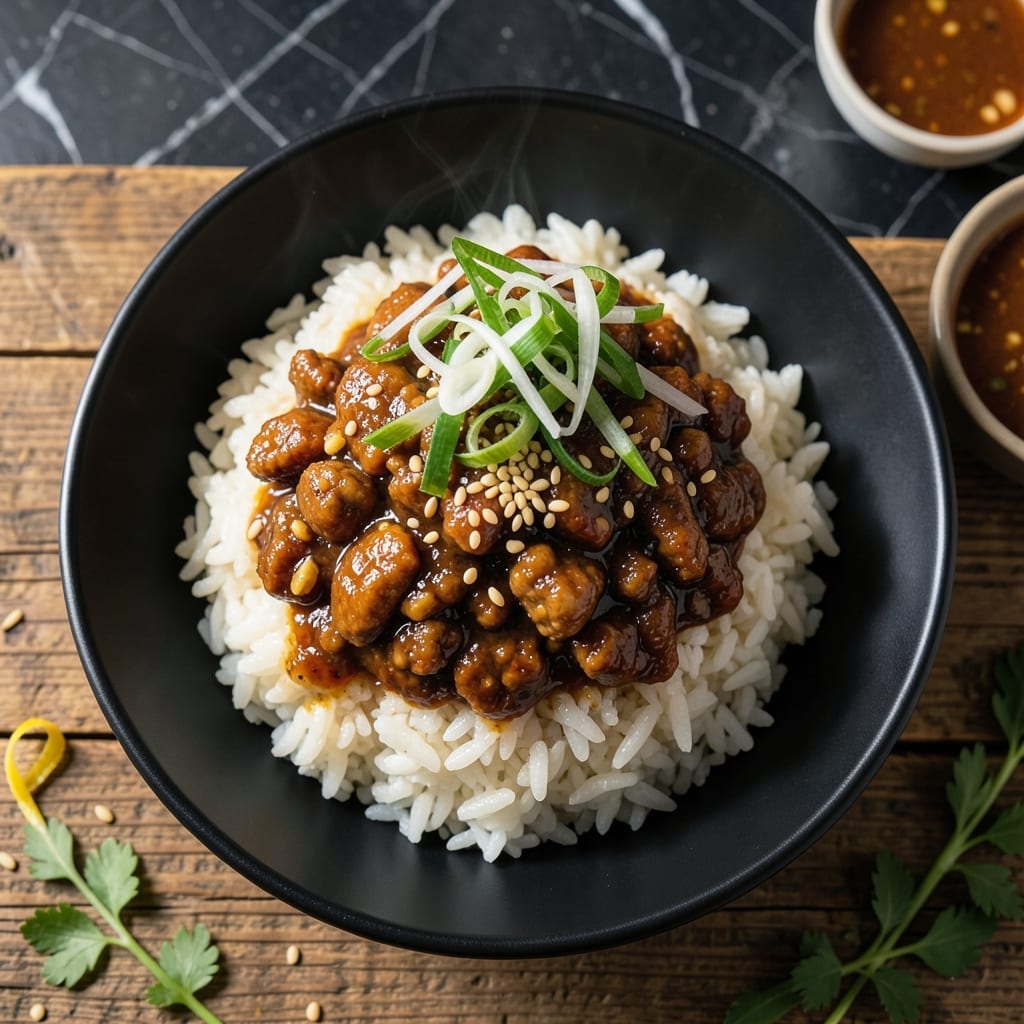
This bulgogi-style ground beef brings authentic Korean flavors to your weeknight table with minimal effort.
The dish combines sweet, savory, and umami through a carefully balanced sauce of soy, brown sugar, and garlic. Cooking at high heat creates a caramelized glaze that coats every bite of the beef.
It delivers restaurant-quality taste with home kitchen simplicity, using one skillet and 20 minutes of active cooking. The meat becomes tender and flavorful, soaking up every drop of the aromatic sauce.
Serve over rice or in lettuce wraps for a complete meal that satisfies every time.
Ingredients for Korean Beef Recipe Ground Beef
Pantry staples and a quick grocery run for the Korean essentials. Nothing exotic, just flavor packed.
| Ingredient | Amount | Notes |
|---|---|---|
| Ground Beef 🥩 | 1 ½ lb | 80/20 lean-to-fat ratio preferred |
| Soy Sauce 🫒 | ½ cup | Low-sodium or regular, your choice |
| Brown Sugar 🍚 | ⅓ cup | Packed, for sweetness and caramelization |
| Garlic Cloves 🧄 | 5 cloves | Minced for maximum flavor infusion |
| Fresh Ginger 🌿 | 1 tbsp | Grated, for aromatic depth |
| Sesame Oil 🫒 | 1 tbsp | Toasted for nutty richness |
| Rice Vinegar 🍶 | 2 tbsp | Balances sweetness with tang |
| Gochujang 🌶️ | 1 tbsp | Korean chili paste for heat |
| Green Onions 🧅 | 4 whole | Thinly sliced for garnish |
| Sesame Seeds 🌰 | 1 tbsp | Toasted for garnish |
| Vegetable Oil 🫒 | 1 tbsp | For high-heat cooking |
| Black Pepper 🌶️ | ½ tsp | Freshly ground for best flavor |
| Red Pepper Flakes 🔥 | ½ tsp | Optional, for extra heat |
[recipe_ingredient_scaler]
The beef is the base here—80/20 ground chuck gives you that juicy texture once cooked. Costco or Sam’s Club have it in bulk at a good price. For the soy sauce, Kikkoman or Pearl River Bridge are reliable brands. The gochujang is non-negotiable for that authentic Korean kick—look for it in the Asian aisle at most supermarkets or any Korean market (H Mart is my go-to).
No gochujang? Sriracha plus a pinch of sugar gets you close, but the flavor won’t be the same. Swap brown sugar for white in a pinch (the molasses depth is nicer though). Fresh ginger at half the amount if you’ve only got powdered. The rice vinegar can be apple cider vinegar, but it’ll taste slightly different. Trader Joe’s has all the Asian staples if your regular store falls short.
This keeps 3-4 days in the fridge and freezes beautifully for up to 3 months. The flavors actually deepen overnight. Reheat in a skillet with a splash of water to keep it from drying out (the microwave works too, but skillet is better).
Why You’ll Love This Recipe
- One Pan Wonder: I toss everything in a single skillet—ground beef, soy sauce, brown sugar—and dinner’s done in 15 minutes flat.
- Sweet-Savory Magic: The brown sugar caramelizes with the soy sauce while the garlic and ginger add that deep, aromatic kick.
- Meal Prep Hero: I make a double batch on Sunday and it tastes just as good reheated for lunch all week.
- Budget Friendly: Ground beef stretches far, and the pantry staples mean I’m not buying specialty items. Honestly, it’s my cheapest crowd-pleaser.
Step-by-Step Instructions for Korean Beef with Ground Beef
This method locks in flavor and delivers that signature sweet-savory balance you expect.
Step 1: Create the Marinade Base
In a large bowl, whisk together the 0.5 cup soy sauce, 0.33 cup brown sugar, 1 tbsp fresh ginger, 1 tbsp sesame oil, 2 tbsp rice vinegar, 1 tbsp gochujang, 0.5 tsp black pepper, and 0.5 tsp red pepper flakes. The sugar will dissolve as you stir. Here’s the thing—this isn’t just seasoning; it’s the entire flavor profile.
I always taste the marinade at this point to adjust the balance. If it needs more tang, add a splash of vinegar. If it’s too sharp, a pinch more sugar tames it. The gochujang will mellow as it cooks, so don’t worry if it seems spicy now.
Step 2: Incorporate Aromatics and Beef
Add the 5 cloves minced garlic cloves to the marinade and stir. Then add the 1.5 lb ground beef, breaking it up with your hands or a wooden spoon. You want every bit of beef coated in that flavorful liquid. I use 80/20 beef here—the fat renders out and creates that glossy sauce we love.
Let this mixture sit for 10 minutes while you prep the rest. Don’t skip this short marinating time. The beef will absorb some of the flavors and start to break down slightly, which makes it more tender during cooking.
Step 3: Cook Until Caramelized and Saucy
Heat the 1 tbsp vegetable oil in a large skillet over medium-high heat. When it shimmers, add the beef mixture, spreading it out into an even layer. Don’t stir for the first 2-3 minutes—this allows the beef to brown and the sugars to start caramelizing.
Once you see the edges getting dark brown and slightly crispy, break up the beef with a spatula and stir. Cook for another 5-7 minutes until the beef is fully cooked through and the sauce has thickened enough to coat the back of a spoon.
Step 4: Finish and Garnish
Remove the skillet from heat. Stir in the 4 whole green onions, thinly sliced. The residual heat will soften them slightly while keeping their fresh bite. I like to reserve a few slices for garnish if I’m serving this to guests.
Sprinkle with the 1 tbsp sesame seeds and give it one final stir. The dish should glisten with that sticky, sweet-savory sauce. Serve immediately over rice or noodles, with extra green onions and sesame seeds on top if desired.
Pro Tips For Making Korean Beef Recipe Ground Beef
- Brown the Beef First: Cook the ground beef until fully browned and drain the fat before adding the sauce—this keeps the dish from being greasy and lets the flavors shine.
- Grate the Ginger: Fresh ginger can be fibrous, so grating it instead of mincing ensures it blends smoothly into the sauce without stringy bits.
- Don’t Overcook the Sauce: After adding soy sauce and brown sugar, simmer just 2-3 minutes—longer reduces it too much, making the beef dry instead of glossy.
- Use Lean Beef: I learned this the hard way—85/15 or leaner ground beef prevents excess grease from pooling in the pan, so you’re not skimming fat halfway through.
Serving Suggestions for Leftovers
Over Rice Classics
Steamed white rice is the perfect canvas to soak up that glossy, caramelized sauce. I use jasmine or short-grain for its sticky texture—about ½ cup dry rice per serving. The contrast between the tender beef and fluffy rice is what makes this dish sing.
Lettuce Wraps
For a low-carb option, serve in butter lettuce or romaine leaves. The crispness cuts through the richness beautifully. I like adding a sprinkle of toasted peanuts for extra crunch. It’s a fun, interactive way to enjoy this meal. 🥗
Pro tip: Briefly blanch the leaves in hot water to soften them slightly while keeping their freshness.
Noodle Pairings
Swap rice for sweet potato noodles (dangmyeon) for an authentic Korean experience. The chewy texture pairs perfectly with the tender beef. Alternatively, udon or soba noodles add a hearty, slurp-worthy element to the dish.
Side Dishes
A simple cucumber salad with rice vinegar and sesame seeds refreshes your palate. Or try kimchi for a spicy, tangy contrast. Both are traditional pairings that balance the sweetness of the beef. 💡
Garnish Generously
Always finish with extra green onions and sesame seeds—they add freshness and visual appeal. A drizzle of toasted sesame oil right before serving intensifies the nutty aroma. I keep these toppings on the table for second helpings.
Nutrition Facts
Frequently Asked Questions
Can I use a leaner ground beef?
Yes, but 85/15 or 80/20 works best for flavor and juiciness. Leaner beef may dry out faster during cooking.
What if I don’t have gochujang?
Substitute with 1 tbsp sriracha plus ½ tsp sugar. It won’t be identical but adds similar heat and sweetness.
How long can I store leftovers?
Keep in an airtight container in the fridge for 3-4 days or freeze for up to 3 months. Reheat gently with a splash of water.
Can I make this ahead of time?
The flavors deepen overnight. Store cooked beef in the fridge and reheat in a skillet for best texture.

Trained in classic French technique but raised on slow-cooked ribs and spicy rubs, she blends culinary skill with smoke and soul.
- Recipe for Boneless Pork Chops in Cast Iron Skillet: Sear and Baste to Juicy Perfection - October 3, 2026
- Recipe for Boneless Cross Rib Roast: Slow-Roasted Beef with Herb Crust - October 3, 2026
- Hamburgers in Sauce Recipe Crock Pot: Slow-Cooked Savory Delight - October 3, 2026