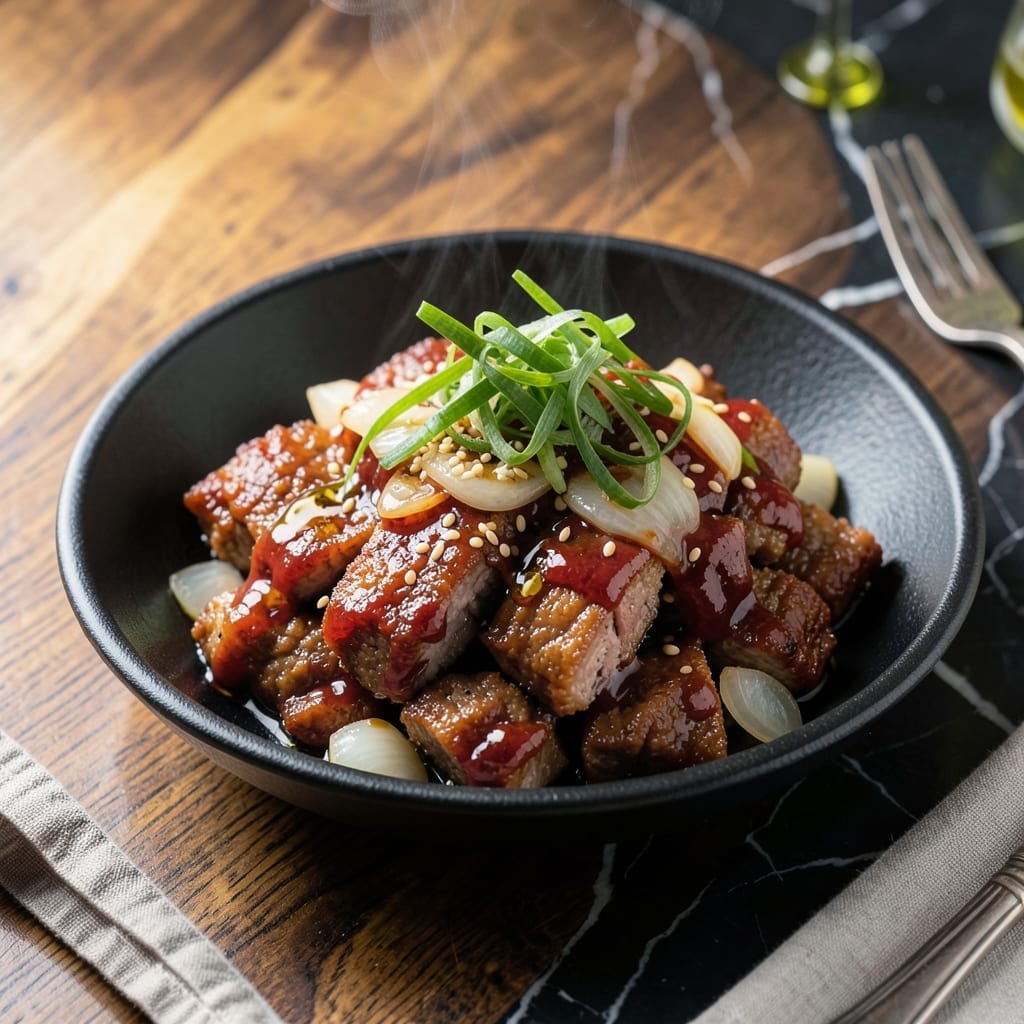
This Korean-inspired dish transforms everyday ingredients into an explosion of bold, spicy flavors that define authentic cuisine. My apartment kitchen has seen many versions, but this one stands apart.
Gochujang brings the signature heat and depth, balanced perfectly with sweet and savory elements. The technique is simple yet precise, ensuring every bite delivers that restaurant-quality complexity.
What emerges is a dish with layers of flavor—umami, heat, and a touch of sweetness—all harmonized through traditional preparation. The aroma alone will transport you.
Serve with steamed rice to soak up every drop of the rich, spiced sauce. Here’s how to create this at home.
Ingredients for Korean Food Recipe with Gochujang
Transform everyday ingredients into bold Korean flavors with this simple, authentic lineup.
| Ingredient | Amount | Notes |
|---|---|---|
| Gochujang 🌶️ | 3 tbsp | Korean fermented chili paste |
| Soy Sauce 🫒 | 2 tbsp | Low-sodium preferred for control |
| Honey 🍯 | 1 tbsp | Balances heat with sweetness |
| Rice Vinegar 💧 | 1 tbsp | Adds brightness to the sauce |
| Sesame Oil 🫒 | 1 tsp | Toasted for nutty aroma |
| Garlic Cloves 🧄 | 4 cloves | Minced for even distribution |
| Fresh Ginger 🌿 | 1 tbsp | Grated for intense flavor |
| Ground Pork 🥩 | 1 lb | Or substitute ground chicken |
| Onion 🧅 | 1 whole | Yellow or white, finely diced |
| Carrot 🥕 | 1 whole | Julienned for texture contrast |
| Green Onions 🌱 | 3 whole | Thinly sliced for garnish |
| Sesame Seeds 🌰 | 1 tsp | Toasted for garnish |
| Steamed White Rice 🍚 | 2 cups | Cooked, for serving |
| Vegetable Oil 🫒 | 1 tbsp | Neutral flavor for cooking |
| Gochugaru 🌶️ | 1 tsp | Korean red pepper flakes, optional |
[recipe_ingredient_scaler]
The gochujang is non-negotiable for authentic flavor—look for Sempio or Mother-in-Law’s brands at H Mart or Korean markets. Fresh ginger and garlic are essential; pre-minced versions lack depth. For the pork, ground shoulder offers the best fat ratio, but any ground pork works. The soy sauce should be Korean or Japanese for umami balance, not Chinese-style which can be saltier.
No gochujang? Sriracha mixed with miso paste (1:1 ratio) gets you close but lacks complexity. Swap honey for brown sugar or maple syrup if needed. For a vegetarian version, crumbled tofu or mushrooms replace the pork beautifully. The rice vinegar can be apple cider vinegar in a pinch, but reduce by half as it’s more assertive. Skip the gochugaru if heat-sensitive.
Sauce can be made 2 days ahead—flavors deepen with time. Store cooked pork mixture in the fridge for up to 4 days or freeze for 3 months. Toast sesame seeds just before serving for maximum crunch (worth the extra minute). Reheat gently to preserve texture.
Why You’ll Love This Recipe
- One Bowl Wonder: I just dump the gochujang, soy sauce, honey, and rice vinegar into a bowl, whisk, and done—no fancy techniques.
- Sweet Heat Balance: The honey tames the gochujang’s spice while the sesame oil adds this deep, nutty finish that’s ridiculously good.
- Dinner or Lunchbox: I slather it on chicken for dinner, then pack the leftovers in wraps for lunch the next day.
- Stretches Far: A little jar of gochujang lasts forever, and this sauce makes even cheap cuts of meat taste like a restaurant dish.
Step-by-Step Instructions for Korean Gochujang Pork
Master these precise techniques to achieve perfect balance of spicy, sweet, and umami flavors.
Step 1: Prepare the Aromatic Base
Heat the 1 tbsp Vegetable Oil in a large skillet over medium-high heat until it shimmers. Add the finely diced Onion and cook for 4-5 minutes until it softens and becomes translucent at the edges.
Stir in the minced 4 cloves Garlic Cloves and 1 tbsp Fresh Ginger, cooking for 1 minute until fragrant but not browned. This aromatic foundation is crucial—it mellows the heat from the gochujang and adds depth to the sauce.
Step 2: Brown the Ground Pork
Add the 1 lb Ground Pork to the skillet, breaking it up with a wooden spoon. Cook for 6-8 minutes, stirring occasionally, until the pork is no longer pink and begins to develop a light golden crust.
I press the pork into the pan surface for 20-30 seconds at a time to create fond—that caramelized layer adds complexity. Drain excess fat if needed, but leave about 1 tbsp for flavor.
Step 3: Build the Gochujang Sauce
Reduce heat to medium and add the 3 tbsp Gochujang, 2 tbsp Soy Sauce, 1 tbsp Honey, 1 tbsp Rice Vinegar, and 1 tsp Gochugaru to the skillet. Stir well to coat the pork completely.
Cook for 3-4 minutes until the sauce thickens slightly and clings to the pork. The mixture should be glossy and deeply aromatic. Taste and adjust seasoning—this is your moment to fine-tune the balance of heat, sweetness, and salt.
Step 4: Incorporate Vegetables and Finish
Add the julienned 1 whole Carrot and cook for 2-3 minutes until it softens slightly but retains a crisp texture. The carrot adds a pleasant contrast to the tender pork.
Remove from heat and stir in the 1 tsp Sesame Oil. This final touch enhances the dish with its distinctive nutty aroma. The pork should be fully cooked through with no pink remaining.
Step 5: Serve Over Rice with Garnishes
Spoon the pork mixture over the 2 cups Steamed White Rice in serving bowls. The rice soaks up the rich sauce beautifully, creating the perfect base for the flavorful pork.
Garnish with thinly sliced 3 whole Green Onions and toasted 1 tsp Sesame Seeds. These final elements add freshness and crunch, completing the dish with authentic Korean flair. Serve immediately while hot.
Pro Tips For Making Korean Food Recipe With Gochujang
- Bloom the Gochujang: Cook the gochujang in sesame oil for 1-2 minutes over medium heat before adding liquids. I learned this the hard way—raw gochujang tastes harsh, but blooming it mellows the flavor and deepens the sauce.
- Thin with Hot Water: If your sauce is too thick, whisk in 1-2 tablespoons of hot water instead of cold. Sounds weird, but it works—hot water blends smoothly into the gochujang without seizing up the oil.
- Skip the Overcooking: Add honey at the end of cooking, not the beginning. After burning three batches, I finally figured out that honey caramelizes fast and can turn bitter if exposed to high heat too long.
- Rest the Sauce: Let the finished sauce sit for 10 minutes before serving. My grandmother swore by this, and she was right: the flavors meld and the gochujang softens its edge—yes, even if you’re impatient like me.
Wine and Beer Pairings for This korean food recipe with gochujang
Crisp Beer Pairings
I love a Korean lager like Hite or OB Beer with this dish—their clean, crisp profiles cut through the spicy gochujang while complementing the umami. The carbonation refreshes your palate between bites. 🍺
Fruity White Wines
A slightly off-dry Riesling from Germany or New York’s Finger Lakes works beautifully. The residual sugar balances the heat, while the citrus notes harmonize with the dish’s bright, tangy elements.
For a bolder option, try a Gewürztraminer with its lychee and rose aromatics that stand up to the intense flavors.
Light Red Options
If you prefer red wine, go for a chilled Beaujolais or Pinot Noir. Their light body and red fruit flavors won’t overpower the dish. Serve slightly cooler than room temperature.
Craft Beer Alternatives
A Belgian witbier like Hoegaarden offers citrus and spice notes that echo the ginger and garlic. The creamy texture also helps tame the heat. I always keep a six-pack on hand for spicy meals.
Nutrition Facts
Frequently Asked Questions
What if my sauce is too spicy?
Balance it with 1 tsp honey or 1 tbsp brown sugar and cook for 2 minutes more. The sweetness will mellow the heat without overpowering.
Can I make this vegetarian?
Swap pork for crumbled tofu or mushrooms. Press tofu first to remove excess water, then cook until golden for best texture.
How long does the sauce keep?
Store in an airtight container in the fridge for up to 5 days. Flavors deepen over time, making leftovers even more delicious.
Can I use a different protein?
Ground chicken or turkey work well. For beef, choose 85% lean and cook slightly longer to avoid dryness.

Trained in classic French technique but raised on slow-cooked ribs and spicy rubs, she blends culinary skill with smoke and soul.
- Indian Lamb Curry Recipe Pressure Cooker: Fragrant Spices in a Fraction of the Time - October 3, 2026
- Recipe for Oven Roasted: Golden Crisp Perfection Without the Fryer - October 3, 2026
- Recipe for Fried Pork Chops With Flour: Crispy Crust and Juicy Centers - October 3, 2026