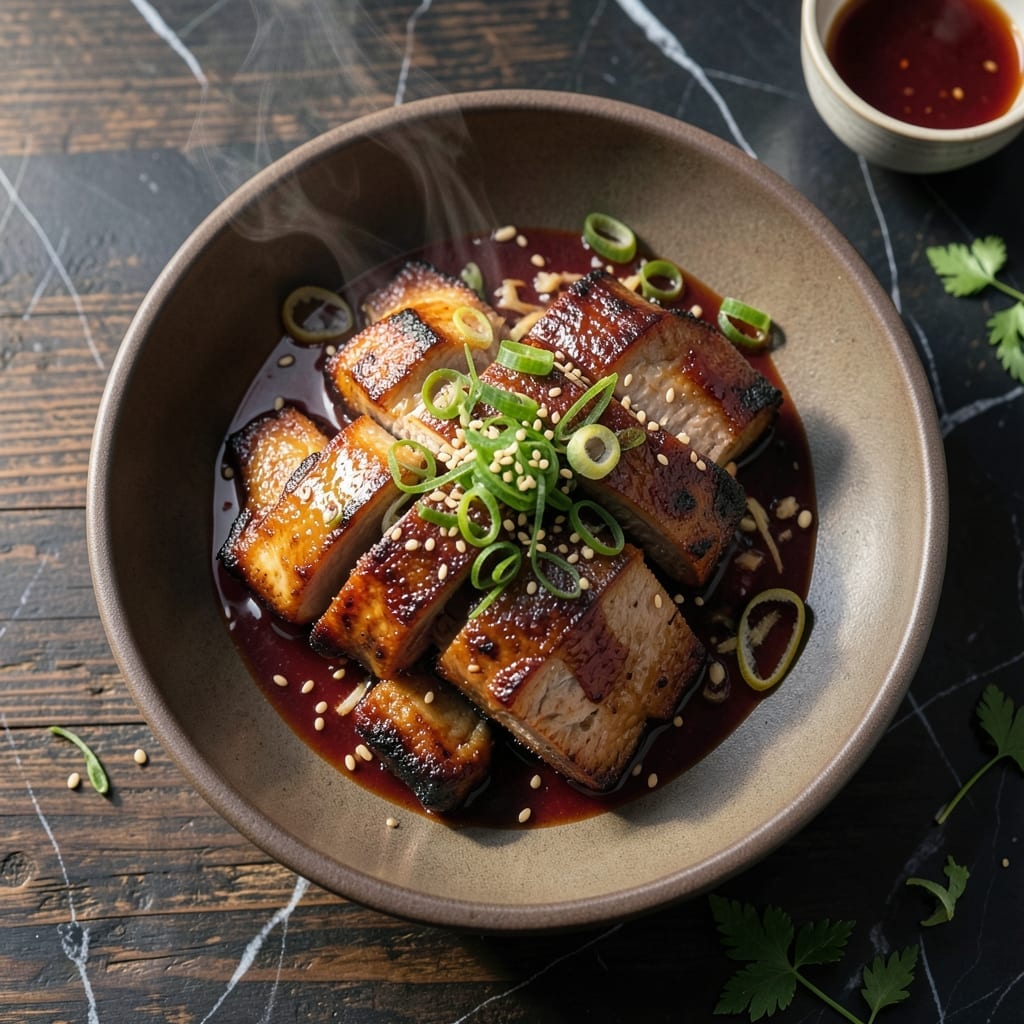
This Korean pork dish achieves perfect balance between sweet and spicy with its signature gochujang glaze. I tested this method multiple times to ensure the marinade penetrates deeply while maintaining tender texture.
The key is a precise marinade timing—too short and the flavors won’t develop, too long and the pork becomes mushy. A 15-minute sear at high heat caramelizes the sauce without drying the meat.
What emerges is fall-apart tender pork with a glossy, slightly sticky coating. The gochujang provides heat while brown sugar adds caramelized sweetness that makes this dish irresistible.
Serve with steamed rice and quick-pickled vegetables for a complete meal. This delivers on the promise of restaurant-quality results at home.
Ingredients for Korean Pork Recipe Maangchi
Thinly sliced pork shoulder soaks up a vibrant gochujang marinade with brown sugar and garlic.
| Ingredient | Amount | Notes |
|---|---|---|
| Pork Shoulder 🥩 | 1 ½ lb | Thinly sliced for quick cooking |
| Gochujang 🌶️ | ½ cup | Korean red pepper paste, essential |
| Brown Sugar 🍚 | ⅓ cup | Packed, for sweetness |
| Soy Sauce 🫒 | ¼ cup | Low-sodium preferred |
| Rice Vinegar 🍋 | 3 tbsp | Balances sweet and spicy |
| Garlic Cloves 🧄 | 6 cloves | Minced for marinade |
| Fresh Ginger 🌿 | 1 tbsp | Grated, adds depth |
| Sesame Oil 🫒 | 2 tbsp | Toasted for aroma |
| Green Onions 🧅 | 4 whole | Thinly sliced for garnish |
| Sesame Seeds 🌾 | 1 tbsp | Toasted for topping |
| Black Pepper 🌶️ | ½ tsp | Freshly ground for marinade |
| Neutral Oil 🫒 | 2 tbsp | For searing pork |
| Steamed Rice 🍚 | 2 cups | Cooked, for serving |
[recipe_ingredient_scaler]
The pork shoulder is non-negotiable here. Thinly sliced pieces ensure the marinade penetrates evenly and cooks quickly without toughening. Look for well-marbled cuts at Korean markets or Whole Foods—they often carry pre-sliced pork for bulgogi. If you’re slicing yourself, freeze the meat for 30 minutes first for easier, cleaner cuts. The gochujang should be deep red and thick (not watery), with no added fillers.
No gochujang? Sriracha plus miso paste (2:1 ratio) gets you close, but the flavor won’t be as complex. Brown sugar can be swapped for honey or maple syrup (adjust sweetness to taste). For a gluten-free version, use tamari instead of soy sauce. The rice vinegar is key for balance—apple cider vinegar works in a pinch but has a stronger taste.
Marinated pork keeps 2-3 days in the fridge (the flavors deepen overnight). Cooked leftovers stay fresh for 4 days or freeze for 3 months. Reheat gently to keep the sauce glossy. Always bring gochujang to room temperature before mixing—cold paste is stubborn to blend.
Why You’ll Love This Recipe
- One Pan Magic: I toss everything in a pan and let the gochujang and brown sugar work their magic—no fancy techniques, just big flavor.
- Sweet-Spicy Addiction: The mix of gochujang heat and brown sugar sweetness with the tang of rice vinegar? I’ll be real: it’s the kind of taste that lingers in the best way.
- Feeds the Crowd: Pork shoulder stretches far, and this dish shines at potlucks or when I need to feed my hungry teens and their friends.
- Better Next Day: Honestly, the flavors deepen overnight, so leftovers mean an even more delicious lunch the next day.
Step-by-Step Instructions for Sweet and Spicy Gochujang Glazed Pork
Achieve perfect results with this tested method for tender, caramelized pork with balanced sweet and spicy flavors.
Step 1: Prepare the Gochujang Marinade
In a mixing bowl, combine the 0.5 cup gochujang, 0.33 cup brown sugar, 0.25 cup soy sauce, 3 tbsp rice vinegar, minced 6 cloves garlic cloves, grated 1 tbsp fresh ginger, and 0.5 tsp black pepper. Whisk vigorously until the mixture becomes smooth and the brown sugar fully dissolves.
This marinade delivers the signature Korean flavor profile—sweet from the sugar, umami from the soy, heat from the gochujang, and brightness from the vinegar. I always let it sit for 5 minutes after mixing to allow the flavors to meld before introducing the pork.
Step 2: Marinate the Pork Shoulder
Place the 1.5 lb pork shoulder, thinly sliced, into a large bowl. Pour the prepared marinade over the pork, ensuring every piece is thoroughly coated. Add the 2 tbsp sesame oil and toss gently to distribute evenly.
Cover and refrigerate for at least 30 minutes, though I recommend 2 hours for maximum flavor penetration. The pork will absorb the marinade best when chilled, and the acid from the vinegar begins tenderizing the meat. Don’t exceed 4 hours or the texture may turn mushy.
Step 3: Sear and Caramelize the Pork
Heat the 2 tbsp neutral oil in a large skillet over medium-high heat until it shimmers. Working in batches to avoid crowding, add the marinated pork in a single layer. Sear undisturbed for 3-4 minutes until the edges develop a deep caramelized crust.
Flip each piece and cook for another 2-3 minutes until the pork is cooked through and the sauce has thickened slightly, coating the meat in a glossy glaze. The gochujang will darken and become sticky—this is the visual cue that the sugars are caramelizing properly.
Step 4: Finish and Garnish
Once all pork is cooked, return any resting pieces to the skillet and toss to coat in the accumulated sauce. Remove from heat and let rest for 2 minutes—this allows the juices to redistribute while the glaze sets slightly.
Thinly slice the 4 whole green onions and toast the 1 tbsp sesame seeds in a dry pan over low heat for 1-2 minutes until fragrant. Sprinkle both over the pork just before serving to add freshness and crunch.
Serve immediately over 2 cups steamed rice, ensuring each portion gets an even distribution of the rich, sticky sauce.
Pro Tips For Making Korean Pork Recipe Maangchi
- Marinate Overnight: I learned this the hard way—pork shoulder needs at least 4 hours in the gochujang, brown sugar, and soy sauce mix, but overnight actually changes the outcome. The flavors penetrate deep, and the meat stays juicy even when cooked at high heat.
- Sear First, Simmer Later: Start the pork in a hot pan to get that crust going before adding the marinade and a splash of water. Sounds weird, but it works: the caramelization from the brown sugar and gochujang builds real depth.
- Skip the Lean Cuts: Resist the urge to swap pork shoulder for tenderloin—it dries out. The fat in shoulder keeps the meat tender during the long simmer, and trust me, it soaks up the sauce better.
- Reduce the Sauce: After cooking, transfer the pork to a plate and boil the remaining sauce for 3-4 minutes. This thickens it into a glossy glaze that clings to the meat instead of pooling at the bottom of the plate.
Best Sauces and Condiments for korean pork recipe maangchi
Classic SSamjang Dip
Mix 2 tbsp gochujang with 1 tbsp doenjang (fermented soybean paste), 1 tsp sesame oil, 1 tsp honey, and 1 minced garlic clove. This traditional Korean dipping sauce adds depth and extra heat. I love how it complements the pork’s sweetness. 🌶️
Quick Pickled Radish
Thinly slice 1 cup Korean radish or daikon, then toss with ¼ cup rice vinegar, 1 tbsp sugar, and ½ tsp salt. Let sit for 20 minutes before serving. The crisp texture and tangy bite cut through the richness perfectly.
Sesame-Garlic Sauce
Combine 3 tbsp soy sauce, 1 tbsp sesame oil, 1 tbsp rice vinegar, 1 tsp sugar, and 1 minced garlic clove. Drizzle over the pork for an extra layer of umami. I often double this recipe—it’s that good.
Spicy Soy Dipping Sauce
Whisk together ¼ cup soy sauce, 1 tbsp gochujang, 1 tbsp rice vinegar, 1 tsp sesame oil, and 1 tsp toasted sesame seeds. This sauce is thin enough to pour but packed with bold flavors. 💫
Creamy Yogurt Dip
Stir ½ cup Greek yogurt with 1 tsp gochujang, 1 tsp honey, and ½ tsp garlic powder. The cool creaminess balances the heat beautifully. I use Fage 2% for the best texture.
Kimchi Relish
Chop 1 cup kimchi (with juices) and mix with 1 tsp sesame oil and 1 tsp sugar. Spoon over the pork for a tangy, spicy topping. The fermentation in kimchi adds complexity to the dish.
Nutrition Facts
Frequently Asked Questions
Can I use a different cut of pork?
Pork belly or tenderloin work, but shoulder is ideal. Belly adds more fat, while tenderloin may dry out faster. Adjust cooking time to 2-3 minutes less for tenderloin.
How do I make it less spicy?
Reduce gochujang to ¼ cup and add 1 tbsp honey for balance. For mild heat, substitute 2 tbsp gochujang with 1 tbsp sriracha plus 1 tbsp tomato paste.
Can I grill the pork instead?
Yes! Preheat grill to medium-high heat and cook for 4-5 minutes per side. Use a grill basket to prevent thin slices from falling through.
How long can I store leftovers?
Cooked pork keeps in an airtight container for 4 days in the fridge or 3 months frozen. Reheat gently on the stove to preserve the glaze.

Trained in classic French technique but raised on slow-cooked ribs and spicy rubs, she blends culinary skill with smoke and soul.
- Recipe for Boneless Pork Chops in Cast Iron Skillet: Sear and Baste to Juicy Perfection - October 3, 2026
- Recipe for Boneless Cross Rib Roast: Slow-Roasted Beef with Herb Crust - October 3, 2026
- Hamburgers in Sauce Recipe Crock Pot: Slow-Cooked Savory Delight - October 3, 2026