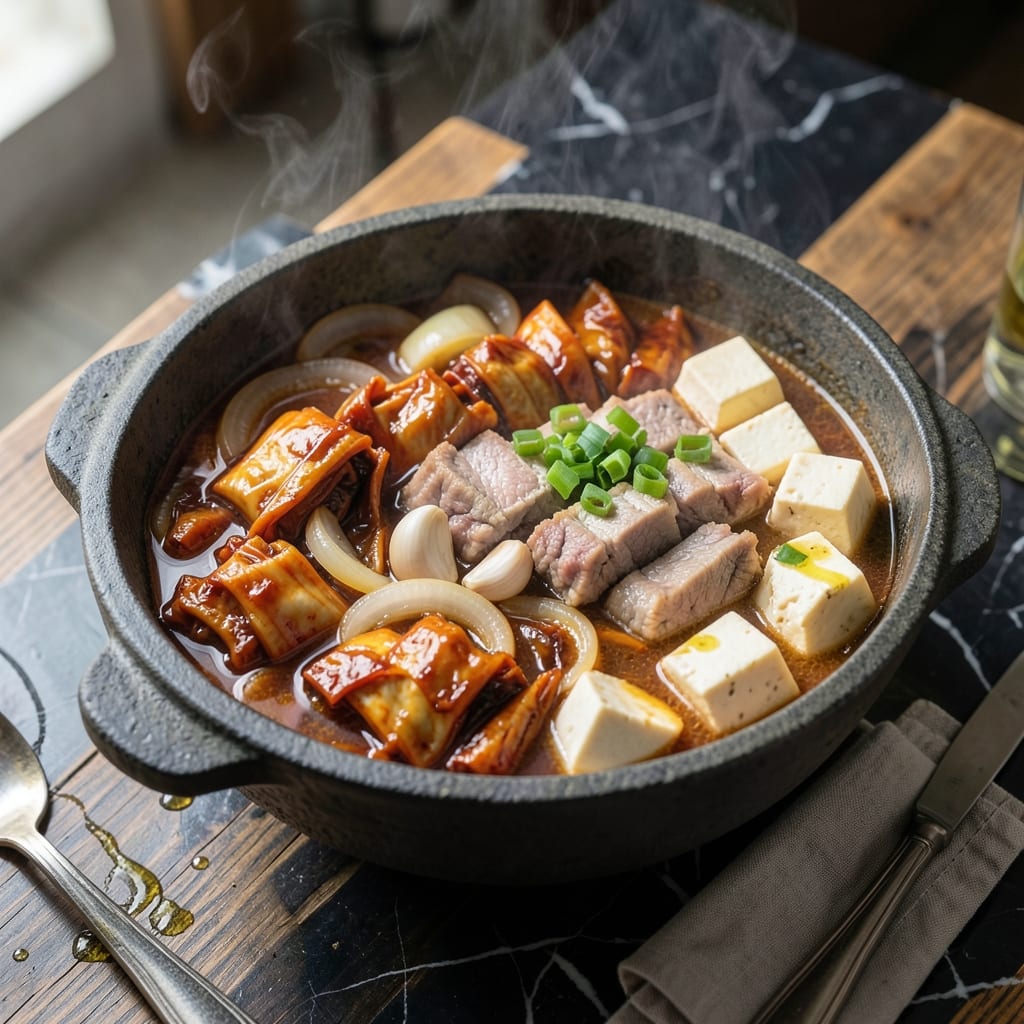
This authentic Korean hot pot brings the vibrant flavors of a traditional kimchi base to your table with minimal effort.
I’ve refined this method to capture the bold, spicy depth Maangchi is known for, using fermented kimchi as the foundation. The stew simmers to develop rich, complex flavors that only improve with time.
You’ll achieve a perfect balance of heat, tang, and umami, with tender ingredients soaking up every bit of the fragrant broth. It’s the kind of dish that warms you from the inside out.
Serve with rice and sides for a complete, satisfying meal that stays true to its roots.
Ingredients for Korean Hot Pot Recipe Maangchi
Bold fermented kimchi and rich broth make this stew unforgettable with every bite.
| Ingredient | Amount | Notes |
|---|---|---|
| Aged Kimchi 🥬 | 4 cups | Well-fermented for sour tang |
| Kimchi Juice 💧 | 1 cup | From the kimchi container |
| Pork Belly 🥩 | 1 lb | Thinly sliced, optional |
| Firm Tofu 🧈 | 14 oz | Pressed and cubed |
| Onion 🧅 | 1 whole | Thinly sliced for broth |
| Garlic Cloves 🧄 | 6 cloves | Minced for depth of flavor |
| Gochugaru 🌶️ | 2 tbsp | Korean red pepper flakes |
| Soy Sauce 🫒 | 3 tbsp | Low-sodium preferred |
| Gochujang 🔥 | 2 tbsp | Korean chili paste |
| Sugar 🍚 | 1 tbsp | Balances the spice |
| Green Onions 🌱 | 4 whole | Chopped for garnish |
| Mushrooms 🍄 | 8 oz | Shiitake or white button |
| Zucchini 🥒 | 1 whole | Sliced into rounds |
| Beef Stock 🥣 | 2 cups | Or substitute vegetable stock |
| Sesame Oil 🫒 | 1 tbsp | For finishing aroma |
[recipe_ingredient_scaler]
The kimchi is non-negotiable here—look for aged, sour kimchi (the kind with visible fermentation bubbles). Most H Mart or Asian grocery stores carry it in the refrigerated section. For the pork belly, ask your butcher to slice it thin (about 1/8-inch) or freeze it for 30 minutes to slice yourself. The gochugaru and gochujang are in the same aisle as other Korean ingredients—Sempio or CJ brands are reliable.
No pork? Thinly sliced beef or chicken works well, or skip it entirely for a vegetarian version. Gochugaru not available? Half the amount of cayenne plus sweet paprika gets you close. The tofu can be swapped for extra mushrooms or zucchini if needed. For the stock, vegetable broth keeps it lighter but still flavorful (just add a splash of soy sauce for depth).
Leftovers taste even better the next day—3-4 days in the fridge, 3 months frozen. Store the kimchi in its juice to keep it fresh. The broth thickens as it cools, so thin with water when reheating.
Why You’ll Love This Recipe
- One Pot Wonder: I toss everything in—aged kimchi, pork belly, tofu—and let it simmer. Honestly, cleanup is just one pot and a spoon.
- Umami Bomb: The aged kimchi and its juice create this deep, tangy richness that coats every bite of pork and tofu.
- Feeds My Crowd: Between us, this stretches perfectly for family dinner or a cozy night in with friends. Leftovers? Even better the next day.
- Budget Friendly: Pork belly and kimchi go a long way here. I’ll be real: it feels fancy but costs less than takeout.
Step-by-Step Instructions for Korean Hot Pot
This authentic method delivers a rich, spicy kimchi base that builds deep, complex flavors.
Step 1: Build the Kimchi Base
In a large pot over medium-high heat, add the 4 cups Aged Kimchi and 1 cup Kimchi Juice. Stir frequently as it comes to a gentle simmer, breaking up the kimchi slightly with your spoon. You’ll notice the mixture start to bubble and the aroma become more intense.
After about 5 minutes, the kimchi should soften and release its tangy, fermented liquid. This forms the foundation of your hot pot broth, so let it develop that deep, sour complexity that makes this dish special.
Step 2: Add Aromatics and Protein
Stir in the 1 whole Onion (thinly sliced), 6 cloves Garlic Cloves (minced), 1 lb Pork Belly (thinly sliced), 8 oz Mushrooms, and 1 whole Zucchini (sliced). These ingredients will infuse the broth with layers of flavor as they cook.
Cook for 7-8 minutes until the pork belly loses its raw appearance and the vegetables begin to soften. The pork fat will start to render, adding richness to the broth. Keep stirring occasionally to prevent anything from sticking to the bottom.
Step 3: Season and Simmer the Broth
Add the 2 tbsp Gochugaru, 2 tbsp Gochujang, 3 tbsp Soy Sauce, and 1 tbsp Sugar. Stir well to distribute the seasonings evenly throughout the broth. The gochugaru will deepen the red color, while the gochujang adds thickness and umami.
Pour in the 2 cups Beef Stock and bring to a gentle boil. Reduce heat to medium-low and let it simmer for 15-20 minutes until the flavors meld and the pork belly is tender. You’ll know it’s ready when the broth has developed a rich, spicy-savory depth.
Step 4: Add Tofu and Finish
Gently stir in the 14 oz Firm Tofu (cubed) and let it warm through for 3-4 minutes. The tofu will absorb the spicy broth, becoming tender and flavorful. Be careful not to stir too vigorously, as you want to keep the cubes intact.
Taste the broth and adjust seasoning if needed. The flavors should be balanced—spicy from the kimchi and gochujang, tangy from the aged kimchi, and savory from the pork and soy sauce. The tofu should be heated through but still firm to the touch.
Step 5: Garnish and Serve
Drizzle the 1 tbsp Sesame Oil over the top and sprinkle with the 4 whole Green Onions (chopped). This adds a final aromatic touch that enhances the dish’s authenticity. The sesame oil should glisten on the surface, and the green onions will add a fresh, crisp contrast.
Serve the hot pot piping hot, directly from the pot to individual bowls. Each serving should include a generous portion of broth, vegetables, pork belly, and tofu. The broth should be steaming and deeply aromatic, with all the flavors perfectly balanced.
Pro Tips For Making Korean Hot Pot Recipe Maangchi
- Boil the Kimchi First: I learned this the hard way—simmer the aged kimchi and its juice for 10 minutes before adding anything else to mellow the sourness and deepen the flavor.
- Slice Pork Thin: Cut the pork belly into ¼-inch slices, no thicker. Sounds tedious, but it cooks through in minutes and soaks up the kimchi broth like a sponge.
- Skip the Fresh Tofu: Firm tofu holds its shape and absorbs the stew’s bold flavors better than soft or silken—don’t substitute, or it’ll turn to mush in the pot.
- Add Tofu Last: Stir in the tofu during the final 5 minutes of cooking so it heats through without falling apart. I used to toss it in early and ended up with a cloudy, broken mess.
Storing and Reheating Leftovers
Refrigerator Storage
Let the hot pot cool completely before transferring to airtight containers. I use glass containers to preserve flavors and avoid plastic odors. Store in the fridge at 40°F or below for up to 3-4 days. The kimchi base actually deepens in flavor over time. ❄️
Freezer Storage
For longer storage, freeze in quart-sized freezer bags laid flat to save space. This stew freezes beautifully for up to 3 months. Leave 1 inch headspace for expansion and squeeze out excess air to prevent freezer burn.
Stovetop Reheating
My preferred method: transfer to a pot, add ¼ cup water, and reheat over medium-low heat for 10-15 minutes. Stir occasionally to prevent sticking. The flavors will taste even richer than the original serving. 🔥
Microwave Reheating
For quick meals, microwave individual portions covered with a damp paper towel. Use 70% power for 2-3 minutes, stir, then continue in 1-minute intervals until reaching 165°F. Add water if the broth thickens too much.
Nutrition Facts
Frequently Asked Questions
Can I use fresh kimchi instead of aged?
Fresh kimchi lacks the sour tang needed for depth. Use well-fermented kimchi with visible bubbles for authentic flavor. If only fresh is available, add 1 tbsp vinegar to mimic the tang.
What if I don’t have gochugaru?
Substitute with ½ tsp cayenne plus 1 tsp sweet paprika for color and mild heat. The flavor won’t be identical but will still be delicious.
How do I prevent the tofu from breaking?
Press tofu for 15 minutes before cubing, then handle gently. Add it last and stir minimally to keep cubes intact.
Can I make this vegetarian?
Omit pork and use vegetable stock. Add extra mushrooms, zucchini, or tofu for protein. The kimchi base keeps it flavorful.

Trained in classic French technique but raised on slow-cooked ribs and spicy rubs, she blends culinary skill with smoke and soul.
- Recipe for Boneless Pork Chops in Cast Iron Skillet: Sear and Baste to Juicy Perfection - October 3, 2026
- Recipe for Boneless Cross Rib Roast: Slow-Roasted Beef with Herb Crust - October 3, 2026
- Hamburgers in Sauce Recipe Crock Pot: Slow-Cooked Savory Delight - October 3, 2026