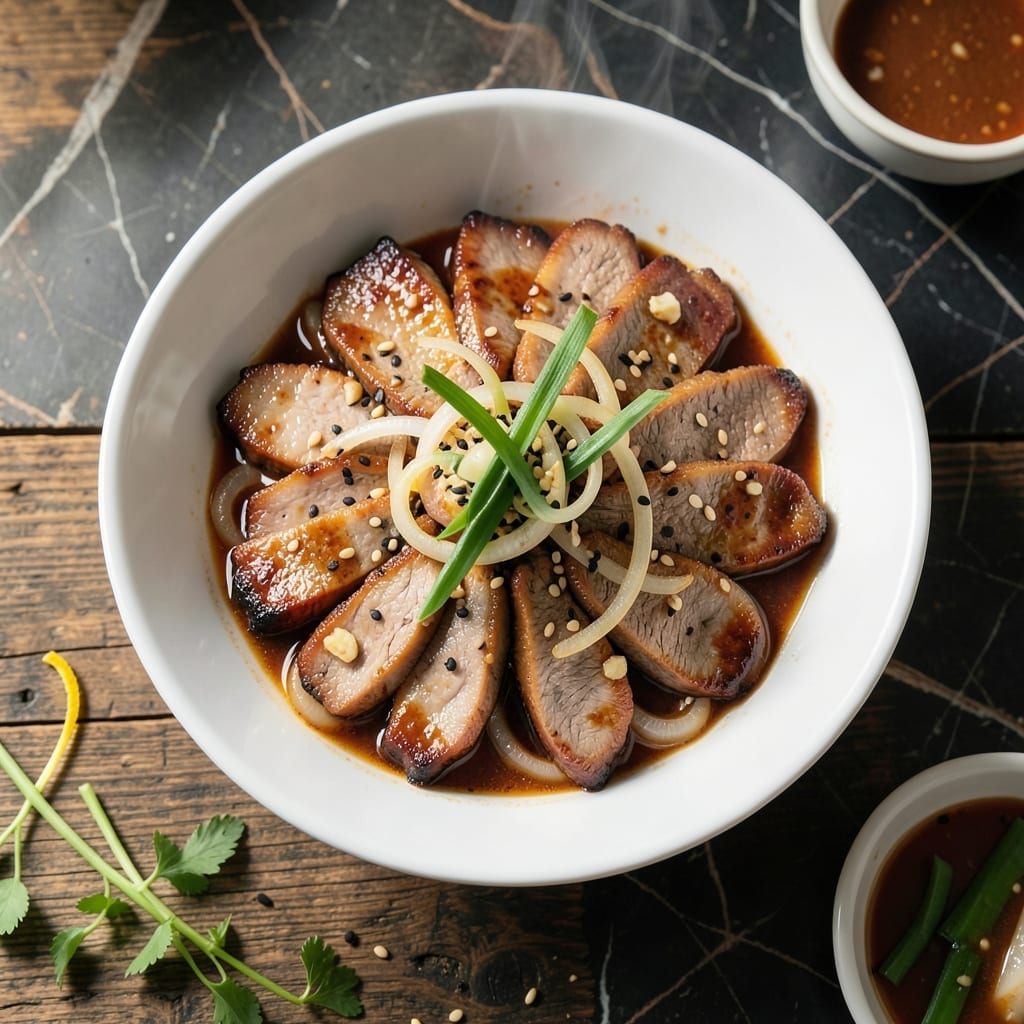
This non-spicy Korean pork bulgogi delivers the same tender, caramelized results as the classic without the heat. The sweet soy marinade creates a glossy, flavorful crust that locks in juices.
I developed this version for diners who prefer milder flavors but still crave that signature bulgogi depth. Thin-sliced pork shoulder soaks up the marinade quickly, ensuring every bite is packed with flavor.
The key is high-heat searing to achieve those coveted caramelized edges while keeping the inside juicy. It’s a foolproof method that works on the stovetop or grill.
Serve with steamed rice and quick-pickled vegetables for a complete meal that’s both comforting and impressive.
Ingredients for Korean Pork Bulgogi Recipe Non Spicy
Thin-sliced pork shoulder meets a sweet soy marinade for tender, caramelized results every time.
| Ingredient | Amount | Notes |
|---|---|---|
| Pork Shoulder 🥩 | 1 ½ lb | Thinly sliced, about 1/8-inch thick |
| Soy Sauce 🫒 | ½ cup | Low-sodium preferred for balance |
| Brown Sugar 🍚 | ⅓ cup | Packed, for caramelization |
| Asian Pear 🍐 | ½ whole | Peeled, grated for tenderness |
| Garlic Cloves 🧄 | 6 cloves | Minced finely for even distribution |
| Fresh Ginger 🌿 | 1 tbsp | Peeled, grated for depth |
| Sesame Oil 🫒 | 2 tbsp | Toasted for aromatic finish |
| Rice Vinegar 💧 | 2 tbsp | Balances sweetness with acidity |
| Green Onions 🧅 | 4 whole | Thinly sliced for garnish |
| Toasted Sesame Seeds 🌾 | 1 tbsp | For nutty crunch and presentation |
| Neutral Oil 🫒 | 2 tbsp | For high-heat searing |
| Black Pepper 🌶️ | ½ tsp | Freshly ground for best flavor |
[recipe_ingredient_scaler]
The pork shoulder is non-negotiable here. Thin-cut slices (ask your butcher at Whole Foods or H-Mart to prepare it) absorb the marinade faster and cook more evenly. Look for well-marbled cuts—this fat renders down during cooking, basting the meat in flavor. Asian pear is the secret tenderizer; Bosc or Anjou pears work if Asian varieties aren’t available.
No Asian pear? Kiwi or pineapple (about 2 tbsp purée) substitutes with similar enzymatic tenderizing. Low-sodium soy sauce prevents the dish from becoming overly salty, but regular works if you reduce other sodium sources. The brown sugar can be swapped for coconut sugar or honey (if not strictly avoiding animal products), though the flavor profile will shift slightly.
Marinate the pork for at least 30 minutes, but overnight yields the most flavorful results. Cooked bulgogi keeps in the fridge for 3-4 days and reheats well. For longer storage, freeze in portions for up to 3 months.
Why You’ll Love This Recipe
- One Pan Marvel: I toss everything in a bowl, let it marinate, then cook it all in one pan—minimal mess, maximum flavor.
- Sweet Garlic Magic: The brown sugar and garlic caramelize into this sticky, savory glaze that clings to every bite of tender pork.
- Weeknight Hero: Between us, I make this on Sundays and it reheats beautifully for lunches all week.
- Budget Friendly: Pork shoulder is cheap, and a little goes a long way with all that bold, pear-sweetened marinade.
Step-by-Step Instructions for Korean Pork Bulgogi Non Spicy
Master the marinating process and searing technique for tender, caramelized pork with deep umami flavor.
Step 1: Prepare and Marinate the Pork
Thinly slice the 1.5 lb Pork Shoulder into 1/8-inch thick strips against the grain. This ensures tenderness and allows the marinade to penetrate deeply. Place the slices in a large bowl.
In a separate bowl, whisk together the 0.5 cup Soy Sauce, 0.33 cup Brown Sugar, grated 0.5 whole Asian Pear, minced 6 cloves Garlic Cloves, grated 1 tbsp Fresh Ginger, 2 tbsp Sesame Oil, 2 tbsp Rice Vinegar, and 0.5 tsp Black Pepper until the sugar dissolves completely.
Pour the marinade over the pork and mix thoroughly to coat every piece. Cover and refrigerate for at least 2 hours, or ideally overnight, to allow the flavors to develop and the pork to tenderize.
Step 2: Sear the Marinated Pork
Heat 2 tbsp Neutral Oil in a large skillet or wok over medium-high heat until it shimmers. Working in batches to avoid overcrowding, add the marinated pork in a single layer. This prevents steaming and ensures proper caramelization.
Cook undisturbed for 3-4 minutes until the edges turn deep golden brown and slightly crisp. Flip the pork and cook for another 3-4 minutes until evenly caramelized and cooked through. The pork should reach an internal temperature of 145°F and the marinade should reduce to a glossy glaze.
Transfer the cooked pork to a plate and repeat with the remaining batches, adding more oil if necessary.
Step 3: Rest and Garnish
Allow the cooked pork to rest for 5 minutes before serving. This brief rest lets the juices redistribute, ensuring each bite is moist and flavorful. Meanwhile, thinly slice the 4 whole Green Onions for garnish.
Arrange the pork on a serving platter and drizzle any remaining pan juices over the top. Sprinkle with the sliced green onions and 1 tbsp Toasted Sesame Seeds for added texture and visual appeal. The sesame seeds will toast slightly from the residual heat, enhancing their nutty aroma.
Serve immediately with steamed rice and your choice of side dishes to soak up the rich, savory-sweet sauce.
Pro Tips For Making Korean Pork Bulgogi Recipe Non Spicy
- Thinly Slice Pork: Cut the pork shoulder against the grain into 1/8-inch slices—this makes it tender and helps the marinade penetrate evenly.
- Grate the Pear: Use a fine grater on the Asian pear so it dissolves into the marinade, naturally tenderizing the meat without chunks.
- Marinate Overnight: Let the pork sit in the soy-brown sugar-garlic mix for at least 8 hours; I learned this the hard way—shorter marinating gives weaker flavor.
- High Heat Sear: Cook the pork in batches on high heat for 2-3 minutes per side to get that caramelized crust without steaming it.
Essential Equipment for Perfect Results
Essential Skillet
A heavy-bottomed 12-inch cast iron skillet is my top choice for bulgogi. My vintage Lodge handles the medium-high heat perfectly without hot spots. The iron retains heat beautifully for even caramelization.
Mixing Bowls
Use a large glass or stainless steel bowl for marinating. I prefer Pyrex with a lid—it won’t absorb odors and makes mixing the pork easy. A 4-quart capacity works for 1.5 lb pork.
High-Quality Knife
Thin-slicing pork shoulder demands a sharp 8-inch chef’s knife. I swear by my Wüsthof—it glides through the meat with precision. Keep it honed for 1/8-inch slices against the grain. 💪
Marinade Tools
A microplane is perfect for grating the ginger and Asian pear. My OXO Good Grips model has non-slip handles. Use a whisk to fully dissolve the brown sugar in the marinade.
A garlic press makes quick work of the 6 cloves—I never cook without mine.
Serving Essentials
Have a large platter ready for serving family-style. I use a bamboo serving board that’s both beautiful and practical. Tongs are best for flipping the pork during searing. 🔥
Nutrition Facts
Frequently Asked Questions
What cut of pork works best for this dish?
Pork shoulder is ideal for its marbling and flavor. Ask your butcher for 1/8-inch thick slices cut against the grain. Pork loin can work in a pinch but may be less tender.
Can I make this ahead of time?
Marinate the pork for up to 24 hours for deeper flavor. Cooked bulgogi keeps in the fridge for 3-4 days and reheats beautifully.
What if I don’t have an Asian pear?
Substitute 2 tbsp kiwi or pineapple purée for similar tenderizing effects. These contain enzymes that break down proteins, keeping the meat tender.
How do I prevent the pork from drying out?
Don’t overcook—pull it at 145°F internal temp. Also, avoid crowding the pan, which steams rather than sears the meat.

Trained in classic French technique but raised on slow-cooked ribs and spicy rubs, she blends culinary skill with smoke and soul.
- Recipe for Boneless Pork Chops in Cast Iron Skillet: Sear and Baste to Juicy Perfection - October 3, 2026
- Recipe for Boneless Cross Rib Roast: Slow-Roasted Beef with Herb Crust - October 3, 2026
- Hamburgers in Sauce Recipe Crock Pot: Slow-Cooked Savory Delight - October 3, 2026