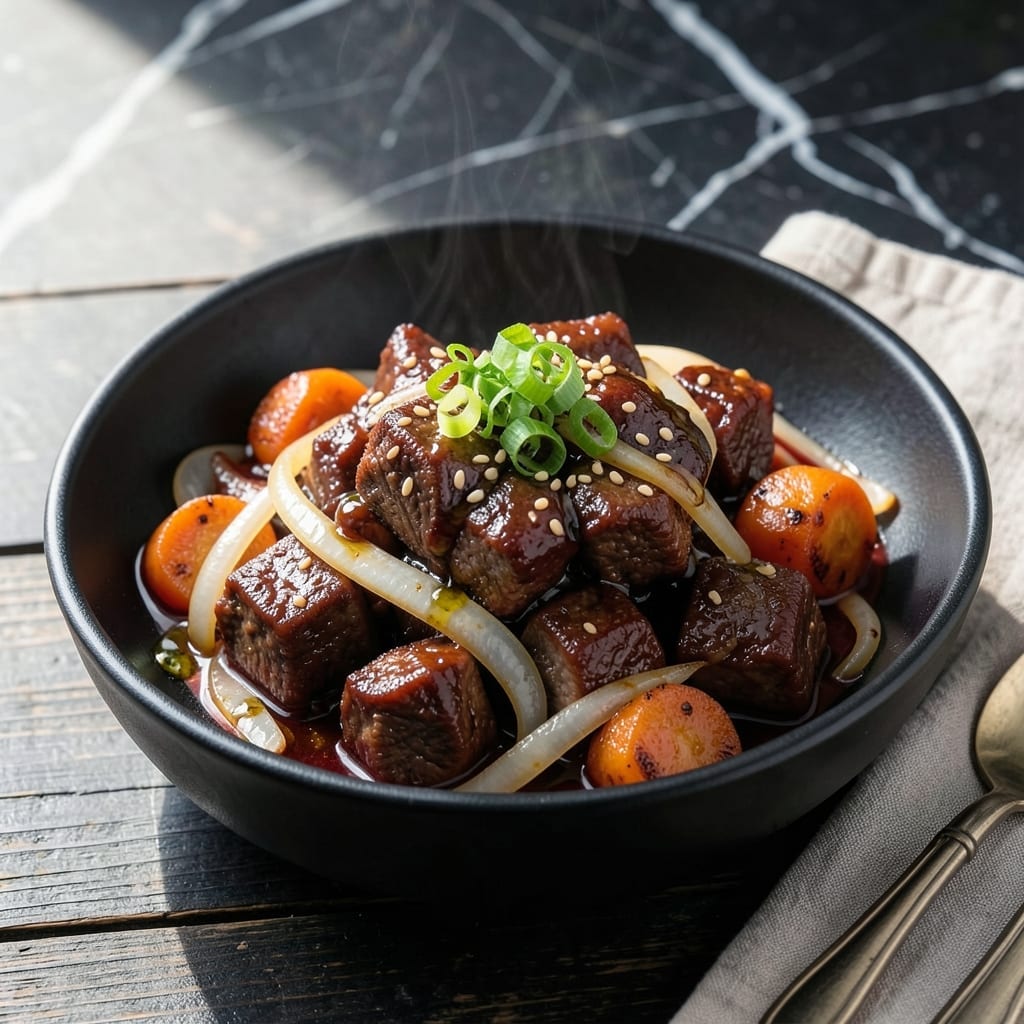
I developed this Instant Pot method to bring authentic Korean flavors to weeknight cooking without sacrificing depth. The pressure cooker transforms tough cuts into tender meat infused with gochujang’s signature heat and complexity.
Traditional techniques meet modern convenience as the pot builds layers of flavor in 30 minutes instead of hours. Soy sauce, sesame, and garlic create a rich base that absorbs into every bite.
What emerges is a dish with the soul of Korean cuisine but the ease of one-pot cooking. The flavors meld completely under pressure, creating a sauce so rich you’ll want to sop it up with rice.
Perfect for busy evenings when you crave restaurant-quality results at home. This method delivers consistent flavor every time.
Ingredients for Korean Recipe Instant Pot
Pantry staples meet bold Korean flavors in this one-pot wonder. Simple, deep, and totally satisfying.
| Ingredient | Amount | Notes |
|---|---|---|
| Beef Chuck Roast 🥩 | 2 lb | Cut into 1-inch cubes, well-marbled |
| Gochujang 🌶️ | ¼ cup | Korean red pepper paste, mild or hot |
| Soy Sauce 🫒 | ⅓ cup | Low-sodium preferred for balance |
| Brown Sugar 🍚 | 2 tbsp | Light or dark, for sweetness |
| Sesame Oil 🫒 | 1 tbsp | Toasted for depth of flavor |
| Garlic Cloves 🧄 | 6 cloves | Minced for maximum flavor infusion |
| Fresh Ginger 🌿 | 1 tbsp | Peeled and grated finely |
| Onion 🧅 | 1 whole | Yellow or white, thinly sliced |
| Carrots 🥕 | 2 whole | Peeled and sliced into rounds |
| Beef Broth 💧 | 1 ½ cups | Low-sodium for controlled seasoning |
| Rice Vinegar 🍚 | 2 tbsp | Adds bright acidity to balance |
| Toasted Sesame Seeds 🌰 | 1 tbsp | For garnish and nutty crunch |
| Green Onions 🧅 | 3 whole | Thinly sliced, white and green parts |
| Cornstarch 🌾 | 2 tbsp | Mixed with water for thickening |
[recipe_ingredient_scaler]
The beef is the foundation here. Chuck roast is ideal for its marbling—Costco has great pre-cut options if you’re in a hurry. Look for pieces with visible fat streaks; they melt under pressure into that rich, tender bite. H-Mart or Korean markets are your best bet for authentic gochujang (the Sempio brand is my go-to). Skip the pre-minced garlic in jars—fresh cloves make all the difference in flavor depth.
No gochujang? Sriracha plus a tbsp of miso paste gets you close, though the flavor won’t be identical. Out of rice vinegar? Apple cider vinegar at half the amount works in a pinch. For a gluten-free version, swap soy sauce for tamari. The sesame oil is non-negotiable though—it adds that signature nutty aroma. And if you’re missing fresh ginger, ground ginger at one-third the amount saves the day.
Leftovers taste even better after a night in the fridge—flavors deepen like a good stew. Stores for 4-5 days sealed tight, or freeze for 3 months. I like to portion it with rice for easy lunches (worth the extra minute).
Why You’ll Love This Recipe
- Set It and Forget: The Instant Pot does all the work—just toss in the beef chuck, gochujang, and soy sauce, then walk away.
- Sweet Heat Perfection: That gochujang and brown sugar combo gives it a sticky, spicy-sweet glaze that’s honestly addictive.
- Feeds the Crew: One batch makes enough for dinner tonight and lunch tomorrow—my family fights over the leftovers.
- Budget Beef: Chuck roast turns fall-apart tender, so I get restaurant-quality Korean flavors without the price tag.
Step-by-Step Instructions for Korean Instant Pot Beef
This hands-off method delivers deep, complex flavors with minimal effort on your part.
Step 1: Sear the Beef and Build the Flavor Base
Set your Instant Pot to the Sauté function on high heat. Add the 1 tbsp Sesame Oil and let it get hot and shimmering. Working in batches, add the 2 lb Beef Chuck Roast cubes and sear for 2-3 minutes per side until deeply browned.
Don’t crowd the pot—this ensures each piece gets a proper sear. Transfer the browned beef to a plate and set aside. The fond left in the pot is pure flavor gold that we’ll use to build our sauce.
Step 2: Combine Aromatics and Sauce Components
In the same pot, add the 1 whole Onion (thinly sliced), 2 whole Carrots (sliced into rounds), 6 cloves Garlic Cloves (minced), and 1 tbsp Fresh Ginger (grated). Sauté for 2-3 minutes until the onion becomes translucent.
Pour in the 0.25 cup Gochujang, 0.33 cup Soy Sauce, 2 tbsp Brown Sugar, 2 tbsp Rice Vinegar, and 1.5 cups Beef Broth. Stir well to combine, scraping up all those browned bits from the bottom of the pot. This creates the rich, complex sauce base.
Step 3: Pressure Cook to Tender Perfection
Return the seared beef to the pot along with any accumulated juices. Stir to coat everything in that gorgeous sauce. Secure the lid, set the valve to Sealing, and cook on High Pressure for 35 minutes.
Let the pressure release naturally for 10 minutes, then quick-release any remaining pressure. The beef should be fork-tender and easily pull apart. If it’s not quite there, seal the pot again and cook for another 5-10 minutes on High Pressure.
Step 4: Thicken the Sauce and Finish
In a small bowl, mix the 2 tbsp Cornstarch with 2 tbsp of cold water to create a slurry. Set the Instant Pot back to Sauté on low heat and stir in the slurry. Cook for 3-5 minutes, stirring constantly, until the sauce has thickened to your desired consistency.
Taste and adjust seasoning if needed—though with the balanced flavors of gochujang, soy, and vinegar, you likely won’t need to. The sauce should coat the back of a spoon and have a glossy sheen.
Step 5: Garnish and Serve
Transfer the beef and sauce to a serving dish. Sprinkle with the 1 tbsp Toasted Sesame Seeds and 3 whole Green Onions (thinly sliced). The sesame seeds add a nutty crunch, while the green onions bring a fresh, bright contrast to the rich, deep flavors of the dish.
Serve immediately over steamed rice or with your favorite side. The beef should be fall-apart tender, and the sauce should be thick enough to cling to every piece, delivering that perfect balance of spicy, sweet, and umami in every bite.
Pro Tips For Making Korean Recipe Instant Pot
- Sear the Beef First: I learned this the hard way—browning the chuck roast in batches before pressure cooking adds depth that skipping this step just can’t match. Use about 1 tablespoon of oil and don’t crowd the pot.
- Bloom the Gochujang: After sautéing the beef, cook the gochujang with the soy sauce and brown sugar for 2-3 minutes. This mellows the heat and deepens the flavor in ways raw paste just doesn’t.
- Skip the Overfilling: Resist the urge to max out the Instant Pot—never exceed the 2/3 mark, especially with beef that releases liquid. I ruined a batch by ignoring this, and the sauce was watery.
- Rest Before Serving: Once it’s done, let the beef sit in the sauce for 10 minutes off the heat. The meat reabsorbs the liquid and stays juicy—I was skeptical until I tried it.
Flavor Customization for This Dish
Spice Level Adjustments
For milder heat, reduce gochujang to 2 tbsp and add 1 tbsp honey to balance. The dish will still have that signature Korean depth without overwhelming spice. I often do this for family meals with kids. 🌶️
Extra Umami Boost
Add 1 tbsp fish sauce or 1 tsp msg to the sauce for deeper savory notes. Red Boat Fish Sauce is my top pick—it enhances the beefy richness without being noticeable. Just a splash makes all the difference.
Vegetable Additions
Stir in 1 cup sliced mushrooms or 1 bell pepper (diced) when adding the aromatics. Portobello mushrooms add meaty texture, while bell peppers bring sweetness. Both absorb the sauce beautifully.
Sweetness Variations
Swap brown sugar for maple syrup or honey for a different sweet profile. Use 2 tbsp of either. Maple syrup adds earthiness, while honey brings floral notes that pair well with the sesame.
Protein Swaps
Replace beef with 2 lb pork shoulder or chicken thighs (bone-in for best results). Pork becomes incredibly tender, while chicken cooks faster—reduce pressure time to 20 minutes. Both work wonderfully with these flavors. 💪
Garnish Upgrades
Top with pickled radish or kimchi for tangy crunch. A soft-boiled egg adds richness. These traditional additions elevate the dish while keeping it authentic. I always keep Chongga Kimchi on hand for this.
Nutrition Facts
Frequently Asked Questions
Do I need to brown the beef first?
Yes, searing creates a flavorful crust and deepens the sauce. Use high heat and work in batches to avoid steaming the meat. This step takes 5-7 minutes total.
Can I use a different cut of meat?
Short ribs or pork shoulder work well. Reduce cooking time to 25 minutes for pork. Avoid lean cuts like sirloin—they can become tough.
What if my sauce is too thin?
Mix 1 tbsp cornstarch with 1 tbsp cold water and stir into simmering sauce. Cook for 2-3 minutes until thickened. Avoid over-thickening—it continues to set as it cools.
How do I make this less spicy?
Cut gochujang to 2 tbsp and add 1 tbsp honey. The sweetness balances the heat while keeping authentic flavor.

Trained in classic French technique but raised on slow-cooked ribs and spicy rubs, she blends culinary skill with smoke and soul.
- Recipe for Boneless Pork Chops in Cast Iron Skillet: Sear and Baste to Juicy Perfection - October 3, 2026
- Recipe for Boneless Cross Rib Roast: Slow-Roasted Beef with Herb Crust - October 3, 2026
- Hamburgers in Sauce Recipe Crock Pot: Slow-Cooked Savory Delight - October 3, 2026